Have you ever looked at the stars and wondered how the universe came into existence? Or sat quietly with your thoughts and asked yourself who you really are beyond your name, identity, and everyday responsibilities?
Questions like these often lead us towards two different yet fascinating fields of exploration: science and spirituality.
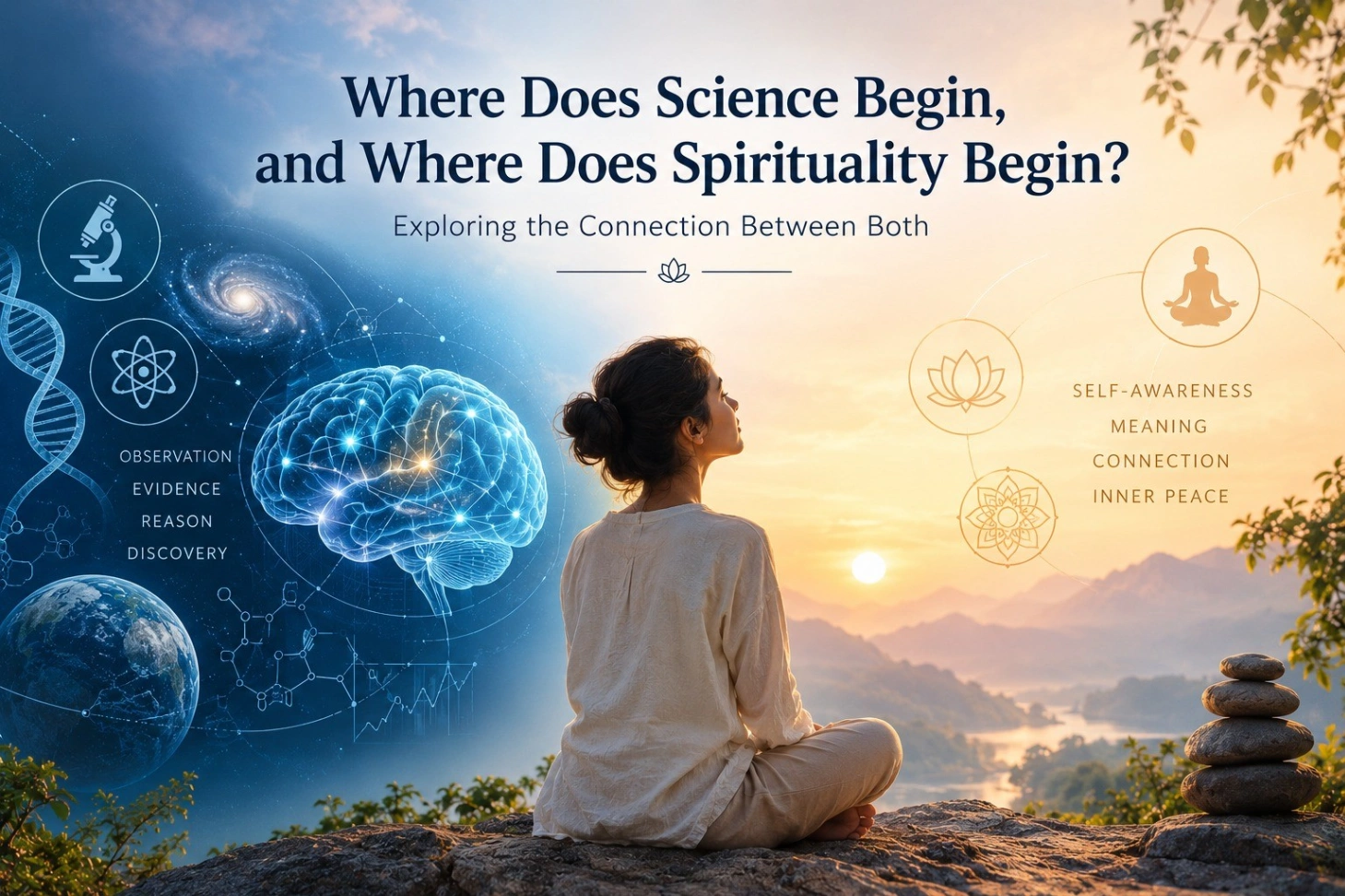
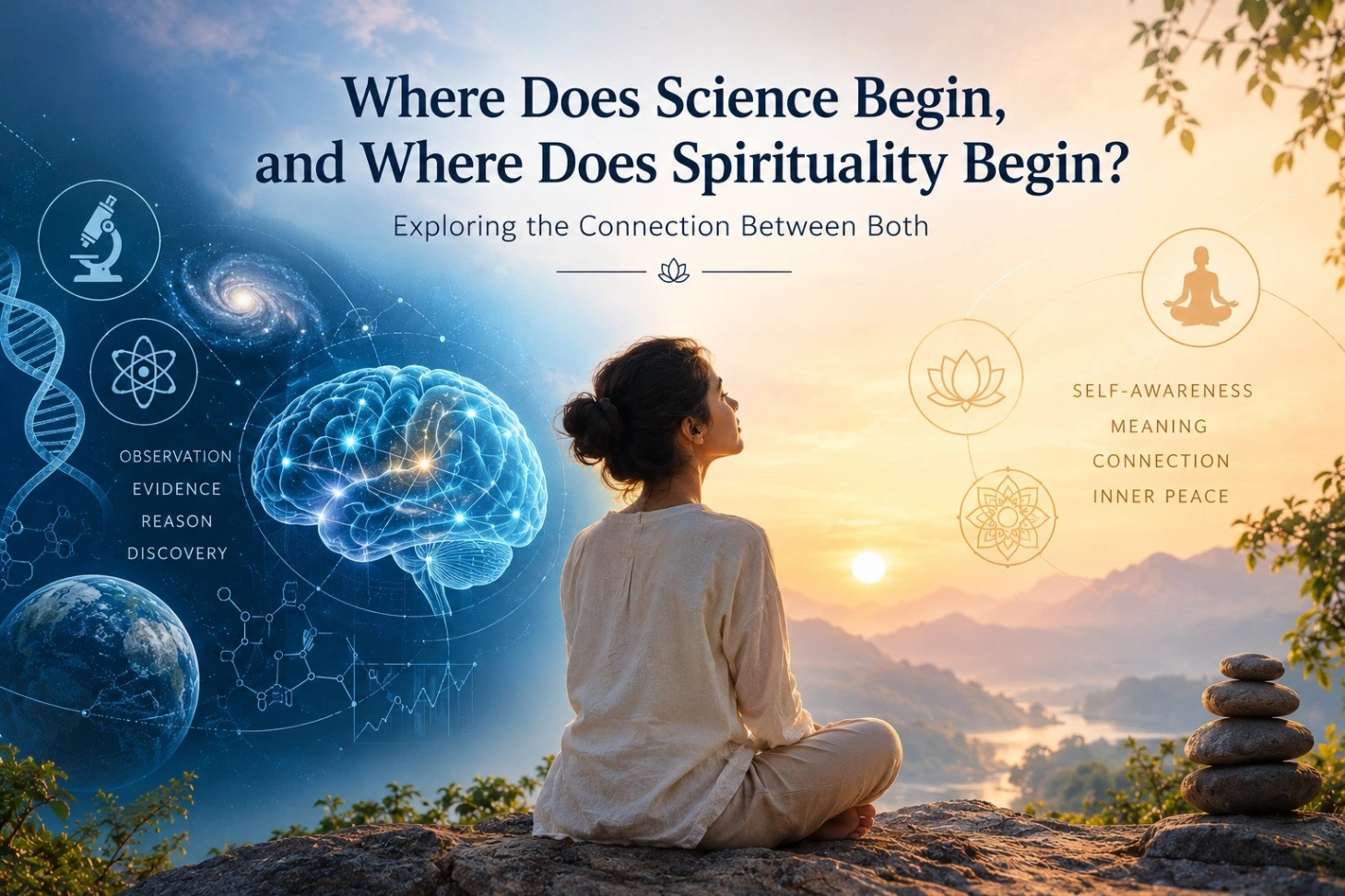
Science seeks to understand the natural world through observation, experimentation, evidence, and reason. Spirituality explores questions of meaning, awareness, existence, and our relationship with ourselves and the world around us.
One investigates what can be observed and tested. The other often invites us to explore what it means to experience life from within.
But does that mean science and spirituality must remain separate? Can understanding the brain help us understand consciousness? Can scientific discoveries deepen our appreciation of existence? And where do we begin when we want to understand not only the world around us but also the person experiencing it?
To explore these questions, we must first understand what science and spirituality actually seek to discover.
What Is Science, and What Does It Seek to Understand?
Science is a systematic way of developing and testing explanations about the natural world.
It begins with curiosity. We observe something, ask a question, develop a possible explanation, and investigate whether the available evidence supports it.
Through observation, experimentation, measurement, and critical examination, scientific inquiry helps us understand phenomena ranging from the movement of planets to the functioning of the human brain.
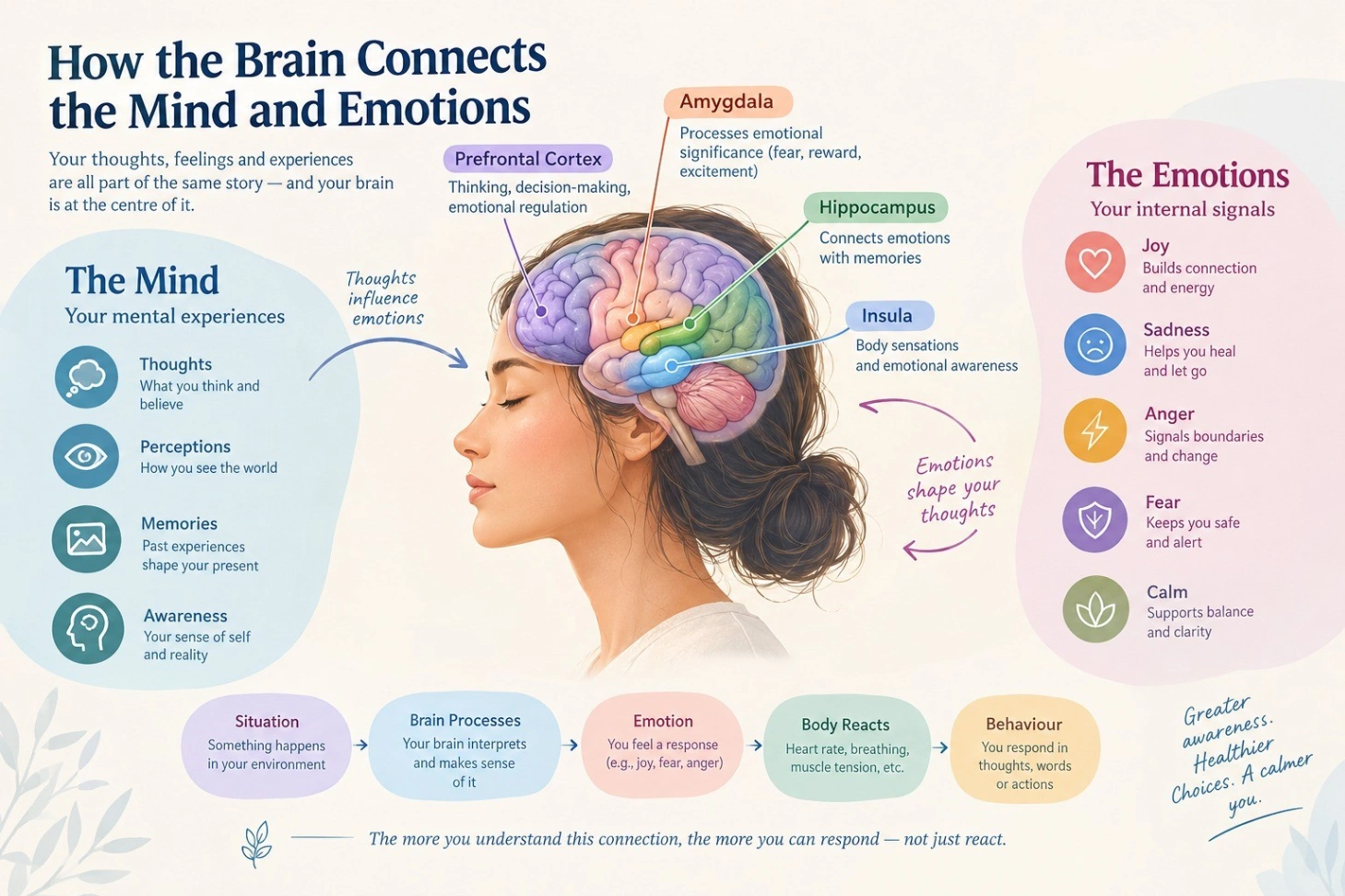
For example, neuroscience investigates how neurons communicate, how memories are formed, and which brain networks participate in emotions and decision-making.
Astronomy investigates stars, galaxies, and the evolution of the universe. Biology explores living organisms, while physics investigates matter, energy, and the fundamental processes of nature.
An important feature of science is that its explanations remain open to revision when stronger evidence becomes available.
Science does not require us to accept an explanation simply because it sounds convincing or aligns with our existing beliefs. It asks us to examine the evidence and consider alternative explanations.
However, science also has boundaries. Scientific methods are particularly powerful when investigating questions that can be observed, measured, tested, or evaluated through evidence.
Questions about ultimate meaning, personal values, or what makes a life meaningful may involve philosophical reasoning, lived experience, and ethical reflection alongside scientific knowledge.
Science can inform these questions without necessarily providing a complete answer to every dimension of them.
Design Your Destiny
Science helps us understand the world around us, while self-reflection invites us to explore the world within. What if understanding yourself more deeply could change the way you see your thoughts, emotions, relationships, and life's possibilities?
Start Your Journey Today!What Is Spirituality, and Why Do People Explore It?
Spirituality is a broad term that can refer to the search for meaning, connection, awareness, purpose, or a deeper understanding of existence.
For some people, spirituality is connected to religion, prayer, sacred texts, or belief in a divine reality. For others, it involves meditation, contemplation, self-inquiry, compassion, or a sense of connection with life.
Spirituality does not have one universally accepted definition.
At its centre, however, it often involves questions that go beyond the immediate demands of everyday life.
Who am I beyond my social roles?
Why do I experience attachment, fear, desire, and uncertainty?
What does it mean to live consciously?
How can I understand myself more deeply?
These questions invite us to look beyond external achievements and examine our inner experiences.
For example, someone may spend years pursuing career success, financial security, or social recognition, only to discover that these achievements have not answered their deeper questions about fulfilment.
Spiritual reflection may encourage that person to reconsider their priorities, examine their motivations, and explore what gives their life meaning.
Such reflection can be valuable, although spiritual experiences and beliefs differ between individuals and are not automatically established as scientific facts.
Where Does Science Begin, and Where Does Spirituality Begin?
The distinction becomes clearer when we examine the kinds of questions each approach asks.
Science often begins with a question about how something works.
What happens in the brain when a person experiences fear? How does meditation affect attention? What biological processes influence sleep? How do humans develop memories?
These questions can be investigated using scientific methods.
Spirituality often begins with a different kind of inquiry.
What does it mean to be aware of fear? How do I relate to my thoughts? Why do I identify so strongly with my achievements? What does it mean to live with greater compassion and understanding?
These questions frequently involve introspection, reflection, philosophical inquiry, or spiritual practice.
Consider meditation as an example.
Science can investigate changes in attention, stress responses, and brain activity associated with meditation. Researchers can compare different practices and examine their effects under defined conditions.
A spiritual practitioner may approach meditation as an opportunity to observe the mind, examine attachment, or explore the nature of awareness.
Both approaches can examine meditation, but they may be interested in different aspects of the experience.
Science investigates what can be tested and supported by evidence. Spirituality often explores meaning, awareness, and the lived experience of existence.
The distinction is not absolute. Spiritual traditions can make claims about the natural world that require scientific evaluation, and scientific research can investigate experiences that people describe as spiritual.
The important point is to understand which kind of question is being asked and what kind of evidence would help answer it
Kali Chaudas vs Naraka Chaturdashi : Are They the Same ?
Can Science and Spirituality Coexist?
Science and spirituality do not necessarily have to oppose one another.
Conflict can arise when a spiritual belief contradicts strong scientific evidence or when scientific findings are interpreted as proving a spiritual conclusion they do not establish.
However, many people engage with both approaches without seeing them as incompatible.
A person might appreciate neuroscience while practising meditation. Another might study astronomy while reflecting on the significance of existence. Someone else might use scientific knowledge to understand stress while drawing on spiritual teachings to examine their relationship with difficult emotions.
These activities can serve different but complementary purposes.
Scientific understanding can help us evaluate claims, understand natural processes, and avoid mistaking assumptions for established facts.
Spiritual reflection can encourage questions about values, self-understanding, compassion, and how we choose to live.
Neither approach needs to claim authority over every possible question.
For example, neuroscience can investigate the brain processes associated with an experience of awe. It cannot, by that finding alone, determine the ultimate philosophical meaning of the experience.
Similarly, feeling that an experience is spiritually meaningful does not establish a particular scientific explanation for why it occurred.
Recognizing these distinctions allows curiosity to flourish without abandoning critical thinking.
The Mystery of Consciousness: A Meeting Point Between Science and Spirituality
One of the most fascinating areas connecting science, philosophy, and spirituality is consciousness.
Consciousness broadly refers to the presence of subjective experience: the fact that we see colours, hear sounds, experience emotions, and have an inner perspective on the world.
Science has made substantial progress in identifying brain processes associated with conscious perception, attention, wakefulness, and other aspects of experience.
Researchers investigate how different brain networks interact and how changes in brain activity relate to changes in what a person experiences.
Yet important questions remain about how subjective experience arises and how best to explain its relationship to physical processes. Philosophers and scientists continue to debate these issues.
Spiritual traditions have also explored consciousness, although they offer different interpretations.
Some traditions emphasize awareness as something to observe through meditation. Others discuss consciousness in relation to the self, reality, or a larger spiritual order.
These perspectives are not identical, and their claims must be evaluated according to the kind of claim being made.
Scientific evidence about brain activity does not automatically prove or disprove every spiritual account of consciousness.
Likewise, a powerful experience during meditation does not, by itself, settle scientific or philosophical debates about the nature of consciousness.
The value of exploring this meeting point lies in remaining open to questions while being careful about what we can reasonably conclude.
What Can Science Tell Us About Meditation and Self-Awareness?
Meditation and mindfulness have attracted scientific interest because they provide ways to investigate attention, emotional responses, and patterns of thinking.
Some studies suggest that particular mindfulness-based interventions can help with stress and certain symptoms of anxiety or depression. However, outcomes vary, and the benefits depend on the practice, the individual, and the circumstances.
Research into meditation also examines attention, emotional regulation, and brain activity. Findings differ across studies, and not every claim made about meditation is supported by strong evidence.
From a practical perspective, mindfulness encourages a person to observe thoughts and feelings without immediately reacting to them.
For example, imagine that you feel angry after a difficult conversation.
You might initially believe that the other person has deliberately disrespected you. With a moment of reflection, you can notice the anger, examine your interpretation, and consider whether you need more information.
This process does not require you to deny your feelings. Instead, it gives you an opportunity to understand them before deciding how to respond.
Scientific psychology can examine the processes involved in attention and emotional regulation. Spiritual practices may offer a framework for exploring the meaning of self-awareness and how it influences everyday life.
The two perspectives can inform a person's exploration without being treated as interchangeable forms of evidence.
Why Do We Celebrate Diwali ? Meaning , History and Significance
How Can You Explore Both Science and Spirituality in Everyday Life?
You do not need to choose between curiosity about the external world and curiosity about your inner experience.
You can explore both through small, practical habits.
1. Ask Questions Before Accepting Answers
Whether you encounter a scientific claim or a spiritual teaching, ask what it means, what supports it, and whether alternative explanations exist.
Curiosity becomes more useful when it is accompanied by careful thinking.
2. Practise Observing Your Thoughts
Set aside a few minutes to sit quietly and notice your thoughts, emotions, and physical sensations.
When your attention wanders, gently return to what you are observing.
You do not need to force a particular experience or assume that every thought has a deeper spiritual meaning.
3. Learn About the Brain and Mind
Explore credible material about neuroscience, psychology, consciousness, and emotional regulation.
Understanding how attention, memory, and emotions work can provide useful context for examining your everyday experiences.
4. Reflect on Your Values
Ask yourself what matters to you beyond achievement, recognition, or external expectations.
Consider how you want to treat others, respond to difficulties, and use your time.
These are questions of meaning and values that can benefit from thoughtful reflection.
5. Remain Open Without Abandoning Critical Thinking
You can acknowledge that you do not have all the answers without accepting every explanation you encounter.
Some questions remain unresolved. Others can be answered more clearly as evidence develops.
A thoughtful approach allows uncertainty to exist without turning it into proof of any particular conclusion.
The Journey from Knowing the World to Understanding Yourself
Where does science begin, and where does spirituality begin?
Science begins with the systematic investigation of the natural world. Spirituality often begins with questions about meaning, awareness, connection, and our experience of existence.
Their methods and aims can differ, but they may also intersect in areas such as meditation, consciousness, and self-understanding.
Science helps us examine what the evidence supports. Spiritual reflection can invite us to consider how we experience life, what we value, and how we wish to live.
Neither curiosity nor self-inquiry requires us to pretend that every mystery has been solved.
Perhaps the most meaningful approach is to remain willing to investigate the world with an open mind while also making time to understand our own experiences.
We can seek knowledge without losing our sense of wonder. We can explore spirituality without abandoning reason.
Personal Session
Sometimes, the questions that matter most are the ones we rarely give ourselves time to explore. A personal session offers an opportunity to reflect on your experiences, examine your perspectives, and explore what matters most to you. Whether you are seeking greater self-understanding, clarity about your direction, or a deeper connection with yourself, give yourself the space to pause and reflect.
Book NowRead Latest Articles
Overthinking Everything? Ancient Gita Wisdom for a Thinking Mind
Do Positive Affirmations Really Work? The Science Behind Self-Talk