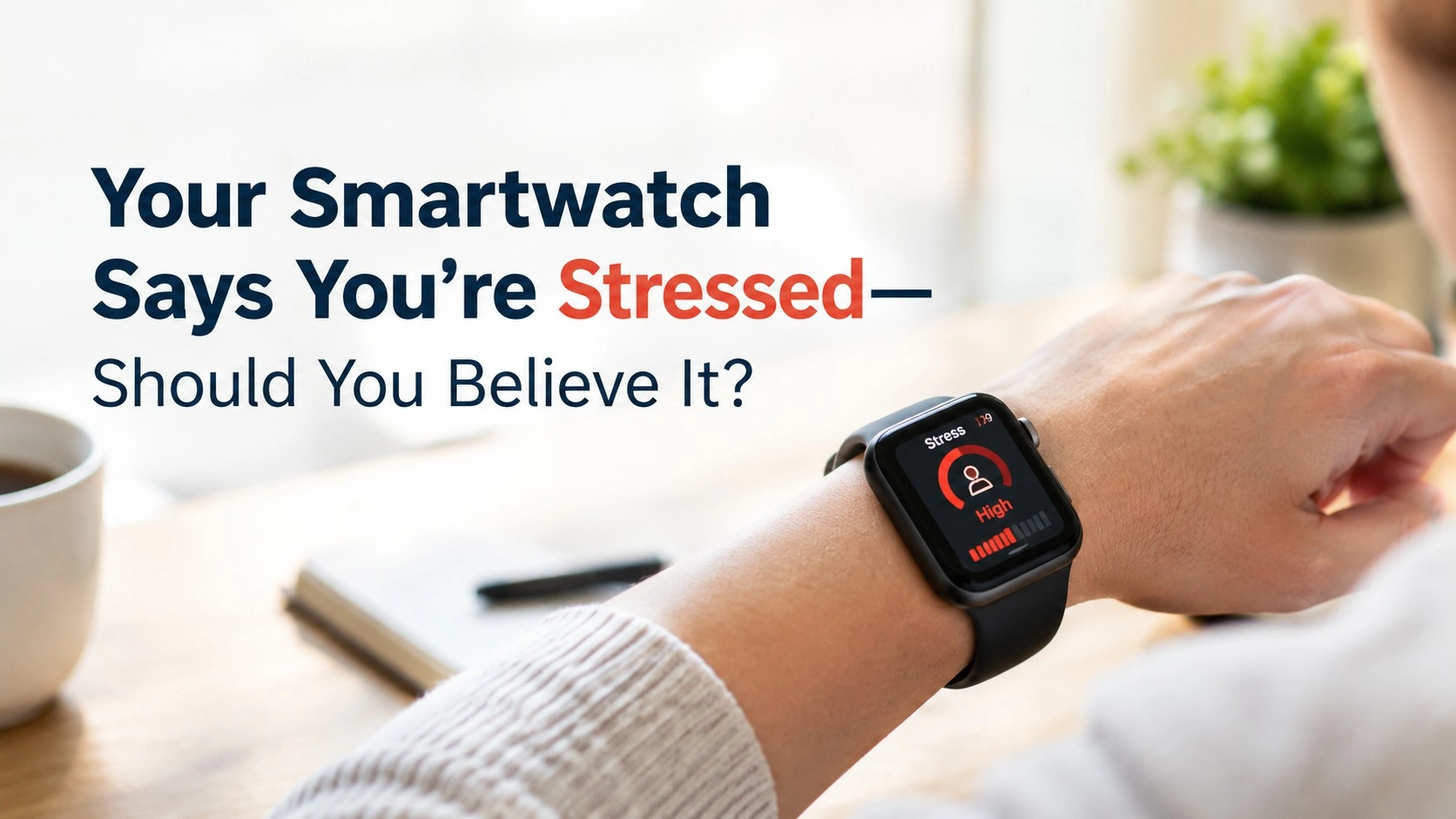
You glance at your wrist during a busy afternoon and see a notification: “High stress.”
But you don't feel particularly stressed. You are simply walking to a meeting, exercising, drinking coffee, or rushing to finish a task.
So, should you believe your smartwatch?
The short answer is: take the reading seriously as a signal, but don't treat it as a diagnosis.
Modern smartwatches and fitness trackers can measure physiological signals associated with the body's stress response, including heart rate and, on some devices, heart rate variability (HRV), movement, breathing patterns and skin-related signals. Researchers have also studied wearable sensors that measure electrodermal activity (EDA), which reflects changes in skin conductance associated with autonomic nervous-system activity.
However, physiological arousal is not the same thing as psychological stress. Exercise, excitement, caffeine, poor sleep, illness and even movement can change the same signals that a wearable may interpret as stress.
That is why your smartwatch can provide useful information about your body's state—but it cannot automatically know what you are thinking or feeling.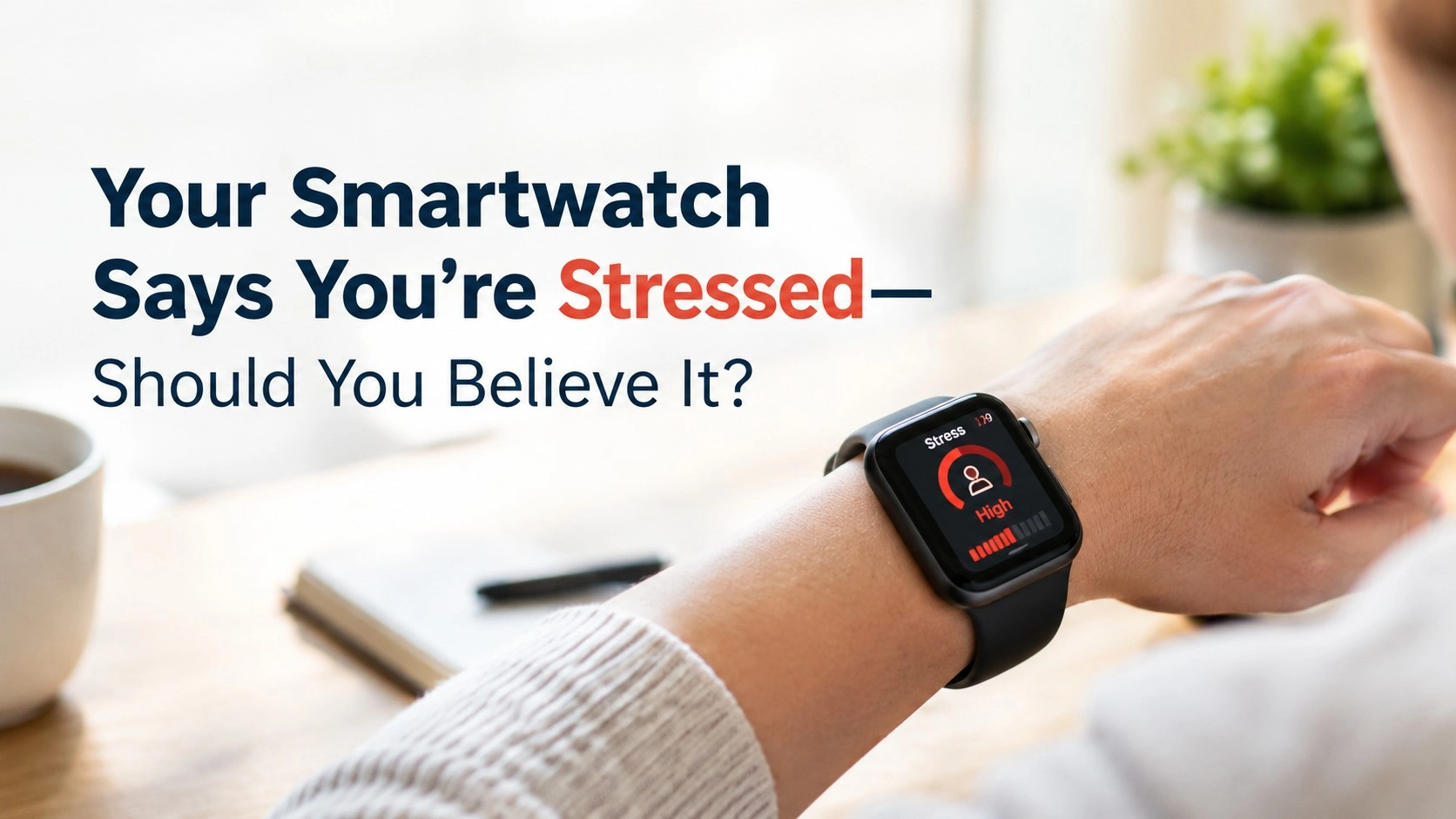
How Does a Smartwatch Know You're Stressed?
To understand smartwatch stress detection, it helps to understand what the device is actually measuring.
Your smartwatch generally does not directly measure “stress.” Instead, its sensors collect physiological data and an algorithm interprets patterns in that data.
One important measurement is heart rate variability, or HRV.
HRV refers to the variation in time between consecutive heartbeats. Contrary to what the name might suggest, a healthy heart does not beat at exactly the same interval every time. The timing naturally changes from beat to beat.
HRV is influenced by the autonomic nervous system, which helps regulate functions such as heart rate, breathing and the body's response to challenges.
Research has found HRV to be one of the important physiological signals investigated for stress detection. A systematic review of smart devices found that studies assessing stress and anxiety frequently used HRV, while noting that average heart rate alone is less informative for stress detection than measures such as HRV and electrodermal activity.
Some wearable systems also use other physiological signals. These can include:
Heart rate
Heart-rate variability
Electrodermal activity or skin conductance
Respiratory patterns
Movement and activity
Skin temperature
Blood-volume changes detected through optical sensors
The device then uses an algorithm to interpret these measurements and generate a stress score, stress notification or similar indicator.
In other words, your smartwatch isn't reading your mind. It is making an estimate based on your body's measurable signals.
Design Your Destiny
Your smartwatch can tell you when your body may be under strain—but lasting wellbeing requires more than numbers on a screen. Design Your Destiny is about understanding yourself, building greater awareness and creating healthier ways to respond to life's challenges.
Start Your Journey Today!What Does a Stress Score on a Smartwatch Mean?
A smartwatch stress score should generally be understood as an algorithmic estimate of physiological stress or arousal, not a direct measurement of your emotional state.
For example, suppose your heart rate rises while you are walking quickly. Your body is experiencing increased physiological activation—but that doesn't necessarily mean you're psychologically stressed.
The same thing can happen when you:
Exercise
Climb stairs
Drink caffeine
Become excited
Experience pain
Feel anxious
Have an emotionally intense conversation
Sleep poorly
Become physically unwell
Your body can respond to many different situations using overlapping physiological pathways.
This is one of the biggest limitations of smartwatch stress detection.
A recent 2026 study specifically examined the problem of distinguishing stress from exercise-related physiological arousal. In its analysis, a wearable stress model frequently classified exercise periods as stress, illustrating why physiological activation does not always equal psychological stress.
So if your watch says “high stress” immediately after a workout, it does not necessarily mean you are emotionally overwhelmed.
Are Smartwatch Stress Scores Reliable?
This is where the answer becomes more nuanced.
Smartwatch stress detection is promising, but its accuracy depends on the device, sensors, algorithm, measurement conditions and individual circumstances.
Research has shown that wearable devices can capture physiological signals relevant to stress. However, researchers have also identified significant challenges in translating those signals into reliable real-world stress detection. A review of wearable health technologies concluded that consumer wearables were not yet consistently able to determine when a person was experiencing a genuine stress response in everyday conditions.
Another systematic review found that HRV measurements from portable devices can show relatively small differences compared with ECG measurements, although the amount of error varies depending on the measurement method and conditions.
Even HRV measurement can become less reliable during movement. Research comparing a wrist-worn research sensor with gold-standard measurements found that HRV accuracy was satisfactory in some resting conditions but decreased during dynamic conditions such as speaking, with wrist movement also affecting accuracy.
This means a smartwatch can be useful for tracking patterns over time, but an individual stress reading should not automatically be treated as an objective statement about your mental health.
Can a Smartwatch Confuse Physical Activity With Stress?
Yes—and this is one of the most important things to remember.
Imagine that you are running for 20 minutes.
Your heart rate rises. Your breathing changes. Your body becomes more activated. Your nervous system responds to physical exertion.
A smartwatch observing those signals may detect physiological arousal.
But are you stressed?
Not necessarily.
You may actually feel energetic, happy and relaxed.
This is why context matters.
The same physiological change can have different explanations.
For example:
High heart rate during exercise:
Likely reflects physical exertion.
High heart rate before an important presentation:
Could reflect nervousness, anticipation or stress.
High heart rate after several cups of coffee:
Could partly reflect caffeine's physiological effects.
Changes in HRV during poor sleep:
Could be associated with recovery, sleep disruption or other physiological factors.
The device sees the signals. You provide the context.
Why Do I Feel Sad All the Time? Causes and When to Seek Help
HRV and Stress: Why Does It Matter?
The relationship between HRV and stress is one of the reasons wearable stress monitoring has attracted so much attention.
HRV provides information about changes in beat-to-beat timing and is influenced by autonomic nervous-system activity. Researchers have repeatedly investigated HRV as a marker associated with stress and emotional states.
However, HRV should not be interpreted as a simple “stress meter.”
A single HRV reading can be influenced by multiple factors, including:
Sleep
Physical activity
Recovery
Breathing
Age
Fitness
Alcohol and caffeine
Illness
Measurement timing
Body position
Sensor quality
Therefore, a lower HRV does not automatically mean “I am psychologically stressed.”
Instead of becoming concerned about one unusual number, it can be more useful to observe your personal trends under similar conditions.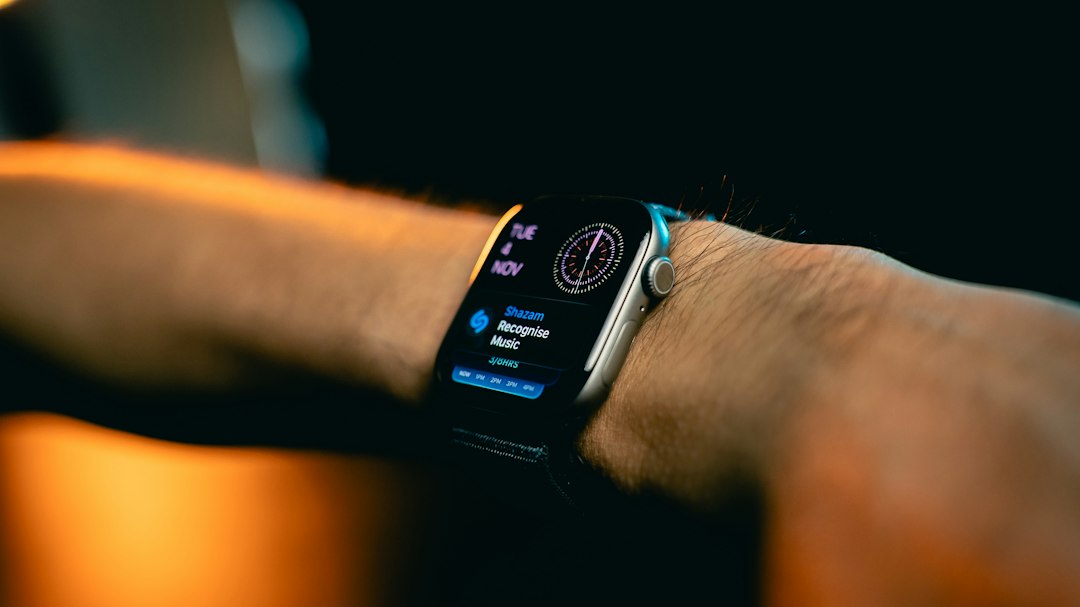
Can Smartwatches Detect Mental Stress?
This is a particularly important distinction.
A smartwatch can potentially detect physiological patterns associated with stress, but that does not mean it can directly diagnose psychological stress, anxiety or another mental-health condition.
Research into wearable technology for stress and anxiety detection is growing rapidly. A recent systematic review of wearable devices for anxiety found that approaches combining multiple physiological signals generally performed better than relying on a single signal, although the studies varied considerably and larger, standardized research is still needed.
This tells us something important:
More data does not automatically mean more certainty.
A device that combines heart activity, movement, breathing and other signals may potentially make a better estimate than one relying on a single measurement. But even sophisticated algorithms need appropriate validation in real-world populations.
Your smartwatch therefore shouldn't be used as a standalone tool to diagnose anxiety, chronic stress or any mental-health disorder.
Why Your Smartwatch May Say You're Stressed When You Feel Fine
If your watch repeatedly reports stress while you feel completely normal, don't immediately assume that either you or the watch is “wrong.”
There may be several explanations.
1. Physical activity
Movement can increase heart rate and alter other physiological measurements.
2. Caffeine
Coffee, energy drinks and other sources of caffeine can influence physiological arousal.
3. Poor sleep
Sleep disruption can affect recovery-related measurements and autonomic activity.
4. Excitement
Positive emotions can also activate the body's physiological systems.
5. Measurement limitations
Wrist-based sensors can be affected by movement, positioning and other conditions.
6. Individual differences
Two people can respond differently to the same situation.
7. Algorithm limitations
A commercial device's stress algorithm is an estimation system. It may not generalize perfectly to every person or every situation.
How to Control Nervousness in Any Situation
How to Use Your Smartwatch Stress Score Wisely
Instead of asking, “Is my smartwatch right or wrong?”, ask a more useful question:
“What pattern is my smartwatch showing me?”
Look at your data over days or weeks rather than becoming overly focused on one reading.
You might notice that your stress score tends to rise:
After several nights of poor sleep
During particularly demanding workdays
After intense exercise
When your routine changes
At certain times of the day
That information can encourage you to pay attention to your habits.
For example, if your smartwatch repeatedly shows unusual physiological patterns alongside poor sleep and you also feel exhausted or overwhelmed, that may be a reason to slow down and reflect on your wellbeing.
But the wearable should be a tool for awareness—not the authority on how you feel.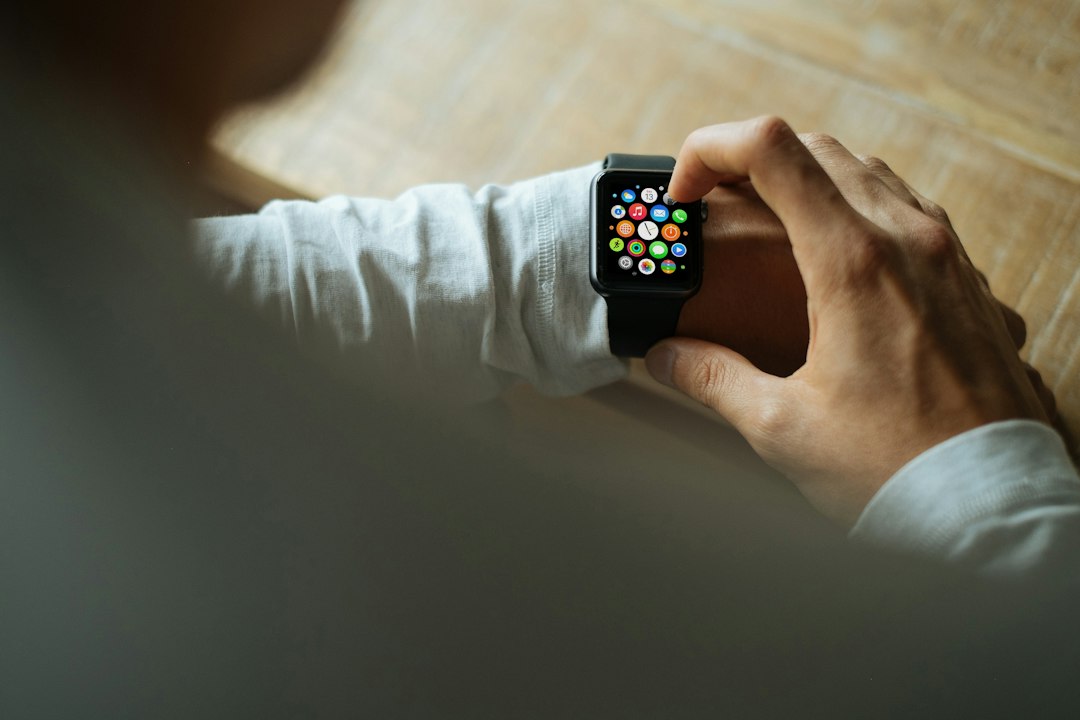
So, Should You Believe Your Smartwatch?
Think of your smartwatch as a smoke alarm, not a fire investigator.
It may notice something has changed in your body's physiological signals. That's useful.
But it cannot always tell you why the change happened.
The strongest approach is to combine wearable data with your own experience.
Ask yourself:
How do I feel?
How have I been sleeping?
Have I exercised recently?
Have I consumed more caffeine than usual?
Am I dealing with something emotionally demanding?
Is this a one-time reading or a recurring pattern?
This context can make the data much more meaningful.
Can smartwatches really detect stress?
They can detect physiological signals that are associated with stress and use algorithms to estimate stress or physiological arousal. Research supports the potential of wearable technology, particularly when multiple physiological signals are combined.
But smartwatch stress detection is not a perfect measure of your emotional state.
A high stress score does not automatically mean you are psychologically stressed, and a low score does not guarantee that you are mentally well.
Use your smartwatch as one piece of information—not the complete picture.
Your body gives signals.
Your smartwatch records some of them.
But you are still the person who provides the meaning.
Personal Session
If you feel overwhelmed, emotionally drained or simply want a deeper understanding of your thoughts, emotions and life patterns, a personal session can help you look beyond the numbers. A smartwatch can track signals from your body. A personal session gives you space to understand the person behind those signals.
Book Now
Read Latest Articles
How to Stop Overthinking and Anxiety: 12 Practical Ways to Calm Your Mind
Importance of Ekadashi Vrat: Meaning, Significance and Benefits
How to Stay Happy Even When Life Is Difficult
Frequently Asked Questions
Can smartwatches really detect stress?
Smartwatches cannot directly measure psychological stress, but they can detect physiological signals associated with stress, such as heart rate and heart-rate variability (HRV). Some devices also use movement and other sensor data. Their stress scores are algorithmic estimates and can be affected by exercise, caffeine, sleep, movement and individual differences, so they should be viewed as indicators rather than medical diagnoses.How does a smartwatch know you're stressed?
A smartwatch typically analyzes physiological signals such as heart rate, HRV, movement and, depending on the device, other measurements. Algorithms use these patterns to estimate physiological stress or arousal.Are smartwatch stress scores reliable?
They can be useful for identifying patterns, but they aren't perfectly reliable. Accuracy varies by device, algorithm and measurement conditions. Research has identified limitations particularly during movement and real-world situations.What does a high stress score on a smartwatch mean?
It generally means that the device has detected physiological patterns it associates with increased stress or arousal. It does not necessarily mean you are emotionally stressed.Can a smartwatch confuse physical activity with stress?
Yes. Exercise can increase heart rate and other physiological signals that may resemble stress-related activation. Recent research highlights exercise as an important challenge for wearable stress-detection systems.Does low HRV always mean you are stressed?
No. HRV is influenced by many factors, including sleep, physical activity, recovery, breathing and individual characteristics. A single HRV measurement should not be interpreted as a diagnosis of stress.Can smartwatches detect mental stress?
They can estimate physiological patterns associated with stress, but they cannot directly measure your thoughts or emotions. Wearable technology is promising, but research continues to evaluate how reliably these systems work outside controlled settings.Should I worry if my smartwatch says I'm stressed?
Not necessarily. First consider what you were doing when the reading appeared. Exercise, caffeine, excitement and poor sleep can all affect physiological measurements. Look for recurring patterns rather than reacting to one isolated reading.Can wearable technology replace a mental-health professional?
No. A smartwatch can provide personal health information, but it cannot replace professional assessment or diagnose a mental-health condition.