Have you ever felt your heart racing before an important meeting, your hands shaking during a presentation, or your mind going blank when someone asks you an unexpected question? Nervousness is a common human response to situations that feel uncertain, challenging, or important.
Whether you are preparing for a job interview, speaking in public, taking an exam, meeting someone new, or handling a difficult conversation, nervousness can sometimes make it harder to think clearly and act confidently.
The good news is that learning how to control nervousness in any situation begins with understanding your body's response and practising simple techniques to manage it. You do not have to eliminate every uncomfortable feeling to perform well. Instead, you can learn to respond to nervousness without allowing it to control your decisions.
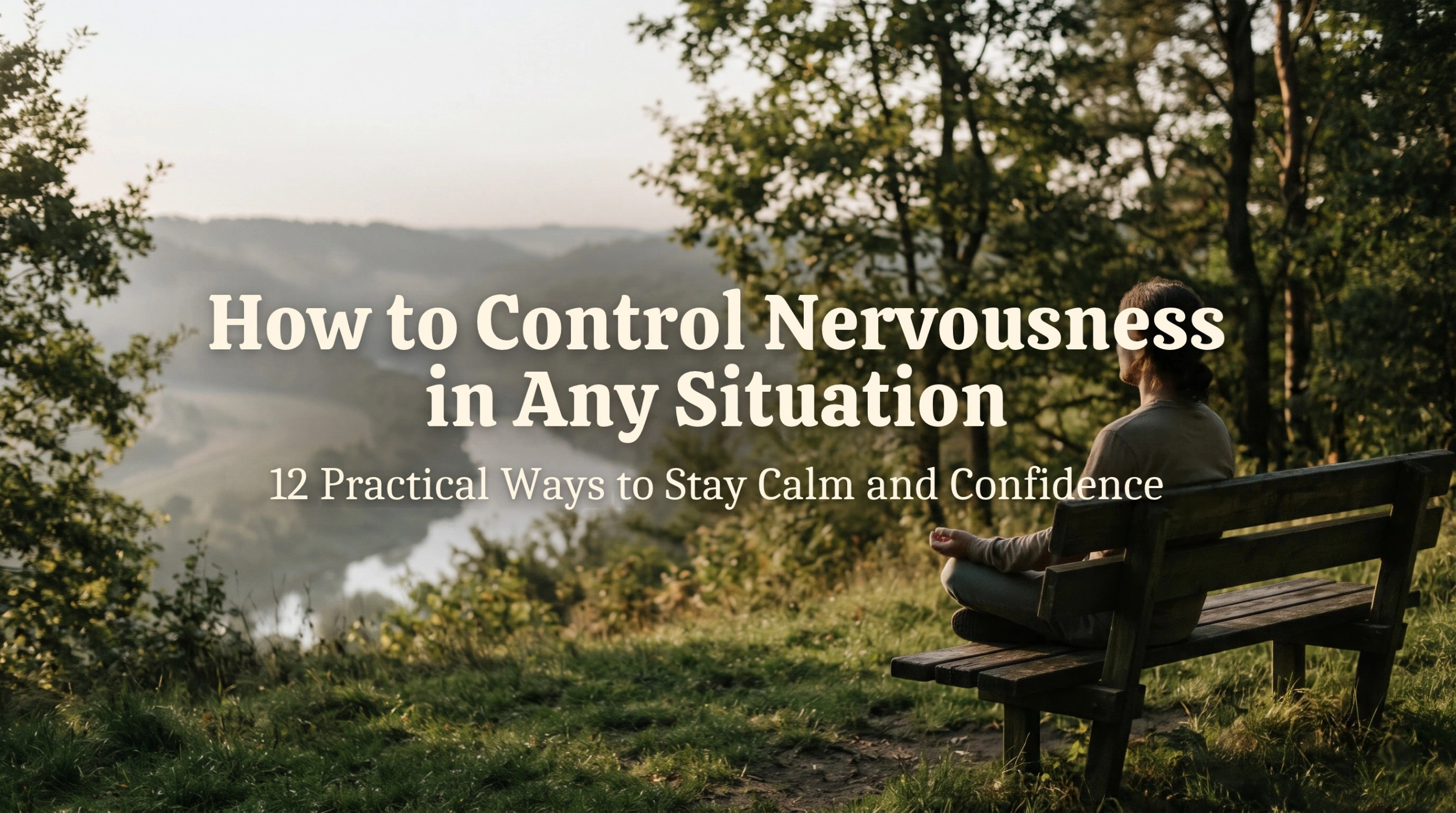
In this guide, you will discover 12 practical ways to calm your mind, manage physical symptoms, improve self-confidence, and handle stressful situations with greater clarity.
What Is Nervousness and Why Does It Happen?
Nervousness is a feeling of uneasiness, apprehension, or tension that often appears when you anticipate a challenge or an uncertain outcome. It can be triggered by public speaking, interviews, examinations, social interactions, important decisions, or fear of making mistakes.
When you feel nervous, your body's stress response may become activated. You might notice a faster heartbeat, sweaty palms, shallow breathing, muscle tension, restlessness, or difficulty concentrating.
These reactions are part of the body's natural response to perceived challenges. They do not necessarily mean that something is wrong.
Nervousness can sometimes help you prepare, stay alert, and focus on an important task. However, when it becomes overwhelming or happens frequently, it may interfere with everyday life.
Understanding what triggers your nervousness is the first step toward managing it more effectively.
12 Practical Ways to Control Nervousness in Any Situation
1. Practise Slow, Gentle Breathing
When you feel nervous, your breathing may become quick and shallow. This can make physical sensations of stress more noticeable.
Slow, comfortable breathing can help you settle your attention and regulate your body's response to stress.
Try this simple technique:
Sit or stand in a comfortable position.
Relax your shoulders and jaw.
Breathe in gently through your nose.
Breathe out slowly without forcing the air.
Repeat for one or two minutes, if comfortable.
You do not need to take unusually deep breaths or hold your breath. If you feel dizzy or uncomfortable, return to your normal breathing.
When to use it: Before an interview, presentation, exam, difficult conversation, or any situation that makes you feel tense.
Design Your Destiny
Build self-awareness. Strengthen your mindset. Move forward with intention. Explore Design Your Destiny for insights and practical guidance that encourage self-awareness, mindful choices, and personal growth. Start developing habits that help you respond to life's challenges with greater clarity and confidence.
Start Your Journey Today!2. Identify What Is Making You Nervous
Sometimes, nervousness feels like a general sense of fear without a clear explanation. Taking a moment to identify the trigger can help you decide what to do next.
Ask yourself:
What exactly am I worried about?
Am I afraid of making a mistake?
Am I concerned about how others will judge me?
Is there something specific I need to prepare for?
Am I imagining an outcome that has not happened?
For example, if you feel nervous before a presentation, the underlying concern may be forgetting your words or being judged by your audience.
Once you identify the concern, you can address it more directly by practising your presentation, preparing notes, or adjusting unrealistic expectations.
Recognising a fear does not automatically remove it, but it can make the situation feel more manageable.
3. Focus on the Present Moment
Nervousness often increases when your attention moves toward everything that could go wrong.
You may imagine making a mistake during an interview, embarrassing yourself during a conversation, or failing an exam before it has even begun.
Mindfulness can help you bring your attention back to what is happening right now.
Try noticing your feet touching the floor, the objects around you, or the sounds you can hear. Then return your attention to the task in front of you.
You can also use a simple grounding exercise by naming five things you see, four things you feel through touch, and three things you hear.
Remember: The goal is not to force every thought away. It is to stop treating every worrying thought as something that requires an immediate reaction.
4. Prepare for Situations That Make You Nervous
Preparation can reduce uncertainty and help you feel more capable of handling a challenging situation.
If you feel nervous before a job interview, research the role, practise common questions, and prepare examples of your experience. If public speaking makes you anxious, rehearse your main points and become familiar with your opening lines.
For an important conversation, write down what you want to communicate and the outcome you hope to achieve.
However, preparation does not mean trying to predict every possible problem. Excessive rehearsal and repeated checking can sometimes increase anxiety.
Focus on preparing for what you can reasonably control, then allow yourself to adapt to what happens.
5. Challenge Negative Self-Talk
The way you speak to yourself can influence how you respond to nervousness.
Thoughts such as “I will definitely fail,” “Everyone will laugh at me,” or “I am not capable of doing this” can intensify fear before anything has happened.
Instead of accepting these thoughts as facts, pause and examine them.
Ask yourself:
What evidence supports this thought?
Am I assuming the worst possible outcome?
Have I handled a similar situation before?
What would I say to a friend who felt this way?
You might replace “I will embarrass myself” with “I may feel nervous, but I can still communicate my ideas.”
The aim is not forced positivity. It is to develop a realistic and balanced way of thinking.
Kali Chaudas vs Naraka Chaturdashi : Are They the Same ?
6. Stop Trying to Eliminate Nervousness Completely
One common mistake is believing that you must feel completely calm before you can take action.
This expectation can create an additional layer of pressure. You may become nervous about being nervous, which makes every physical sensation feel like a problem.
Instead, remind yourself that nervousness and capability can exist together.
You can feel anxious and still give a presentation, attend an interview, speak honestly, or make a decision.
Try shifting your goal from “I must not feel nervous” to “I will do the next useful thing, even if I feel nervous.”
This approach helps you focus on what matters rather than constantly checking whether your anxiety has disappeared.
7. Build Confidence Through Small Steps
Confidence often develops through experience rather than waiting for fear to disappear.
If you avoid every situation that makes you nervous, you may miss opportunities to discover that you can handle discomfort.
Start with manageable steps and gradually work toward more challenging situations.
For example, if speaking in public makes you nervous, you could begin by sharing an opinion in a small group, then practise speaking to a larger audience.
If social interactions feel difficult, start with a short conversation rather than expecting yourself to feel comfortable in every social setting immediately.
Move at a pace that feels manageable. If fear is severe or connected to trauma, professional guidance can help you approach challenging situations safely.
8. Relax Your Body
Nervousness can cause physical tension in your shoulders, jaw, neck, hands, and stomach.
When you notice this tension, gently relax the affected muscles. Lower your shoulders, unclench your jaw, loosen your hands, and place both feet comfortably on the floor.
You can also try progressive muscle relaxation by gently tensing and then relaxing different muscle groups, provided it feels comfortable.
These small adjustments can help you become more aware of your physical response and may reduce the feeling of being physically overwhelmed.
Try this: Before entering a stressful situation, take a moment to check your posture, relax your shoulders, and release unnecessary muscle tension.
9. Reduce Excessive Caffeine and Protect Your Sleep
Lifestyle factors can influence how nervous you feel. Too much caffeine may cause a racing heartbeat, shakiness, or restlessness in some people, which can resemble or intensify nervousness.
Poor sleep can also make it harder to concentrate, manage emotions, and respond calmly to challenges.
Consider reducing caffeine if you notice that it makes you feel jittery. Avoid relying on it to compensate for inadequate sleep, and maintain a consistent bedtime whenever possible.
Most adults generally need around seven to nine hours of sleep, although individual needs vary.
These habits may not eliminate nervousness, but they can help reduce avoidable physical stress.
10. Use Positive Visualisation Realistically
Visualisation involves mentally rehearsing how you want to approach a situation.
Before an interview or presentation, imagine yourself entering the room, taking a steady breath, listening carefully, and responding thoughtfully.
Include the possibility of small difficulties, too. For example, imagine pausing to collect your thoughts if you forget a point.
This makes the exercise more realistic than picturing a flawless performance.
Visualisation works best as a complement to preparation and practice. It cannot guarantee a particular outcome, but it can help you clarify your approach and feel more familiar with the task.
11. Accept That You Cannot Control Every Outcome
Nervousness often becomes stronger when you try to control how everyone will react or guarantee that nothing will go wrong.
You can prepare carefully, communicate clearly, and make thoughtful decisions, but you cannot control every person's opinion or every unexpected event.
Separate what is within your control from what is not.
You may control your preparation, effort, behaviour, and response. You may not control another person's reaction, a difficult question, or an unexpected change.
Focusing on your own actions can reduce unnecessary mental pressure and help you respond more flexibly.
12. Seek Support When Nervousness Becomes Overwhelming
Occasional nervousness is common, but frequent or intense anxiety can sometimes affect work, relationships, sleep, education, and everyday activities.
If nervousness causes persistent avoidance, panic-like episodes, ongoing worry, or significant distress, consider speaking with a qualified mental health professional.
A psychologist, psychiatrist, counsellor, or primary care doctor can help assess your symptoms and discuss appropriate options. Depending on your needs, support may include psychological therapy, practical coping strategies, or medical treatment.
Seeking help does not mean you lack confidence. It means you are taking your well-being seriously.
How to Control Nervousness Quickly in the Moment
When nervousness suddenly appears, use this simple sequence:
Pause: Give yourself a few seconds before reacting.
Breathe: Take a gentle, unforced breath and allow your exhalation to be comfortable and slow.
Ground yourself: Notice your feet on the floor and the surroundings.
Name the concern: Identify the specific thing you are worried about.
Choose one action: Ask a question, begin your first sentence, read the next line, or take the next manageable step.
You do not need to feel perfectly calm before continuing.
For example, if your mind goes blank during a presentation, pause, look at your notes, and return to your main point. If you feel nervous during an interview, take a moment to organise your thoughts before answering.
A short pause is often more helpful than rushing because you feel uncomfortable.
Why Is Kheer Kept Under Moonlight on Sharad Purnima
When Should You Seek Professional Help?
Consider seeking professional support if nervousness or anxiety:
Occurs frequently and feels difficult to manage.
Leads you to avoid important activities or responsibilities.
Interferes with sleep, concentration, work, education, or relationships.
Causes repeated panic-like episodes or intense physical distress.
Persists despite your efforts to manage it.
Is accompanied by persistent sadness or other concerning symptoms.
You do not need to wait until nervousness becomes severe before asking for help. A professional can help you understand your triggers and develop strategies suited to your circumstances.
If you experience new, severe, or concerning physical symptoms, seek medical advice rather than assuming they are caused by nervousness.
Final Thoughts
Learning how to control nervousness in any situation is not about becoming fearless. It is about understanding your reactions, preparing for challenges, and learning how to act even when you feel uncomfortable.
Slow breathing, grounding, realistic self-talk, preparation, healthy routines, and gradual practice can help you approach stressful moments with greater confidence. Not every technique works equally well for everyone, so experiment with what feels helpful and give yourself time to practise.
Most importantly, do not judge yourself for feeling nervous. You can be nervous and still be capable, prepared, and confident enough to take the next step.
Personal Session
Understand your challenges and explore your next steps. If you would like personalised guidance around self-awareness, confidence, or personal growth, consider booking a personal session. Reflective guidance can complement your development journey. If nervousness is persistent or significantly affects daily life, a qualified mental health professional can help assess your needs and discuss suitable support.
Book NowRead Latest Articles
What Is My Purpose in Life?How to Discover Your True Calling
Bhai Dooj Date: Tilak Muhurat, Puja Time & Complete Vidhi
Frequently Asked Questions
Q. How can I control nervousness in any situation?
To control nervousness, practise slow and comfortable breathing, focus on the present moment, identify what is worrying you, and prepare for situations that feel challenging. Challenge negative self-talk and take one manageable action at a time. If nervousness frequently interferes with everyday life, consider speaking with a qualified mental health professional.Q.Why do I get nervous in every situation?
Nervousness may be related to uncertainty, fear of judgment, past experiences, stress, or a tendency to anticipate negative outcomes. If it occurs frequently or interferes with daily life, a qualified professional can help you understand possible triggers and suitable ways to manage it.Q.How can I calm my nerves in 30 seconds?
Pause, relax your shoulders, feel your feet on the floor, and take a gentle, comfortable breath. Identify the next small action you need to take. This may help you regain focus, although nervousness may not disappear completely in 30 seconds.Q.How can I stop feeling nervous before an interview?
Research the role, practise common questions, and prepare examples of your skills and experience. Before the interview, breathe comfortably, remind yourself that you do not need perfect answers, and focus on communicating clearly rather than trying to control the interviewer's reaction.Q.Does nervousness mean I lack confidence?
No. Nervousness is a normal response to uncertainty or important situations and does not automatically indicate low confidence. Even experienced people can feel nervous. Confidence often involves learning to handle discomfort while continuing to take meaningful action.Q.Can breathing exercises reduce nervousness?
Slow, comfortable breathing may help some people manage physical tension and stress. Practise gently rather than forcing deep breaths. If a breathing exercise makes you uncomfortable or dizzy, return to normal breathing.Q.How can I control nervousness while speaking in public?
Prepare your key points, practise aloud, and become familiar with your opening lines. During the presentation, slow down, pause when necessary, and focus on communicating your message instead of monitoring every reaction from the audience.