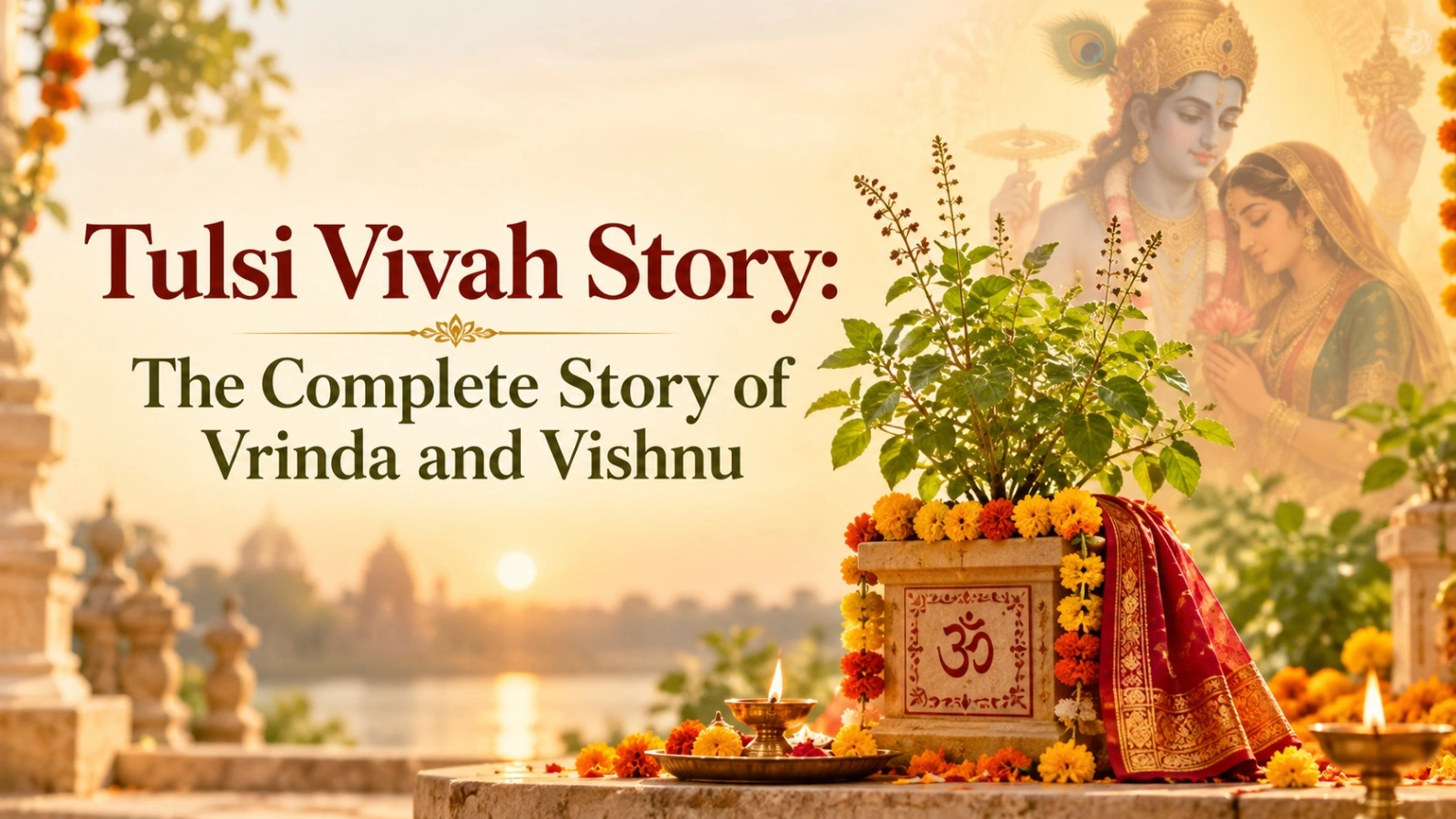
The Tulsi plant holds a special place in Hindu homes, temples, and spiritual traditions across India. Known as holy basil in English, Tulsi is much more than an ordinary garden plant. It represents devotion, purity, faith, and the deep connection between human life and nature.
For generations, Hindu families have grown Tulsi in courtyards, balconies, and near entrances, often offering water and prayers to the plant every morning. Its leaves are especially important in the worship of Lord Vishnu and Lord Krishna, while the annual festival of Tulsi Vivah celebrates the sacred marriage of Tulsi with Lord Vishnu or Krishna in many traditions.
But what makes Tulsi so sacred? Why do people worship it, and what stories explain its importance in Hindu culture?
In this guide, we explore the Tulsi plant religious significance, its mythological origins, daily worship rituals, festival traditions, and botanical importance.
What Is the Religious Significance of the Tulsi Plant?
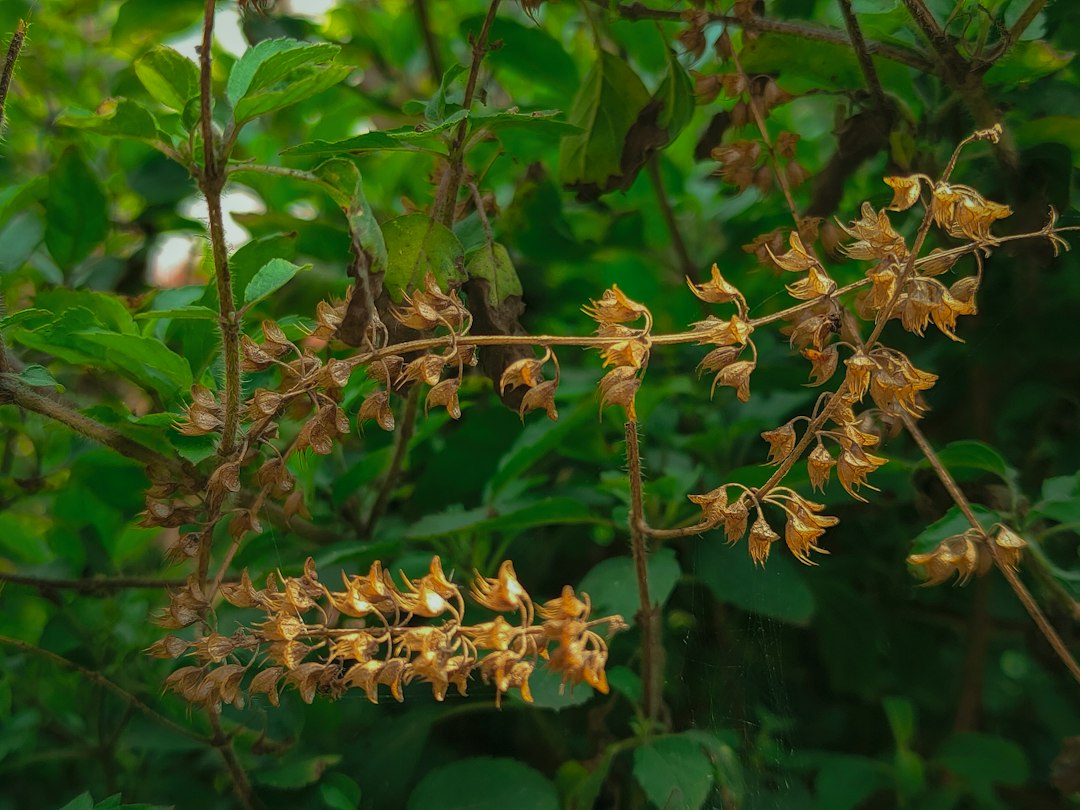
Tulsi, scientifically known as Ocimum tenuiflorum and also called Ocimum sanctum in botanical literature, is one of the most revered plants in Hinduism. It is commonly known as holy basil or sacred basil.
In many Hindu traditions, Tulsi is personified as a goddess and associated with Vrinda, a devoted figure in Hindu mythology. She is also closely connected with Goddess Lakshmi and Lord Vishnu, although the details vary across religious texts and regional traditions.
The plant symbolizes several important spiritual values:
Purity: Tulsi represents spiritual cleanliness and a sacred presence in the home.
Devotion: Its association with Vishnu and Krishna reflects sincere worship and dedication.
Auspiciousness: Many families consider a Tulsi plant a blessing and an important part of household religious life.
Harmony with nature: Caring for a living plant encourages respect for the natural world.
Daily mindfulness: Watering and worshipping Tulsi can become a meaningful routine of prayer and reflection.
Tulsi's religious role is particularly prominent in Vaishnava traditions, which emphasize devotion to Lord Vishnu and his avatars, including Krishna and Rama.
Design Your Destiny
Discover how meaningful traditions, self-reflection, and intentional daily habits can inspire a more purposeful life. Take the next step toward understanding your goals and creating a future aligned with your values.
Start Your Journey Today!Why Is Tulsi Worshipped in Hinduism?
Tulsi worship is rooted in mythology, devotional practices, and generations of household tradition. For many Hindus, the plant provides a tangible focus for expressing faith in everyday life.
Unlike worship that takes place only during major festivals, Tulsi worship is often performed at home as part of a regular routine. Families may offer water, flowers, incense, or a small oil lamp while reciting prayers.
Tulsi leaves are also offered to Lord Vishnu and Lord Krishna because they hold special religious importance in these devotional traditions. In some Vaishnava practices, Tulsi leaves are placed on food offerings, known as prasad, before they are presented to the deity.
The significance of Tulsi extends beyond the ritual itself. Its presence reminds devotees to practice gratitude, discipline, respect, and devotion in daily life.
For many families, the tradition is also a link between generations. Parents and grandparents teach children how to care for the plant and explain the stories and beliefs associated with it.
The Story of Tulsi and Vrinda in Hindu Mythology
One of the best-known explanations of Tulsi's sacred status comes from Hindu mythological traditions involving Vrinda.
Versions of the story appear in different religious narratives, so the details are not identical everywhere. A commonly told version describes Vrinda as a woman whose devotion and spiritual dedication were extraordinary.
In this narrative, Vrinda is married to Jalandhara, a powerful figure whose strength is connected with her devotion and virtue. During the conflict between Jalandhara and the gods, Lord Vishnu becomes involved in a complex sequence of events that ultimately leads to Jalandhara's defeat.
When Vrinda discovers what has happened, she is overcome with grief and feels that her trust has been violated. The story concludes with her transformation into the Tulsi plant or with Tulsi emerging from her sacred legacy, depending on the version being told.
Lord Vishnu then grants Tulsi a special place in worship, and her leaves become closely associated with offerings to him.
The story is significant because it connects Tulsi with devotion, sacrifice, divine promises, and the relationship between the devotee and the divine.
It is best understood as a religious narrative whose details vary across traditions rather than as a single historical account.
Connection Between Tulsi, Goddess Lakshmi and Lord Vishnu
Tulsi has a particularly close relationship with Lord Vishnu in Hindu worship. In many traditions, she is associated with Goddess Lakshmi, the goddess of prosperity, abundance, and auspiciousness.
This connection explains why Tulsi is often worshipped in homes where devotees pray for spiritual well-being, peace, and prosperity.
Lord Vishnu represents the preservation and maintenance of cosmic order in Hindu theology. Tulsi's association with him reflects the importance of devotion and the sacred relationship between nature and divinity.
For devotees of Krishna, Tulsi leaves are also significant in daily worship and the presentation of food offerings. Many Vaishnava communities regard Tulsi as an essential part of their devotional practice.
These beliefs have helped establish the Tulsi plant as a familiar and meaningful feature of Hindu religious life.
Spiritual Significance of Rivers in Hinduism: Sacred Meaning, Traditions and Wisdom
Importance of the Tulsi Plant in Indian Homes
The Tulsi plant is traditionally grown in many Indian households, where it can serve both religious and cultural purposes.
In older homes, Tulsi was often placed in a central courtyard or on a raised platform known as a Tulsi Vrindavan. In modern homes and apartments, families may grow it in a pot on a balcony, terrace, or near a sunny window.
Its presence can reflect several aspects of household life.
1. A Daily Center for Prayer
Many families begin the day by watering Tulsi and offering a short prayer. Some also light a diya in the morning or evening, depending on their customs.
This regular practice gives worship a place in ordinary life rather than limiting it to special occasions.
2. A Symbol of Purity and Auspiciousness
Tulsi is commonly associated with a sacred and welcoming home. Devotees may view caring for the plant as an expression of respect for the divine.
Beliefs about its spiritual influence vary among households and communities.
3. A Tradition Passed Between Generations
Tulsi worship often forms part of family heritage. Stories about the plant, traditional prayers, and the rituals associated with festivals may be passed from grandparents to children.
These practices help preserve cultural identity and family connections.
4. A Reminder to Care for Nature
Growing Tulsi encourages people to care for a living plant and understand its needs. This everyday responsibility can reinforce the cultural idea that nature deserves respect.
Although religious beliefs and scientific explanations are different, both can encourage people to appreciate plants and their place in the environment.
Daily Tulsi Worship: Common Rituals and Practices
Tulsi worship varies by region, family tradition, and religious community. There is no single routine followed by every Hindu household.
Common practices include the following:
Offering water: Many devotees water Tulsi in the morning as an act of care and reverence.
Praying near the plant: Some families recite mantras, offer flowers, or spend a few moments in prayer.
Lighting a diya: An oil lamp may be lit near Tulsi, particularly in evening worship or during religious festivals. It should be placed safely away from dry leaves and other flammable materials.
Offering Tulsi leaves to deities: The leaves are important in many forms of Vishnu and Krishna worship and may be placed on prasad according to the family's tradition.
Keeping the plant healthy: Providing suitable sunlight, water, and growing conditions allows the plant to thrive and supports the tradition of caring for it.
These practices are expressions of faith rather than requirements that every household must follow in exactly the same way.
Tulsi Vivah: The Sacred Marriage Festival
Tulsi Vivah is one of the most important celebrations associated with the plant.
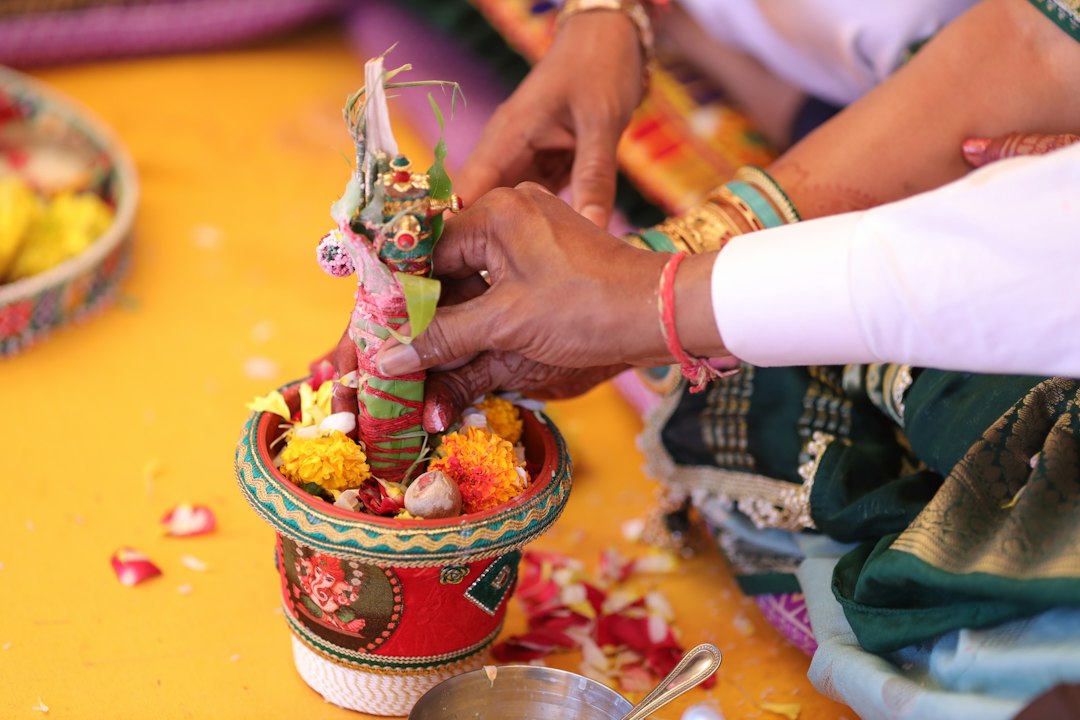
The festival symbolically celebrates the marriage of Tulsi, often understood as Vrinda or a sacred manifestation of the goddess, with Lord Vishnu or Krishna. It is widely observed in parts of India and is particularly meaningful in many Vaishnava households.
Tulsi Vivah generally takes place during the Hindu month of Kartika, often on the Dwadashi or another locally observed date following the regional calendar and tradition. The exact observance varies.
During the ceremony, families may decorate the Tulsi plant or its platform with flowers, colourful fabrics, lights, and other festive items. Prayers are offered, and the ceremony may be performed in a manner resembling a traditional Hindu wedding.
The festival carries several meanings:
It celebrates the sacred relationship between Tulsi and Lord Vishnu.
It renews household devotional traditions.
It brings families and communities together in prayer.
In many regions, it marks a traditional transition into the Hindu wedding season.
Tulsi Vivah demonstrates how a plant can become a central symbol in religious storytelling, seasonal celebrations, and community life.
Tulsi Leaves in Hindu Religious Ceremonies
Tulsi leaves are widely used in religious practices, particularly in worship associated with Vishnu and Krishna.
They may be offered during puja, placed on prasad, or used in ceremonies according to local custom. The significance of the leaves comes from the plant's sacred association and the devotion expressed through the offering.
Tulsi is also connected with japa malas, or prayer beads, made from its wood. Some devotees use Tulsi malas while chanting mantras or repeating the names of a deity.
In these practices, the plant is not merely a decorative object. It becomes part of a broader system of devotional symbols that help practitioners focus their attention and express their faith.
Specific rules about collecting leaves, the days on which they may be picked, and the way they are offered differ among traditions. Families generally follow the guidance they have inherited or received from their religious teachers.
Rama Tulsi and Krishna Tulsi: Are They Different?
Two commonly recognised forms of Tulsi are Rama Tulsi and Krishna Tulsi, sometimes called Shyama Tulsi.
Rama Tulsi generally has green leaves, while Krishna Tulsi often has darker green or purplish leaves. Both are valued in traditional Indian culture and are used for religious and household purposes.
Feature | Rama Tulsi | Krishna Tulsi |
|---|---|---|
Typical leaf colour | Green | Dark green or purplish |
Cultural importance | Sacred in Hindu traditions | Sacred in Hindu traditions |
Household use | Worship and gardening | Worship and gardening |
Botanical note | A commonly recognised Tulsi type | A commonly recognised Tulsi type |
Names and plant characteristics can vary by region and cultivar. Both types are associated with Tulsi's religious importance, and families may choose either for their home worship.
Tulsi Plant Religious Significance and Plant Science
Tulsi's cultural importance also intersects with its botanical properties.
The plant belongs to the mint family, Lamiaceae, and contains aromatic compounds, including eugenol. It has a long history of use in Ayurveda and other traditional practices.
Scientific studies have investigated Tulsi's chemical constituents and potential biological activities, including antioxidant and antimicrobial effects. However, laboratory findings do not automatically establish that a plant or its extracts will prevent or treat a particular illness in humans.
It is useful to distinguish three aspects of Tulsi's importance:
Religious significance: Its sacred status comes from Hindu beliefs, devotional narratives, and customary worship.
Traditional medicinal use: Ayurveda has used Tulsi in a variety of traditional preparations over many generations.
Scientific research: Researchers study its chemical composition and potential effects using laboratory and clinical methods. The strength of evidence varies by use.
The fact that Tulsi is sacred does not itself prove a medical claim. Likewise, scientific research into its properties does not diminish its religious importance.
For households that grow Tulsi, the plant can represent faith, cultural continuity, gardening, and an appreciation of nature at the same time.
Ahoi Ashtami 2026: Date, Puja Muhurat, Vrat Vidhi and Significance
How to Care for a Tulsi Plant at Home
Caring for Tulsi is a practical way to continue the household tradition while supporting the plant's growth.
Choose a suitable location: Tulsi generally grows well with several hours of sunlight and good air circulation.
Use well-draining soil: Waterlogged soil can damage the roots.
Water according to conditions: Check the soil before watering and adjust for heat, rainfall, and pot size.
Remove dead leaves: Occasional maintenance helps keep the plant healthy.
Use a pot with drainage holes: This is especially important when growing Tulsi on a balcony or terrace.
Growing conditions vary with climate and season, so the plant should be cared for according to its actual needs rather than a rigid religious schedule.
There is no need to feel guilty if a plant becomes unhealthy or dies. Plants are living organisms affected by weather, pests, soil, and other environmental factors. Replanting and caring for a new one can be a simple way to continue the tradition.
The Tulsi plant religious significance comes from a rich combination of Hindu mythology, devotion to Lord Vishnu and Lord Krishna, household worship, and cultural traditions such as Tulsi Vivah.
For many families, Tulsi represents purity, faith, auspiciousness, and the enduring relationship between people and nature. Its presence in homes keeps religious practices connected to daily life, while its history in Ayurveda adds another dimension to its cultural value.
Whether it grows in a traditional courtyard or a small apartment balcony, Tulsi continues to be a meaningful symbol of India's living spiritual heritage.
Understanding its significance means appreciating both the beliefs that make it sacred and the botanical qualities that make it a remarkable plant.
Personal Session
Looking for more personalised guidance on your goals, values, or spiritual journey? A personal session offers an opportunity to discuss your questions, reflect on your priorities, and explore practical next steps tailored to your needs. Take time for your personal growth.
Book NowRead Latest Articles
Vaikunth Chaturdashi: Why Are Vishnu & Shiva Worshipped Together?
Bhai Dooj Date: Tilak Muhurat, Puja Time & Complete Vidhi
Frequently Asked Questions
Why is the Tulsi plant considered sacred in Hinduism?
Tulsi is considered sacred because Hindu traditions associate it with Vrinda, Goddess Lakshmi, and Lord Vishnu. Its leaves are important in Vishnu and Krishna worship, and many families offer prayers to Tulsi at home. The plant represents devotion, purity, and auspiciousness, making it an important part of household religious practicesWhich Hindu god is associated with Tulsi?
Tulsi is most closely associated with Lord Vishnu and Lord Krishna. In many traditions, the plant is also connected with Goddess Lakshmi and the mythological figure Vrinda. Tulsi leaves are commonly used in offerings to Vishnu and Krishna.What is the story behind Tulsi Vivah?
Tulsi Vivah celebrates the symbolic marriage of Tulsi, associated with Vrinda, to Lord Vishnu or Krishna. The festival is observed during Kartika according to regional calendars and traditions. It represents devotion and is traditionally connected with the beginning of the Hindu wedding season in many parts of India.What is the scientific name of Tulsi?
The scientific name commonly used for Tulsi is Ocimum tenuiflorum. Ocimum sanctum is another name found in botanical and medicinal literature. Tulsi belongs to the Lamiaceae family, which also includes mint and other aromatic herbs.Why do Hindus grow Tulsi plants at home?
Many Hindus grow Tulsi at home because it is considered sacred and associated with devotion, purity, and auspiciousness. The plant provides a focus for daily prayers and religious observances. It is also an aromatic herb that people cultivate for gardening and traditional uses.Does science prove that Tulsi brings prosperity or removes negative energy?
Claims about prosperity and spiritual protection belong to religious and cultural belief systems and cannot be established through botanical research alone. Science investigates measurable properties of the plant, while its spiritual meaning depends on individual faith and tradition.