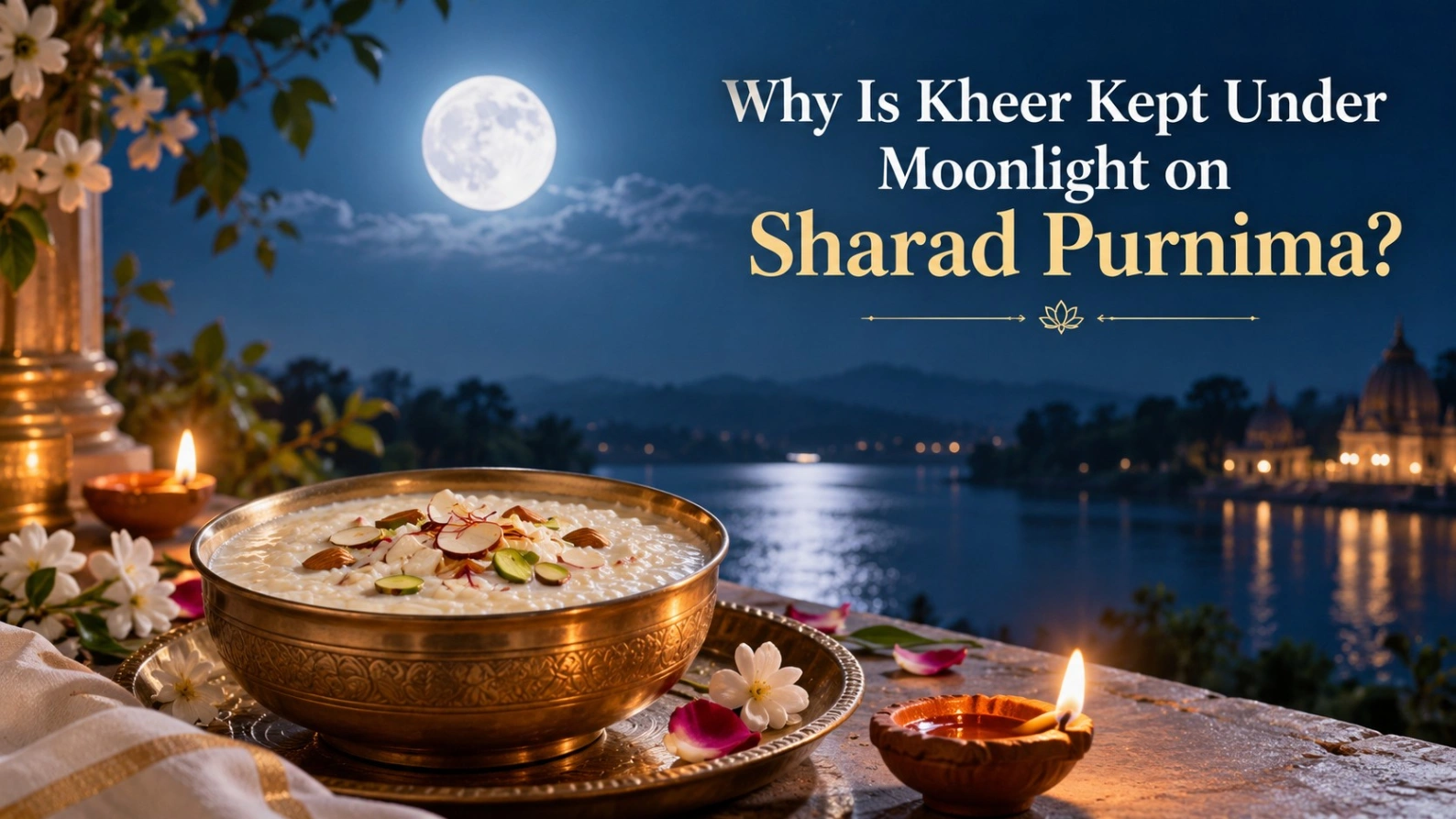
Sharad Purnima is one of the most spiritually significant full moon nights in the Hindu calendar. In 2026, Sharad Purnima falls on Sunday, October 25, with Purnima Tithi beginning at 11:55 AM on October 25 and ending at 9:41 AM on October 26. Current Panchang listings also note that this night is associated with Lord Krishna’s Maha Raas and a long-standing tradition of preparing rice kheer and leaving it under the moonlight overnight before consuming it as prasad the next morning.
One of the most searched questions about this festival is: Why is kheer kept under moonlight on Sharad Purnima?
The simple answer is that, according to Hindu religious belief, the moonlight of Sharad Purnima is especially auspicious. It is traditionally believed that the moon shines with all sixteen kalas on this night, and that its rays carry nourishing, cooling and spiritually beneficial qualities. Because of this belief, rice kheer is prepared and placed under the moonlight so that it may absorb this divine energy and later be eaten as blessed prasad.
Sharad Purnima 2026 Date and Time
For readers also searching festival timing intent, the main details are:
Sharad Purnima Date: Sunday, October 25, 2026
Purnima Tithi Begins: 11:55 AM on October 25, 2026
Purnima Tithi Ends: 9:41 AM on October 26, 2026
Moonrise on Sharad Purnima Day in New Delhi: 5:00 PM
These timings make Sharad Purnima one of the most awaited autumn full moon observances, especially for devotees who perform moon worship, Lakshmi worship or the kheer ritual at home.
What Is the Sharad Purnima Kheer Tradition?
The Sharad Purnima kheer tradition is simple but deeply symbolic.
On the night of Sharad Purnima, devotees prepare rice kheer, traditionally made with milk, rice and sugar. It is then placed under the moonlight for the whole night. In the morning, the kheer is consumed and distributed as prasad among family members. Current Panchang notes describe this as a traditional practice followed specifically to “take advantage” of the spiritually important moonlight of Sharad Purnima, which is believed to energise or fortify the kheer.
So, when people ask why kheer is kept under moonlight, the answer lies in a religious and cultural belief: the moonlight of this particular full moon is considered uniquely sacred and life-giving.
Design Your Destiny
Sharad Purnima reminds us that spiritual life often lives in simple acts—preparing food with devotion, waiting with faith and receiving grace in silence. The kheer ritual is a beautiful example of how ordinary life becomes sacred when touched by awareness and श्रद्धा.
Start Your Journey Today!Why Is Kheer Kept Under Moonlight on Sharad Purnima?
There are several layers to this tradition.
1. It Is Believed the Moon Is at Its Fullest Spiritual Radiance
Sharad Purnima is traditionally regarded as the one night when the moon appears with all sixteen kalas, or complete fullness. Drik Panchang explains that this belief is one of the reasons the night is considered highly auspicious in Hindu tradition.
Because the moon is seen as spiritually complete on this night, its light is also believed to be unusually pure and beneficial.
2. Moonlight Is Traditionally Believed to Carry Nectar-Like Qualities
A widely repeated religious belief is that the moon rays on Sharad Purnima are amritmayi, or nectar-like. Current Panchang descriptions mention that it is believed the moon rays on this night “drip nectar” and have nourishing or healing properties for body and soul.
That is why the kheer is left under moonlight: it is believed to absorb these sacred qualities.
3. Kheer Is a Pure Sattvic Offering
Kheer is one of the most common sattvic prasad preparations in Hindu rituals.
Made from milk, rice and sugar, it symbolises simplicity, purity and devotion. When placed under moonlight on Sharad Purnima, it becomes not just a sweet dish but a sacred offering linked to Chandra Dev and the blessings of the full moon.
4. It Connects Food With Blessing
The deeper spiritual beauty of the ritual is that ordinary food is transformed into prasadam through devotion, timing and sacred association.
The kheer is not kept outside merely as a custom. It is kept there with reverence, prayer and faith that divine grace may touch the offering.
Religious Belief Behind Sharad Purnima Moonlight Kheer
The belief behind Sharad Purnima kheer is not just about the moon itself. It is connected with a wider spiritual atmosphere surrounding the festival.
Sharad Purnima is associated with:
Chandra Dev worship
Kojagara or Kojagari Purnima
Goddess Lakshmi
Lord Krishna’s Maha Raas
fullness, prosperity and divine grace
Because the night is already considered spiritually charged, the ritual of leaving kheer under moonlight becomes a symbolic act of receiving blessing, cooling the mind, and welcoming abundance.
Connection With Lord Krishna and Maha Raas
Sharad Purnima is also known in the Brij region as Raas Purnima.
Drik Panchang notes that this is the night traditionally associated with Lord Krishna’s Maha Raas with the gopis of Vrindavan. According to devotional belief, Krishna performed the divine dance of love on this sacred moonlit night.
This Krishna connection adds another layer to the kheer tradition.
The cool moonlight, the sweetness of kheer and the devotional atmosphere of Sharad Purnima all together create a festival experience rooted in bhakti, beauty and divine remembrance.
Sharad Purnima and Kojagara Purnima
In many regions, Sharad Purnima is also celebrated as Kojagara Purnima or Kaumudi Vrat. Panchang descriptions note that in many places a full-day Kojagara Vrat is observed on this occasion.
This association strengthens the link between the festival and prosperity, wakefulness, blessing and grace. In several households, the kheer ritual is also seen as part of this devotional observance.
Is There Any Scientific Reason Behind This Tradition?
The traditional explanation is primarily religious and cultural, not a proven medical or scientific claim.
People may describe the moonlight as cooling or soothing, and culturally the ritual is associated with wellness and purity. However, the main significance of keeping kheer under moonlight on Sharad Purnima should be understood as a matter of faith and tradition.
So if you are writing this for readers, it is best to phrase it carefully:
it is a traditional belief
it is spiritually significant
it is part of Hindu festival observance
it should not be presented as a medically proven treatment
Navratri Day 6:Maa Katyayani Puja Vidhi,Story & Significance
How Is Sharad Purnima Kheer Usually Prepared?
Traditionally, the kheer is made using:
milk
rice
sugar
sometimes cardamom, dry fruits or saffron depending on family custom
The preparation is usually kept simple and pure.
After preparing the kheer, devotees place it in a bowl or vessel under the open sky where moonlight can fall upon it. Many households loosely cover the vessel with a thin cloth or fine mesh for hygiene while still following the spirit of the tradition.
The next morning, the kheer is eaten and shared as prasad.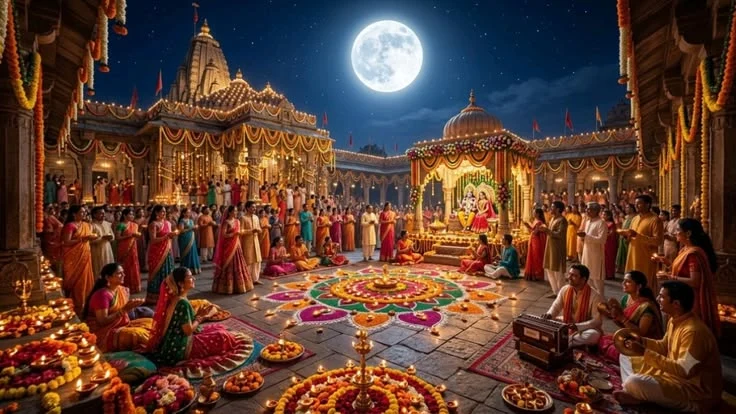
When Is the Kheer Removed?
Most families keep the kheer under the moonlight through the night and consume it the next morning.
Since Sharad Purnima is especially about the night of the full moon, the ritual emphasis is on allowing the kheer to remain under the moonlit sky long enough to symbolically receive the blessings of the night.
Spiritual Meaning of Keeping Kheer Under Moonlight
The ritual also has a beautiful symbolic meaning.
1. Receiving Grace
The kheer represents human offering, and the moonlight represents divine blessing.
2. Cooling the Mind
In Indian spiritual symbolism, the moon is often associated with calmness, serenity and emotional balance. The act of placing kheer under moonlight reflects a longing for inner peace.
3. Turning the Ordinary Into Sacred
Rice, milk and sugar are everyday ingredients. Yet through faith, they become a sacred prasad. This reflects a deep Hindu principle: even ordinary life becomes sacred when touched by devotion.
4. Living in Harmony With Cosmic Rhythms
The ritual connects daily life with lunar rhythm, season and sacred time. It reminds devotees that spiritual life is not separate from nature.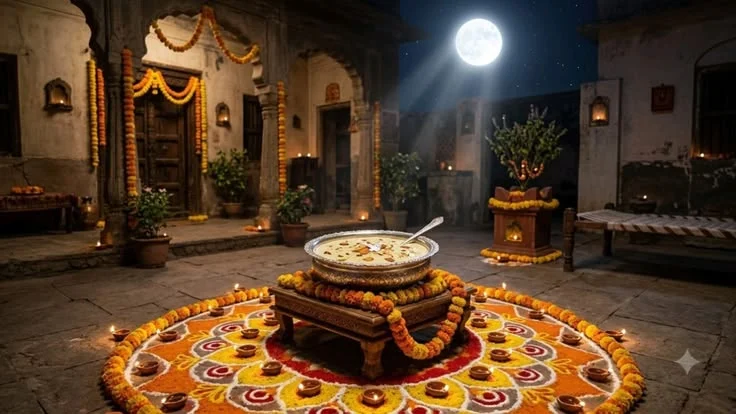
Why Is Rice Kheer Specifically Used?
Kheer is one of the most widely accepted festive offerings because it is:
simple
vegetarian
sattvic
cooling in nature in traditional Indian understanding
easy to prepare in most households
suitable for offering as prasad
Milk and rice also carry symbolic associations of nourishment, purity and abundance, making kheer especially appropriate for a full moon observance like Sharad Purnima.
Vaikunth Chaturdashi: Why Are Vishnu & Shiva Worshipped Together?
Can Sharad Purnima Kheer Be Shared With Everyone?
Yes, in most homes the kheer is treated as prasad and shared with family members, guests and loved ones.
The act of distribution reflects the spiritual idea that blessings are meant to be shared, not kept only for oneself.
Sharad Purnima 2026 at a Glance
Festival: Sharad Purnima
Also Known As: Sharad Poonam, Raas Purnima, Kojagara Purnima
Date: Sunday, October 25, 2026
Purnima Tithi Begins: 11:55 AM on October 25
Purnima Tithi Ends: 9:41 AM on October 26
Moonrise in New Delhi: 5:00 PM
Special Tradition: Preparing rice kheer and leaving it under the moonlight overnight
Personal Session
Sometimes spiritual traditions also awaken deeper personal questions about purpose, peace, emotional balance and life direction
Book Now
Read Latest Articles
Vaikunth Chaturdashi: Why Are Vishnu & Shiva Worshipped Together?
Bhai Dooj Date: Tilak Muhurat, Puja Time & Complete Vidhi
Frequently Asked Questions
Q.Why is kheer kept under moonlight on Sharad Purnima?
Kheer is kept under moonlight on Sharad Purnima because, according to Hindu tradition, the full moon rays on this night are especially auspicious and nectar-like. It is believed that the moon shines with all sixteen kalas, and that its light blesses and fortifies the kheer. The next morning, the kheer is consumed and shared as sacred prasad.Q.Why is kheer made on Sharad Purnima?
Kheer is made because it is a pure, sattvic dish traditionally offered on Sharad Purnima and kept under moonlight as part of a sacred ritual.Q.Why is kheer kept outside on Sharad Purnima night?
It is kept outside so that the moonlight can fall on it. According to tradition, the moon rays on this night are especially auspicious and spiritually beneficial.Q.Is Sharad Purnima kheer a religious belief?
Yes. The importance of moonlight kheer on Sharad Purnima is primarily a religious and cultural belief.Q.What is special about Sharad Purnima moonlight?
Sharad Purnima moonlight is traditionally believed to be especially pure because the moon is said to appear in its full sixteen-kala form on this night.Q.When is Sharad Purnima in 2026?
Sharad Purnima falls on Sunday, October 25, 2026.Q.Is Sharad Purnima linked with Lord Krishna?
Yes. In the Brij region, Sharad Purnima is associated with Lord Krishna’s Maha Raas and is also called Raas Purnima.