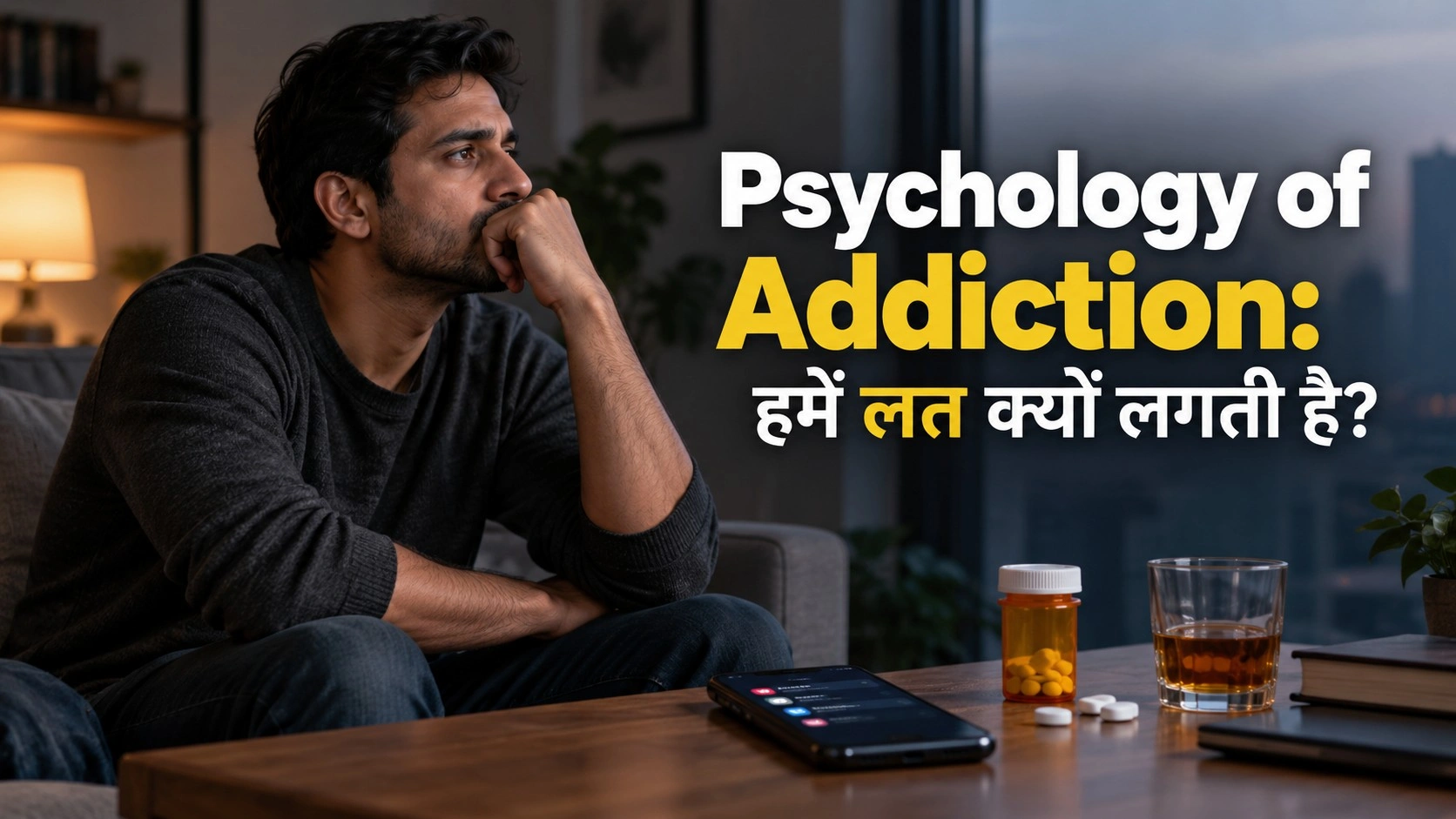
कभी आपने सोचा है कि हम जानते हुए भी किसी ऐसी चीज़ को बार-बार क्यों करते हैं जो हमारे लिए नुकसानदायक हो सकती है? कोई व्यक्ति बार-बार शराब या नशीले पदार्थों की ओर जाता है, कोई gambling को रोक नहीं पाता, किसी के लिए gaming पर control रखना मुश्किल हो जाता है, तो किसी को scrolling, shopping या किसी particular behavior से दूरी बनाना कठिन लगता है। यहीं से सवाल उठता है—why do we get addicted?
क्या addiction केवल कमजोर willpower का परिणाम है? क्या इसके पीछे dopamine जिम्मेदार है? क्या stress, trauma और हमारे पुराने emotional patterns भी addiction को जन्म दे सकते हैं? Psychology of addiction बताती है कि addiction किसी एक कारण से पैदा नहीं होती। इसमें brain chemistry, learning, genetics, emotions, environment, habits और psychological factors का complex interaction हो सकता है।
Addiction को केवल character flaw या lack of discipline समझना सही नहीं है। कई मामलों में यह brain और behavior दोनों को प्रभावित करने वाला health-related condition हो सकता है। यही कारण है कि addiction को judgment की बजाय understanding और awareness के साथ देखना जरूरी है।
Psychology of Addiction क्या है?
Psychology of addiction उन mental और behavioral processes को समझने का प्रयास करती है जिनकी वजह से कोई व्यक्ति किसी substance या rewarding behavior को बार-बार repeat करता है, कभी-कभी तब भी जब उसके negative consequences सामने आने लगें। हर habit addiction नहीं होती और हर पसंद भी addiction नहीं होती। समस्या तब गंभीर होती है जब व्यक्ति behavior पर control खोने लगे, उसे बाकी important activities से ज्यादा priority देने लगे और नुकसान होने के बावजूद उसे जारी रखे।
यही कारण है कि addiction psychology केवल यह नहीं पूछती कि व्यक्ति क्या कर रहा है, बल्कि यह भी पूछती है कि वह ऐसा क्यों कर रहा है, किस emotional state में कर रहा है और उसके brain ने उस behavior से कौन-सा connection बनाना शुरू कर दिया है।
Design Your Destiny
क्या आपने कभी महसूस किया है कि आपका mind बार-बार उन्हीं thoughts, emotions और patterns में लौट जाता है? Design Your Destiny के माध्यम से self-discovery, emotional awareness, conscious thinking और inner transformation की journey शुरू करें। अपने विचारों और प्रतिक्रियाओं को समझें और अपने जीवन को अधिक awareness के साथ direction देना सीखें। अपने जीवन को केवल circumstances पर मत छोड़िए—उसे consciously design करना शुरू कीजिए।
Start Your Journey Today!हमें Addiction क्यों होता है?
Addiction का कोई एक universal कारण नहीं है। अलग-अलग लोगों में अलग factors important हो सकते हैं। किसी व्यक्ति में stress major trigger हो सकता है, किसी में loneliness, किसी में trauma, किसी में peer influence और किसी में repeated reward-seeking behavior। Brain, environment और emotions अक्सर मिलकर addictive patterns को strengthen करते हैं।
कई बार व्यक्ति शुरुआत में किसी behavior को choice के रूप में करता है, लेकिन repeated exposure के बाद वही behavior automatic, habitual और फिर compulsive बन सकता है। यहीं psychology of addiction हमें यह समझने में मदद करती है कि addiction केवल “चाहने” और “न चाहने” की बात नहीं होती।
Brain का Reward System कैसे काम करता है?
हमारा brain ऐसी activities को याद रखना सीखता है जो rewarding महसूस होती हैं। भोजन, social connection, achievement और pleasure जैसी experiences brain के reward system को activate कर सकती हैं। इस process में dopamine समेत कई neurotransmitters महत्वपूर्ण भूमिका निभाते हैं।
जब कोई rewarding experience होता है, brain उससे जुड़ी information सीख सकता है और यह signal बना सकता है कि यह experience important था और इसे दोबारा किया जाना चाहिए। यही mechanism normal life का हिस्सा है, लेकिन कुछ substances और repeated rewarding behaviors इस system पर ज्यादा powerful impact डाल सकते हैं।
समय के साथ brain particular cues, situations और emotions को reward से जोड़ना शुरू कर सकता है। यही कारण है कि cravings कई बार अचानक trigger हो सकती हैं, भले ही व्यक्ति consciously उस behavior को avoid करना चाहता हो।
Dopamine and Addiction का Connection
Dopamine को अक्सर “pleasure chemical” कहा जाता है, लेकिन यह description बहुत simplified है। Dopamine motivation, learning, attention और reward anticipation में भी important role निभाता है। इसलिए dopamine and addiction का connection केवल pleasure तक सीमित नहीं है।
जब brain किसी behavior को reward से जोड़ लेता है, तो उससे जुड़े cues भी powerful हो जाते हैं। उदाहरण के लिए किसी particular place पर जाना, किसी व्यक्ति को देखना, stress महसूस करना, notification सुनना या कोई emotional trigger अचानक craving बढ़ा सकता है। Brain पहले से learned association के आधार पर behavior repeat करने की tendency बना सकता है।
इसी वजह से addiction को केवल “pleasure की इच्छा” कहना incomplete है। कई बार addiction learning, anticipation और emotional relief का combination होता है।
Phone Addiction: 12 Signs Your Smartphone Is Disconnecting You From Yourself
Pleasure से ज्यादा Powerful हो सकता है Relief
बहुत से लोग मानते हैं कि addictive behavior केवल pleasure पाने के लिए किया जाता है, लेकिन कई बार व्यक्ति pleasure से ज्यादा relief खोज रहा होता है। वह stress से राहत चाहता है, loneliness से escape करना चाहता है, anxiety से distract होना चाहता है या emotional pain को temporarily numb करना चाहता है।
जब कोई behavior कुछ देर के लिए uncomfortable feelings को कम करता है, brain सीख सकता है कि इस emotional state में यह behavior मदद करता है। धीरे-धीरे यह coping mechanism बन सकता है। जब वही mechanism बार-बार repeat होता है, तो वह compulsive pattern में बदल सकता है।
यहीं addiction psychology यह दिखाती है कि कभी-कभी addiction की जड़ substance या behavior नहीं, बल्कि उस relief की खोज होती है जो व्यक्ति उससे जोड़ चुका होता है।
Psychological Causes of Addiction
Psychological causes of addiction को समझना बहुत जरूरी है क्योंकि addiction केवल brain chemistry से नहीं जुड़ा होता। Stress, trauma, loneliness, anxiety, depression, difficult childhood experiences, family environment और unhealthy coping mechanisms किसी व्यक्ति की vulnerability बढ़ा सकते हैं।
कुछ लोग emotional pain को manage करने के लिए substances या repetitive behaviors की ओर जा सकते हैं। कुछ लोगों के लिए addiction stress response का हिस्सा बन सकता है। वहीं social environment, peer pressure और easy availability भी addictive behavior को strengthen कर सकती है।
इसका मतलब यह नहीं है कि trauma या stress से गुजरने वाला हर व्यक्ति addicted हो जाएगा। यह केवल risk factors हैं, और हर व्यक्ति की psychological journey अलग होती है।
Addiction Cycle कैसे शुरू होता है?
Addiction cycle को समझना इस topic का सबसे important हिस्सा है। यह अक्सर trigger से शुरू होता है। Trigger emotional, social, environmental या physical हो सकता है। उसके बाद craving पैदा होती है, फिर व्यक्ति behavior repeat करता है, temporary reward या relief मिलता है और brain उस pattern को reinforce कर देता है।
मान लीजिए किसी व्यक्ति को काम का बहुत stress है। Stress trigger बनता है। Brain relief की तलाश करता है और craving पैदा होती है। व्यक्ति किसी substance, gambling, gaming या compulsive activity की ओर जाता है। उसे कुछ समय के लिए relief मिलता है और brain सीखता है कि stress का solution यही behavior है। अगली बार stress होने पर craving और जल्दी activate हो सकती है।
इसी repeated pattern को addiction cycle कहा जा सकता है। Trigger, craving, behavior, relief और reinforcement का यही sequence धीरे-धीरे automatic बन सकता है।
Habits Addiction में कैसे बदल सकती हैं?
हर habit addiction नहीं होती। हमारी daily life में कई habits होती हैं, जैसे सुबह tea पीना, exercise करना या सोने से पहले phone check करना। लेकिन जब कोई behavior हमारी life पर control लेने लगे, तब concern बढ़ता है।
अगर व्यक्ति behavior रोकने की कोशिश करता है लेकिन repeatedly fail होता है, अगर वह activity relationships, career, health या daily functioning को impact करने लगे और harmful consequences के बावजूद behavior जारी रहे, तो वह compulsive pattern हो सकता है।
यही reason है कि how do habits turn into addictions एक important question है। Frequency alone addiction नहीं बताती। Control, consequences और impact ज्यादा important indicators हैं।
Behavioral Addiction क्या होती है?
Addiction केवल drugs या alcohol तक सीमित नहीं है। कुछ rewarding behaviors भी compulsive patterns में बदल सकते हैं। Gambling disorder और gaming disorder को recognized addictive-behaviour conditions के रूप में देखा जाता है।
हालांकि यह भी समझना जरूरी है कि बहुत ज्यादा phone use, social media scrolling, shopping या entertainment automatically clinical addiction नहीं कहलाते। कई बार इन्हें problematic use, excessive use या compulsive behavior के रूप में describe करना ज्यादा appropriate होता है।
Behavioral addiction में भी reward, anticipation, emotional relief और loss of control जैसे psychological patterns दिखाई दे सकते हैं।
Brain Addiction को कैसे सीखता है?
जब कोई substance या behavior बार-बार repeat होता है, brain उससे जुड़ी cues और rewards को मजबूत तरीके से learn कर सकता है। समय के साथ कुछ substances के मामले में tolerance जैसी processes develop हो सकती हैं, जिसमें पहले जैसा effect पाने के लिए ज्यादा quantity की जरूरत महसूस हो सकती है।
Repeated reward-seeking behavior के कारण brain ordinary pleasures को comparatively कम rewarding महसूस कर सकता है। यही कारण है कि कुछ लोगों को family time, hobbies या everyday activities में पहले जैसी satisfaction नहीं मिलती।
Brain and addiction का relationship complex है, लेकिन एक बात clear है—repeated patterns brain को behavior repeat करने की दिशा में condition कर सकते हैं।
कुछ लोग Addiction के प्रति ज्यादा Vulnerable क्यों होते हैं?
Why are some people more prone to addiction? इसका कोई single answer नहीं है। Genetics, personality, temperament, family environment, trauma, stress exposure, mental health, social influence और substance availability अलग-अलग लोगों में अलग role play कर सकते हैं।
एक ही experience दो लोगों पर अलग असर डाल सकता है। कोई व्यक्ति occasional use के बाद आसानी से रुक सकता है, जबकि दूसरा व्यक्ति उसी behavior को emotional coping mechanism के रूप में इस्तेमाल करना शुरू कर सकता है।
इसीलिए addiction को judge करने की बजाय individual context समझना ज्यादा जरूरी है।
Addiction छोड़ना इतना मुश्किल क्यों होता है?
Why is addiction hard to stop psychology of addiction का एक major question है। कई बार व्यक्ति logically जानता है कि behavior उसके लिए harmful है, फिर भी वह उसे repeat करता है।
इसका कारण यह है कि conscious knowledge और conditioned craving हमेशा एक ही direction में काम नहीं करते। Brain rewarding behavior को cues और emotions से जोड़ चुका होता है। Stress, cravings, withdrawal, environmental triggers और habitual responses behavior को फिर activate कर सकते हैं।
इसी वजह से addiction को “बस छोड़ दो” कहकर solve नहीं किया जा सकता। Long-term change के लिए underlying triggers और learned patterns को समझना जरूरी होता है।
Addiction और Mental Health का Connection
Addiction और mental health कई मामलों में एक-दूसरे को influence कर सकते हैं। कुछ लोग anxiety, depression या emotional distress से cope करने के लिए substances या compulsive behaviors का use कर सकते हैं। वहीं substance use mental health symptoms को worsen भी कर सकता है।
जब mental health और addiction साथ मौजूद हों, तो केवल एक problem को address करना पर्याप्त नहीं हो सकता। व्यक्ति की emotional state, coping patterns और overall psychological health को भी समझना जरूरी होता है।
यही कारण है कि addiction recovery में whole-person approach ज्यादा useful मानी जाती है।
What Is Addiction ? Causes , Symptoms , Types, and Treatment
Self-Awareness Addiction Cycle तोड़ने में कैसे मदद कर सकती है?
Self-awareness व्यक्ति को अपने triggers और automatic patterns पहचानने में मदद कर सकती है। जब craving आए तो तुरंत react करने के बजाय व्यक्ति observe कर सकता है कि अभी वह क्या महसूस कर रहा है, craving से पहले क्या हुआ था और वह pleasure खोज रहा है या किसी discomfort से escape कर रहा है।
यह awareness impulse और action के बीच psychological space create कर सकती है। व्यक्ति धीरे-धीरे अपने behavior को automatic reaction की बजाय conscious choice के रूप में देखना शुरू कर सकता है।
लेकिन severe substance dependence या diagnosed addiction में meditation, spirituality या self-help को professional treatment का replacement नहीं माना जाना चाहिए।
Addiction से बाहर निकलना संभव है?
हाँ, addiction treatable है और recovery संभव है। Recovery हर व्यक्ति के लिए अलग हो सकती है और treatment substance, behavior, severity और mental health condition पर depend करता है।
Treatment में counselling, behavioral therapies, medical support, support groups, lifestyle changes और कुछ substance-use disorders में medications शामिल हो सकते हैं। अगर addictive behavior health, relationships, career या daily life पर असर डाल रहा है, तो qualified mental health या addiction professional से मदद लेना जरूरी हो सकता है।
Recovery केवल behavior रोकना नहीं है। यह समझना भी जरूरी है कि व्यक्ति किस feeling से बच रहा था, उसके triggers क्या हैं और वह stress, loneliness या emotional pain को healthier तरीके से कैसे manage कर सकता है।
तो आखिर हमें addiction क्यों होता है? इसका जवाब किसी एक factor में नहीं छिपा है। Brain reward system, dopamine-related learning, habits, environment, emotions, stress, trauma और genetics मिलकर addictive behavior को influence कर सकते हैं।
Addiction को weakness या bad character समझना सही नहीं है। Real change तब शुरू होता है जब हम behavior के पीछे के triggers, emotions और patterns को समझना शुरू करते हैं।
Awareness हमें अपने automatic responses पहचानने में मदद करती है। जब हम यह समझना सीखते हैं कि craving क्यों आ रही है और कौन-सा emotional pattern उसे fuel कर रहा है, तभी conscious choice के लिए space बनती है।
Personal Session
क्या आप अपने जीवन के patterns को deeper level पर समझना चाहते हैं? कई बार हमें पता होता है कि कुछ बदलना है, लेकिन यह clear नहीं होता कि शुरुआत कहां से करें। Sakshi Shree के साथ Personal Session के माध्यम से अपनी life challenges, inner patterns और spiritual journey के लिए personalized guidance प्राप्त करें और अपने जीवन को अधिक clarity और awareness के साथ समझने की दिशा में आगे बढ़ें।
Book Now
Read Latest Articles
Vaikunth Chaturdashi: Why Are Vishnu & Shiva Worshipped Together?
Bhai Dooj Date: Tilak Muhurat, Puja Time & Complete Vidhi
Frequently Asked Questions
Psychology of addiction क्या है और हमें लत क्यों लगती है?
Psychology of addiction यह समझाती है कि brain reward system, dopamine-related learning, emotions, habits, stress, trauma और environment addictive behavior को कैसे प्रभावित कर सकते हैं। बार-बार मिलने वाला reward या emotional relief brain को किसी behavior को दोहराना सिखा सकता है। समय के साथ यह pattern कुछ लोगों में craving, reduced control और compulsive behavior में बदल सकता है।Addiction का मुख्य कारण क्या है?
Addiction का कोई एक कारण नहीं होता। Genetics, brain processes, environment, stress, trauma, mental health, social factors और learned behaviors किसी व्यक्ति में addiction risk को influence कर सकते हैं।Dopamine addiction कैसे पैदा करता है?
Dopamine अकेले addiction पैदा नहीं करता। यह reward learning, motivation और anticipation में महत्वपूर्ण भूमिका निभाता है। Repeated rewarding experiences brain को particular cues और behaviors को important मानना सिखा सकते हैं।Habit और addiction में क्या अंतर है?
Habit सामान्य routine हो सकती है, जबकि addiction में व्यक्ति behavior पर control खो सकता है और harmful consequences के बावजूद उसे continue कर सकता है। केवल किसी activity को frequently करना addiction prove नहीं करता।Addiction छोड़ना इतना कठिन क्यों होता है?
Addiction रोकना इसलिए difficult हो सकता है क्योंकि cravings, learned associations, emotional triggers, environmental cues और brain adaptations behavior को reinforce करते रहते हैं।क्या Trauma Addiction का कारण बन सकता है?
Trauma कुछ लोगों में addiction vulnerability बढ़ा सकता है, लेकिन trauma का experience होना यह नहीं बताता कि व्यक्ति निश्चित रूप से addicted होगा। Addiction multiple factors के interaction से develop हो सकता है।क्या Behavioral Addiction भी होती है?
हाँ। Gambling disorder और gaming disorder recognized addictive-behaviour disorders हैं। हालांकि हर excessive activity, जैसे phone या social media use, अपने आप clinical addiction नहीं कहलाती।क्या Addiction केवल कमजोर Willpower का परिणाम है?
नहीं। Addiction को केवल willpower या character weakness से explain नहीं किया जा सकता। यह brain, behavior, environment और psychological factors से जुड़ा complex issue हो सकता है।क्या Addiction से Recovery संभव है?
हाँ। Professional support, evidence-based treatment, counselling, medical care, behavioral interventions और lifestyle changes के साथ recovery संभव है। सही approach व्यक्ति की individual needs पर depend करती है।