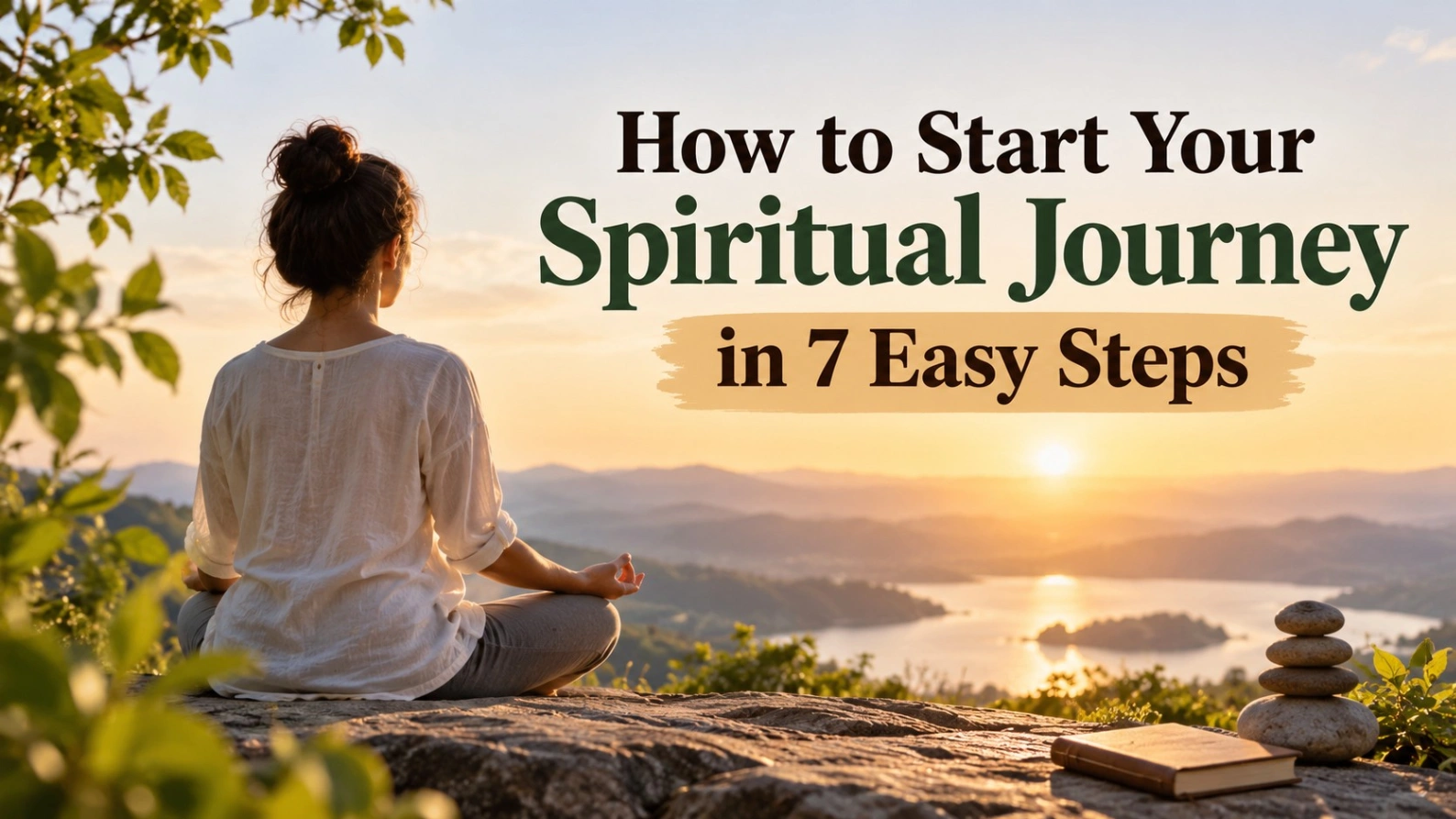
Many people feel drawn towards spirituality at some point in life.
Sometimes it begins during a difficult phase.
Sometimes it arises after success that still feels incomplete.
Sometimes it comes from a quiet inner question: Is there more to life than routine, pressure and constant mental noise?
A spiritual journey does not always begin with a dramatic awakening. In fact, for most people, it starts very simply — through reflection, curiosity and a desire to understand themselves more deeply.
If you have been wondering how to start your spiritual journey, the good news is that you do not need to leave your normal life, follow complicated rituals or have all the answers.
A spiritual path can begin with small and sincere steps.
It is less about becoming someone different overnight and more about becoming more aware, more peaceful and more connected with your inner self.
This guide explains 7 easy steps to start your spiritual journey in a simple and practical way.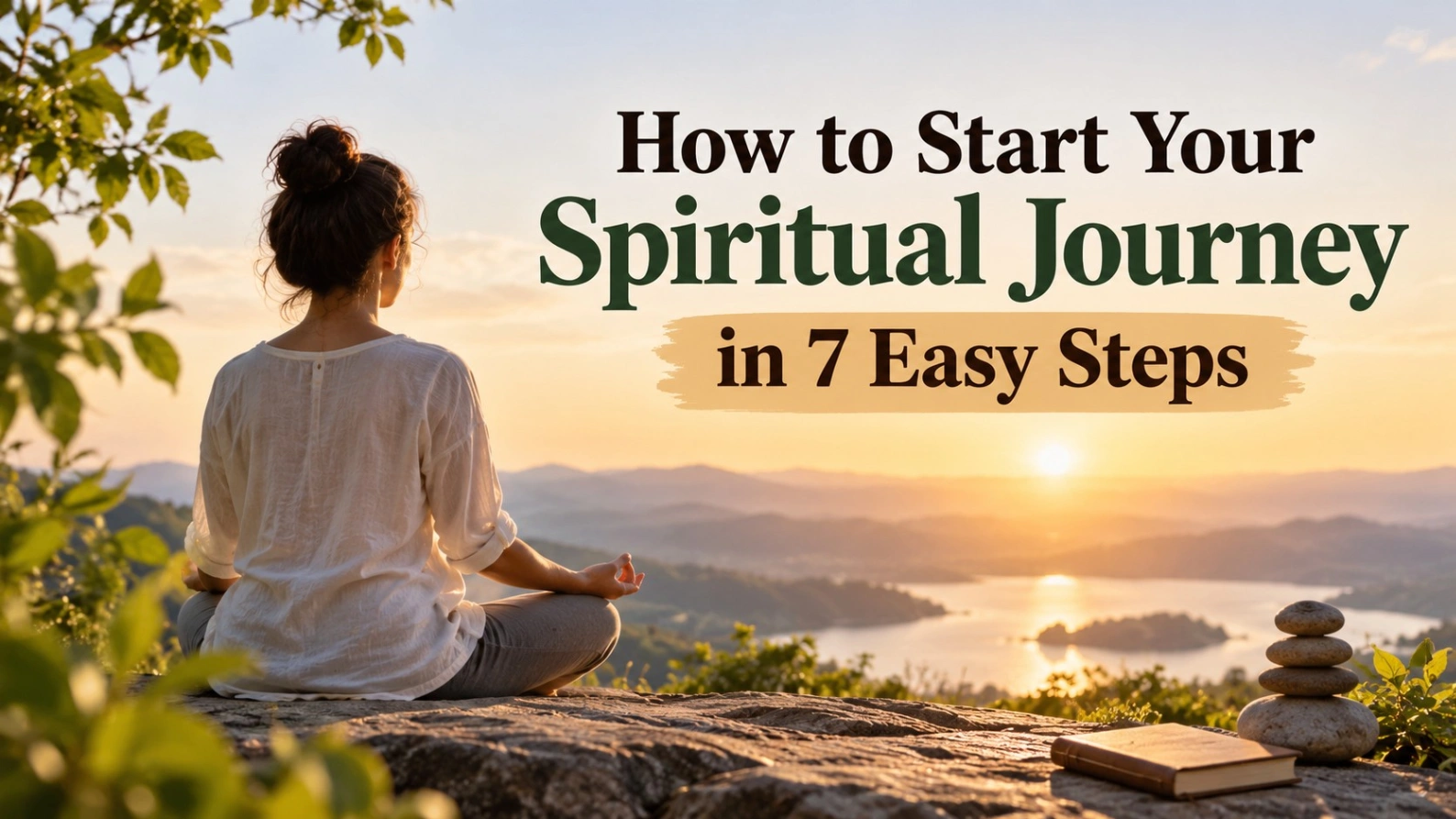
What Is a Spiritual Journey?
A spiritual journey is the process of turning inward to understand yourself, your life and your connection with something deeper than everyday thought and routine.
For some people, that connection may be with God, divine consciousness, the soul, presence, awareness or a higher purpose.
For others, it may simply begin as a search for:
inner peace
clarity
meaning
self-awareness
healing
truth
The spiritual journey is not one fixed path.
It looks different for everyone.
Some people explore prayer.
Some are drawn to meditation.
Some connect through sacred texts, silence, nature, service or self-inquiry.
What matters most is sincerity, not performance.
Why Do People Start a Spiritual Journey?
People often begin their spiritual journey because they feel something is missing internally, even if life appears full on the outside.
Common reasons include:
feeling mentally restless
looking for deeper meaning
going through emotional pain
wanting peace of mind
seeking healing
questioning old beliefs
feeling disconnected from oneself
wanting a more conscious life
A spiritual journey is not about escaping life.
It is about learning how to live life with more awareness, wisdom and balance.
Design Your Destiny
A spiritual journey begins the moment you choose awareness over autopilot. As you understand your inner patterns more deeply, you begin to live with greater clarity, purpose and peace.
Start Your Journey Today!Do You Need to Follow a Religion to Be Spiritual?
Not necessarily.
Spirituality and religion can overlap, but they are not always the same thing.
Religion may offer structure, teachings, rituals and community.
Spirituality is often more personal and experiential.
A person may be deeply spiritual within a religion, or they may begin a spiritual journey outside formal religion.
For many people, spirituality begins with direct inner experience:
watching the mind
asking deeper questions
practising silence
developing compassion
becoming more aware of thoughts, emotions and actions
The essential point is not labels.
It is whether your life is becoming more conscious, peaceful and aligned.
7 Easy Steps to Start Your Spiritual Journey
1. Begin With Self-Reflection
Every spiritual journey starts with awareness.
Before trying to “become spiritual,” spend a little time honestly looking at your current inner state.
Ask yourself:
What am I really seeking?
Why do I feel drawn to spirituality now?
What feels missing in my life?
What patterns keep repeating in my thoughts, emotions or relationships?
What kind of person do I want to become?
You do not need perfect answers.
The purpose of reflection is simply to become more conscious of your inner life.
You may write your thoughts in a journal or sit quietly with these questions.
Spiritual growth often begins not by adding something new, but by becoming aware of what is already happening within you.
2. Create a Few Minutes of Silence Every Day
One of the easiest and most powerful ways to begin a spiritual path is to create daily silence.
Modern life is filled with constant stimulation:
phones
messages
work pressure
noise
social media
mental overthinking
When the mind is constantly occupied, it becomes difficult to hear the deeper voice within.
Start with just 5 to 10 minutes of silence daily.
Sit comfortably.
Put your phone away.
Close your eyes if you want.
Take a few slow breaths.
Simply observe.
You do not have to force the mind to become blank.
Just allow yourself to pause.
Daily silence helps create inner space, and inner space is essential for spiritual clarity.
3. Start a Simple Meditation or Prayer Practice
Many beginners ask whether they should meditate or pray.
The answer is: begin with whichever feels natural to you.
If you feel drawn to meditation:
Sit quietly and observe your breath, thoughts or inner awareness.
If you feel drawn to prayer:
Speak sincerely from the heart.
Offer gratitude.
Ask for guidance.
Express what you are feeling.
Meditation helps cultivate observation and stillness.
Prayer helps cultivate humility, surrender and connection.
Both can become beautiful parts of a spiritual journey.
What matters most is consistency.
Even a short daily practice can gradually shift your inner state.
4. Read or Listen to Spiritual Wisdom
A spiritual journey becomes easier when your mind is regularly exposed to deeper teachings.
This may include:
spiritual books
sacred texts
discourses
podcasts
guided reflections
teachings from a trusted spiritual guide
Choose material that helps you feel:
clearer
calmer
more aware
more compassionate
more truthful
Do not collect teachings only for information.
Read slowly.
Reflect on what you read.
Ask:
How does this apply to my life?
What is this teaching asking me to observe in myself?
Spiritual wisdom becomes transformative when it is lived, not just admired.
Navratri Day 6:Maa Katyayani Puja Vidhi,Story & Significance
5. Observe Your Thoughts and Emotions Without Immediately Reacting
One of the biggest shifts on a spiritual path is moving from identifying with every thought to observing thoughts more consciously.
Most of us are used to reacting automatically.
We get angry and become the anger.
We get anxious and become the anxiety.
We get praised and become inflated.
We get criticised and become disturbed.
Spiritual growth begins when you start noticing:
I am feeling anger.
I am having anxious thoughts.
I am reacting strongly.
I am being pulled by ego.
This simple shift creates distance between you and your passing mental state.
That distance is powerful.
It allows wisdom to arise where habit once ruled.
You do not need to become emotionless.
You simply begin learning how to witness your mind rather than being controlled by it.
6. Bring Spirituality Into Daily Life
A spiritual journey is not only about what happens during meditation.
It is also about how you live.
Real spirituality gradually changes everyday life.
Ask yourself:
How do I speak to others?
How do I respond when things do not go my way?
Do I act with awareness or impulse?
Am I becoming more peaceful, more honest and more compassionate?
Spirituality can be practised through ordinary actions:
speaking truthfully
listening deeply
being kind
showing patience
practising gratitude
eating mindfully
serving others
living with integrity
If spiritual practice remains limited to a few minutes a day but does not influence how you live, the journey stays incomplete.
The goal is not to perform spirituality.
The goal is to embody it.
7. Be Patient and Let the Journey Unfold Naturally
Many beginners make the mistake of expecting immediate transformation.
They want instant peace, instant awakening or instant clarity.
But spirituality is not a race.
It is a gradual deepening.
Some days you may feel connected and peaceful.
Some days the mind may feel noisy and restless.
Some days you may feel inspired.
Other days you may feel doubtful.
This is normal.
Growth often happens quietly.
Be patient with yourself.
Do not compare your journey to someone else’s.
Do not force dramatic experiences.
What matters is sincerity, consistency and openness.
A true spiritual journey unfolds step by step.
Common Challenges Beginners Face on a Spiritual Path
Starting a spiritual journey can feel beautiful, but it can also bring confusion at first.
Here are some common beginner challenges:
1. Expecting Quick Results
Many people want instant calm or transformation. Real growth usually takes time.
2. Overcomplicating the Path
You do not need too many rituals, techniques or teachings at once. Simplicity is often best.
3. Doubting Yourself
It is common to wonder whether you are “doing it right.” Spirituality is not about perfection.
4. Inconsistency
Some people begin enthusiastically but stop after a few days. Small daily consistency is more valuable than occasional intensity.
5. Escaping Instead of Growing
Spirituality should not become a way to avoid responsibilities, emotions or practical life. A healthy spiritual path helps you face life more consciously.
Simple Daily Spiritual Practices for Beginners
If you want a practical routine, here are a few easy daily spiritual habits:
sit in silence for 5–10 minutes
meditate or pray daily
write one page of self-reflection in a journal
read a short spiritual passage
practise gratitude before sleeping
observe your thoughts without judgment
spend time in nature mindfully
do one act of kindness consciously
take pauses during the day to reconnect with your breath
ask yourself, “Am I acting from awareness or from habit?”
You do not need to do everything at once.
Choose a few practices and stay with them.
How Do You Know Your Spiritual Journey Has Begun?
A spiritual journey often begins quietly.
You may notice signs such as:
increased self-awareness
more reflection and less impulsive reaction
a desire for truth rather than appearance
reduced attraction to unnecessary drama
more interest in silence and inner peace
greater compassion for yourself and others
deeper questioning about life and purpose
a wish to live more consciously
The beginning of the spiritual path is not always dramatic.
Often, it simply feels like a sincere turning inward.
Is a Spiritual Journey Only About Peace?
Not always.
A spiritual journey can bring peace, but it may also bring uncomfortable self-realisation.
You may begin seeing patterns you previously ignored.
You may confront fear, attachment, ego, insecurity or unresolved pain.
This is not a sign that something is wrong.
It is part of the process.
True spirituality is not about decorating the ego with spiritual language.
It is about honestly seeing yourself and gradually becoming freer, lighter and more aware.
The Difference Between Spiritual Interest and Spiritual Practice
Many people enjoy spiritual content.
They watch videos, read quotes and listen to talks.
That can be helpful, but interest alone is not transformation.
The real shift comes when teachings become practice.
For example:
not just reading about gratitude, but living it
not just admiring peace, but practising silence
not just speaking about consciousness, but observing the mind
not just liking spiritual ideas, but applying them in relationships and decisions
A spiritual journey truly begins when inner understanding starts changing daily life.
How to Stay Consistent on Your Spiritual Path
Consistency matters more than intensity.
A few helpful ways to stay consistent are:
Keep It Simple
Do not start with ten complicated practices.
Choose a Fixed Time
Morning or night can help create rhythm.
Journal Your Growth
Writing helps you notice subtle changes.
Avoid Comparison
Your journey is personal.
Return Gently After Gaps
If you miss a few days, begin again without guilt.
Spiritual growth is strengthened by sincerity, not by harsh self-judgment.Vaikunth Chaturdashi: Why Are Vishnu & Shiva Worshipped Together?
Spiritual Journey at a Glance
Meaning: A path of inner growth, self-awareness and deeper connection
Best way to begin: Start with reflection, silence and simple daily practice
Easy beginner practices: Meditation, prayer, journaling, gratitude and mindful living
Main goal: Inner peace, awareness, truth and spiritual growth
Important reminder: Spirituality is a journey, not a performance
Personal Session
Sometimes spiritual growth becomes deeper when you have space for personal reflection and guidance. If you want support in understanding your inner patterns, life direction, relationships or spiritual questions more clearly, a personal session can offer focused guidance and insight.
Book Now
Read Latest Articles
Vaikunth Chaturdashi: Why Are Vishnu & Shiva Worshipped Together?
Bhai Dooj Date: Tilak Muhurat, Puja Time & Complete Vidhi
Frequently Asked Questions
Q.How can I start my spiritual journey?
You can start your spiritual journey by taking simple daily steps such as self-reflection, spending a few minutes in silence, beginning meditation or prayer, reading spiritual wisdom, observing your thoughts more consciously and bringing awareness into daily life. The key is to begin sincerely, stay consistent and allow the journey to unfold naturally.Q.What is the first step in a spiritual journey?
The first step is usually self-reflection — honestly asking yourself what you are seeking and why spirituality is calling you now.Q.Do I need a guru or teacher to start my spiritual journey?
Not always. Many people begin through self-reflection, prayer, meditation and spiritual reading. A genuine guide may become helpful later, but you can begin with sincerity and openness.Q.How do beginners start spirituality?
Beginners can start with simple habits such as daily silence, meditation, prayer, journaling and reading spiritual teachings.Q.How much time should I give spirituality every day?
Even 5 to 15 minutes daily can be enough to begin. Consistency matters more than long hours.Q.Can I be spiritual without following a religion?
Yes. Spirituality can be personal and experiential, though some people also express it through religion.Q.What are the signs of spiritual growth?
Common signs include greater self-awareness, calmness, compassion, less impulsive reactivity and a stronger sense of inner clarity.