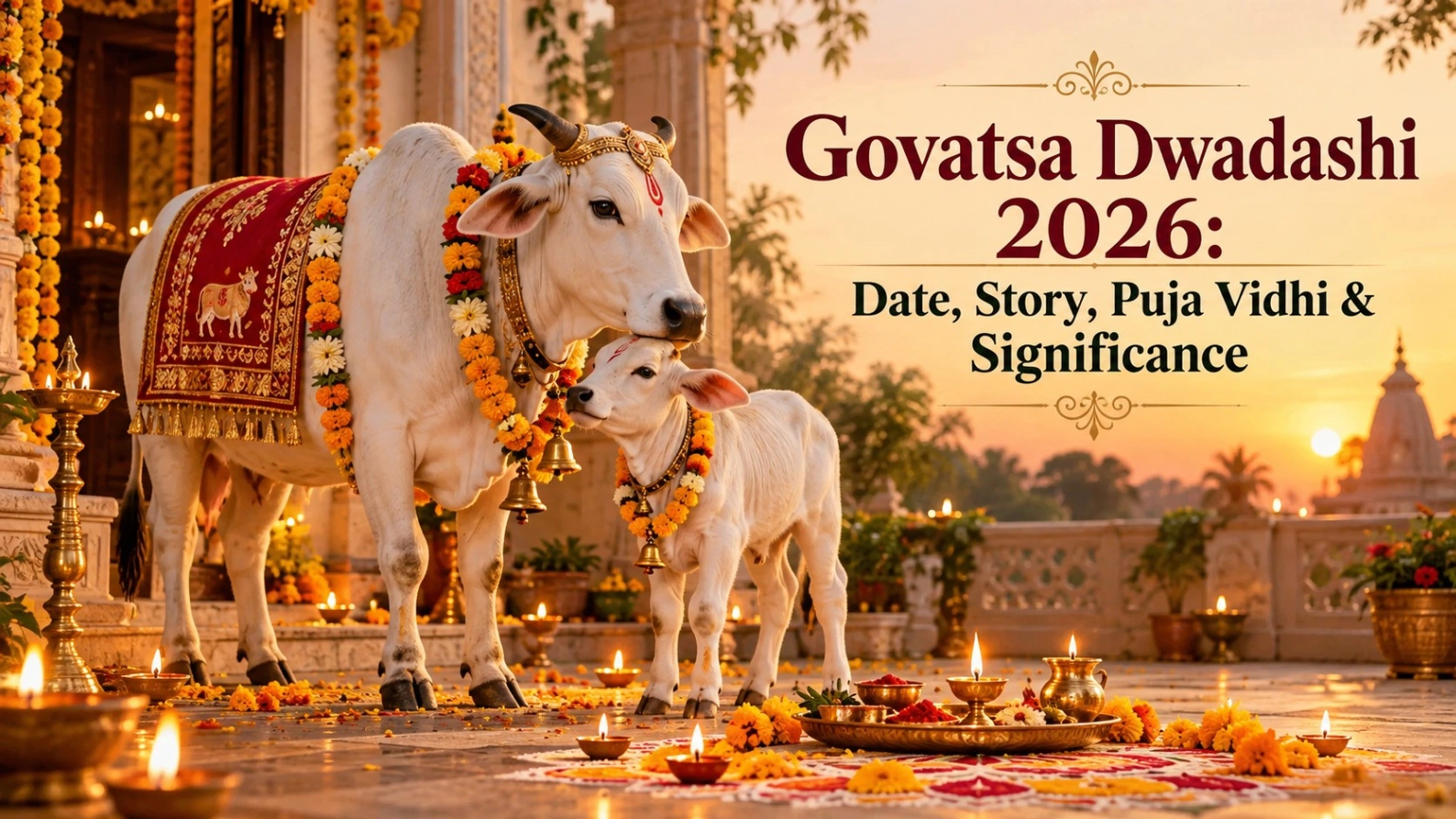
Govatsa Dwadashi 2026 is an important Hindu observance dedicated to the worship of cows and calves. Celebrated just before Dhanteras, the festival expresses gratitude towards the cow, traditionally regarded as a symbol of nourishment, motherhood, abundance and selfless giving.
Known as Vasu Baras in Maharashtra, Govatsa Dwadashi also marks the beginning of the Diwali festivities for many Maharashtrian families. Regional names and traditions may differ, and the observance is also associated with names such as Nandini Vrat and Vagh Baras in different parts of India.
In 2026, Govatsa Dwadashi falls on Thursday, November 5, 2026. It is observed during the Krishna Paksha Dwadashi Tithi of the Kartika month and falls one day before Dhanteras.
This guide explains the Govatsa Dwadashi 2026 date and time, Govatsa Dwadashi story, puja vidhi, vrat traditions, Vasu Baras customs and spiritual significance in detail.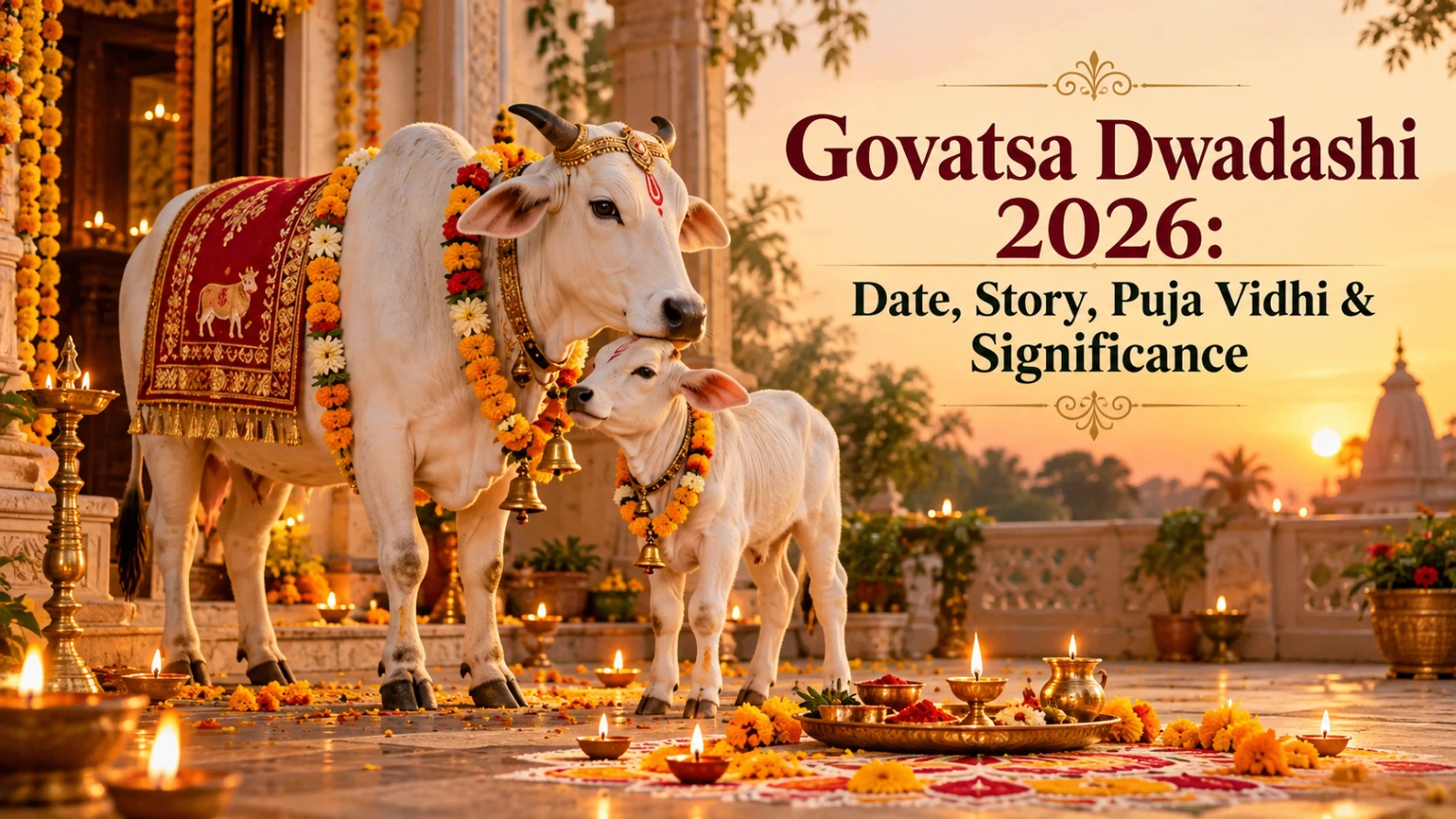
Govatsa Dwadashi 2026 Date and Time
Govatsa Dwadashi 2026 will be observed on:
Date: Thursday, November 5, 2026
Dwadashi Tithi Begins: Around 10:35 AM on November 5, 2026
Dwadashi Tithi Ends: Around 10:30 AM on November 6, 2026
Festival: Govatsa Dwadashi / Vasu Baras / Nandini Vrat
Dhanteras: November 6, 2026
Panchang calculations place Govatsa Dwadashi on November 5, with Dhanteras following on November 6.
Traditionally, the Govatsa Dwadashi cow puja is performed during Pradosh Kaal, the evening period around and after sunset. Since the precise Pradosh timing differs according to location, devotees should check the local Panchang for their city before performing the puja.
Design Your Destiny
Don’t Just Wait for Life to Change—Design It Festivals remind us that real transformation begins within. If you want to move beyond limiting patterns, understand your inner self and consciously create a more purposeful life, Design Your Destiny can help you begin that journey.
Start Your Journey Today!What Is Govatsa Dwadashi?
The word “Go” refers to a cow, while “Vatsa” means calf. Govatsa Dwadashi therefore literally refers to a sacred day dedicated to cows and their calves.
On this occasion, devotees worship a cow along with her calf and express gratitude for the nourishment and support that cattle have historically provided to households and agricultural communities.
The festival is not merely about ritual worship. At a deeper level, it highlights values such as gratitude, compassion, care, nurturing and living harmoniously with nature.
For many families, Govatsa Dwadashi also begins the spiritual preparation for the Diwali period.
Why Is Govatsa Dwadashi Celebrated?
Govatsa Dwadashi is celebrated primarily to honour the sacred relationship between human beings, animals and nature.
In Hindu tradition, the cow is associated with nourishment, abundance, purity and motherhood. A cow provides milk and has historically played an important role in agriculture and rural life. Worshipping the cow and calf therefore becomes a symbolic expression of gratitude towards all forms of life that sustain us.
Families may also observe the Govatsa Dwadashi vrat while praying for prosperity, family well-being and the protection of children.
The presence of the calf is particularly meaningful because it represents continuation, nurturing and the bond between a mother and her child.
Why Is Annakut Offered During Govardhan Puja? Meaning & Story
Govatsa Dwadashi Story
The Govatsa Dwadashi vrat katha is associated with the importance of protecting and respecting cows.
A scriptural account presented as the Govatsa Dwadashi Mahatmya describes Lord Krishna explaining the importance and method of this vrat to Yudhishthira. The account emphasises worshipping a cow together with her calf, offering flowers and other puja items, feeding the cow and bowing before her with devotion.
The cow in Hindu thought is regarded as more than an animal that provides material nourishment. She represents selfless giving and the sustaining power of nature.
Another important name connected with the observance is Nandini, the divine cow associated with sacred Hindu traditions. This is why Govatsa Dwadashi is also referred to as Nandini Vrat.
The central teaching behind the Govatsa Dwadashi story is simple: what nourishes and sustains life should be treated with gratitude rather than exploitation.
The festival therefore encourages devotees to cultivate compassion, humility and respect for all living beings.
Govatsa Dwadashi Puja Vidhi
The Govatsa Dwadashi puja vidhi can be performed with devotion and simplicity.
Devotees generally begin the day by waking up early, bathing and cleaning the area where the puja will be performed.
If a cow and calf are available nearby and can be approached safely and respectfully, they may be worshipped directly. The animals should never be frightened, restrained unnecessarily or inconvenienced for the purpose of performing a ritual.
Traditionally, the cow and calf are decorated respectfully, and tilak may be applied using turmeric and kumkum. Flowers are offered, followed by lighting a diya and incense.
Devotees then offer suitable fodder or food to the cow and calf.
Traditional accounts of the puja mention offerings such as fragrance, flowers, akshata and lamps, followed by feeding the cow and offering prayers.
One may then perform a simple aarti and pray for the health, happiness and well-being of the family.
The puja should ultimately be performed with gratitude rather than merely following mechanical rituals.
How to Perform Govatsa Dwadashi Puja at Home
People living in cities may not always have access to cows and calves. In such cases, Govatsa Dwadashi can still be observed respectfully at home.
A picture or small representation of a cow and calf may be placed in the puja area. Clean the space, light a diya, offer flowers and spend a few moments reflecting on gratitude towards animals, nature and everything that sustains life.
Families may read or listen to the Govatsa Dwadashi story and conclude the puja with prayers.
Those who wish to extend the meaning of the observance beyond ritual can also feed cows through a trusted gaushala, contribute towards animal welfare or provide appropriate food to animals.
The spirit of Govatsa Dwadashi lies in compassion and gratitude, so the intention behind the observance is as important as the external ritual.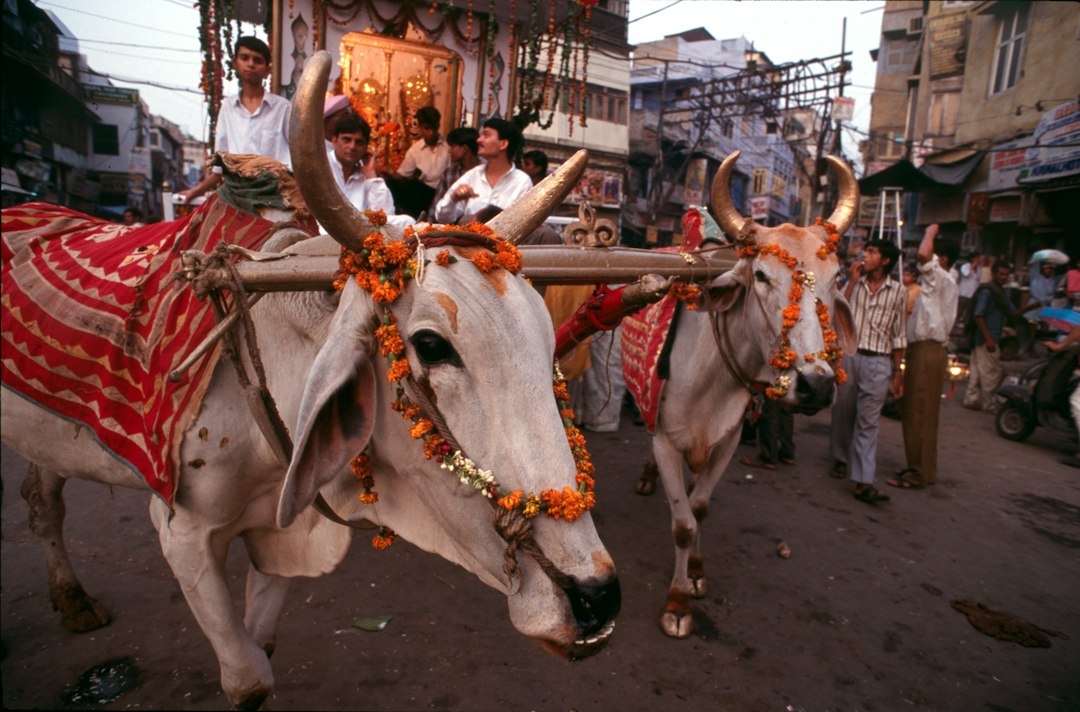
Govatsa Dwadashi Puja Samagri
Commonly used puja items include a diya, oil or ghee for the lamp, flowers, kumkum, turmeric, akshata, incense, water and suitable food or fodder for the cow.
Traditional practices vary from region to region and even between families, so devotees may follow their family customs where applicable.
Govatsa Dwadashi Vrat Rules
Some devotees observe a fast on Govatsa Dwadashi, while others follow specific dietary restrictions.
Traditional descriptions of the observance mention avoiding certain wheat and milk products during the day.
However, fasting customs can differ considerably according to region and family tradition. Some people eat only after completing the evening cow puja, while others consume a simple vrat meal.
The most important principle is that fasting should support devotion, discipline and awareness rather than become a source of physical strain.
People with health conditions, elderly devotees, pregnant women or anyone taking medication should follow dietary restrictions only when appropriate for them.
Why Are Cows and Calves Worshipped on Govatsa Dwadashi?
The worship of both the cow and her calf makes Govatsa Dwadashi particularly symbolic.
The cow represents nourishment and selfless giving, while the calf represents innocence, future generations and the mother-child relationship.
Together, they represent continuity of life.
The ritual can therefore be understood as a reminder that prosperity does not come only from possessing wealth. Real abundance also depends upon nature, food, animals, family, relationships and the countless visible and invisible systems that support everyday life.
Govatsa Dwadashi encourages people to acknowledge those sources of nourishment rather than taking them for granted.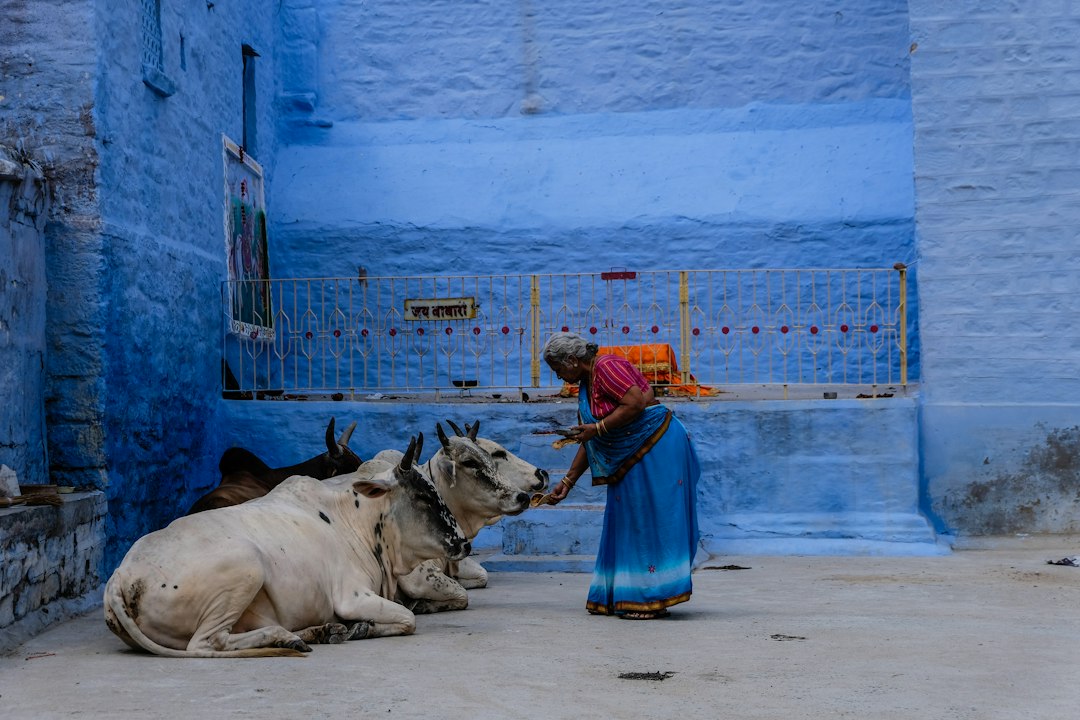
What Is Vasu Baras?
Vasu Baras 2026 falls on the same day as Govatsa Dwadashi—Thursday, November 5, 2026.
In Maharashtra, Govatsa Dwadashi is popularly known as Vasu Baras, and it is traditionally considered the beginning of the Diwali festival period.
Families worship cows and calves and pray for prosperity and well-being.
Because of this regional name, people searching for Vasu Baras 2026 date, Vasu Baras puja vidhi or Vasu Baras first day of Diwali are essentially looking for information closely connected with Govatsa Dwadashi.
Dhanteras 2026 Date and Time: Puja Muhurat & Shubh Muhurat
Govatsa Dwadashi and Dhanteras Connection
A common question is: Is Govatsa Dwadashi celebrated before Dhanteras?
Yes.
Govatsa Dwadashi is traditionally observed one day before Dhanteras. In 2026, Govatsa Dwadashi falls on November 5, while Dhanteras follows on November 6.
This sequence also carries symbolic meaning.
Before Diwali becomes associated with lamps, purchases and material prosperity, Govatsa Dwadashi begins the festive period by encouraging gratitude towards the living beings and natural resources that sustain life.
It serves as a reminder that prosperity begins with appreciation.
Spiritual Significance of Govatsa Dwadashi
The Govatsa Dwadashi significance goes beyond cow worship.
At its heart, the festival teaches gratitude.
Human beings often notice what they lack more quickly than what they already receive every day. Govatsa Dwadashi reverses that perspective by asking us to recognise nourishment, support and abundance already present around us.
The cow becomes a symbol of unconditional giving. She gives without asking for recognition. The calf symbolises innocence, dependence and the responsibility to care for future generations.
The observance therefore encourages several inner qualities: gratitude instead of entitlement, compassion instead of exploitation, responsibility instead of neglect and reverence instead of unconscious consumption.
In this sense, Govatsa Dwadashi can become a day for consciously acknowledging everything that supports our existence.
Govatsa Dwadashi 2026
Govatsa Dwadashi 2026 will be celebrated on Thursday, November 5, 2026, one day before Dhanteras.
Known as Vasu Baras in Maharashtra and also associated with Nandini Vrat, the festival centres around worshipping cows and calves and expressing gratitude for nourishment, family well-being and the abundance provided by nature.
Whether one performs an elaborate Govatsa Dwadashi puja vidhi or observes the day simply through gratitude, compassion and animal care, its essential teaching remains timeless:
Respect what sustains you. Value what nourishes you. And never take the gifts of life for granted.
Personal Session
Need Personal Guidance for Your Life Journey? Sometimes the answers we seek require deeper understanding and individual guidance. A Personal Session can help you gain clarity about the challenges, patterns and questions influencing your life.
Book Now
Read Latest Articles
Ahoi Ashtami Vrat Katha 2026 Read the Complete Ahoi Mata Story
Bhai Dooj Date: Tilak Muhurat, Puja Time & Complete Vidhi
Frequently Asked Questions
When is Govatsa Dwadashi 2026?
Govatsa Dwadashi 2026 will be celebrated on Thursday, November 5, 2026. The Dwadashi Tithi begins at approximately 10:35 AM on November 5 and ends around 10:30 AM on November 6. Also known as Vasu Baras or Nandini Vrat, Govatsa Dwadashi is observed one day before Dhanteras and involves the worship of cows and calves.What is the Govatsa Dwadashi 2026 date?
Govatsa Dwadashi falls on Thursday, November 5, 2026.Is Govatsa Dwadashi the same as Vasu Baras?
Yes. Govatsa Dwadashi is popularly known as Vasu Baras in Maharashtra, where it is regarded as the beginning of the Diwali festivities.Why is Govatsa Dwadashi celebrated?
Govatsa Dwadashi is celebrated to honour cows and calves and express gratitude for nourishment, abundance and nature. Families also pray for prosperity and the well-being of their children.When should Govatsa Dwadashi Puja be performed?
Govatsa Dwadashi Puja is traditionally performed during Pradosh Kaal in the evening. Exact timings vary by city, so devotees should consult their local Panchang.What is Nandini Vrat?
Govatsa Dwadashi is also known as Nandini Vrat, named after the sacred divine cow Nandini associated with Hindu tradition.Is Govatsa Dwadashi celebrated before Dhanteras?
Yes. Govatsa Dwadashi is celebrated one day before Dhanteras. In 2026, Govatsa Dwadashi is on November 5 and Dhanteras is on November 6.Can Govatsa Dwadashi Puja be performed without a real cow?
Yes. Those who do not have access to a cow and calf may worship a symbolic image respectfully and can also support a gaushala or animal welfare initiative.What should be offered to cows on Govatsa Dwadashi?
Traditionally, devotees offer suitable fodder and food to the cow and calf after completing the puja. Offerings should always be safe and appropriate for the animals.What should not be eaten on Govatsa Dwadashi?
Certain traditional observances avoid wheat and milk products, although customs vary according to region and family tradition.Is Vasu Baras the first day of Diwali?
In Maharashtra, Vasu Baras is traditionally considered the beginning of the Diwali celebrations, preceding Dhanteras.