Sharad Navratri is one of the most important Hindu festivals dedicated to Maa Durga and her nine divine forms. Celebrated during the autumn season, the nine-day festival represents the victory of divine power, courage and righteousness over darkness and negativity.
However, an important and fascinating tradition also connects Sharad Navratri with Lord Rama.
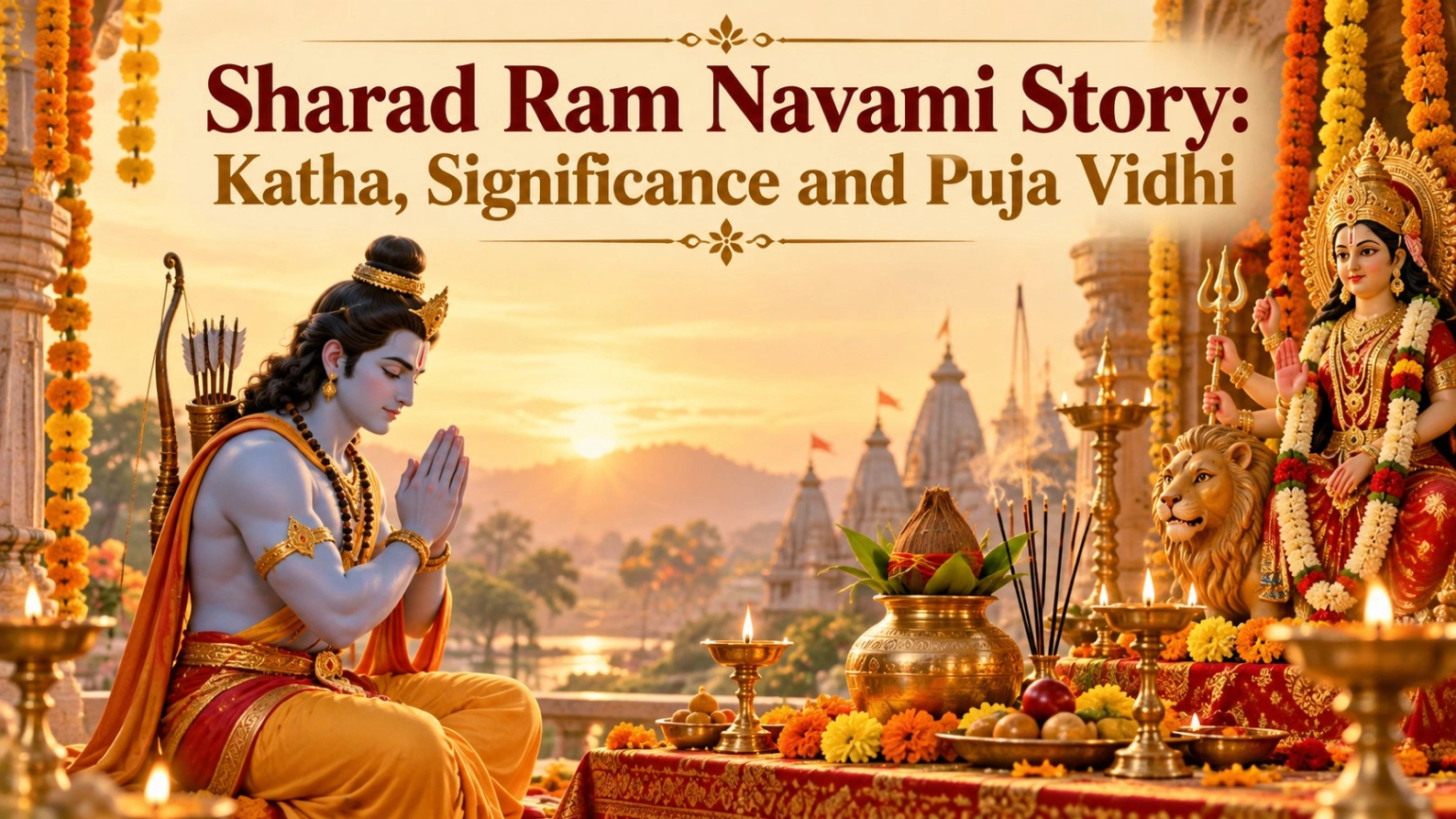
According to a widely told devotional tradition, before his decisive battle against Ravana in Lanka, Lord Rama worshipped Goddess Durga and sought her blessings for victory. Because Durga worship was traditionally associated with another season, Rama's autumn invocation of the Goddess came to be known as Akal Bodhan, meaning an invocation performed outside the customary time.
This story forms one of the most meaningful links between Sharad Navratri, Lord Rama, Durga Puja and Vijayadashami.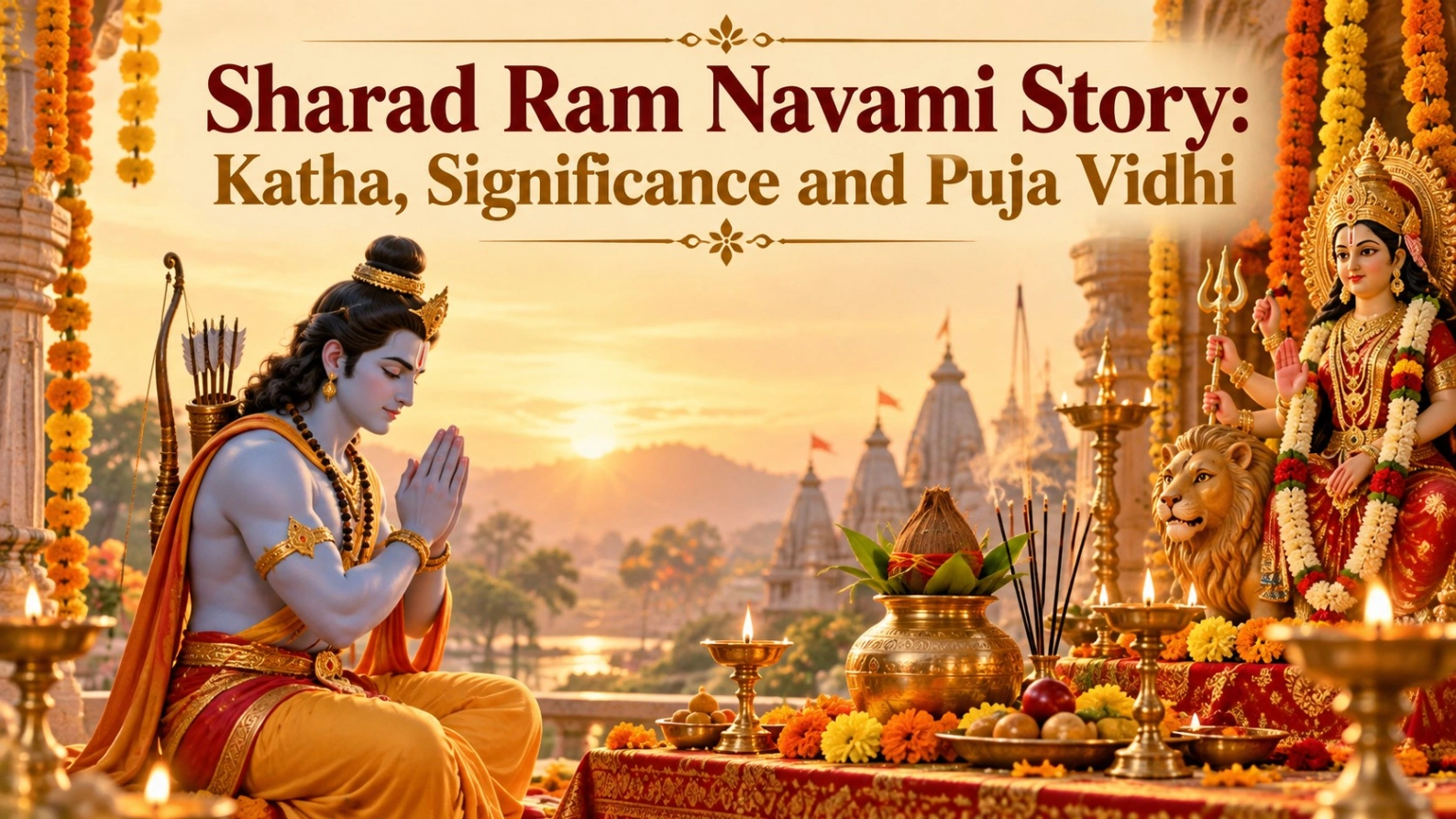
What Is the Connection Between Lord Rama and Sharad Navratri?
Sharad Navratri is primarily dedicated to Goddess Durga, but several regional traditions connect the festival with Lord Rama's battle against Ravana.
According to the traditional narrative, Lord Rama understood that Ravana was an extraordinarily powerful opponent. Before beginning the final phase of the battle, Rama decided to worship Adi Shakti, the supreme divine feminine power.
He therefore invoked Maa Durga during the autumn season and prayed for strength, courage and victory.
The Goddess, pleased by his devotion, blessed him.
Rama eventually defeated Ravana, and the victory is commemorated on Vijayadashami or Dussehra.
This is why Sharad Navratri can also be understood as a period of spiritual preparation leading towards the celebration of dharma's victory on Vijayadashami.
What Is Akal Bodhan?
The term Akal Bodhan is especially important in understanding the Lord Rama-Sharad Navratri connection.
“Akal” means an unusual or untimely period, while “Bodhan” means invocation or awakening.
According to tradition, Goddess Durga was conventionally worshipped in the spring season. Lord Rama, however, invoked her during autumn before fighting Ravana.
Because the worship occurred outside the conventional seasonal period, it became known as Akal Bodhan.
This autumn invocation later became strongly associated with Sharad Navratri and particularly with Durga Puja traditions in eastern India.
Design Your Destiny
The story of Lord Rama's worship of Maa Durga reminds us that even the strongest person sometimes needs to turn inward before facing an external battle. True victory begins with awareness, discipline and alignment with our deeper purpose.
Start Your Journey Today!Sharad Navratri Lord Rama Story
According to traditional retellings, Lord Rama was preparing for the decisive battle against Ravana.
Ravana was no ordinary enemy. He was a powerful warrior, knowledgeable in scriptures and protected by powerful boons.
Rama understood that physical strength alone would not be enough.
He therefore decided to worship the supreme Goddess and seek her divine blessings.
For the puja, Rama was required to offer 108 blue lotus flowers, traditionally called Neelkamal.
He collected the flowers and began worshipping Maa Durga with complete concentration.
As he was making the offering, Rama discovered that only 107 lotus flowers were present.
One lotus was missing.
The worship required 108 flowers, and Rama did not want his prayer to remain incomplete.
Lord Rama was famously known as Kamalanayan, meaning lotus-eyed, because his eyes were compared to beautiful lotus flowers.
Remembering this, Rama decided that if one lotus was missing, he would offer one of his own eyes to complete the worship.
He prepared to sacrifice his eye as the final lotus.
Seeing this extraordinary devotion and determination, Goddess Durga appeared before him and stopped him.
She was deeply pleased by Rama's devotion and blessed him with victory.
Rama then went into battle and ultimately defeated Ravana.
The story has become a powerful symbol of devotion, determination and complete surrender to divine power.
What Does the 108 Blue Lotus Story Mean?
The story of the 108 blue lotuses contains an important spiritual message.
Lord Rama was already a powerful warrior, but the legend emphasises that he approached the divine with humility.
When a single flower was missing, he did not abandon the ritual or treat it casually.
Instead, he was willing to sacrifice something precious to complete his worship.
The symbolic lesson is that genuine devotion involves sincerity, commitment and surrender.
The missing lotus can also represent the final obstacle between ordinary effort and total dedication.
Rama's willingness to offer his eye represents the moment when personal attachment gives way to complete faith.
Why Did Lord Rama Worship Maa Durga?
Lord Rama worshipped Maa Durga to seek divine strength and blessings before confronting Ravana, according to this devotional tradition.
Durga represents Shakti, the cosmic power behind creation, preservation and transformation.
The story reminds devotees that even great strength benefits from humility, prayer and connection with a higher consciousness.
Rama does not approach Durga out of weakness.
Instead, the story shows that true strength includes acknowledging the divine source of power.
This relationship between Rama and Durga also creates a meaningful bridge between two major autumn celebrations: Navratri and Vijayadashami.
What Is Naraka Chaturdashi?History & Importance of Choti Diwali
Sharad Navratri and Vijayadashami
Sharad Navratri consists of nine nights devoted to divine feminine energy.
The festival culminates in Vijayadashami, the tenth day associated with victory.
In Ramayana traditions, Vijayadashami commemorates Lord Rama's triumph over Ravana.
In Durga traditions, it represents the victory of Goddess Durga over Mahishasura.
Although these stories come from different traditions, their spiritual message is remarkably similar.
Both celebrate:
good over evil
dharma over adharma
awareness over ignorance
courage over fear
humility over ego
This shared symbolism is one of the reasons Vijayadashami has such broad significance across India.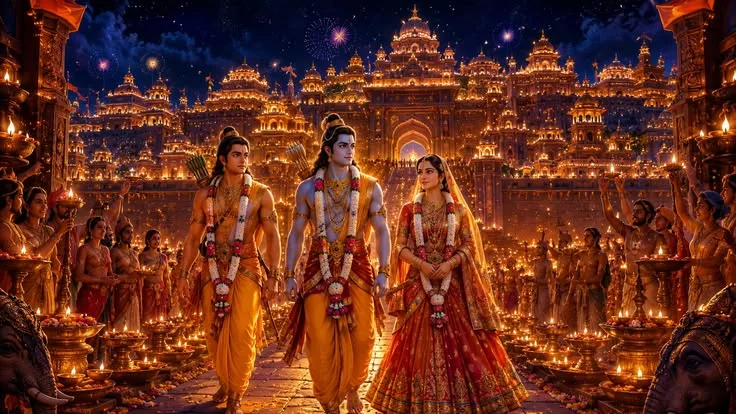
Spiritual Significance of Lord Rama's Navratri Worship
The Lord Rama story offers several powerful spiritual lessons.
1. Strength Needs Humility
Rama was a warrior and leader, yet he still sought divine guidance.
The story reminds us that genuine confidence does not require arrogance.
2. Devotion Requires Sincerity
The missing lotus tested Rama's commitment.
Rather than completing the ritual mechanically, he was ready to make a genuine sacrifice.
3. Shakti Exists Behind Action
Maa Durga represents divine energy.
The story suggests that external action becomes more powerful when supported by inner clarity and spiritual alignment.
4. Every Battle Begins Within
Ravana may be understood not only as an external enemy but also as a symbol of ego, anger, greed and uncontrolled desire.
Before fighting the external battle, Rama first turns inward through worship.
5. Victory Requires Preparation
Navratri precedes Vijayadashami.
Spiritually, this sequence teaches that transformation requires preparation before victory becomes possible.
Why Is Sharad Navratri Celebrated?
Sharad Navratri is an autumn festival lasting nine nights and dedicated to Goddess Durga.
The name “Sharad” refers to the autumn season, while “Navratri” means nine nights.
During these nine days, devotees worship different forms of Maa Durga, practise fasting, perform puja, chant mantras and seek divine blessings.
Sharad Navratri 2026 begins on October 11, 2026, according to current New Delhi Panchang listings.
The festival represents spiritual purification, courage and the awakening of Shakti within the devotee.
Nine Forms of Maa Durga During Navratri
Each day of Navratri is traditionally associated with one of the nine forms of Navadurga.
They are:
Maa Shailputri
Maa Brahmacharini
Maa Chandraghanta
Maa Kushmanda
Maa Skandamata
Maa Katyayani
Maa Kalaratri
Maa Mahagauri
Maa Siddhidatri
These nine forms represent different dimensions of divine feminine energy and different stages of spiritual development.
Current 2026 calendars list Sharad Navratri beginning with Maa Shailputri worship on October 11 and continuing through the nine-day cycle.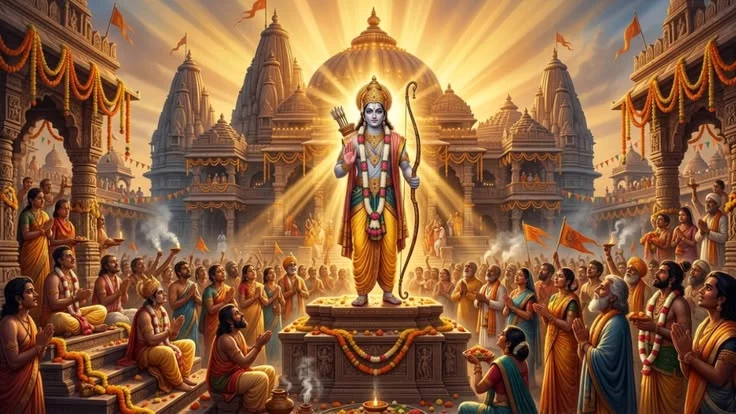
Sharad Navratri Puja Vidhi
A simple Sharad Navratri puja can begin with cleansing the home and puja area.
On the first day, many devotees perform Ghatasthapana or Kalash Sthapana.
An image or idol of Maa Durga is placed respectfully in the worship area.
Light a diya and incense.
Offer flowers, fruits and sattvic bhog.
Chant Durga mantras or recite Durga Chalisa.
Some devotees read Durga Saptashati during the nine days.
An Akhand Jyoti may also be maintained according to family tradition.
On Ashtami or Navami, many families perform Kanya Puja.
The nine-day worship traditionally concludes around Vijayadashami.
How Can Lord Rama Be Remembered During Sharad Navratri?
Devotees who follow the Rama-Durga tradition may remember Lord Rama's Akal Bodhan as part of their Navratri reflection.
They can:
read the story of Rama's Durga worship
recite passages from the Ramayana or Ramcharitmanas
chant the name of Shri Ram
worship Maa Durga
reflect on the values represented by Rama and Durga
pray for courage to overcome personal challenges
The purpose is not necessarily to introduce a separate “Ram Navami” during Sharad Navratri, but to understand the traditional connection between Rama's worship of Shakti and Vijayadashami.
Is Sharad Ram Navami the Same as Ram Navami?
No.
This distinction is important.
Ram Navami traditionally celebrates the birth of Lord Rama and occurs during Chaitra Shukla Navami, generally in March or April.
It falls during Chaitra Navratri, not Sharad Navratri.
Sharad Navratri occurs during the autumn season and is primarily dedicated to Goddess Durga.
Lord Rama's connection with Sharad Navratri comes through the Akal Bodhan tradition and his worship of Maa Durga before fighting Ravana, not through Rama's birth celebration.
Therefore, “Sharad Ram Navami” should not be presented as another standard name for Ram Navami.
Sharad Purnima 2026 Vrat Katha: Story, Puja Vidhi & Benefits
Lord Rama, Durga and the Inner Battle
The Akal Bodhan story becomes especially meaningful when interpreted inwardly.
Ravana can represent the many-headed nature of the human ego: desire, anger, jealousy, arrogance, attachment and fear.
Durga represents Shakti—the power needed for transformation.
Rama represents dharma, clarity and right action.
The story therefore describes an inner process:
First, recognise the battle.
Then awaken inner Shakti.
Act with clarity.
Finally, overcome what prevents you from living according to your highest values.
This is one reason the Rama-Durga connection continues to resonate beyond ritual and mythology.
Sharad Navratri and Lord Rama at a Glance
Festival: Sharad Navratri
Primary Deity: Goddess Durga
Lord Rama Connection: Akal Bodhan before battle with Ravana
Important Legend: Offering of 108 blue lotuses
Meaning of Akal Bodhan: Invocation of the Goddess outside the customary season
Festival Conclusion: Vijayadashami / Dussehra
Core Message: Divine strength, devotion and victory of dharma
Sharad Navratri 2026 Begins: October 11, 2026 in New Delhi Panchang listings.
Personal Session
Every person faces battles that cannot always be solved through general advice. Whether you are seeking clarity around your career, relationships, emotional patterns, spiritual growth or larger life direction, a personal session can help you explore your journey more deeply.
Book Now
Read Latest Articles
9 Colour of Navratri 2026: DayWise List, Date & Significance
Bhai Dooj Date: Tilak Muhurat, Puja Time & Complete Vidhi
Frequently Asked Questions
Q.Why did Lord Rama worship Maa Durga during Sharad Navratri?
According to the Akal Bodhan tradition, Lord Rama worshipped Maa Durga during autumn before his battle with Ravana to seek divine strength and blessings. The legend says Rama intended to offer 108 blue lotuses and, when one was missing, prepared to offer his own lotus-like eye. Pleased by his devotion, Durga blessed him with victory.Q.What is the connection between Lord Rama and Sharad Navratri?
According to tradition, Lord Rama invoked Goddess Durga during autumn before his battle against Ravana and sought her blessings for victory.Q.What is Akal Bodhan?
Akal Bodhan refers to Rama's invocation of Goddess Durga outside the traditionally associated season of her worship.Q.Did Lord Rama offer 108 lotus flowers?
Traditional retellings say Rama was asked to offer 108 blue lotuses to Maa Durga and discovered that one was missingQ.Why did Rama offer his eye?
Rama was called Kamalanayan, or lotus-eyed. When one lotus was missing, tradition says he prepared to offer his own eye to complete the worship.Q.Is Sharad Ram Navami the same as Ram Navami?
No. Ram Navami celebrates Lord Rama's birth during Chaitra Navratri. Sharad Navratri's Rama connection is primarily through Akal Bodhan and his worship of Goddess Durga.Q.What happens after Sharad Navratri?
The festival culminates around Vijayadashami, which celebrates the victory of good over evil and is closely associated with Rama's victory over Ravana.