
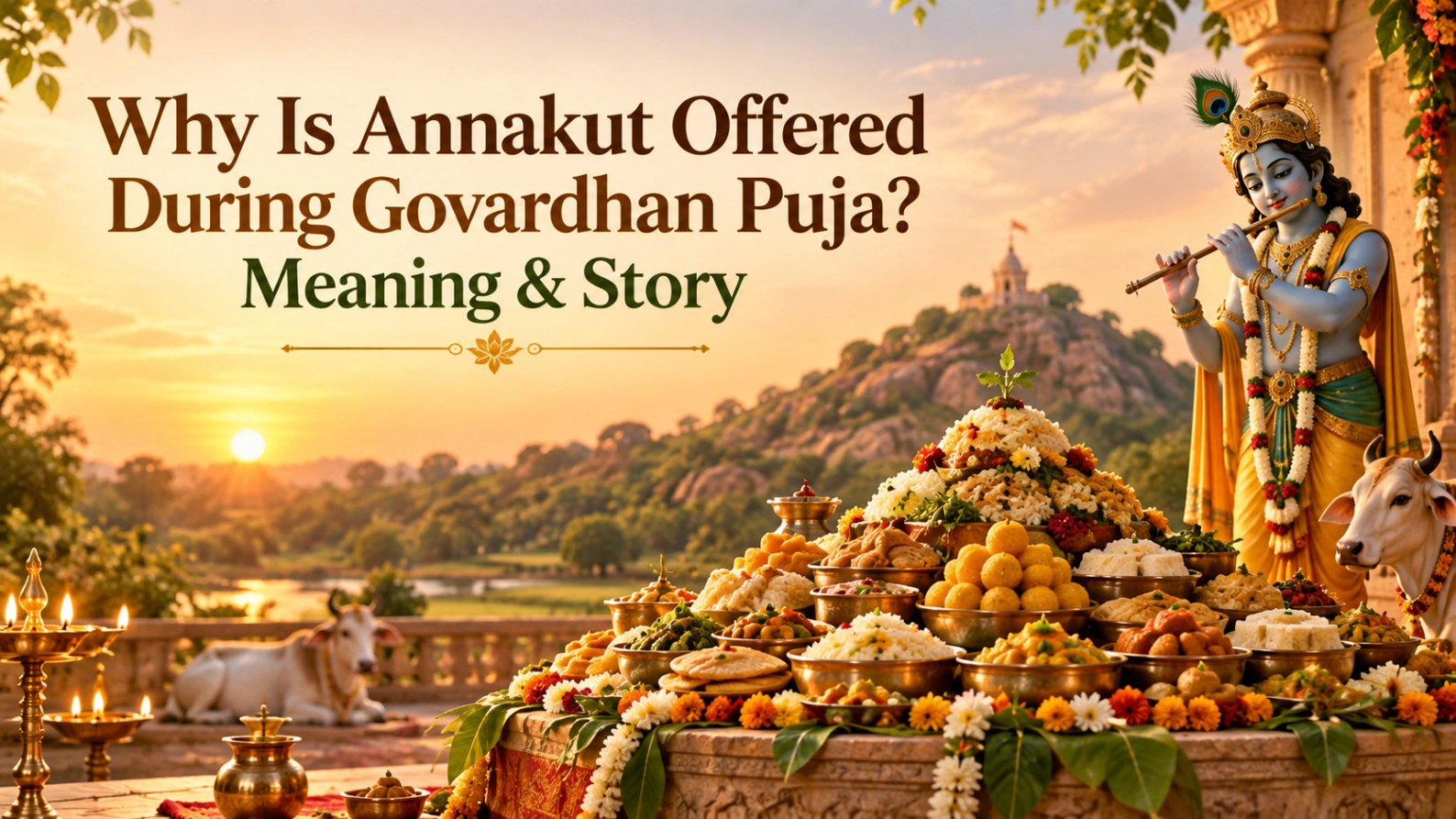
The day after the brilliance and celebration of Diwali, many homes and temples witness another extraordinary sight: enormous arrangements of food placed before Lord Krishna in the form of a symbolic mountain. This sacred offering is known as Annakut, and it forms an important part of Govardhan Puja.
But why is Annakut offered during Govardhan Puja? Why is food arranged like a mountain? Why are dozens of dishes prepared for Lord Krishna, and how did the famous tradition of Chhappan Bhog, or 56 offerings, become associated with this festival?
The answers take us to one of the most loved stories from Lord Krishna's life—the lifting of Govardhan Hill. Yet Annakut is much more than a remembrance of an ancient event. At its spiritual heart, it represents gratitude for nature, surrender to the Divine, sharing one's abundance and understanding that everything that sustains life is ultimately a blessing.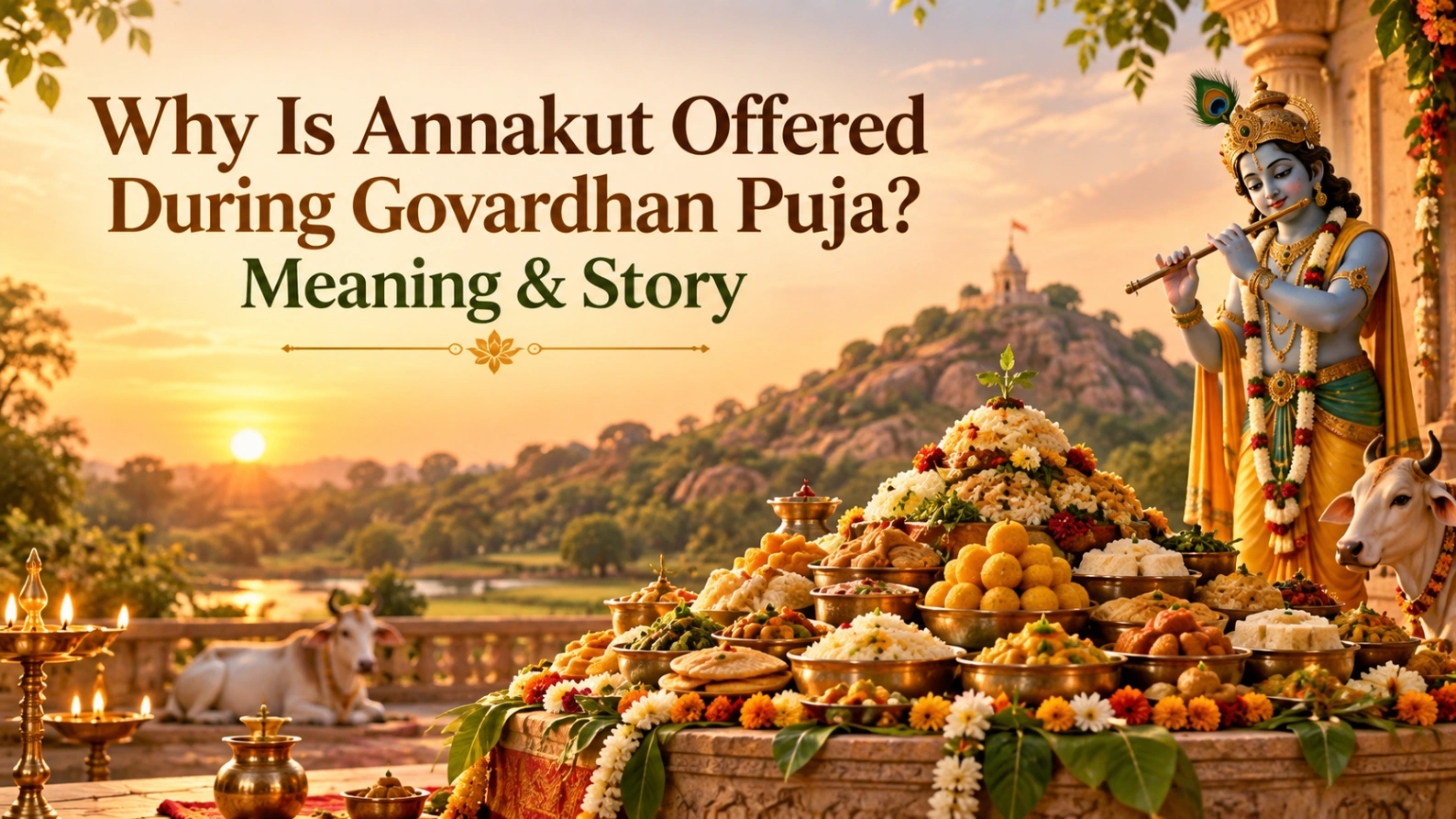
What Is Annakut?
The word Annakut can be understood as a “mountain of food.” “Anna” refers to food or grain, while “kut” conveys the idea of a heap or mountain. During Govardhan Puja, devotees prepare numerous dishes and arrange them before Lord Krishna in a large decorative display resembling Govardhan Hill.
Depending on the family, temple and regional tradition, the Annakut bhog may include rice, different varieties of vegetables, lentils, sweets, fruits, breads, savoury preparations, milk products and other vegetarian dishes.
After being offered to the deity, the food becomes prasad and is distributed among devotees.
Therefore, when people ask what is Annakut in Govardhan Puja, it is not simply a large feast. It is an expression of devotion through food and an acknowledgement that the nourishment we receive should be accepted with gratitude rather than entitlement.
Design Your Destiny
The wisdom behind Govardhan Puja reminds us that spirituality is not merely about knowing sacred teachings—it is about bringing them into everyday life. Design Your Destiny is an invitation to understand your mind, transform limiting patterns and consciously create the life you wish to live. Begin your journey of inner transformation with Design Your Destiny.
Start Your Journey Today!Why Is Annakut Offered During Govardhan Puja?
The answer to why Annakut is offered during Govardhan Puja lies in the story of Lord Krishna and the residents of Braj.
According to the traditional narrative, the people of Vrindavan once prepared elaborate offerings for Lord Indra, the deity associated with rain. They believed that worshipping Indra would ensure sufficient rainfall for their crops and the prosperity of their community.
Young Krishna questioned this practice. He reminded the residents that their lives depended directly on the land around them—the cows they cared for, the fields that produced their food, and especially Govardhan Hill, which provided grass, water, shelter and other resources.
Krishna encouraged the people of Braj to express gratitude toward Govardhan instead.
They followed his advice and prepared a magnificent offering of food. This became associated with the tradition of Govardhan Puja and Annakut.
The story then describes Lord Indra becoming angered when his customary worship was discontinued. Heavy rains and storms descended upon Braj. To protect the people and animals, Krishna lifted Govardhan Hill and held it above them like a giant umbrella.
The residents gathered safely beneath the hill until the storm finally ended.
The episode became a powerful spiritual teaching. Govardhan Puja celebrates Krishna as the protector of his devotees while Annakut commemorates the abundance offered in gratitude.
The mountain of food presented during Annakut symbolically recalls Govardhan Hill itself.
The Deeper Significance of Annakut
The Annakut significance extends far beyond the quantity of dishes placed before the deity.
Food is one of the most fundamental requirements of human life. Yet it is easy to consume it every day without considering everything that makes a meal possible—the earth, water, sunlight, rainfall, farmers, animals, human labour and countless interconnected forces.
Annakut transforms food from something ordinary into an object of awareness and gratitude.
Before devotees eat, they first offer their abundance to the Divine. Symbolically, the act says, “What I have received is not mine alone. I recognise its source, and I offer it back with gratitude.”
That is why Annakut represents both abundance and humility.
A table overflowing with food might ordinarily represent possession. During Govardhan Puja, however, that abundance is first surrendered. The devotee acknowledges that prosperity becomes meaningful when accompanied by gratitude, generosity and sharing.
What Does Annakut Mean in Govardhan Puja?
In Govardhan Puja, Annakut represents several interconnected ideas: gratitude for nourishment, respect for nature, devotion to Krishna, celebration of abundance and the willingness to share what one has received.
The symbolic mountain of food also represents Govardhan Hill.
Krishna's Govardhan story teaches devotees to recognise the sacredness present in the world around them. Mountains, forests, animals, water and fertile land are not merely resources to be exploited; they sustain life.
For this reason, Govardhan Puja can also encourage a deeper attitude of responsibility toward nature.
The festival reminds us that genuine spirituality is not limited to rituals. It also influences how consciously we live, how respectfully we treat the environment and how gratefully we receive the things that sustain us.
Govardhan Puja 2025: Date, Puja Time, Vidhi, Muhurat, & Mantra
Why Is Annakut Offered to Lord Krishna?
Annakut is offered to Lord Krishna because Govardhan Puja commemorates Krishna's role in protecting the residents of Braj and revealing a deeper understanding of devotion.
Krishna's lifting of Govardhan Hill is remembered as an expression of divine protection. The enormous bhog presented during Annakut therefore becomes an offering of love and gratitude.
Devotees prepare foods they consider pure and suitable for offering, present them to Krishna, and later receive the food as prasad.
There is an important transformation hidden within this simple ritual.
Before the offering, food may be viewed as something “I prepared” or “I possess.” After offering it, the same food is accepted as prasad—a blessing received from the Divine.
The ritual therefore encourages a shift from ownership to gratitude.
What Is Chhappan Bhog on Govardhan Puja?
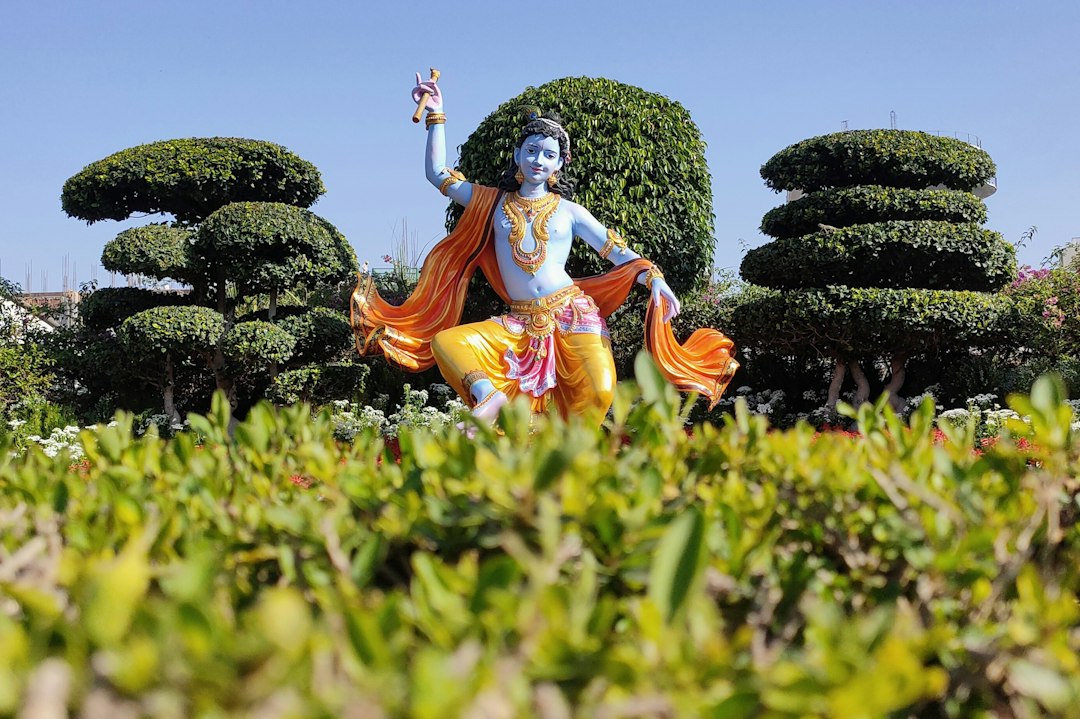
One of the most popular traditions associated with Annakut is Chhappan Bhog, meaning an offering of 56 food items.
A widely told devotional explanation connects the number 56 with the seven days during which Krishna protected the people of Braj by holding Govardhan Hill.
According to this popular tradition, Krishna normally ate eight times during the day. While holding Govardhan Hill for seven days, he remained focused on protecting the residents and did not follow his usual meals.
Eight meals multiplied by seven days gives 56.
After the danger passed, devotees are traditionally said to have prepared 56 dishes as an expression of love and gratitude toward Krishna.
This explanation is deeply popular in Krishna devotional traditions, although practices and interpretations can differ across regions and temples.
Today, Chhappan Bhog may include sweets, savouries, fruits, rice preparations, vegetables, milk-based dishes, breads and other vegetarian offerings.
Why Are 56 Bhog Offered on Govardhan Puja?
The tradition of 56 bhog on Govardhan Puja is ultimately an expression of devotion rather than a requirement that every household must prepare exactly 56 dishes.
The number has acquired strong symbolic importance through the Krishna tradition, but the deeper principle of Annakut is bhava—the feeling behind the offering.
A temple may prepare hundreds of elaborate dishes. A family at home may offer only a few lovingly prepared foods.
Spiritual sincerity is not measured by the size of the feast.
The essence remains gratitude.
One simple dish offered with devotion may carry more spiritual meaning for a person than dozens of preparations made only to fulfil an external ritual.
How Is Annakut Prepared?
People often wonder how Annakut is prepared for Govardhan Puja.
Preparations usually begin by cleaning the home or temple space and preparing vegetarian dishes intended for offering. The exact Annakut food items differ according to local customs, family traditions and available ingredients.
Dishes may include rice preparations, puris, rotis, dal, khichdi, seasonal vegetables, curries, sweets, laddoos, halwa, kheer, fruits, dry fruits, milk, curd, butter and other Krishna bhog preparations.
The foods are then arranged attractively before the deity. In many temples, the arrangement is intentionally designed like a mountain to symbolise Govardhan Hill.
Some families also create a representation of Govardhan and perform traditional Govardhan worship.
Prayers, bhajans, aarti and offerings may follow. Once the food has been offered, it is distributed as Annakut prasad.
The most important aspect is not extravagance but devotion and gratitude.
What Is Offered in Annakut?
There is no single universal Annakut food list followed everywhere.
Different communities maintain different culinary traditions. An Annakut offering may contain grains, rice, lentils, vegetables, breads, sweets, dairy preparations, fruits, nuts, savouries and beverages considered appropriate for bhog.
In major Krishna temples, the display may become extremely elaborate, with numerous dishes beautifully arranged before the deity.
At home, the offering can remain simple.
What connects all these traditions is the intention to present the nourishment received in life back to God before sharing it as prasad.
Govardhan Puja and Gratitude Toward Nature
One of the most relevant messages of the Lord Krishna Govardhan story is its emphasis on recognising what genuinely sustains us.
The residents of Braj depended on cows, fields, water, vegetation and Govardhan Hill. Krishna redirected their attention toward this immediate relationship with nature.
For a modern reader, this part of the story carries particular significance.
Every meal remains dependent upon soil, water, sunlight, climate and human labour. Yet modern life can create a distance between people and the origins of their food.
Annakut restores awareness.
When we look at a mountain of food offered during Govardhan Puja, we are invited to see not merely dishes but an entire chain of nourishment.
Gratitude naturally creates responsibility. When something is recognised as sacred, we become less willing to waste it.
Thus, the spiritual meaning of Annakut can also inspire mindful consumption, respect for food and compassion toward those who do not have enough.
Why We Celebrate Radha Ashtami? Story History & Significance
Annakut Is Also a Celebration of Sharing
Annakut does not end when food is placed before Krishna.
The offering becomes prasad, which is then shared.
This is essential to the spirit of the festival.
True abundance is not merely having more. It is having enough awareness to share.
When devotees eat Annakut prasad together, distinctions of possession become less important. Everyone receives from the same offering.
In this way, Govardhan Puja carries a beautiful social message alongside its spiritual one: what we receive becomes more meaningful when it benefits others.
What Govardhan Puja Teaches Us Today
The Govardhan Puja significance remains remarkably relevant even outside its ritual context.
Krishna's story encourages us to question unconscious habits, appreciate the sources of our nourishment and recognise the relationship between human life and nature.
Annakut teaches another equally powerful lesson.
We often focus on what is missing from our lives. The festival asks us to notice what has already been given.
Food on the table. People who support us. A body capable of experiencing life. Nature that provides nourishment. Opportunities to learn, serve and grow.
Gratitude does not mean that every difficulty disappears. It means that even while moving toward something better, we do not become blind to what already sustains us.
That shift in awareness is itself a spiritual practice.
The Spiritual Meaning Behind the Mountain of Food
A mountain represents something vast.
During Annakut, the mountain is created not from stone but from nourishment. Symbolically, it reminds devotees of the vastness of divine abundance.
Yet the offering also contains a paradox.
The devotee creates an elaborate feast—and then offers it away.
That is precisely where its spiritual beauty lies.
Annakut teaches that abundance and surrender can exist together. We can enjoy what life provides without becoming psychologically possessed by it. We can achieve, earn, create and celebrate while still remembering that nothing in the external world is permanently ours.
The practice therefore transforms a festival of food into a meditation on gratitude, surrender and inner freedom.
So, why is Annakut offered during Govardhan Puja?
Annakut commemorates Lord Krishna's connection with Govardhan Hill, celebrates his protection of the people of Braj and expresses gratitude for the abundance that sustains life. The symbolic mountain of food recalls Govardhan itself, while traditions such as Chhappan Bhog express the devotees' love for Krishna through an elaborate offering.
But the deepest meaning of Annakut does not lie in whether we prepare five dishes, 56 dishes or hundreds.
It lies in our state of awareness.
Can we look at our food and feel gratitude?
Can we recognise nature as something sacred rather than something we simply consume?
Can we receive abundance without becoming attached to it?
And can we share what we have with others?
When these questions become part of our daily lives, the message of Govardhan Puja moves beyond one festival day.
The mountain of food becomes a mountain of gratitude.
And that is when the story of Krishna and Govardhan becomes something we do not merely remember—but something we begin to live.
Personal Session
Every person's questions, challenges and spiritual journey are different. A personal session can help you gain deeper clarity about the patterns holding you back and understand how spiritual wisdom can be applied to your own life. Book a Personal Session and take the next step toward greater clarity, awareness and inner transformation.
Book Now
Read Latest Articles
Dussehra 2026 Date and Time: Vijayadashami Story, Rituals & Significance
Ashtami 2026: Durga Ashtami Date, Time & Navratri Puja Guide
Yama Deepam on Dhanteras: Why Do We Light a Diya for Lord Yama?
Frequently Asked Questions
Why is Annakut offered during Govardhan Puja?
Annakut is offered during Govardhan Puja to honour Lord Krishna and commemorate the Govardhan Hill story. Devotees arrange numerous food preparations like a mountain, symbolising Govardhan, and offer them to Krishna in gratitude for nourishment, protection and nature's abundance. The food is later distributed as prasad.What does Annakut mean?
Annakut means a “mountain of food.” It refers to the elaborate arrangement of food offered to Lord Krishna during Govardhan Puja. The mountain-like presentation symbolically represents Govardhan Hill.What is the significance of Annakut?
Annakut symbolises gratitude for food, nature and divine abundance. It commemorates Krishna's Govardhan story while teaching devotees to recognise the source of their nourishment and share their blessings with others.Why is Annakut offered to Lord Krishna?
Annakut is offered to Lord Krishna in remembrance of his protection of the residents of Braj when he lifted Govardhan Hill. The offering expresses devotion, gratitude and surrender.Why are 56 dishes offered to Krishna?
According to a popular devotional tradition, Krishna normally ate eight times a day. During the seven days he held Govardhan Hill, he is said to have forgone these meals. Eight multiplied by seven equals 56, inspiring the tradition of Chhappan Bhog.Is Annakut the same as Chhappan Bhog?
They are closely related but not always identical. Annakut refers broadly to the mountain-like food offering made during Govardhan Puja, while Chhappan Bhog specifically refers to an offering of 56 food preparations.What food is offered during Annakut?
Annakut may include rice, dal, vegetables, breads, sweets, fruits, milk products, savouries and other vegetarian foods prepared as Krishna bhog. The exact dishes vary between families, regions and temples.How is Annakut celebrated?
Devotees prepare various foods, arrange them before Lord Krishna or a representation of Govardhan Hill, perform prayers and aarti, and offer the meal as bhog. Afterwards, the food is distributed as prasad.When is Annakut celebrated?
Annakut is traditionally associated with Govardhan Puja during Kartik Shukla Pratipada, around the Diwali festival period. Exact observances may vary according to regional and religious calendars.