

Dussehra is one of India's most widely celebrated festivals, marking a powerful message that has remained relevant across generations: truth ultimately prevails over falsehood, dharma over adharma and light over darkness. Also known as Vijayadashami or Dasara, the festival arrives at the culmination of Navratri and is associated with some of the most significant stories and traditions in Hindu culture.
Dussehra 2026 will be celebrated on Tuesday, October 20, 2026. The festival is observed on Vijayadashami, the tenth day connected with the conclusion of the Navratri celebrations. Government tourism information for India also lists Dussehra on October 20, 2026.
For millions of devotees, however, Dussehra is much more than a festival commemorating a victory from the past. It is an invitation to recognise and overcome the inner tendencies that prevent us from living with awareness, courage, balance and righteousness.
From the legendary victory of Lord Rama over Ravana to Goddess Durga's triumph over Mahishasura, every tradition associated with Vijayadashami points toward transformation. Understanding the deeper spiritual significance of Dussehra therefore allows the festival to move from an external celebration to an opportunity for inner reflection.

Dussehra 2026 Date: When Is Vijayadashami in 2026?
People searching for the Dussehra 2026 date or Vijayadashami 2026 date should mark Tuesday, October 20, 2026.
According to Panchang calculations for Gurugram, Haryana, Dashami Tithi begins at 12:50 PM on October 20, 2026, and ends at 2:11 PM on October 21, 2026. Vijayadashami is observed on October 20, while the Bengal Vijayadashami observance is listed for October 21.
The date is significant because Vijayadashami literally conveys the idea of a victorious tenth day — Vijaya referring to victory and Dashami referring to the tenth lunar day.
It follows the nine nights of Navratri, during which different manifestations of the Divine Feminine are worshipped. Vijayadashami represents the culmination of that journey: the moment when spiritual strength triumphs over ignorance, ego and negativity.
Design Your Destiny
Dussehra reminds us that the Ravana outside may be burned in a moment, but overcoming the anger, fear, attachment and limiting patterns within requires awareness. Design Your Destiny is an invitation to move from simply understanding spiritual wisdom to applying it in everyday life. Discover how greater awareness, clarity and conscious action can help you transform the way you experience yourself and your life.
Start Your Journey Today!Dussehra 2026 Puja Muhurat and Vijayadashami Time
The Dussehra 2026 puja muhurat depends on geographical location because Panchang calculations vary according to local sunrise and other astronomical factors.
For Gurugram/Delhi-NCR, the Vijay Muhurat on October 20, 2026 is approximately 2:00 PM to 2:46 PM, while the broader Aparahna Puja period is approximately 1:15 PM to 3:31 PM.
Delhi timings are very similar, with the Vijay Muhurat listed from 1:59 PM to 2:45 PM.
Devotees planning a traditional Vijayadashami puja should ideally confirm the Panchang for their own city before fixing the final time.
The Aparahna period is particularly associated with traditional Vijayadashami observances such as Shami Puja, Aparajita Puja and Seema Avalanghan.
Dussehra 2026 Ravana Dahan Time
One of the most searched questions around the festival is the Dussehra 2026 Ravana Dahan time.
There is no single nationwide Ravana Dahan clock time. Public celebrations are organised locally, and timings are generally announced by individual Ramlila committees, temples, societies or city administrations. Ravana Dahan is commonly held toward the evening as the dramatic culmination of Ramlila celebrations.
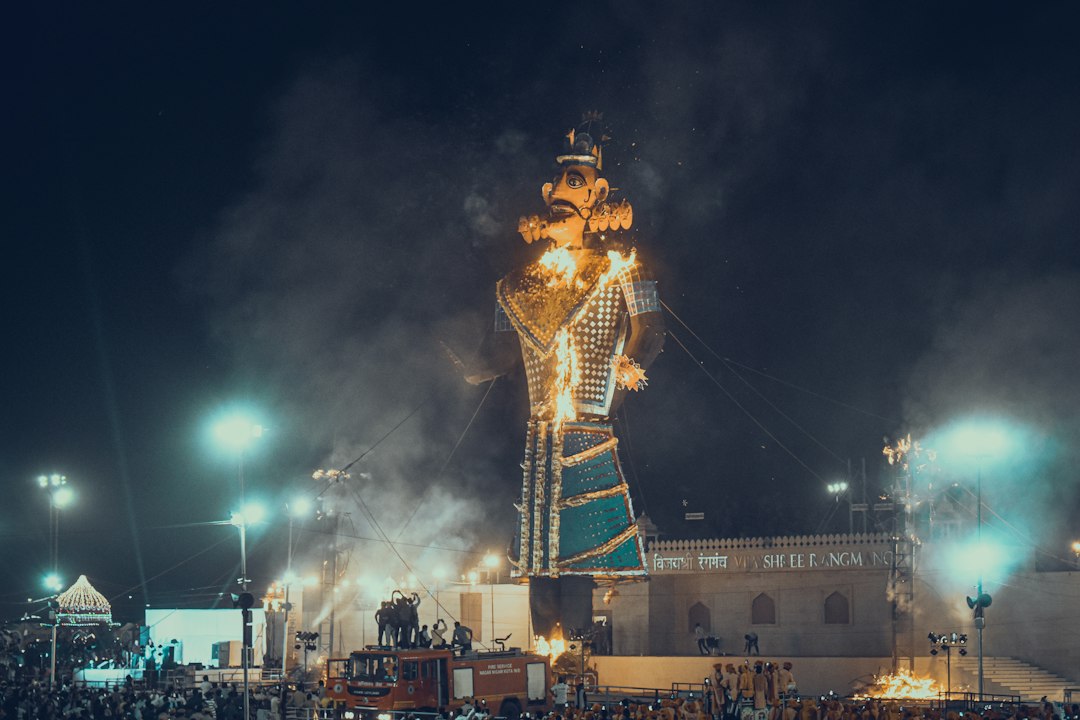
Across northern India, enormous effigies of Ravana are often accompanied by those of Kumbhakarna and Meghnad. Their symbolic burning represents the destruction of evil and the triumph of righteousness. India's official tourism portal describes Ravana Dahan as one of Dussehra's most prominent public traditions.
For the exact Ravana Dahan time on October 20, 2026, visitors should therefore check their local event or Ramlila organiser rather than relying on one generic national timing.
9 Forms of Maa Durga: Names, Stories, Mantras & Significance
Why Is Dussehra Celebrated?
To understand why Dussehra is celebrated, we must look at the stories that have shaped the festival's meaning.
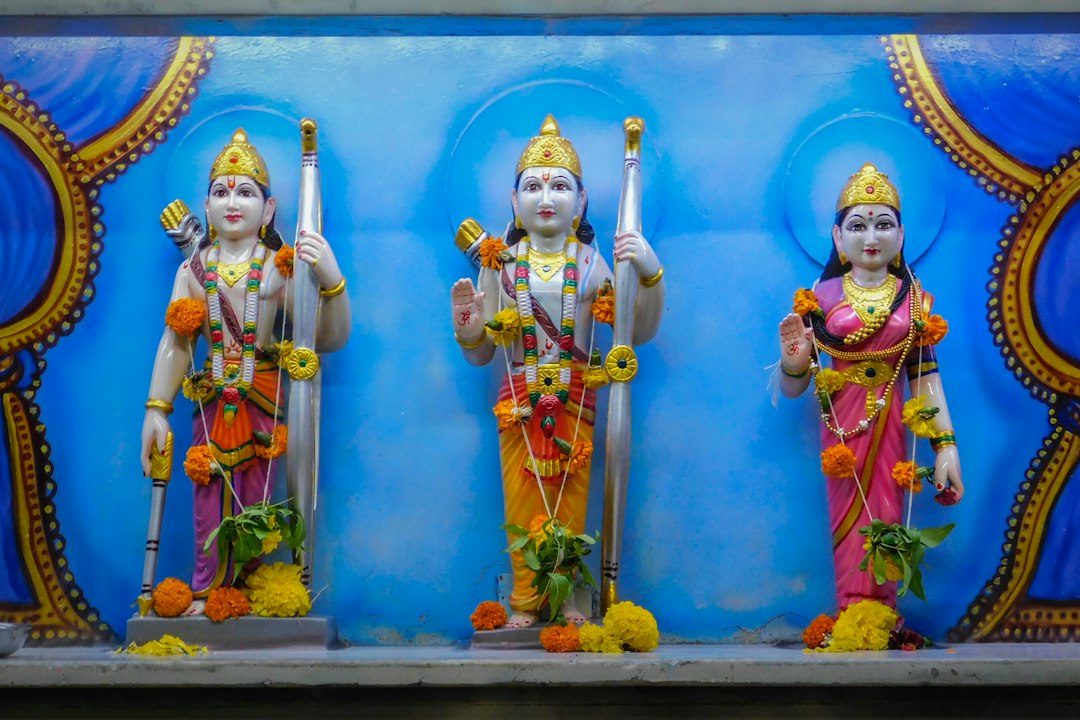
In much of northern India, Dussehra commemorates the victory of Lord Rama over Ravana, the king of Lanka. According to the Ramayana tradition, Ravana abducted Sita and took her to Lanka. Lord Rama, accompanied by Lakshmana and supported by Hanuman and the Vanara army, undertook the journey to rescue her.
A great battle followed between Rama and Ravana. Vijayadashami commemorates Rama's eventual victory over Ravana, making the festival a lasting symbol of dharma prevailing over adharma.
This is why Ramlila performances are such an important feature of the days leading to Dussehra. Episodes from the Ramayana are enacted before audiences, culminating in the defeat of Ravana. Ramlila itself has been recognised by UNESCO as part of humanity's intangible cultural heritage, and Dussehra celebrations continue to bring these narratives into public life.
The story reminds devotees that victory is not simply about defeating an external opponent. It begins with choosing courage, truth and righteous action even in difficult circumstances.
Lord Rama and Ravana Dussehra Story: Its Deeper Meaning
The Lord Rama and Ravana Dussehra story becomes even more meaningful when understood symbolically.
Ravana is remembered as immensely knowledgeable and powerful, yet his knowledge did not free him from pride, attachment and uncontrolled desire. The story therefore asks an uncomfortable but valuable question: what is the purpose of knowledge if it does not transform the person who possesses it?
Lord Rama, in contrast, represents discipline, responsibility, self-control and adherence to dharma despite adversity.
Seen through this lens, the burning of Ravana can become a symbolic practice of identifying the inner patterns that repeatedly disturb our lives — anger, greed, jealousy, arrogance, attachment, dishonesty or uncontrolled desire.
The most meaningful Ravana Dahan may therefore be the one that happens within.
Goddess Durga and the Significance of Vijayadashami
Dussehra also has a powerful connection with Goddess Durga.
In several traditions, Vijayadashami commemorates the triumph of Goddess Durga over Mahishasura. The festival therefore marks the victory of divine Shakti over destructive forces. Official Indian tourism resources describe Vijayadashami as the culmination of the nine nights of Navratri and, in several parts of India, as the celebration of Durga's victory over Mahishasura.
In West Bengal, Vijayadashami also marks the conclusion of Durga Puja and is associated with the ceremonial farewell and immersion of Durga idols.
The Rama-Ravana tradition and the Durga-Mahishasura tradition may appear different, yet their essential message converges: darkness does not have the final word.
Dussehra Rituals and Puja Vidhi
Dussehra rituals differ significantly across India's regions and communities, which is why there is no single Dussehra puja vidhi followed everywhere.
Many families begin Vijayadashami with prayer and the worship of their chosen deity. Homes and places of worship may be cleaned and decorated, lamps may be lit, and offerings of flowers, fruits and sweets may be made.
Aparajita Puja is associated with worship of the divine power of victory. Shami Puja is another recognised Vijayadashami tradition, while Seema Avalanghan or Simollanghan is observed in several regions. Traditional Panchang sources associate these observances particularly with the Aparahna period.
In different parts of southern India, tools, books, instruments and objects associated with one's work or learning also receive special reverence around the concluding days of Navratri and Vijayadashami. These customs remind us that knowledge, skills and the instruments through which we serve society deserve respect rather than being taken for granted.
In northern India, attending Ramlila and witnessing Ravana Dahan remain central community traditions.
The exact ritual may differ, but the essential intention is similar: expressing gratitude, invoking strength and beginning again with greater clarity.
Spiritual Significance of Dussehra
The spiritual significance of Dussehra becomes clearer when we stop seeing Ravana only as a character outside ourselves.
Each human being experiences an inner conflict between awareness and impulse, patience and anger, humility and ego, truth and convenience.
We frequently know what is right and still choose otherwise. We understand the importance of peace but continue feeding thoughts that disturb us. We seek happiness but become attached to possessions, expectations and approval. In that sense, the battlefield represented by Dussehra can also be understood as the battlefield within the human mind.
Real victory begins when awareness becomes stronger than unconscious habit.
That is why Vijayadashami can become a day for self-observation. Which tendency within you needs to end? Which attachment is preventing growth? Which habit repeatedly takes you away from peace? Which fear has been controlling your decisions?
When these questions are asked sincerely, Dussehra becomes more than an annual celebration.
It becomes a practice of inner transformation.
Dussehra and the Victory of Awareness Over Ego
Ravana's destruction is often represented spectacularly through towering effigies and fireworks. Yet the ego within us rarely disappears through one dramatic act.
Inner transformation requires awareness.
The ego becomes powerful when we remain unconscious of our reactions. Anger grows when it is continuously justified. Jealousy survives when it is never observed. Attachment strengthens when every desire is automatically obeyed.
Awareness creates a gap between an emotion and our response to it.
That gap gives us freedom.
The message of Vijayadashami is therefore deeply relevant to modern life. Victory does not necessarily mean defeating another person. Sometimes victory means refusing to react impulsively. Sometimes it means letting go of resentment. Sometimes it means acting according to what is right even when the easier option is more attractive.
This is the living spiritual meaning of Vijayadashami.
Navratri: Dates, Puja Timings, Vrat Rule & Spiritual Meaning
How Dussehra Is Celebrated Across India
Although the central message of Dussehra remains connected with victory and renewal, India's celebrations are remarkably diverse.
Delhi and many parts of northern India are known for Ramlila performances and Ravana Dahan. West Bengal observes Vijaya Dashami as the concluding phase of Durga Puja. Mysuru's celebrated Dasara traditions revolve around elaborate processions and the worship of Goddess Chamundeshwari.
Kullu has its own distinctive Dussehra traditions, while Bastar Dussehra represents an entirely different cultural expression centred on Maa Danteshwari and local tribal traditions rather than Ravana Dahan. Official tourism information notes that Bastar's observance extends for approximately 75 days and does not centre on burning Ravana's effigy.
This diversity shows that Dussehra is not confined to one form of celebration. Different regions express the festival through their own histories, deities and customs while preserving the broader themes of devotion, courage and renewal.
What Can Dussehra Teach Us in Everyday Life?
The true relevance of Vijayadashami significance appears when its teachings are applied after the festival ends.
We may burn Ravana once every year, but anger, attachment and ego can return the very next morning.
The question is therefore not simply whether we celebrate Dussehra. It is whether we live its message.
Victory over anger may mean remaining conscious during disagreement. Victory over greed may mean recognising when enough is enough. Victory over ego may mean being able to admit a mistake. Victory over fear may mean taking the right action despite uncertainty.
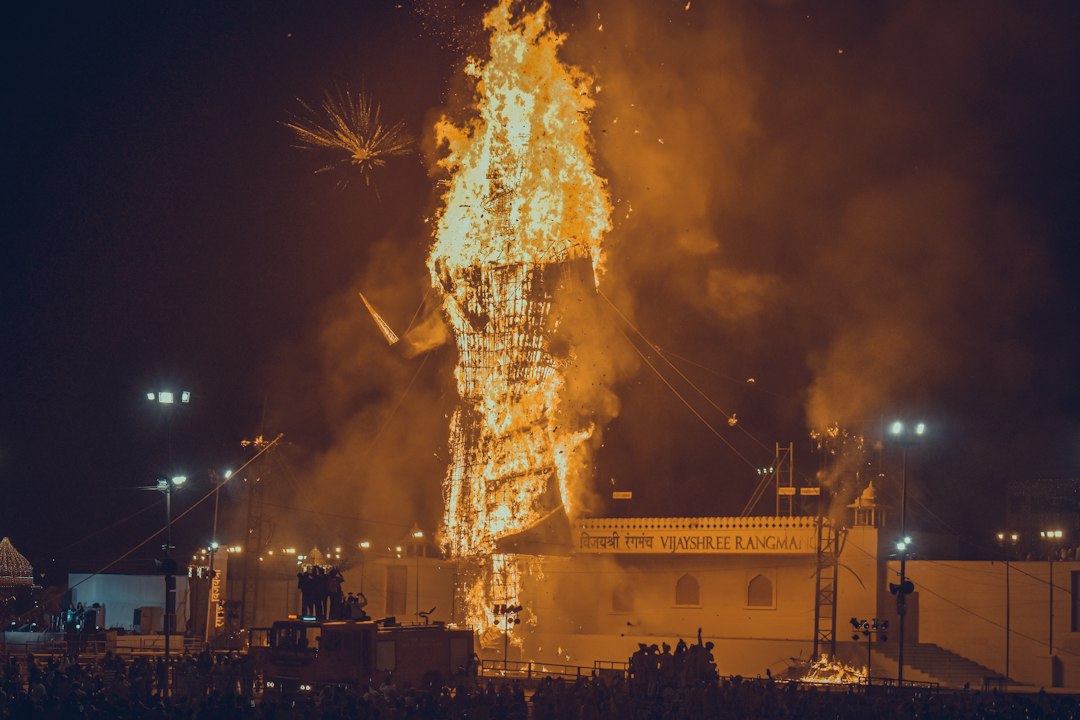
Dussehra reminds us that the greatest battles of life are often invisible.
When awareness defeats unconsciousness, when wisdom guides action and when truth becomes stronger than convenience, Vijayadashami is no longer merely a festival on the calendar.
It becomes a way of living.
Personal Session
Every person's challenges, patterns and questions are different. Sometimes, deeper clarity begins with an opportunity to look inward with the right guidance. A personal session can help you explore the thoughts, emotional patterns and inner conflicts that may be preventing you from experiencing greater clarity and peace.
Book NowRead Latest Articles
What You Experience After Fasting Every Monday in Sawan
Frequently Asked Questions
When is Dussehra 2026?
Dussehra 2026 will be celebrated on Tuesday, October 20, 2026. Also known as Vijayadashami, it marks Lord Rama's victory over Ravana and is also associated with Goddess Durga's victory over Mahishasura. Puja muhurat timings vary by city, so devotees should check their local Panchang before performing Vijayadashami rituals.Is Dussehra on October 20 in 2026?
Yes. Dussehra or Vijayadashami will be observed on Tuesday, October 20, 2026.What is the Dussehra 2026 puja muhurat?
For Gurugram, the Vijay Muhurat is approximately 2:00 PM to 2:46 PM, while the Aparahna Puja period is approximately 1:15 PM to 3:31 PM on October 20, 2026. Timings vary according to location.What is the Dashami Tithi timing in 2026?
For the referenced Panchang, Dashami Tithi begins at 12:50 PM on October 20 and ends at 2:11 PM on October 21, 2026.What is the Dussehra 2026 Ravana Dahan time?
There is no single Ravana Dahan time for all of India. Ravana Dahan is generally organised during local evening Dussehra celebrations, and the exact timing is determined by the relevant Ramlila committee or event organiser.Why is Dussehra celebrated?
Dussehra commemorates the victory of Lord Rama over Ravana and, in another major tradition, Goddess Durga's victory over Mahishasura. Both narratives represent the triumph of righteousness over destructive forces.Are Dussehra and Vijayadashami the same?
Yes. Vijayadashami is also widely known as Dussehra or Dasara, although traditions and forms of celebration vary considerably between regions.What is the spiritual significance of Dussehra?
Spiritually, Dussehra can be understood as a reminder to overcome inner negativity such as anger, greed, attachment, jealousy and ego. It encourages awareness, right action and the victory of wisdom over unconscious habits.