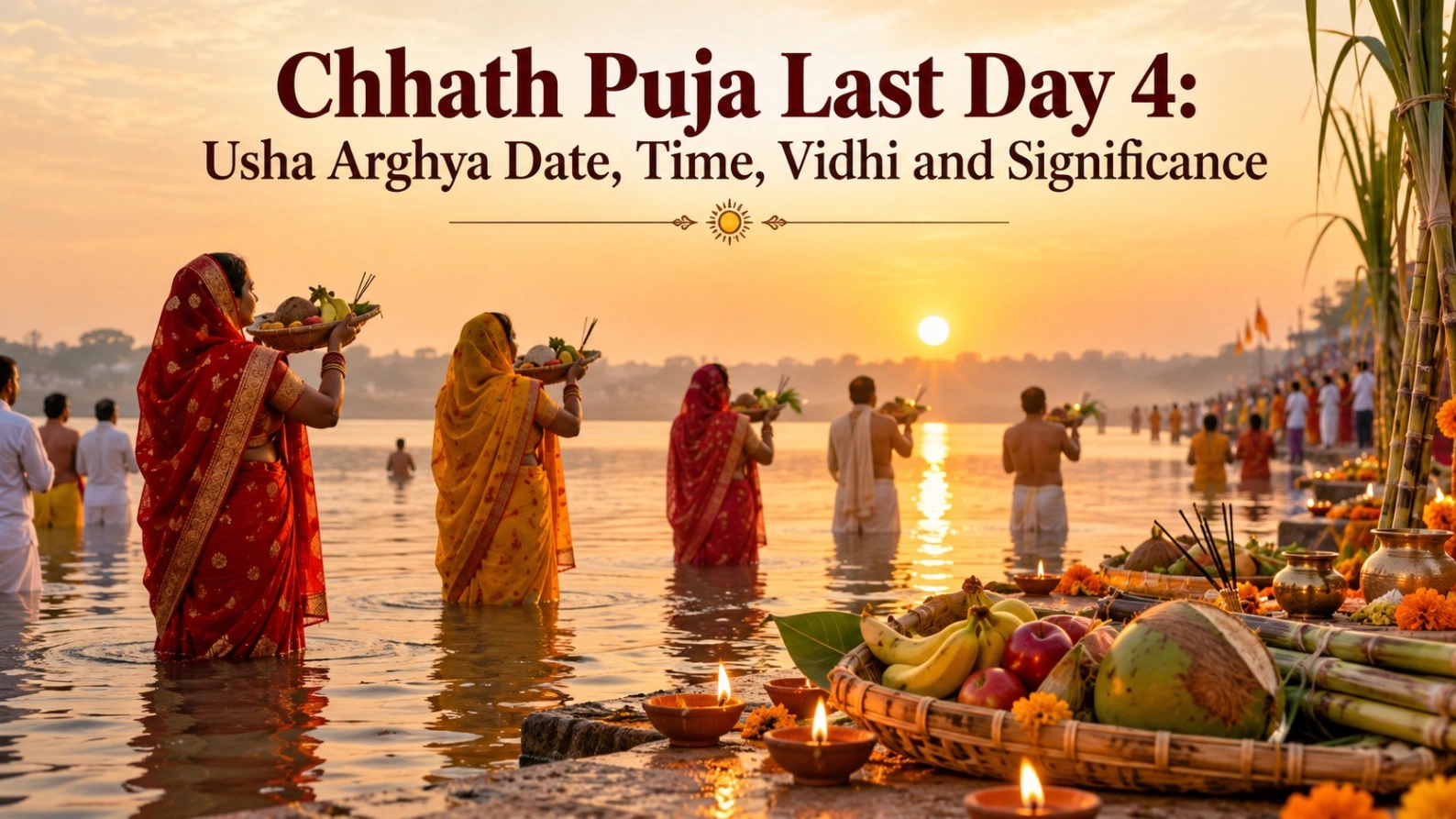
Chhath Puja is one of the most sacred and disciplined Hindu festivals dedicated to Surya Dev, the Sun God, and Chhathi Maiya. Celebrated over four days, each stage of the festival has a distinct spiritual and ritual significance. The fourth and final day of Chhath Puja is known as Usha Arghya, when devotees offer prayers to the rising Sun and conclude the vrat through Parana.
If you are searching for Chhath Puja Last Day 4 Usha Arghya 2026, the final day will be observed on Monday, November 16, 2026. According to the 2026 Chhath calendar for New Delhi, Usha Arghya and Parana Day falls on November 16, with sunrise at 6:44 AM and sunset at 5:27 PM. Since Usha Arghya is offered to the rising Sun, devotees gather before sunrise so they are ready to offer Arghya as the Sun appears on the horizon.
The final day of Chhath Puja is emotionally and spiritually powerful. After days of fasting, devotion and discipline, devotees stand in water and offer gratitude, prayer and surrender to Surya Dev. Usha Arghya represents hope, renewal, blessings and the completion of one of the purest observances in Hindu tradition.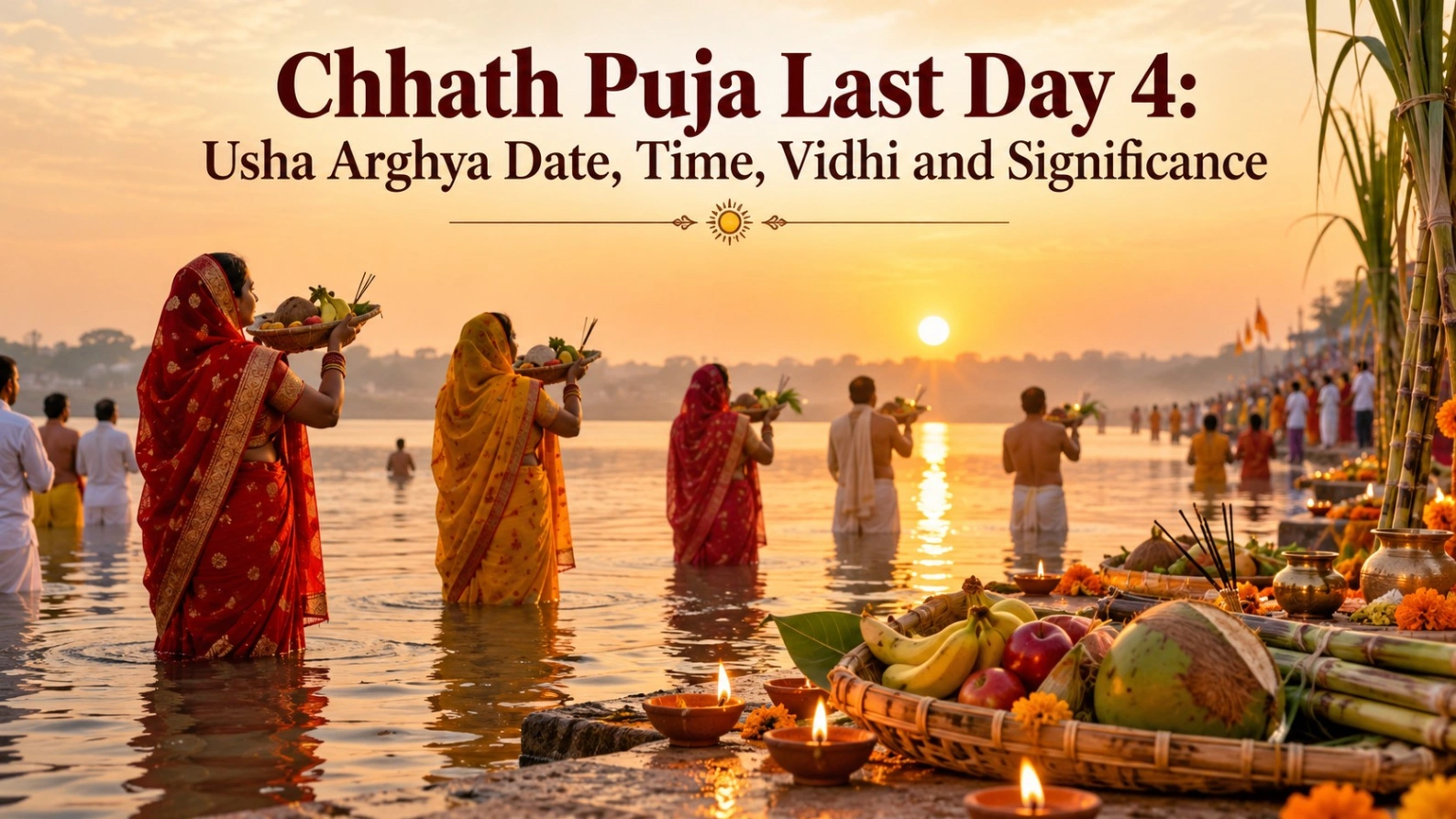
Usha Arghya 2026 Date and Time
For 2026, the important details are:
Festival: Chhath Puja Day 4
Name of the Day: Usha Arghya and Parana Day
Date: Monday, November 16, 2026
Sunrise in New Delhi: 6:44 AM
Sunset in New Delhi: 5:27 PM
Because Usha Arghya is offered to the rising Sun, the most important time is around local sunrise. Devotees should always check the local sunrise timing for their own city, because the exact time differs between places.
What Is Usha Arghya in Chhath Puja?
Usha Arghya is the final ritual offering to the rising Sun on the fourth day of Chhath Puja.
The word Usha refers to dawn or early morning, and Arghya means a respectful offering made with water and prayer. On this day, the vratin and family members gather at a river, pond, lake or other water body before sunrise. They stand in the water and offer Arghya to Surya Dev as the Sun rises.
This act is filled with reverence and gratitude. While the third day of Chhath is associated with Sandhya Arghya, the offering to the setting Sun, the fourth day completes the festival with Usha Arghya, the offering to the rising Sun.
This final offering carries a beautiful spiritual message: gratitude for endings and hope for new beginnings.
Chhath Puja Day 4 Date in 2026
The last day of Chhath Puja 2026 falls on Monday, November 16, 2026.
This day comes after:
Day 1: Nahay Khay
Day 2: Lohanda and Kharna
Day 3: Sandhya Arghya / Main Chhath Puja
Day 4: Usha Arghya and Parana
By the time devotees reach Usha Arghya, they have already completed an extraordinary journey of fasting, purity and worship.
Design Your Destiny
The last day of Chhath Puja reminds us that every period of discipline, patience and surrender leads to a new sunrise. Usha Arghya teaches that inner strength grows when we move through life with devotion, gratitude and awareness.
Start Your Journey Today!Why Is Usha Arghya Important?
Usha Arghya is important because it marks the culmination of Chhath Puja.
The offering to the rising Sun symbolises:
renewal
hope
gratitude
spiritual completion
divine blessings
fresh beginnings
In Hindu thought, the Sun is the visible source of life, light and energy. By offering Arghya at sunrise, devotees honour Surya Dev as the sustainer of existence and pray for health, prosperity, family welfare and inner strength.
The morning Sun also represents awakening. Spiritually, this can be understood as the awakening of consciousness after a period of discipline and austerity.
Usha Arghya Vidhi
The Usha Arghya vidhi is simple in form but profound in devotion.
A common explanation of the ritual sequence is as follows:
The vratin wakes up early, often before dawn. Family members also prepare and gather the puja items. Devotees go to the ghat or water body while it is still dark or during dawn twilight.
The offerings, traditionally arranged in bamboo baskets or soop, are carried carefully to the site. Fruits, thekua, sugarcane, coconuts and other Chhath offerings are kept ready.
As the Sun begins to rise, the vratin stands in the water facing east. Water is offered with folded hands and deep prayer. Arghya is given to the rising Sun with devotion and gratitude.
Family members may chant prayers or remain in silent reverence. After the offering is completed, the vrat is concluded later through Parana.
The beauty of the ritual lies not in complexity, but in sincerity, purity and discipline.
What Is Offered During Usha Arghya?
The offerings on the last day of Chhath Puja are generally similar to those used during the main Chhath rituals. These often include:
thekua
fruits such as bananas and coconuts
sugarcane
seasonal offerings
diyas
water for Arghya
bamboo soop or baskets
traditional prasad items
The exact items can vary by family and regional custom, but the spirit remains the same: gratitude to Surya Dev and Chhathi Maiya.
Difference Between Sandhya Arghya and Usha Arghya
Many readers search for the difference between Sandhya Arghya and Usha Arghya.
Sandhya Arghya
This is offered on Day 3 of Chhath Puja to the setting Sun.
Usha Arghya
This is offered on Day 4 of Chhath Puja to the rising Sun.
Together, these two offerings make Chhath unique. It is one of the few Hindu observances where the Sun is worshipped at both sunset and sunrise.
This dual worship reflects a deep wisdom: gratitude should be offered not only at the beginning, but also at the close of a cycle.
Navratri Day 5:Skandamata Puja Vidhi,Mantra,Colour & Significance
What Is Parana on Chhath Puja Last Day?
After Usha Arghya, the vrat is completed through Parana.
Parana means breaking the fast after the worship is complete. Since Chhath involves an extremely strict fasting sequence, Parana is a very important and emotional moment for the vratin.
After offering Arghya to the rising Sun, devotees return home or complete the concluding ritual steps and then end the fast with prasad and simple food according to family custom.
Parana symbolises:
completion of tapasya
acceptance of divine grace
return from austerity into daily life
gratitude for strength received during the vrat
Because Chhath is such a disciplined observance, Parana is not treated casually. It is performed with reverence and thanksgiving.
Spiritual Significance of Usha Arghya
The spiritual meaning of Usha Arghya is profound.
1. Gratitude to the Source of Life
The Sun sustains all life. Offering Arghya is an act of humility and thankfulness.
2. Completion of Austerity
The final day completes the fast and the entire Chhath vrat.
3. Prayer for Family Well-Being
Devotees pray for the happiness, protection and prosperity of the family.
4. Hope and Renewal
The rising Sun naturally symbolises new beginnings and fresh possibilities.
5. Inner Awakening
After days of discipline, the devotee reaches a moment of stillness, surrender and spiritual clarity.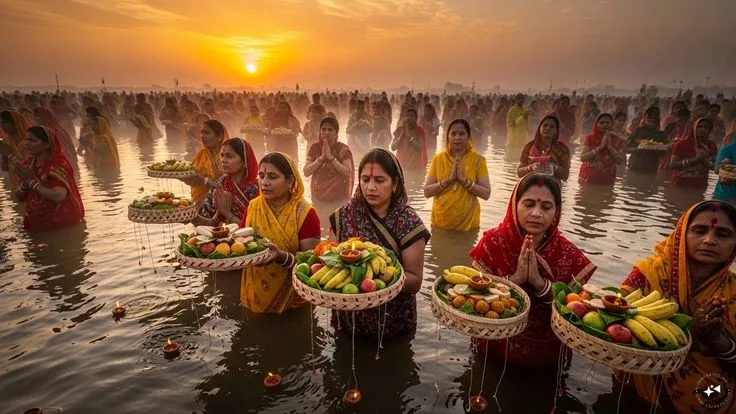
Why Do Devotees Stand in Water During Usha Arghya?
Standing in water is one of the most visually powerful aspects of Chhath Puja.
Water symbolises purity, receptivity and surrender. By standing in the water and offering Arghya to the rising Sun, devotees place themselves in a posture of humility before nature and the divine.
The act also reflects deep concentration. The devotee is fully present, physically grounded and spiritually focused.
Can Usha Arghya Be Done at Home?
Traditionally, Usha Arghya is offered at a natural water body or ghat. However, some families may adapt the observance based on circumstances, location or health conditions.
Wherever the ritual is performed, the key principles of Chhath remain:
purity
sincerity
devotion
gratitude
discipline
Still, for traditional observance, families generally prefer to perform Usha Arghya at a river, pond, lake or a community ghat setup.
Usha Arghya and the End of the 36-Hour Fast
One of the most defining aspects of Chhath Puja is the long and demanding fast associated with the later days of the observance.
Usha Arghya is especially important because it comes at the end of this intense phase. After Sandhya Arghya on Day 3, the devotee continues the vrat and only concludes it after offering Usha Arghya on Day 4.
This is why the morning offering is so emotional for many families. It is not only a ritual act but the completion of devotion, sacrifice and unwavering faith.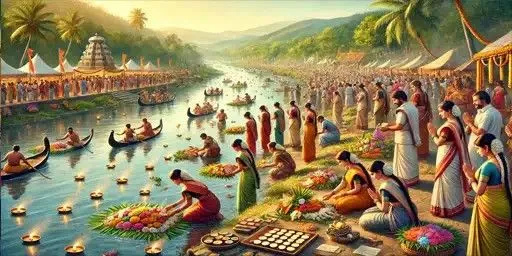
What Does the Rising Sun Symbolise in Chhath?
The rising Sun in Chhath Puja can be understood on many levels.
It symbolises:
light after darkness
hope after struggle
grace after discipline
awakening after silence
new beginnings after surrender
This symbolism makes Usha Arghya much more than a festival custom. It becomes a deeply spiritual act of welcoming divine light into life.
Chhath Puja Last Day 4 at a Glance
Festival: Chhath Puja Day 4
Ritual Name: Usha Arghya and Parana
Date: Monday, November 16, 2026
Main Offering: Arghya to the rising Sun
Sunrise in New Delhi: 6:44 AM
Importance: Final day of Chhath Puja and conclusion of the vrat
After the Ritual: Parana, or breaking the fast
Personal Session
Sometimes spiritual practices open deeper personal questions about life, relationships, purpose and direction. A personal session can help you reflect more deeply, find clarity and move forward with greater awareness.
Book Now
Read Latest Articles
Ahoi Ashtami Vrat Katha 2026 Read the Complete Ahoi Mata Story
Bhai Dooj Date: Tilak Muhurat, Puja Time & Complete Vidhi
Frequently Asked Questions
Q.When is Usha Arghya in Chhath Puja 2026?
Usha Arghya in Chhath Puja 2026 will be observed on Monday, November 16, 2026. It is the fourth and final day of Chhath Puja. Devotees offer Arghya to the rising Sun at sunrise and then conclude the vrat through Parana. In New Delhi, sunrise on Usha Arghya day is around 6:44 AM.Q.What is Usha Arghya?
Usha Arghya is the final offering made to the rising Sun on the fourth day of Chhath Puja.Q.What is the Usha Arghya 2026 date?
Usha Arghya in 2026 falls on Monday, November 16, 2026.Q.At what time is Usha Arghya offered?
It is offered at sunrise. In New Delhi, sunrise on November 16, 2026, is around 6:44 AM.Q.What is Parana in Chhath Puja?
Parana is the ritual breaking of the fast after Usha Arghya and marks the completion of the Chhath vrat.Q.Is Usha Arghya more important than Sandhya Arghya?
Both are extremely important. Sandhya Arghya is offered to the setting Sun, while Usha Arghya is offered to the rising Sun and completes the festival.Q.What is offered during Usha Arghya?
Devotees offer water, fruits, thekua, coconuts, sugarcane and other traditional Chhath prasad items.