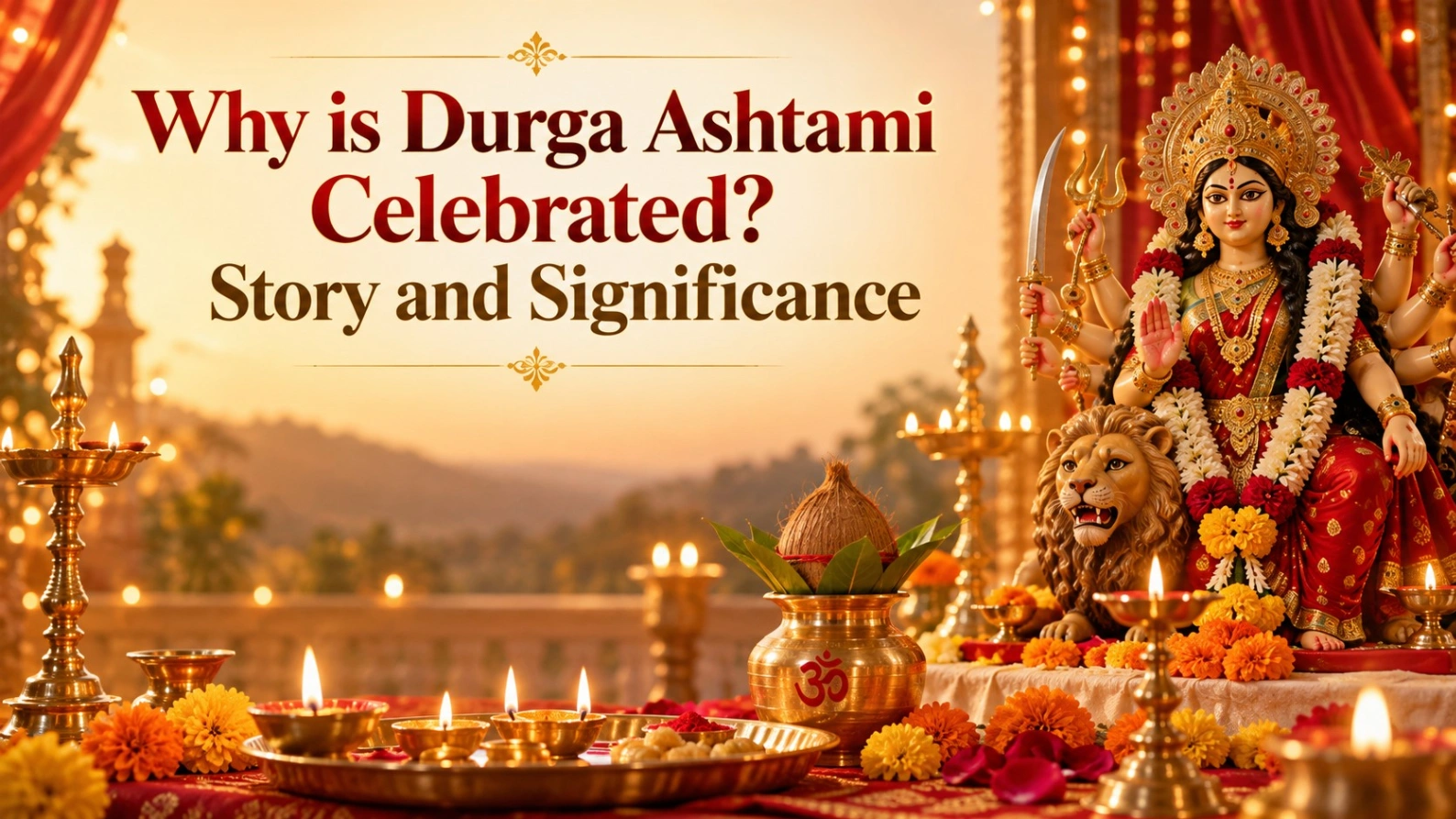
Durga Ashtami, also known as Maha Ashtami, is one of the most sacred and important days of Navratri and Durga Puja. Observed on the eighth lunar day, or Ashtami Tithi, the festival is dedicated to Goddess Durga and celebrates divine feminine power, courage and the victory of good over evil.
If you have ever wondered why Durga Ashtami is celebrated, the answer lies in both mythology and spiritual symbolism. The day honours Goddess Durga in her powerful form and is closely associated with her battle against the forces of evil. During Sharadiya Navratri, devotees also worship Maa Mahagauri, the eighth form of Navadurga, and many families perform Kanya Puja, worshipping young girls as manifestations of the Goddess.
In 2026, Durga Ashtami falls on Monday, October 19, 2026. For Delhi, Ashtami Tithi begins at approximately 8:27 AM on October 18 and ends at 10:51 AM on October 19. Maha Ashtami is one of the most important days of Durga Puja and includes elaborate worship and traditional rituals.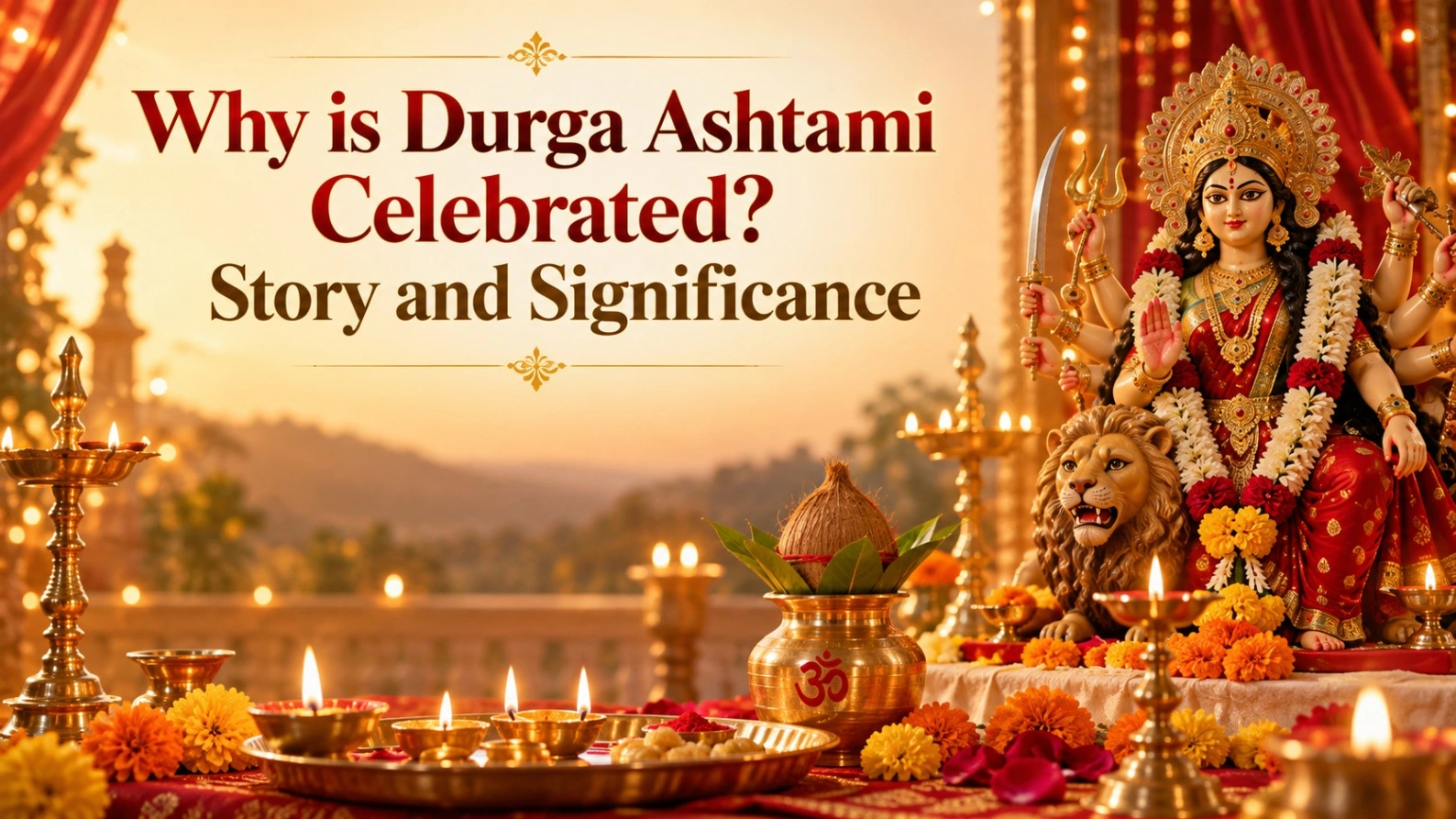
What Is Durga Ashtami?
Durga Ashtami is the eighth day of the Navratri festival and one of the central days of Durga Puja.
The word Ashtami means the eighth lunar day, while Durga refers to Goddess Durga, the divine feminine force who protects dharma and destroys evil.
During Sharadiya Navratri, this day is especially significant because devotees worship the Goddess with greater intensity through fasting, puja, mantra chanting, bhajans and Kanya Puja.
In Bengali Durga Puja traditions, Maha Ashtami is one of the most elaborate days of worship and is marked by special rituals, Pushpanjali and devotional gatherings.
Why Is Durga Ashtami Celebrated?
Durga Ashtami is celebrated to honour the divine power of Goddess Durga and the ultimate victory of righteousness over evil.
According to Hindu tradition, Goddess Durga fought the buffalo demon Mahishasura, who had become extremely powerful and was causing suffering across the worlds.
Mahishasura had received a boon that made him difficult to defeat. As his arrogance and power grew, the gods combined their divine energies, giving rise to Goddess Durga.
Armed with weapons given by different deities, Durga confronted Mahishasura and his army.
The battle became symbolic of the struggle between dharma and adharma, light and darkness, courage and fear.
Durga Ashtami is therefore celebrated as one of the most powerful days in the sequence leading towards the Goddess's victory.
Design Your Destiny
Durga Ashtami reminds us that real strength is not simply the power to fight the world outside us. It is also the courage to face the fears, habits and inner patterns that limit our growth.
Start Your Journey Today!Story of Goddess Durga and Mahishasura
The Durga Ashtami story is closely connected with the famous legend of Goddess Durga and Mahishasura.
According to Hindu mythology, Mahishasura was a powerful asura who performed severe penance and received a boon that made him nearly invincible.
Once empowered, he became arrogant and began attacking the devas.
Unable to defeat him individually, the gods united their divine energies.
From this combined radiance emerged Goddess Durga, magnificent and powerful.
Different gods offered her divine weapons. Shiva gave his trident, Vishnu his discus and other deities gave weapons and powers needed to confront the demon army.
Durga mounted her lion and fought Mahishasura and his forces.
The battle continued fiercely until the Goddess ultimately defeated him.
The victory became a timeless symbol of the triumph of divine wisdom, courage and righteousness over arrogance, violence and ignorance.
Is Mahishasura Killed on Durga Ashtami?
This is an important distinction.
Durga Ashtami is strongly associated with the intense phase of Goddess Durga's battle, but many Durga Puja traditions associate the final destruction of Mahishasura with Maha Navami.
Current Panchang descriptions specifically note that Goddess Durga is worshipped as Mahishasuramardini, the destroyer of Mahishasura, on Maha Navami.
Durga Ashtami should therefore be understood as one of the most sacred stages in the larger story of Durga's victory rather than simplistically saying that Mahishasura was universally believed to have been killed specifically on Ashtami.
Goddess Mahagauri on Durga Ashtami
During Navratri, the eighth day is traditionally associated with Maa Mahagauri, the eighth form of Navadurga.
Mahagauri represents purity, serenity, compassion and spiritual transformation.
Her name comes from the idea of extraordinary radiance and purity.
She is often depicted wearing white and riding a bull.
Devotees worship Mahagauri seeking peace, purification and freedom from negativity.
Her calm appearance contrasts beautifully with Durga's fierce warrior energy. Together, these aspects show that divine feminine power can be both strong and compassionate.
Ahoi Ashtami Vrat Katha 2026 Read the Complete Ahoi Mata Story
Spiritual Meaning of Durga Ashtami
The spiritual significance of Durga Ashtami goes beyond mythology.
Mahishasura can symbolise the negative forces within the human mind, including:
ego
anger
greed
jealousy
fear
ignorance
attachment
arrogance
Goddess Durga represents the awareness and inner strength required to overcome these tendencies.
In this interpretation, Durga Ashtami is not only about remembering a battle fought long ago.
It becomes a reminder that every individual has an inner battle between awareness and unconscious habits.
The true victory of Durga therefore takes place when clarity, courage and wisdom overcome fear, ego and negativity.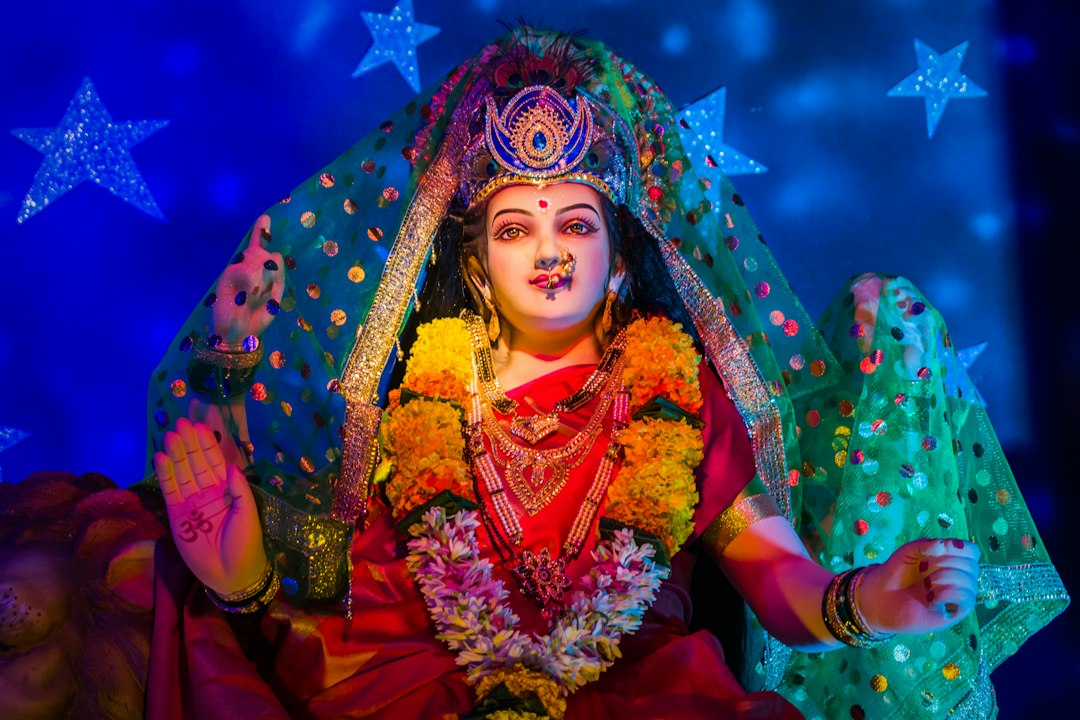
Why Is Kanya Puja Performed on Durga Ashtami?
One of the most popular traditions associated with Durga Ashtami is Kanya Puja, also known as Kumari Puja or Kanjak Puja.
Young girls are worshipped as manifestations of the Goddess.
Devotees wash their feet, offer food, flowers, gifts and seek their blessings.
The practice symbolises the belief that divine feminine energy exists in every girl and woman.
Kanya Puja is commonly performed on either Ashtami or Navami depending on family tradition.
The ritual also encourages respect for feminine energy and reminds devotees that worship of the Goddess should extend beyond temples into the way women and girls are treated in everyday life.
What Is Offered During Kanya Puja?
A traditional North Indian Kanya Puja meal commonly includes:
Puri
Kala chana
Halwa
Fruits
Sweets
The girls may also receive gifts, clothes or money according to family custom.
Before serving food, devotees often wash their feet and apply tilak.
The ritual ends by seeking their blessings.
Why Do Devotees Fast on Durga Ashtami?
Many devotees observe a fast on Durga Ashtami as a form of devotion and self-discipline.
Some keep a complete fast, while others consume fruits, milk or vrat-friendly foods.
The purpose of fasting is traditionally spiritual rather than merely dietary.
It helps devotees reduce distractions, focus on worship and practise restraint.
The fast may be broken after Kanya Puja or according to the family's specific Navratri tradition.
Those with medical conditions should adapt fasting practices safely rather than undertaking extreme restriction.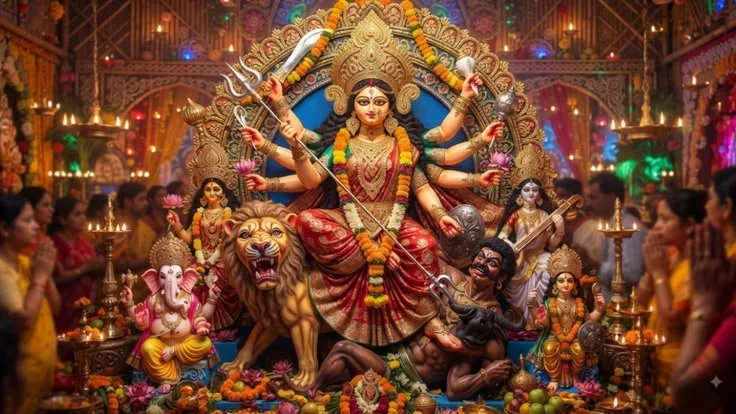
Maha Ashtami During Durga Puja
In Durga Puja traditions, particularly in eastern India, Maha Ashtami is one of the most important days of the festival.
The day's worship includes Mahasnan and elaborate Shodashopachar Puja.
Pushpanjali is a major devotional practice in which devotees offer flowers while chanting mantras.
Maha Ashtami follows Maha Saptami and forms the second major day of Durga Puja worship.
Temples and pandals are filled with devotees who gather for prayers, offerings and cultural celebrations.
What Is Naraka Chaturdashi?History & Importance of Choti Diwali
What Is Sandhi Puja?
Sandhi Puja is one of the most sacred rituals associated with the transition between Ashtami and Navami.
It is performed during the Sandhi period when Ashtami ends and Navami begins.
This short transitional period is considered spiritually powerful.
In Durga Puja traditions, the ritual represents an intense moment in the Goddess's battle against evil.
Devotees may light lamps, offer flowers and perform special worship.
The exact Sandhi Puja timing depends on the local Ashtami and Navami Tithi calculations.
Durga Ashtami 2026 Date
For seasonal search traffic, Durga Ashtami 2026 will be observed on Monday, October 19, 2026 in Delhi.
Ashtami Tithi Begins: approximately 8:27 AM on October 18, 2026
Ashtami Tithi Ends: approximately 10:51 AM on October 19, 2026.
Interestingly, the 2026 Panchang also places Maha Navami on October 19 because Navami Tithi begins after Ashtami ends that morning.
This makes 2026 particularly important for devotees checking exact Puja and Kanya Puja timings.
Durga Ashtami Puja Vidhi
A simple Durga Ashtami puja at home can begin by cleaning the puja area and taking a bath.
Place an image or idol of Goddess Durga or Mahagauri in the worship area.
Light a diya and incense.
Offer flowers, fruits, sweets and other sattvic items.
Apply roli or kumkum according to tradition.
Chant Durga mantras or recite Durga Chalisa.
Devotees may also read portions of Durga Saptashati or listen to devotional hymns.
Perform Aarti.
If performing Kanya Puja, invite young girls respectfully, wash their feet, offer food and seek their blessings.
Family traditions may vary, so rituals should be followed according to household custom.
What Colour Is Associated With Mahagauri?
Maa Mahagauri is strongly associated with white, representing purity, peace and serenity.
Her worship reminds devotees that after intense inner struggle comes clarity and stillness.
The symbolism is particularly meaningful during Navratri because spiritual transformation is not only about fighting negativity but also about developing peace.
Importance of Durga Ashtami
Durga Ashtami is important for several reasons.
It Celebrates Shakti
The festival honours divine feminine power and reminds devotees of the strength represented by Goddess Durga.
It Symbolises Victory Over Evil
The battle with Mahishasura represents the eternal struggle between righteousness and destructive forces.
It Encourages Inner Transformation
Devotees are encouraged to overcome their own fear, ego and negative habits.
It Honours the Feminine
Kanya Puja emphasises respect for girls and feminine energy.
It Deepens Navratri Devotion
Ashtami is one of the most spiritually intense days of the nine-night festival.
Difference Between Durga Ashtami and Navami
Durga Ashtami is the eighth day of Navratri, while Maha Navami is the ninth.
Ashtami is associated with intense Durga worship, Mahagauri and Kanya Puja.
Navami represents the culmination of the Navratri worship cycle and, in many traditions, is associated with Goddess Durga as Mahishasuramardini.
Some families perform Kanya Puja on Ashtami, while others do it on Navami.
Both days are highly auspicious.
Durga Ashtami at a Glance
Festival: Durga Ashtami / Maha Ashtami
Occasion: Eighth day of Navratri
Main Deity: Goddess Durga
Navadurga Form: Maa Mahagauri
Major Ritual: Kanya Puja
Core Meaning: Victory of good over evil and inner strength over negativity
Durga Ashtami 2026: Monday, October 19, 2026
Ashtami Tithi: approximately 8:27 AM on October 18 to 10:51 AM on October 19 in Delhi.
Personal Session
Sometimes the battles we face cannot be understood through general answers alone. Whether you are seeking clarity in your relationships, career, emotional patterns, personal growth or spiritual journey, a personal session can help you explore your challenges more deeply and move forward with greater awareness.
Book Now
Read Latest Articles
9 Colour of Navratri 2026: DayWise List, Date & Significance
Bhai Dooj Date: Tilak Muhurat, Puja Time & Complete Vidhi
Frequently Asked Questions
Q.Why is Durga Ashtami celebrated?
Durga Ashtami is celebrated to honour Goddess Durga and divine feminine power during Navratri. It symbolises the victory of good over evil and is connected with Durga's battle against Mahishasura. Devotees worship Maa Mahagauri, observe fasts, perform Kanya Puja and pray for courage, purity, protection and spiritual strength.Q.What is Durga Ashtami?
Durga Ashtami is the eighth day of Navratri and one of the most important days of Durga Puja.Q.Why is Durga Ashtami celebrated?
It is celebrated to honour Goddess Durga and commemorate the triumph of divine power over evil.Q.Which Goddess is worshipped on Durga Ashtami?
During Navratri, devotees worship Maa Mahagauri, the eighth form of Navadurga.Q.What is the story behind Durga Ashtami?
Durga Ashtami is closely linked to Goddess Durga's battle against the demon Mahishasura and symbolises the triumph of dharma.Q.Why is Kanya Puja done on Ashtami?
Young girls are worshipped as manifestations of divine feminine energy and are offered food, gifts and respect.Q.What is Durga Ashtami 2026 date?
Durga Ashtami 2026 falls on Monday, October 19, 2026 in Delhi.