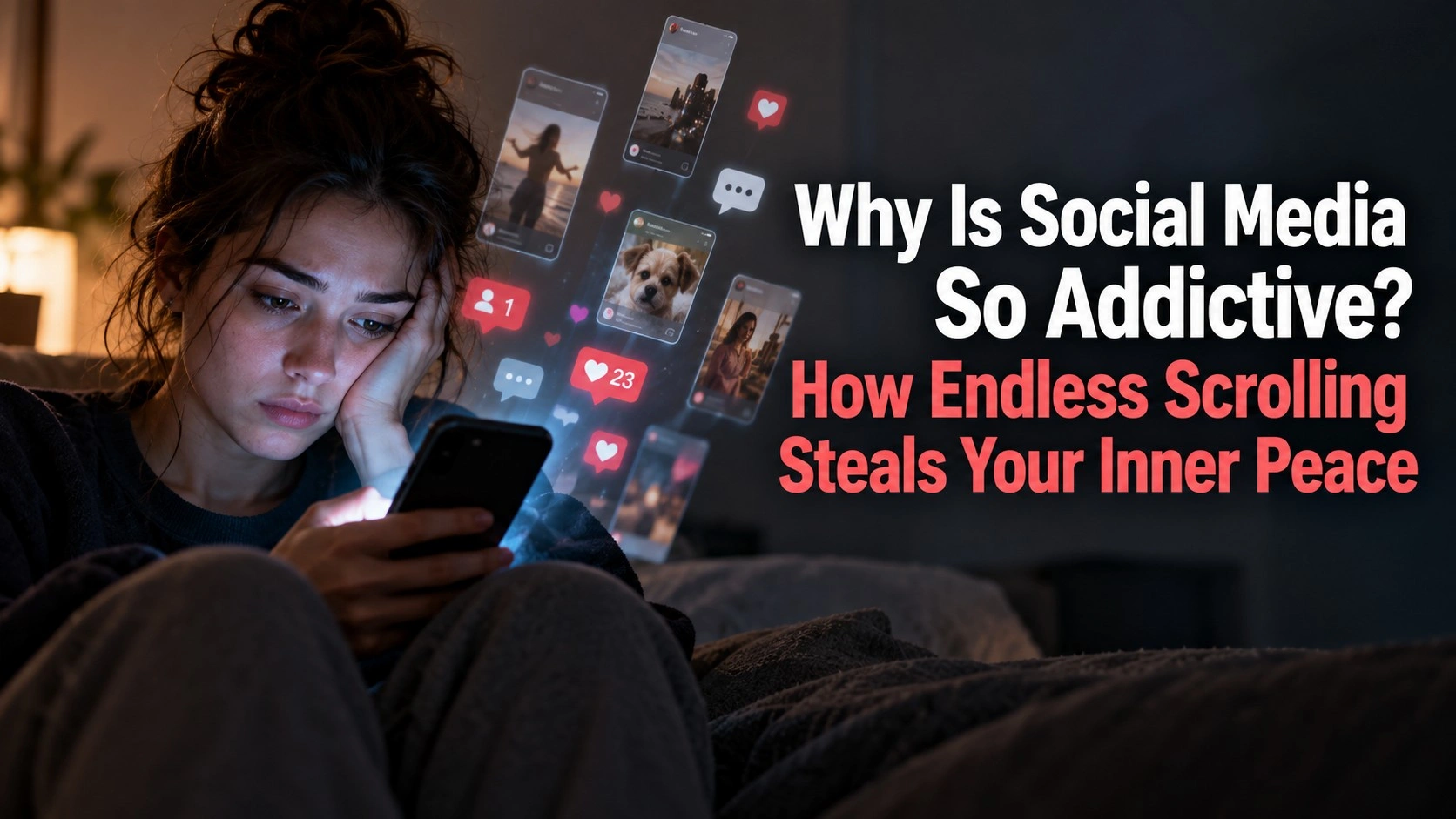
You open Instagram just to check one message, but a few minutes later you are watching a Reel, then another, and then another. Without realizing it, twenty or thirty minutes have disappeared. You may even close the app and open it again a few minutes later without consciously deciding to do so. If this feels familiar, you are far from alone.
Social media addiction has become one of the most significant behavioral challenges of the digital age. Social media platforms have transformed the way we communicate, learn, entertain ourselves and stay connected. Yet the same technology that connects us to thousands of people can also disconnect us from the person sitting beside us and, more importantly, from ourselves.
The real issue is not simply how many hours we spend online. The deeper concern is how constant digital stimulation affects our attention, emotional balance, concentration and ability to remain peacefully present. To understand why social media is so addictive, we need to examine what happens in the mind every time we swipe, refresh, receive a notification or wait for the next interesting piece of content.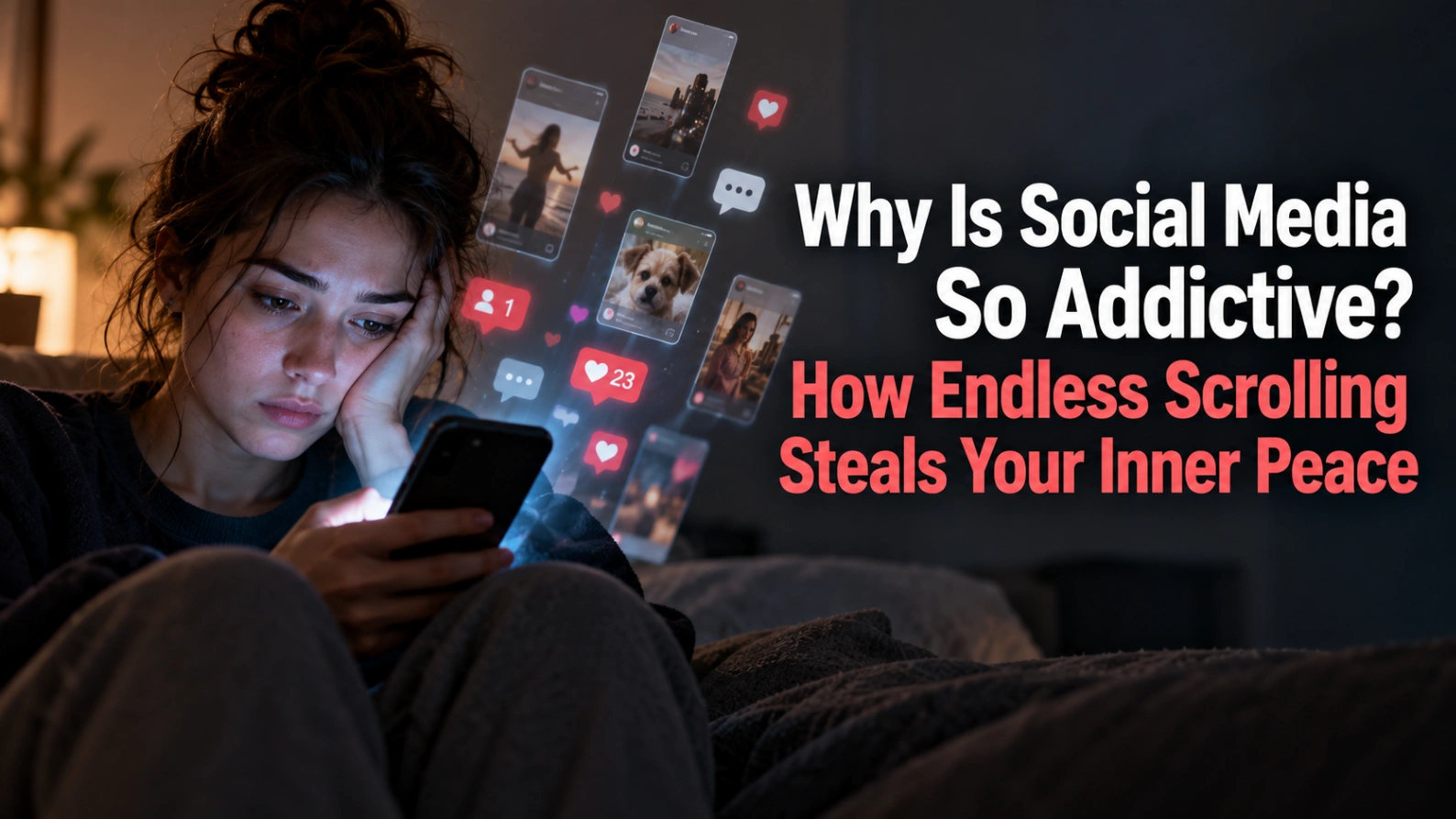
Why Is Social Media So Addictive?
Social media gives the brain something it naturally finds difficult to resist: frequent and unpredictable rewards. Every time you open an app, you do not know exactly what you will find. There may be a message from someone you care about, a new like on your post, an interesting Reel, an entertaining meme, breaking news or something surprising that catches your attention.
This uncertainty is important because unpredictable rewards encourage repeated checking. The mind starts thinking that the next swipe may contain something more interesting than the previous one. This creates what is often described as a variable reward system, in which the user continues engaging because the next reward cannot be predicted.
Social media makes this pattern even stronger by providing almost unlimited content. A book reaches the end of a chapter, a movie finishes and a newspaper has a final page, but an infinite social media feed has no natural stopping point. There is always another post, another video or another update waiting below. That simple possibility—perhaps the next post will be more interesting—is enough to keep the scrolling habit alive.
Design Your Destiny
Your digital habits may be one reflection of a deeper question: Are you consciously directing your life, or simply reacting to everything around you? Through Design Your Destiny, discover how greater awareness, clarity and conscious action can help you understand your patterns, move beyond limiting habits and create a life guided by purpose rather than impulse. Take the first step toward living consciously and explore Design Your Destiny today.
Start Your Journey Today!Dopamine and Social Media: Understanding the Reward Loop
Dopamine is often described as the brain's “pleasure chemical,” but this explanation is incomplete. Dopamine is also involved in motivation, learning, anticipation and reinforcing behaviors that the brain considers rewarding. When something interesting, entertaining or socially validating appears on your screen, the brain begins learning that checking your phone can produce a rewarding experience.
Over time, this can create a habit loop. You may feel bored and instinctively reach for your phone. You open an app, begin scrolling and find something stimulating. The brain remembers that sequence. The next time boredom appears, reaching for the phone becomes easier and more automatic. Eventually, you may check social media before even realizing that you have made the decision.
Notifications can strengthen this pattern further. A vibration, sound or red notification badge tells the brain that something potentially rewarding may be waiting. It might be a message, a like, a comment or simply new content. This is why dopamine and social media are frequently discussed together. The problem is not dopamine itself, because dopamine is essential to healthy human functioning. The real problem arises when our environment constantly offers quick and easily accessible opportunities for stimulation and reward.
Infinite Scroll Removes the Natural Stopping Point
One of the most powerful features of modern social media is infinite scroll. Older websites often required users to click “next page” to continue. That simple action created a small decision point where the mind could ask whether it really wanted to continue. Infinite scrolling removes that pause.
The next piece of content automatically appears before you have made a conscious decision to continue. Short-form videos intensify this effect because they provide rapidly changing stimulation. Within a few minutes, you may move from a comedy video to breaking news, travel inspiration, celebrity gossip, motivational content, relationship advice and a controversial argument.
This constant switching forces attention from one emotional state to another. The mind receives little opportunity to become quiet. Even boredom, which is usually considered negative, can have value because it creates space for reflection, creativity and self-awareness. When every silent moment is immediately filled with digital stimulation, we gradually become uncomfortable with simply being present.
The Trap of Instant Gratification
Social media offers instant gratification with almost no effort. When you feel bored, entertainment is available within seconds. When you feel lonely, messages and social updates are immediately accessible. When you feel uncertain about yourself, a like, comment or view may provide temporary validation. When you feel emotionally uncomfortable, scrolling can become a distraction.
The problem begins when the mind learns that every uncomfortable feeling should be escaped immediately. Real life does not work this way. Meaningful relationships require patience, learning requires concentration, fitness requires consistency, personal growth requires self-observation, and inner transformation takes time.
When the mind becomes accustomed to receiving stimulation every few seconds, slower activities can begin to feel unusually difficult. Reading a long book may feel boring, meditation may feel restless, studying may feel exhausting, and even a meaningful conversation can seem insufficiently stimulating. This is how instant gratification can gradually reduce our tolerance for patience, silence and sustained attention.
Dopamine Detox: Benefits, Rules and How to Do It
Social Validation Keeps You Coming Back
Human beings naturally seek belonging, appreciation and acceptance. Social media converts these emotional needs into visible numbers such as likes, followers, views, comments and shares. These numbers can gradually become symbols of social approval.
You may upload a photo and repeatedly check whether people have reacted. A positive response creates excitement, while a disappointing response can lead to self-doubt. Over time, personal value can become connected to digital feedback. Instead of asking, “Did I enjoy this experience?” we may begin asking, “Will people like this?”
Even beautiful moments can become opportunities for content. Instead of fully experiencing a sunset, meal, holiday or celebration, part of the mind may already be thinking about the photograph, caption or response it will generate online. The experience is no longer simply lived; it is packaged for an audience. When this happens frequently, life itself can begin to feel like a performance.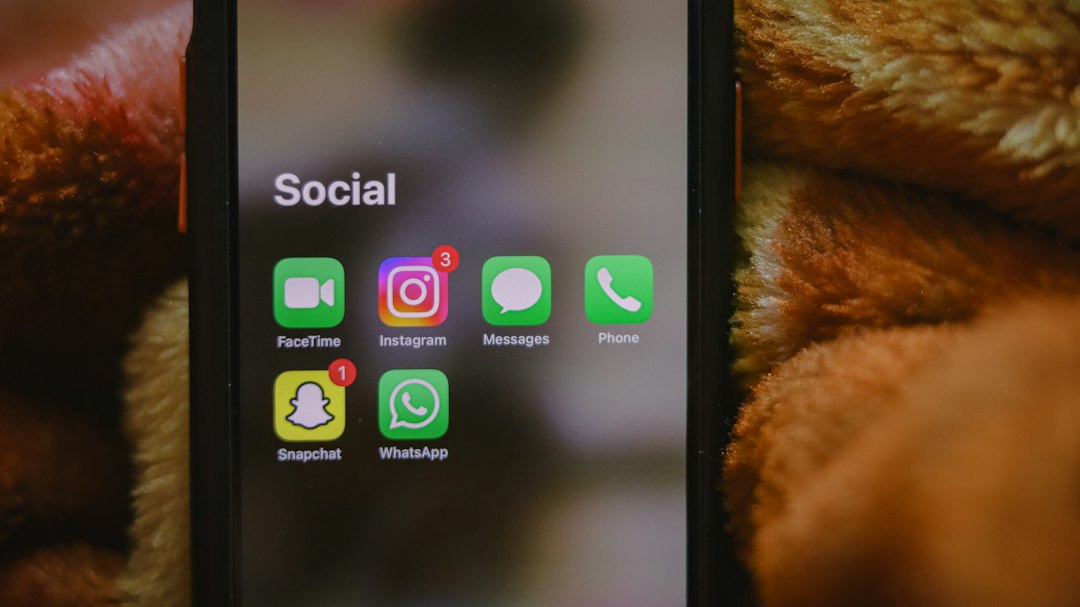
FOMO and the Fear of Missing Out
Another major factor behind social media addiction is FOMO, or the fear of missing out. Social media constantly shows us what other people are doing. Someone is travelling, someone has bought a new home, someone is getting married, someone has received a promotion and someone is attending a celebration that looks exciting.
The problem is that we usually see highlights rather than complete lives. Your ordinary Tuesday evening may suddenly feel disappointing compared with another person's beautifully edited vacation video. Yet you are comparing the full reality of your own life with a carefully selected moment from somebody else's.
This constant comparison can make the mind restless because there will always be someone who appears richer, happier, more attractive, more successful or more adventurous. When attention is constantly measuring your life against other people's visible achievements, inner peace becomes harder to maintain.
Doomscrolling: When Scrolling Stops Feeling Good
Not all scrolling feels pleasurable. Sometimes people continue consuming content even when it makes them anxious, angry or emotionally exhausted. This behavior is commonly called doomscrolling.
You may read one disturbing story and then search for another update. The mind tells you that more information will create certainty, but the opposite often happens. More information produces more questions, alarming content increases anxiety and anxiety creates another urge to check for updates. The cycle continues.
Doomscrolling can be particularly disruptive at night. Instead of allowing the mind and body to slow down before sleep, you continue consuming emotionally intense information. The body may be physically resting, but the mind remains active, alert and stimulated. Over time, this pattern can interfere with emotional calm and healthy sleep habits.
How Endless Scrolling Steals Your Inner Peace
Inner peace does not mean feeling happy every moment. It means developing enough inner stability that every external event does not immediately control your emotional state. Endless scrolling can work in exactly the opposite direction.
A notification attracts you, a video excites you, a comment irritates you, a headline frightens you, somebody's success triggers comparison and somebody's opinion produces anger. Your mind continuously shifts according to whatever appears next on the screen.
Gradually, algorithms can begin deciding where your attention goes more frequently than you do. This is where the problem becomes spiritual as well as psychological. When attention is permanently scattered outward, it becomes difficult to observe what is happening within. Silence begins to feel uncomfortable and stillness feels empty, even though silence and stillness are often where deeper self-awareness begins.
Are You Using Social Media or Is Social Media Using You?
Using social media frequently does not automatically mean that a person has an addiction. A more useful question is whether you still feel in control of your behavior. Notice whether you open apps without intending to, lose track of time while scrolling, check notifications compulsively, sacrifice sleep for social media or continue using an app even when you feel mentally exhausted.
It is also helpful to observe how you feel after using social media. Do you feel inspired, connected and informed, or do you feel restless, inadequate, anxious and mentally tired? Your emotional state after scrolling can reveal whether your digital habits are supporting your wellbeing or disturbing it.
Awareness is the first stage of change. You cannot transform a habit that you never observe.
How to Break the Endless Scrolling Loop
Breaking a scrolling addiction does not necessarily require deleting every social media account. For many people, a healthier and more realistic goal is conscious social media use.
Begin by creating intentional boundaries. Avoid making your phone the first thing you look at after waking and the last thing you see before sleeping. Turn off unnecessary notifications and move highly addictive apps away from your home screen. Create phone-free spaces such as your dining table, bedroom or meditation area, and decide on specific periods of the day when you will intentionally check social media instead of checking it constantly.
Most importantly, learn to identify the emotion behind the urge to scroll. Before opening an app, pause and ask yourself, “Why am I reaching for my phone right now?” You may discover that the trigger is boredom, loneliness, anxiety, procrastination or simple habit. Understanding that trigger can teach you more about your relationship with technology than a screen-time report alone.
Try a Digital Detox
A digital detox does not mean disappearing from the internet for weeks. Small changes can be more practical and sustainable. You might begin by spending the first hour of your morning without social media, taking one screen-free evening each week or putting your phone away while eating.
You can also try going for a walk without holding your phone, talking to somebody without checking notifications or sitting silently for ten minutes without looking for entertainment. Initially, these moments may feel uncomfortable because your mind has become accustomed to constant stimulation.
Instead of immediately escaping this restlessness, observe it. The urge to check your phone usually rises and then eventually passes. Every time you choose awareness instead of automatic scrolling, you begin weakening the habitual pattern.
Mindfulness for Social Media Addiction
Mindfulness means becoming aware of the present moment without immediately reacting to every thought, feeling or impulse. This simple practice can transform the way you use social media.
Suppose you suddenly feel the urge to open Instagram. Instead of immediately acting on the urge, pause for a few seconds. Notice what you are feeling, observe your breathing and ask whether opening the app is a conscious decision or simply an automatic habit. Even a short pause creates a valuable gap between impulse and action.
Meditation strengthens this ability. As you practise sitting quietly and observing thoughts without automatically following them, you begin understanding that every urge does not require a response. You can experience boredom without escaping it, anxiety without scrolling through it and loneliness without immediately searching for digital validation.
This is where digital wellbeing becomes something deeper than simply reducing screen time. It becomes an exercise in awareness and self-mastery.
Psychology of Addiction: हमें लत क्यों लगती है?
Reconnect With Yourself
Technology itself is not the enemy. The larger problem is unconscious use. Social media can educate, entertain, inspire and connect people across the world. However, when its use becomes automatic, it can consume the very attention needed to experience your own life deeply.
The answer is not merely to disconnect from social media. The deeper goal is to reconnect with yourself. Spend time in silence, meditate, take walks without headphones, write down your thoughts, have uninterrupted conversations, notice nature, read slowly and practise doing one thing at a time.
Learn to experience certain moments without immediately trying to photograph, record or share them. Inner peace begins returning when attention stops running constantly toward the next stimulus and settles more deeply into the present moment.
Technology will continue competing for your attention. The real question is whether you consciously decide where your attention goes or allow an algorithm to decide for you.
Your attention is one of the most valuable resources you possess. Where your attention goes, your life follows. Protect it consciously.
Personal Session
Sometimes we understand what needs to change but still continue repeating the same habits, thoughts and emotional patterns. A personal session can offer a dedicated space to understand what may be driving those patterns and explore a more conscious way forward. If digital distraction, lack of focus, emotional restlessness or recurring habits are preventing you from experiencing clarity and inner peace, book your session now.
Book Now
Read Latest Articles