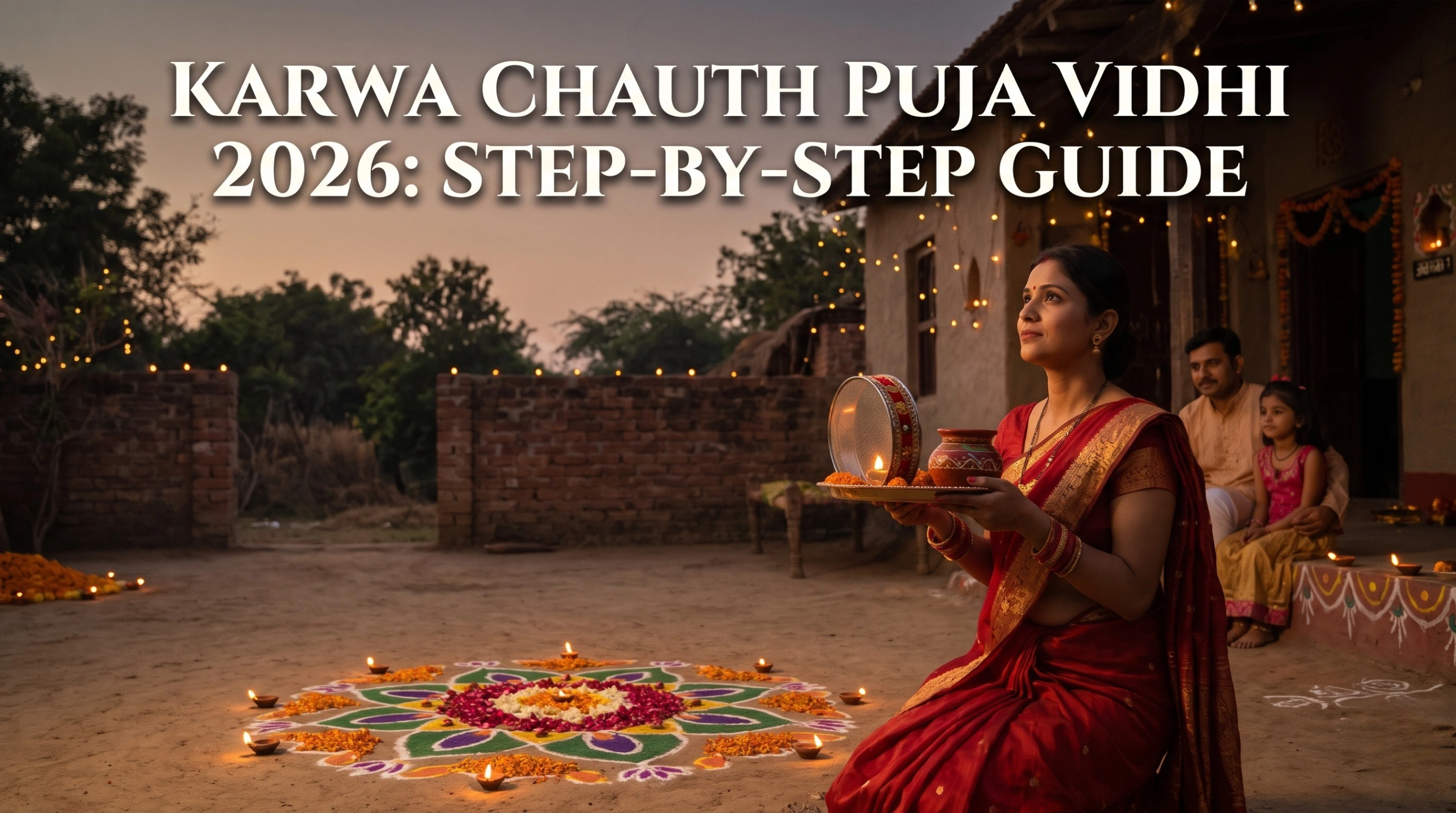
Karwa Chauth is a cherished Hindu festival that celebrates love, commitment, prayer, and the importance of relationships. Observed primarily by married Hindu women, the festival involves fasting, performing puja, listening to the Karwa Chauth Vrat Katha, and offering prayers to the Moon before completing the fast. In many families, husbands also participate in the celebrations, making the occasion a shared expression of care and togetherness.
Karwa Chauth 2026 will be celebrated on Thursday, 29 October 2026, in India. Women observing the vrat traditionally begin their fast before sunrise and break it after sighting the Moon in the evening. The festival is associated with Goddess Parvati, Lord Shiva, Lord Ganesha, and Chandra Dev, although specific customs may vary by region and family tradition.
But what is the correct Karwa Chauth puja vidhi? What items are required for the puja, when should the rituals be performed, and what is the deeper significance of this tradition?
This step-by-step guide explains the Karwa Chauth puja samagri, vrat procedure, evening rituals, moon-sighting ceremony, and important precautions for 2026. It also explores how the festival's values of devotion, patience, and conscious relationships connect with the vision of Science Divine Foundation: Sound Body, Sound Mind and Self-Realisation.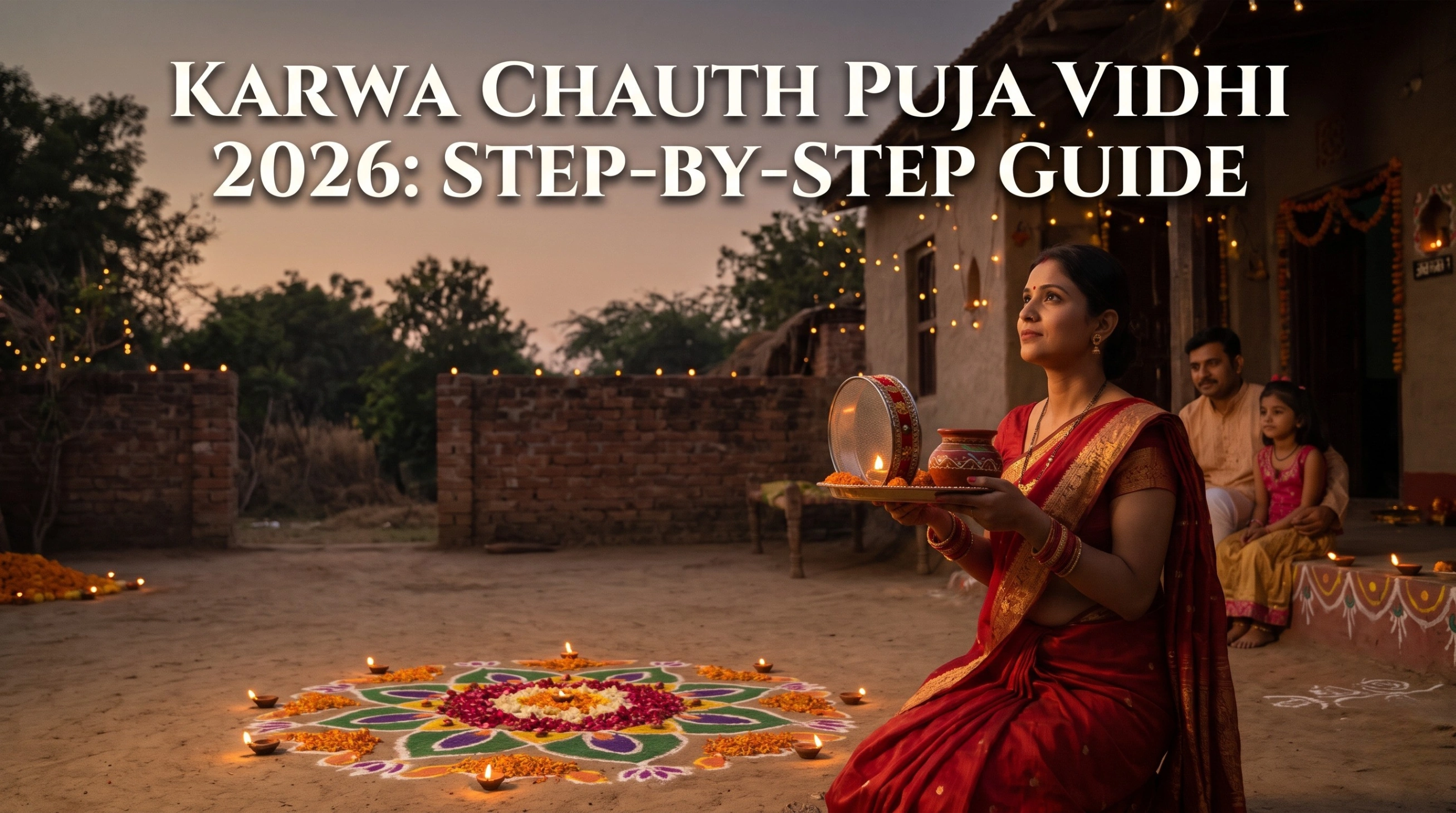
When Is Karwa Chauth 2026? Date and Puja Muhurat
Karwa Chauth falls on Krishna Paksha Chaturthi in the Hindu lunar calendar. The date is determined according to traditional panchang calculations, with the observance linked to the Chaturthi tithi at moonrise.
For 2026, Karwa Chauth falls on Thursday, 29 October, in India.
Event | Date and time |
|---|---|
Karwa Chauth 2026 | Thursday, 29 October 2026 |
Chaturthi tithi begins | Approximately 1:06 AM, 29 October |
Chaturthi tithi ends | Approximately 10:09 PM, 29 October |
Evening puja muhurat | Approximately 5:38 PM–6:56 PM in New Delhi |
Expected moonrise | Approximately 8:17 PM in New Delhi |
These timings are indicative for New Delhi and can differ by location and panchang source. Check a reliable local panchang for the precise puja muhurat and moonrise time before observing the vrat. Drik Panchang provides location-specific timings.
What Is the Significance of Karwa Chauth?
Karwa Chauth is traditionally observed as a prayer for the health, well-being, and longevity of one's husband. It also represents devotion, commitment, patience, and the importance of nurturing relationships.
The word Karwa refers to an earthen pot traditionally used during the rituals, while Chauth refers to the fourth lunar day. The karwa has an important place in the evening puja and Moon-worship ceremony.
Several traditional stories are associated with the festival, including the story of Veeravati and the tale of Savitri and Satyavan in broader discussions of devotion and determination. The customs and narratives followed may differ across communities.
Beyond its rituals, Karwa Chauth can be an occasion to reflect on the values that sustain relationships: trust, communication, respect, understanding, and mutual care. These qualities help make the festival meaningful beyond a single day of celebration.
Design Your Destiny
Spiritual wisdom becomes more meaningful when it shapes our everyday choices. Explore Science Divine Foundation's resources and teachings to deepen self-awareness, cultivate inner balance, and bring timeless wisdom into daily life.
Start Your Journey Today!Karwa Chauth Puja Samagri List 2026
Preparing the puja samagri in advance makes the rituals easier to perform. Items may vary according to regional practices and family traditions.
Here is a commonly used Karwa Chauth puja checklist:
Karwa or earthen pot filled with water
Puja thali
Diya and cotton wicks
Ghee or oil for the lamp
Kumkum and roli
Haldi and akshat (uncooked rice)
Flowers and a small garland
Incense sticks and camphor, if used
Sweets, fruits, and other traditional offerings
Kalash or water vessel, as required by the family custom
Images or idols of Goddess Parvati, Lord Shiva, and Lord Ganesha
Karwa Chauth Vrat Katha book or printed text
Sieve or channi for viewing the Moon
A small vessel for offering arghya to Chandra Dev
A glass of water and food to break the fast
Traditional clothing and adornments, if desired
Some families also include a decorated karwa, a small plate of wheat or other grains, and items associated with the customary exchange of gifts. Ask an elder or local priest if your household follows a particular ritual sequence.
Karwa Chauth Puja Vidhi 2026: Step-by-Step Guide
The following steps describe a common North Indian Karwa Chauth observance. Your family may follow a slightly different order, so local customs and guidance from your priest can take precedence.
Step 1: Wake Up Early and Eat Sargi
The day traditionally begins before sunrise with Sargi, a pre-dawn meal often prepared or given by the mother-in-law. It may include fruits, nuts, sweets, and other foods customary in the family.
Sargi provides nourishment before the fasting period begins. Those observing a strict nirjala vrat traditionally abstain from food and water after the fast starts, until the Moon is sighted and the customary rituals are completed.
Fasting practices should be adapted to individual health needs. People who are pregnant, breastfeeding, diabetic, taking medication that requires food or water, or managing another health condition should consult a qualified healthcare professional before undertaking a restrictive fast. Religious observance should not require putting one's health at risk.
Step 2: Take a Bath and Make a Sankalp
After waking, devotees traditionally bathe, wear clean clothes, and make a personal sankalp, or resolve, to observe the vrat according to their beliefs and family customs.
Some women wear traditional attire, apply mehendi, and complete solah shringar as part of the celebration. These practices are customary rather than compulsory for every devotee.
The sankalp is an opportunity to approach the day with sincerity, devotion, and a clear intention.
Step 3: Observe the Vrat Throughout the Day
After Sargi and the beginning of the fast, devotees follow their chosen fasting tradition. In many households, the fast continues from sunrise until the Moon is sighted.
People may spend the day praying, preparing for the evening puja, meeting family members, or listening to devotional stories. Some communities observe a nirjala fast, while individual practices and health-related adaptations may differ.
It is important to understand your family's tradition and avoid treating every customary practice as a universal rule.
Kali Chaudas vs Naraka Chaturdashi : Are They the Same ?
Step 4: Prepare the Puja Area
In the late afternoon, clean the puja area and arrange the required samagri. Place the images or idols of the deities according to your household's usual arrangement.
Decorate the puja thali, prepare the karwa, and keep the diya, flowers, kumkum, rice, offerings, and Vrat Katha ready.
A calm and organised setting helps devotees perform the rituals without unnecessary haste.
Step 5: Perform the Evening Puja
Perform the puja during the locally applicable Karwa Chauth puja muhurat. Many households worship Goddess Parvati, Lord Shiva, and Lord Ganesha, seeking blessings for well-being, harmony, and family happiness.
A common sequence includes:
Light the diya and offer prayers.
Apply kumkum or roli according to the family's custom.
Offer flowers, akshat, and traditional offerings.
Pray to the deities with sincerity.
Keep the karwa ready for the customary ritual.
Listen to or read the Karwa Chauth Vrat Katha.
The exact sequence can vary. Follow the practices customary in your household or the guidance of your family priest.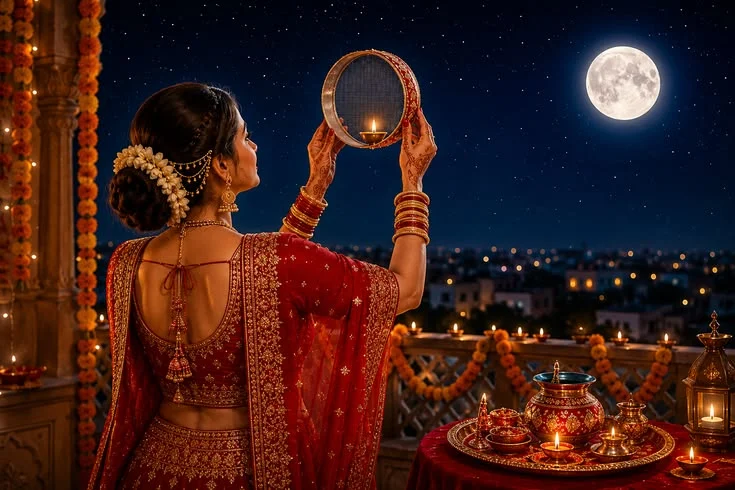
Step 6: Listen to the Karwa Chauth Vrat Katha
Listening to the Vrat Katha is an important part of Karwa Chauth in many North Indian traditions. One widely known story is that of Veeravati, who observes a fast for her husband's well-being.
According to the popular version, Veeravati's brothers become concerned when they see her struggling with the fast. They create an illusion of moonrise so that she will break it early. After she ends her fast, she learns that her husband is seriously unwell. Through devotion and prayer, the story describes her eventual reunion with him.
Different versions of the story exist, and details may vary. Its traditional message is often interpreted through devotion, perseverance, faith, and the importance of following the vrat with sincerity.
Step 7: Perform the Karwa Ritual
During the puja, devotees may hold or pass the decorated karwa and follow customary prayers or exchanges. In some communities, women sit together, listen to the Katha, and exchange karwas or other symbolic items.
These practices differ from one region to another. If your family follows a specific karwa ritual, prepare the required items beforehand so that the ceremony can be completed comfortably.
Step 8: Wait for the Moonrise
After the evening puja, devotees wait for the Moon to appear. Moonrise times differ across cities, and buildings, clouds, or the local horizon may affect when the Moon becomes visible.
For this reason, do not rely on a general India-wide moonrise time. Check the local panchang for your city and allow extra time if visibility is poor.
Step 9: Offer Arghya to Chandra Dev
Once the Moon is visible, many devotees offer arghya, traditionally water, to Chandra Dev. Some observe the Moon through a sieve before offering prayers.
In many households, the woman then looks at her husband through the sieve and the husband offers her water to help her break the fast. These customs symbolise devotion and the completion of the day's observance.
The exact sequence may differ. Follow your family's tradition and the guidance you have chosen to observe.
Step 10: Break the Fast
After completing the Moon-related rituals, devotees traditionally break their fast with water and food. A light meal may be more comfortable after a long period without eating or drinking.
Avoid rushing into a very large meal. If you experience dizziness, faintness, confusion, severe weakness, or other concerning symptoms during the fast, prioritise your health and seek appropriate medical help rather than waiting for a ritual milestone.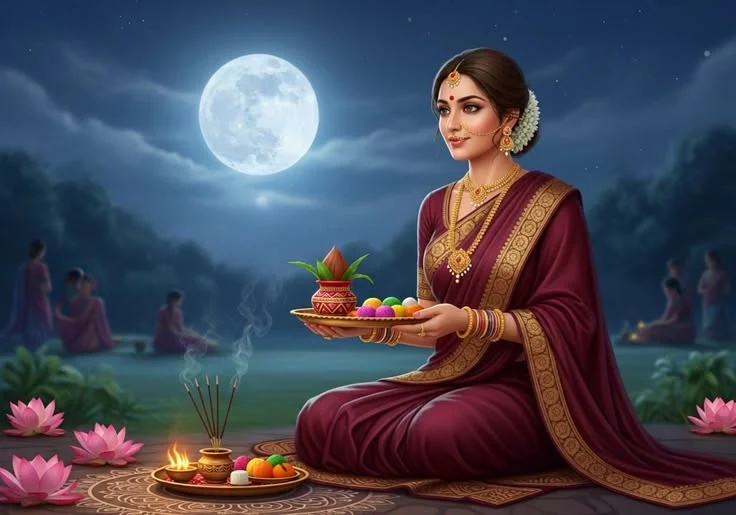
Important Karwa Chauth Vrat Rules and Tips
Before observing Karwa Chauth 2026, keep these practical points in mind:
Confirm local timings: Puja muhurat and moonrise vary by location.
Prepare in advance: Arrange Sargi, puja samagri, and the Vrat Katha beforehand.
Follow your family tradition: Ritual details can differ across regions.
Respect health needs: Consult a healthcare professional before fasting if you have a medical condition, are pregnant or breastfeeding, or take medication that requires food or water.
Avoid unnecessary pressure: Customs around clothing, gifts, and fasting may vary; choose an observance that is safe and meaningful for you.
Keep the evening calm: Plan the puja so that you are not rushing between preparations and rituals.
These practical steps help make the observance more organised while respecting both tradition and personal well-being.
What Is the Deeper Spiritual Meaning of Karwa Chauth?
Karwa Chauth is often associated with devotion and a prayer for a spouse's well-being. It can also inspire reflection on the qualities that strengthen a relationship over time.
Love is not sustained by rituals alone. It grows through trust, patience, honest communication, empathy, and mutual responsibility. A festival can remind us to appreciate the people in our lives and to express care through everyday actions.
The Bhagavad Gita offers insights into self-discipline, balanced thinking, and acting with awareness. Its teachings encourage people to consider not only what they do, but also the intention and attitude with which they act.
For example, practising patience during a disagreement, listening without immediately reacting, and taking responsibility for one's words can help nurture a healthier relationship. These actions bring the values celebrated during a festival into daily life.
The deeper message is not that one ritual guarantees a particular outcome. Rather, traditions can become opportunities to renew our intentions and consciously practise the values we wish to embody.
How to Stay Happy Even When Life Is Difficult
How Science Divine Foundation Connects with Karwa Chauth
Science Divine Foundation's vision of Sound Body, Sound Mind and Self-Realisation offers a meaningful perspective on bringing spiritual values into everyday living.
Karwa Chauth involves preparation, prayer, discipline, and reflection. These elements can invite devotees to pause and consider the quality of their relationships, the intentions behind their actions, and the importance of inner balance.
The foundation encourages people to explore self-awareness and the practical wisdom of spiritual teachings. Its message, “Gita ko sirf padhna nahi, Gita ko jeena hai,” reminds us that wisdom becomes meaningful when we apply it in everyday life.
In the context of Karwa Chauth, this may mean expressing gratitude towards one's partner, listening with greater patience, communicating honestly, and recognising the difference between love and possessiveness. It can also mean caring for one's own physical and emotional well-being while respecting the well-being of others.
Self-awareness helps us notice our reactions and understand how our habits affect our relationships. Rather than expecting a single day or ritual to resolve every difficulty, we can use the occasion as a reminder to nurture kindness, respect, and conscious choices throughout the year.
Science Divine Foundation's emphasis on self-realisation encourages individuals to look inward, understand their patterns, and explore a more balanced way of living. These reflections can complement the devotional significance of Karwa Chauth without replacing its traditional rituals.
Conclusion
Karwa Chauth 2026 will be observed on Thursday, 29 October, in India. The festival brings together fasting, puja, the Vrat Katha, and Moon-related rituals in a tradition associated with devotion and a spouse's well-being.
By preparing the puja samagri in advance, checking local timings, following family customs, and observing the vrat safely, devotees can approach the day with greater confidence and care.
The festival can also serve as a reminder that meaningful relationships are nurtured through everyday choices. Patience, respect, communication, and self-awareness help translate the spirit of devotion into daily life.
In keeping with Science Divine Foundation's vision of Sound Body, Sound Mind and Self-Realisation, let Karwa Chauth be an opportunity not only to observe tradition, but also to reflect on how we can live with greater awareness, compassion, and balance.
May Karwa Chauth bring peace, understanding, happiness, and well-being to you and your loved ones.
Personal Session
Every individual's journey towards self-understanding is different. If you would like to reflect on your personal challenges and explore spiritual wisdom in everyday life, connect with Science Divine Foundation to learn about available personal sessions.
Book Now
Read Latest Articles
Overthinking Everything? Ancient Gita Wisdom for a Thinking Mind
Do Positive Affirmations Really Work? The Science Behind Self-Talk
Frequently Asked Questions
Q.How do you perform Karwa Chauth Puja Vidhi?
To perform Karwa Chauth puja, prepare the puja samagri, worship Goddess Parvati, Lord Shiva, and Lord Ganesha according to your family tradition, and listen to the Karwa Chauth Vrat Katha. In the evening, wait for the Moon, offer arghya to Chandra Dev, and complete the customary Moon-sighting rituals before breaking the fast. Follow local panchang timings and observe fasting safely.Q.When is Karwa Chauth in 2026?
Karwa Chauth will be observed on Thursday, 29 October 2026, in India. The puja muhurat and Moon-sighting time vary by location, so check a reliable local panchang before planning the rituals.Q.What items are needed for Karwa Chauth puja?
Common items include a karwa, puja thali, diya, kumkum, rice, flowers, incense, offerings, images of the deities, the Vrat Katha, a sieve, and a vessel for Moon worship. Exact requirements differ by family and region.Q.Which gods are worshipped during Karwa Chauth?
Many families worship Goddess Parvati, Lord Shiva, and Lord Ganesha during the evening puja. Chandra Dev, the Moon deity, is honoured during the Moon-sighting ritual. Customs may vary by region.Q.What is the purpose of the Karwa Chauth Vrat Katha?
The Vrat Katha shares traditional stories associated with the fast and is an important part of the observance in many communities. The stories are often understood as reflections on devotion, perseverance, and faith.Q.Can Karwa Chauth puja be performed at home?
Yes. Many devotees perform Karwa Chauth puja at home by arranging the samagri, worshipping according to their family tradition, listening to the Vrat Katha, and completing the Moon-related rituals. A priest is not required in every household.Q.What is the spiritual significance of Karwa Chauth?
Karwa Chauth is traditionally associated with devotion and prayers for a spouse's well-being. It can also encourage reflection on love, patience, commitment, gratitude, and the conscious actions that support healthy relationships.