Have you ever felt physically present but mentally somewhere else? Perhaps you are eating breakfast while thinking about work, checking your phone while talking to someone, or lying in bed replaying conversations from the past. Even when everything seems fine around you, your mind may feel restless, overwhelmed, or exhausted.
In today's fast-paced world, finding inner peace can feel difficult. We are constantly surrounded by notifications, responsibilities, expectations, and thoughts about what we should do next. While we cannot always control what happens around us, we can learn to change how we pay attention to our experiences.
This is where mindfulness can help.
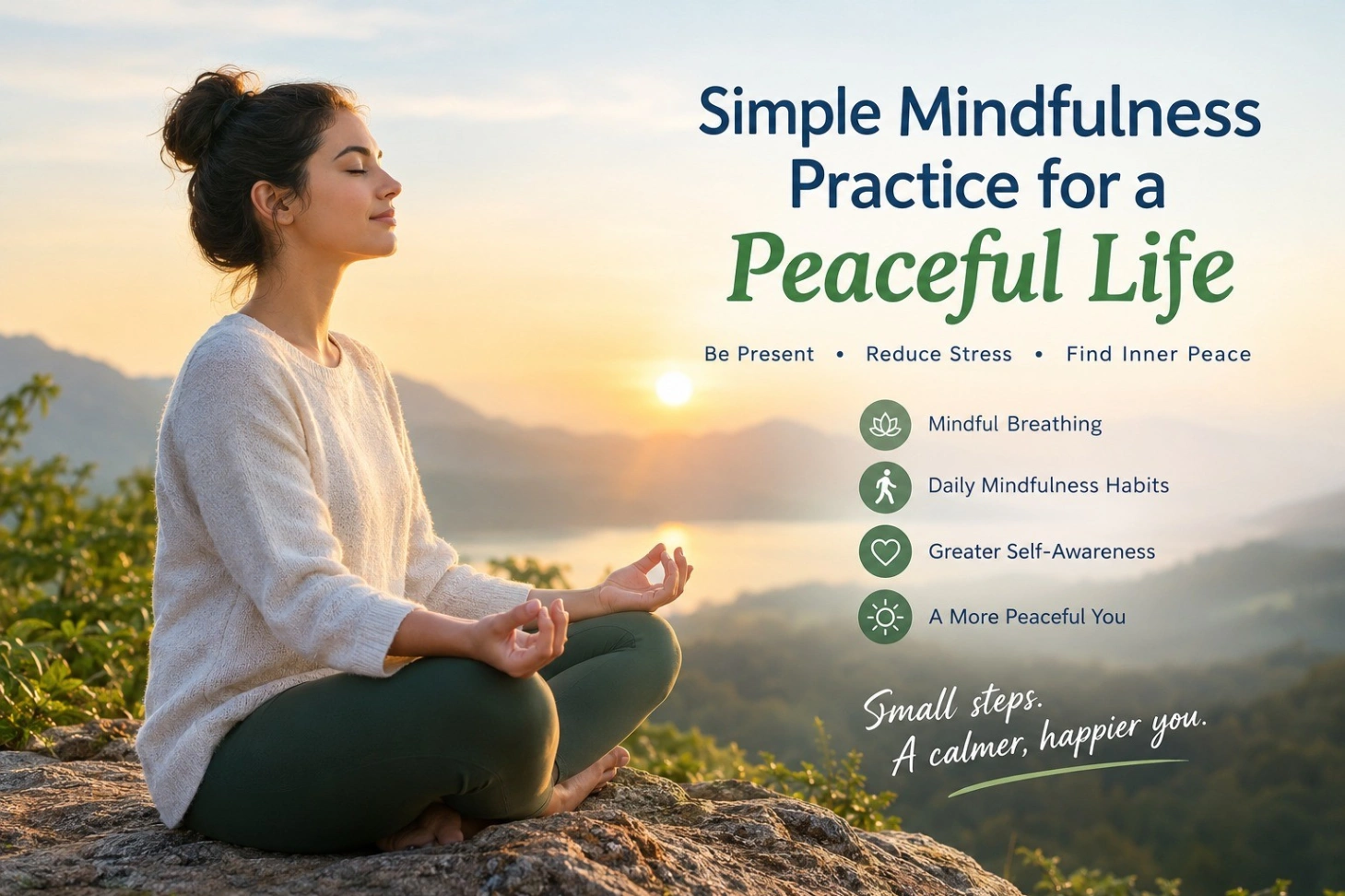
A simple mindfulness practice for a peaceful life does not require expensive equipment, hours of meditation, or a complete lifestyle change. It begins with something accessible to everyone: paying attention to the present moment with openness and without immediately judging what we experience.
Whether you are a beginner or someone looking to reconnect with yourself, mindfulness can help you develop greater awareness of your thoughts, emotions, and everyday experiences.
In this guide, you will discover what mindfulness means, how it can support your well-being, and seven practical mindfulness exercises you can incorporate into your daily routine.
What Is Mindfulness?
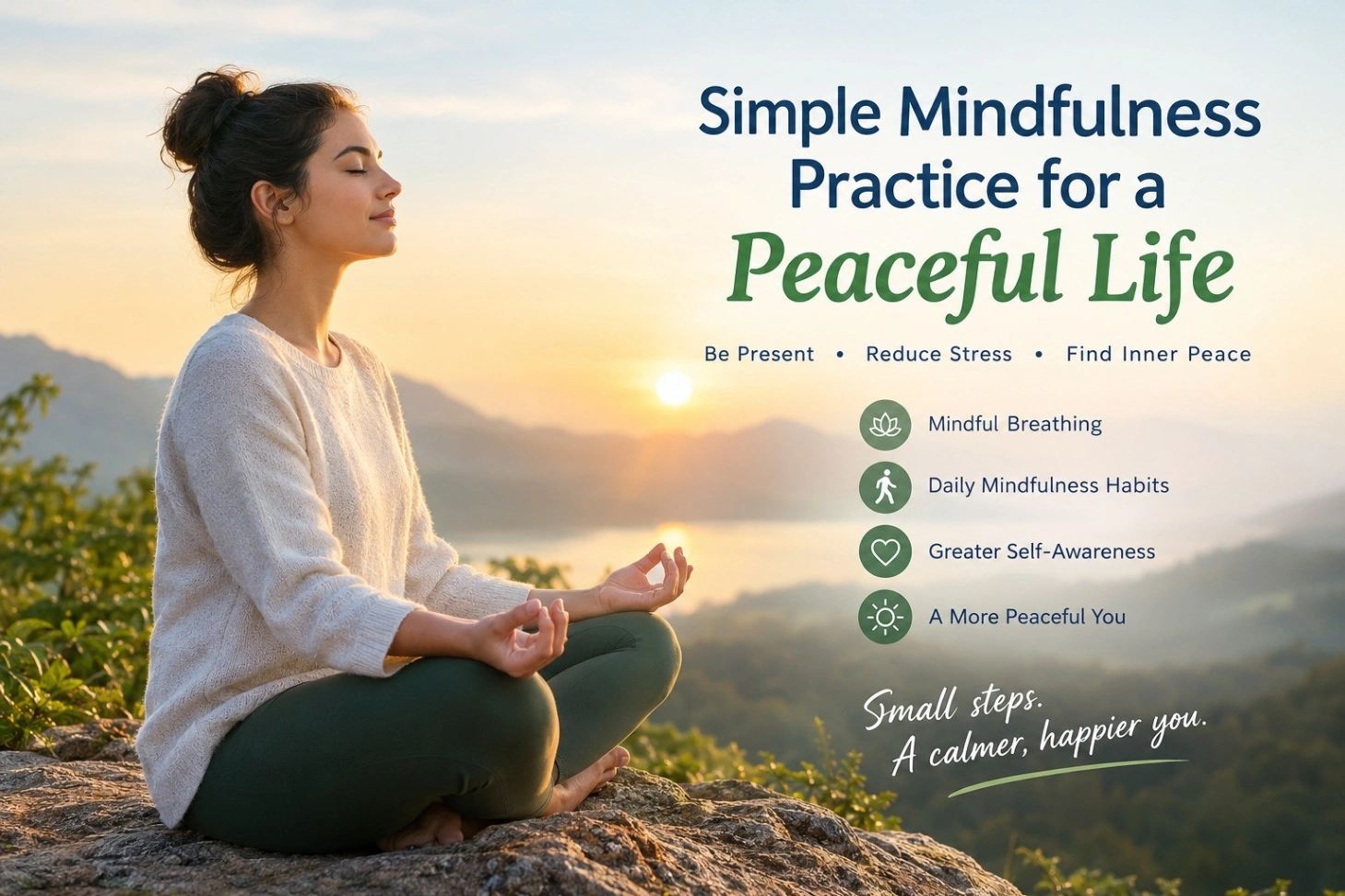
Mindfulness is the practice of paying attention to the present moment intentionally and with an attitude of openness rather than judgment.
It involves noticing what is happening within you and around you without automatically reacting to every thought, emotion, or situation.
For example, imagine that someone makes a comment that upsets you. Your immediate reaction might be to become defensive, replay their words repeatedly, or respond angrily.
With mindfulness, you learn to notice the irritation, recognize the thoughts accompanying it, and pause before deciding how to respond.
You might still feel upset, but you have an opportunity to choose your response rather than acting entirely on impulse.
Mindfulness is not about stopping your thoughts, ignoring your emotions, or pretending that everything is positive. It is about becoming more aware of your experience and developing a different relationship with it.
The practice can take place during meditation, but it can also happen while walking, eating, listening, working, or completing ordinary household activities.
Why Is Mindfulness Important for a Peaceful Life?
A peaceful life does not necessarily mean a life without challenges. It means developing the awareness and skills to meet those challenges with greater clarity and balance.
Mindfulness can support this process in several ways.
1. It Helps You Recognize Stress
Stress can build gradually through deadlines, responsibilities, uncertainty, and everyday frustrations.
Sometimes, we become so accustomed to feeling overwhelmed that we stop noticing the signs until we feel exhausted.
Mindfulness encourages you to pay attention to your experience. You may notice tension in your shoulders, a racing mind, shallow breathing, or irritation before these feelings become overwhelming.
Recognizing these signals can help you identify when you need a break or a different approach to a situation.
Design Your Destiny
Ready to Create a More Meaningful Life? Mindfulness is the beginning of understanding yourself more deeply. When you become aware of your thoughts, emotions, and patterns, you can start making more conscious choices about the life you want to create. Design Your Destiny and take a step towards greater self-awareness, clarity, and personal growth. Discover how understanding yourself can help you approach life's challenges with a fresh perspective.
Start Your Journey Today!2. It Encourages Emotional Awareness
Emotions are a natural part of life. Happiness, sadness, anger, fear, and disappointment all provide information about our experiences.
However, reacting immediately to every emotion can make difficult situations harder to navigate.
Mindfulness helps you recognize what you are feeling without automatically acting on it.
Instead of saying, "I am an angry person," you might notice, "I am experiencing anger right now."
This small shift creates room for reflection and a more considered response.
3. It Helps You Appreciate Everyday Life
When your attention is constantly focused on the next task, you may overlook the experiences that make ordinary life meaningful.
A conversation with a loved one, the warmth of sunlight, a quiet morning, or a meal prepared with care can become opportunities to reconnect with the present.
Mindfulness invites you to experience these moments instead of moving through them automatically.
4. It Can Support Better Focus
Constantly switching between tasks, notifications, and competing thoughts can make it difficult to concentrate.
Mindfulness involves noticing when your attention wanders and gently bringing it back to what you are doing.
Practising this regularly may help you become more aware of distractions and more intentional about where you direct your attention.
5. It Creates Space Between Thoughts and Actions
Not every thought needs an immediate response, and not every emotion needs to determine your behaviour.
Mindfulness can help you notice a thought without automatically accepting it as fact.
For instance, thinking "I am going to fail" does not mean failure is inevitable. It is a thought that can be examined rather than blindly followed.
Over time, this awareness may help you respond to uncertainty with greater flexibility.
Mindfulness affects people differently, and it is not a substitute for professional mental health care when that is needed. However, it can be a useful part of a balanced approach to well-being.
Simple Mindfulness Practices for a Peaceful Life
You do not need to practise every technique at once. Start with one exercise that fits naturally into your routine and build consistency gradually.
1. Begin Your Morning with Five Minutes of Mindful Breathing
How you begin your morning can influence how you approach the rest of your day.
Instead of immediately checking messages, emails, or social media, give yourself five quiet minutes to notice your breathing
How to practise:
Sit comfortably on a chair, cushion, or bed.
Relax your shoulders and allow your hands to rest naturally.
Notice the sensation of air entering and leaving your body.
Observe the gentle movement of your chest or abdomen.
When your mind wanders, acknowledge the distraction and return your attention to your breath.
There is no need to force yourself to think about nothing. Thoughts will naturally appear. The practice is to notice them and gently return to breathing.
If focusing on your breath feels uncomfortable, choose another anchor, such as the sounds around you or the sensation of your feet touching the floor.
Why it helps: Mindful breathing gives you a simple opportunity to pause, settle your attention, and begin the day more intentionally.
2. Practise Mindful Walking
Walking is an everyday activity that can become a mindfulness practice.
Instead of spending your entire walk thinking about unfinished tasks or scrolling through your phone, bring your attention to the physical experience of moving.
How to practise:
Walk at a comfortable pace in a safe place.
Notice how your feet touch the ground.
Feel the movement of your legs and the position of your body.
Observe the sounds, colours, and details around you.
Whenever you become lost in thought, gently return your attention to walking.
You can practise mindful walking in a garden, on your terrace, in a park, or during a short break from work.
You do not have to walk slowly or make the activity look a certain way. The goal is simply to pay attention to the experience.
Why it helps: Mindful walking gives you an opportunity to reconnect with your surroundings and take a break from automatic thinking.
3. Eat One Meal Mindfully
Many people eat while watching videos, replying to messages, or thinking about their next responsibility.
Although eating this way may feel normal, it can make the experience less attentive.
Mindful eating encourages you to notice the food in front of you and the experience of eating.
How to practise:
Observe the colours, textures, and appearance of your food.
Notice its aroma before taking the first bite.
Pay attention to the taste and texture as you chew.
Put your phone aside for part of the meal, if possible.
Notice your body's hunger and fullness signals without judging yourself.
You do not need to eat every meal in silence. Start by giving one meal or even the first few bites your full attention.
Why it helps: Mindful eating can make meals more engaging and help you become more aware of your eating experience and physical cues.

4. Pause Before Reacting to Difficult Emotions
Imagine receiving an unexpected message that makes you angry. Your first instinct might be to reply immediately.
Instead, mindfulness offers another possibility: pause, notice your reaction, and then decide what to do.
Try this simple three-step practice:
Step 1: Notice. Recognize the emotion you are experiencing. You might feel anger, embarrassment, disappointment, or fear.
Step 2: Allow. Acknowledge the feeling without immediately criticizing yourself for having it. You do not have to like the emotion to recognize that it is present.
Step 3: Choose. Give yourself a moment before responding. Ask yourself what response would be appropriate and consistent with your values.
For example, instead of sending an angry message immediately, you might take a short break and return to the conversation when you feel ready.
This does not mean suppressing your emotions or accepting disrespectful behaviour. It means responding with awareness rather than relying entirely on your first impulse.
Why it helps: Pausing can create an opportunity to make more thoughtful decisions during emotionally challenging moments.
Why Do We Celebrate Dhanteras? History, Story & Significance
5. Create a Five-Minute Digital Detox
Digital devices help us work, communicate, and learn. However, constant notifications and information can make it difficult to give our attention to one experience.
A short digital break can help you become more intentional about technology use.
How to practise:
Choose a five-minute period when you do not need your phone.
Silence unnecessary notifications or place your device out of reach.
Sit quietly, stretch, look outside, or take a few comfortable breaths.
Notice the urge to check your phone without immediately acting on it.
Return to your device when the break is over, if needed.
You can try this during lunch, between work tasks, or before going to bed.
If you find yourself reaching for your phone automatically, do not criticize yourself. Simply notice the habit and choose what you want to do next.
Why it helps: Short breaks from digital stimulation can give you an opportunity to rest your attention and reconsider how you use technology.
6. Practise Gratitude Without Forcing Positivity
Mindfulness helps you notice your experiences, including the ordinary moments that are easy to overlook.
Gratitude can complement this practice by directing your attention toward things you genuinely appreciate.
Before going to sleep, think about three things that made your day meaningful.
They do not need to be major achievements.
Perhaps someone listened to you, you enjoyed a delicious meal, you completed a difficult task, or you had a few moments of quiet.
You can write these observations in a journal or simply reflect on them.
If your day was difficult, you do not need to pretend that everything was good. You can acknowledge the challenges while recognizing any small moment of comfort, support, or relief.
Why it helps: Gratitude practice may support a more balanced perspective by helping you notice positive experiences alongside life's difficulties.
7. End Your Day with a Mindful Reflection
Many people go to bed physically tired but mentally occupied with conversations, unfinished tasks, and worries about tomorrow.
A brief evening reflection can help you become more aware of your day without turning it into another opportunity for self-criticism.
Set aside five minutes before bed and ask yourself:
What emotions did I experience today?
When did I feel most present?
What situation triggered a strong reaction?
How did I respond?
What would I like to approach differently tomorrow?
There is no need to find the perfect answer to every question.
The purpose is to observe your experiences, learn from them, and acknowledge that each day offers opportunities to practise awareness.
Finish by taking a few comfortable breaths and allowing yourself to rest.
Why it helps: Evening reflection can support self-awareness and help you identify patterns in your thoughts, emotions, and behaviour.

How to Build a Daily Mindfulness Routine
Knowing about mindfulness is useful, but regular practice is what allows you to explore how it works in your own life.
The easiest way to begin is to connect mindfulness with activities you already do.
Here is a simple routine for beginners:
Morning — 5 minutes: Practise mindful breathing before checking your phone.
During the day — 2 minutes: Pause between tasks and notice your surroundings, posture, and emotional state.
During a meal — 5 minutes: Put distractions aside and pay attention to the experience of eating.
Evening — 5 minutes: Reflect on your day and identify one moment when you were fully present.
This routine takes approximately 17 minutes, although you can adjust it to fit your schedule.
If that feels like too much, begin with just two minutes a day.
Choose a time you can realistically maintain, and focus on consistency rather than perfection.
You can gradually increase the duration as the practice becomes more familiar.
Common Mindfulness Mistakes to Avoid
When beginning mindfulness, it is easy to assume that you must achieve a perfectly quiet mind. This expectation can make the practice feel frustrating.
Here are some common misunderstandings to avoid.
Trying to stop every thought: Thoughts are a natural part of the mind. Mindfulness involves noticing them and returning your attention to the present.
Expecting immediate results: Some people feel calmer after practising, while others initially notice restlessness or discomfort. Experiences vary, and change may take time.
Judging yourself for getting distracted: Wandering attention is not failure. Recognizing that your mind has wandered is part of the practice.
Using mindfulness to avoid problems: Awareness can help you respond thoughtfully, but it does not replace practical action, healthy boundaries, or professional support.
Treating mindfulness as another task to complete: Your practice does not need to be perfect. A few attentive moments can be a useful starting point.
If mindfulness or meditation intensifies distress, stop the exercise and try a grounding activity, such as noticing objects in the room or feeling your feet against the floor. Seek professional guidance if difficulties persist.
Final Thoughts: Peace Begins with Awareness
A peaceful life is not necessarily one in which everything goes according to plan. It is one in which you gradually learn to meet your experiences with greater awareness, patience, and understanding.
Simple mindfulness practices can help you pause during a busy morning, pay attention to a conversation, recognize an emotion, or appreciate an ordinary moment.
You do not have to change your entire life to begin. Start with one breath, one mindful walk, or one moment of reflection.
When your mind wanders, gently return to the present. When you react automatically, notice what happened and consider what you might do differently next time.
Over time, these small moments of awareness can become a meaningful part of your daily life.
Personal Session
Sometimes, finding clarity begins with taking the time to understand what is happening within you. If you are navigating stress, overthinking, emotional challenges, or questions about your life's direction, a personal session can offer an opportunity to reflect on your experiences and explore your next steps.
Book NowRead Latest Articles
Overthinking Everything? Ancient Gita Wisdom for a Thinking Mind
Why Is Gen Z So Mentally Exhausted Even When Life Seems Fine
Do Positive Affirmations Really Work? The Science Behind Self-Talk