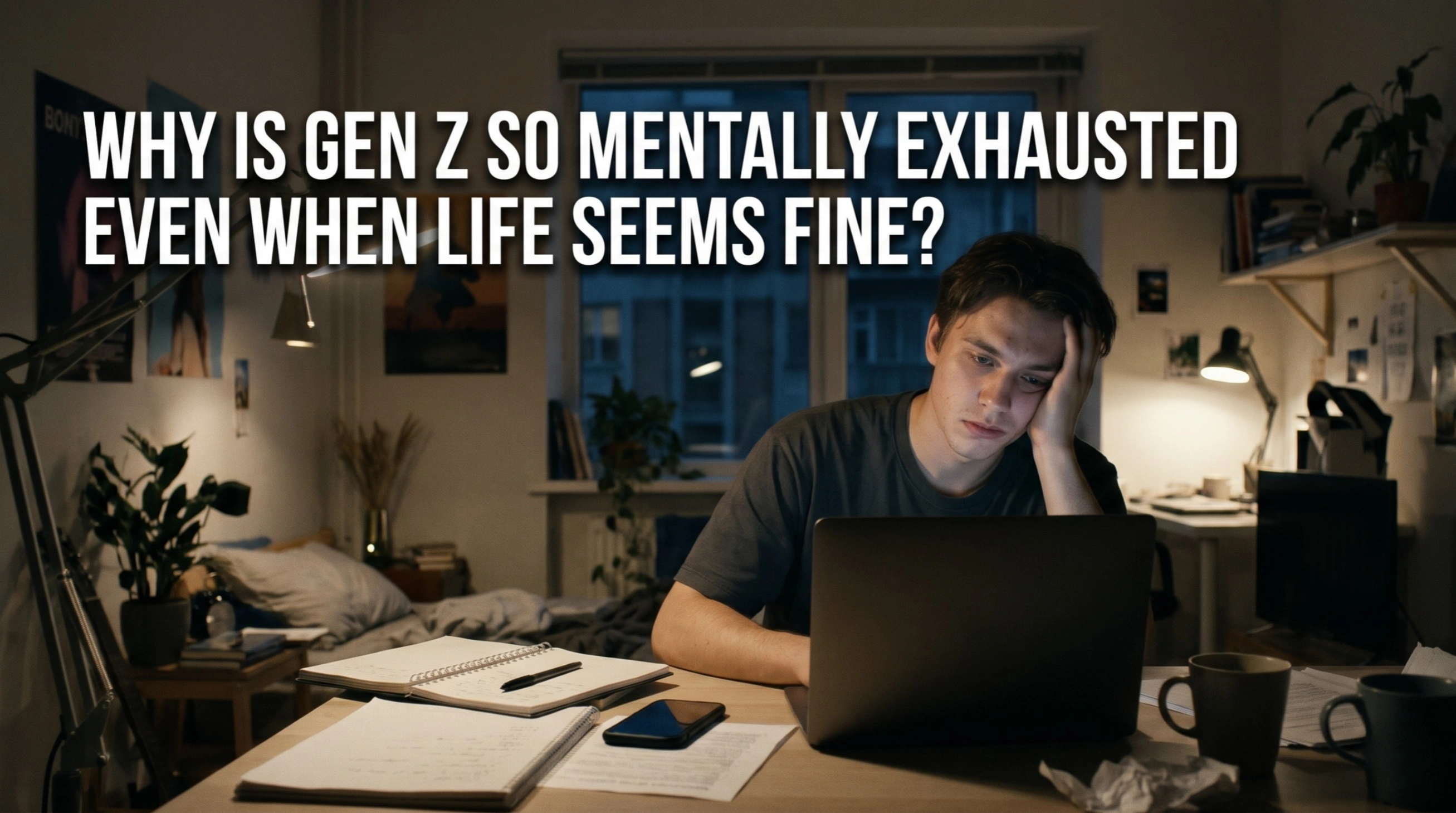
Generation Z is often described as ambitious, digitally connected, socially aware, and full of opportunities. Yet many young people feel mentally exhausted even when their lives appear comfortable from the outside. They may have supportive families, educational opportunities, friends, entertainment, and plans for the future, but still struggle with low motivation, constant worry, emotional fatigue, or a persistent feeling of being overwhelmed.
This raises an important question: Why is Gen Z so mentally exhausted even when life seems fine?
The answer is rarely as simple as being lazy, ungrateful, or unable to handle pressure. Mental exhaustion can develop when everyday demands, constant digital stimulation, social comparison, uncertainty about the future, and emotional expectations accumulate over time.
Understanding these factors is the first step towards building healthier habits, reconnecting with yourself, and finding a more sustainable balance between achievement and inner peace.
What Is Mental Exhaustion?
Mental exhaustion is a state in which a person feels emotionally and cognitively drained. Even ordinary responsibilities can begin to feel difficult, and activities that once felt enjoyable may require more effort.
Unlike physical tiredness, which may improve after rest, mental exhaustion can persist when the underlying sources of stress remain unresolved.
Common signs include:
Feeling tired even after getting enough sleep.
Struggling to concentrate or make decisions.
Losing motivation for work, studies, or hobbies.
Feeling overwhelmed by small responsibilities.
Becoming irritable, anxious, or emotionally numb.
Constantly thinking about the future or past mistakes.
Feeling guilty when resting or doing nothing productive.
Wanting to disconnect from everyone without knowing why.
Experiencing these feelings occasionally does not necessarily indicate a mental health condition. However, when they persist or interfere with daily life, they deserve attention rather than dismissal.
1. Social Media Creates a Constant Comparison Trap
One major challenge for Gen Z is growing up in an environment where other people's lives are always visible.
Social media provides entertainment, inspiration, and opportunities to connect. However, it can also expose young people to a continuous stream of achievements, attractive lifestyles, career milestones, relationships, travel experiences, and carefully curated moments.
A person might spend a few minutes scrolling and see someone getting promoted, someone else travelling abroad, another person buying a home, and another announcing an apparently perfect relationship.
Even when they understand that social media does not show the complete picture, comparison can happen automatically.
Thoughts such as "Am I falling behind?" or "Why does everyone else seem to have everything figured out?" can gradually affect confidence and satisfaction.
The problem is not necessarily that other people are doing well. It is that their visible achievements can become the standard against which we judge our own lives.
Design Your Destiny
Building a more balanced life begins with understanding your habits, expectations, and inner patterns. Explore how greater self-awareness and conscious choices can help you move towards a life that feels more meaningful, balanced, and aligned with your values.
Start Your Journey Today!How to reduce social comparison
Unfollow accounts that consistently make you feel inadequate.
Limit scrolling during the first and last hour of your day.
Remind yourself that online content represents selected moments, not an entire life.
Celebrate personal progress without comparing your timeline with someone else's.
Spend more time participating in life than observing other people's lives.
Your progress does not become less meaningful because someone else reaches a milestone earlier.
2. The Pressure to Succeed Early Can Be Overwhelming
Many young adults feel they should have their careers, finances, relationships, and identities figured out by their twenties.
They may see peers earning high salaries, starting businesses, pursuing postgraduate degrees, or building online audiences. These examples can create the impression that everyone is moving forward quickly.
At the same time, Gen Z faces difficult questions about career stability, living costs, competition, and what professional success should look like.
The result can be a persistent sense of urgency.
Even during a break, a young person might worry that they should be learning a new skill, applying for jobs, building a side business, or improving themselves.
Rest begins to feel like wasted time.
Why this pressure becomes exhausting
When every activity is evaluated according to its future benefit, life can become an endless self-improvement project. There is always another goal, another skill, or another milestone to pursue.
Ambition is valuable, but constant pressure leaves little room for recovery.
A healthier approach is to set realistic goals, focus on what matters most right now, and accept that career and personal development rarely follow a perfectly predictable timeline.
You can be ambitious without treating every day as a race.
3. Constant Digital Stimulation Leaves Little Room for Mental Rest
Gen Z has access to an almost unlimited stream of messages, videos, notifications, news, music, and information.
A person may move between work emails, social media, online conversations, short videos, and news updates throughout the day. Even when they are physically resting, their attention may remain occupied.
Frequent interruptions can make it harder to sustain concentration and create a sense of mental clutter.
There is also a difference between taking a break and consuming more information. Watching videos for an hour may feel relaxing, but it does not always provide the same recovery as quiet time, a walk, or an uninterrupted conversation.
How to give your mind a genuine break
Try introducing short periods of reduced stimulation into your day.
Keep your phone away while eating, take a walk without constantly checking notifications, and complete one task at a time whenever possible.
You do not need to abandon technology. Instead, use it intentionally rather than allowing every notification to determine where your attention goes.
Sometimes, the mind needs fewer inputs rather than more entertainment.
4. The Future Feels Increasingly Uncertain
Career competition, financial pressures, technological change, climate concerns, and rapidly changing expectations can make the future feel difficult to predict.
Young people may worry about securing a stable job, earning enough money, choosing the right career, maintaining relationships, or making decisions that will affect the rest of their lives.
Planning for the future is useful. However, repeatedly imagining worst-case scenarios can create emotional strain without necessarily improving preparedness.
For example, someone searching for a job might spend hours worrying about whether they will succeed while struggling to focus on applications that could actually improve their chances.
Govardhan Leela Story:Why Lord Krishna Lifted Govardhan Hill
Focus on what you can influence
Divide your concerns into two categories:
Within your control: your preparation, daily habits, decisions, communication, and willingness to seek help.
Outside your complete control: unexpected changes, other people's reactions, and the exact timing of future opportunities.
Take practical steps where you have influence. For uncertain outcomes, practise responding to the present rather than trying to mentally solve every possible future.
This approach does not eliminate uncertainty, but it can help prevent uncertainty from occupying your entire day.
5. Emotional Exhaustion Can Hide Behind an Apparently Good Life
One reason mental exhaustion can be confusing is that it does not always correspond to visible hardship.
A person may have a loving family, financial security, friends, or access to opportunities and still feel overwhelmed.
They might then feel guilty for struggling.
Thoughts such as "I have no real reason to feel this way" or "Other people have much bigger problems" can make it harder to acknowledge their own emotions.
But gratitude and distress can coexist. Appreciating what you have does not mean you must feel happy all the time.
Emotional exhaustion can develop from accumulated pressure, unresolved worries, inadequate recovery, difficult relationships, or factors that are not immediately obvious.
Give yourself permission to acknowledge your feelings
Instead of asking, "Why am I unhappy when everything is fine?", try asking:
What has been demanding most of my energy lately?
Have I had enough rest and meaningful connection?
Am I putting pressure on myself to appear successful or happy?
Is there something I have been avoiding or struggling to express?
These questions encourage curiosity rather than self-judgment.
You do not need to prove that your problems are serious enough before you are allowed to take care of yourself.
6. Being Constantly Available Creates Hidden Stress
Messages can arrive at any hour. Work may extend into personal time, friends may expect immediate replies, and online conversations can create pressure to remain available.
Over time, constant availability can make it difficult to establish boundaries.
Even when nothing urgent is happening, a person may feel that they should check their phone, respond to a message, or remain aware of what everyone else is doing.
This creates a subtle form of pressure: the feeling that attention must always be available to someone or something.
Build healthier boundaries
Decide when you will check messages and when you will disconnect. Communicate reasonable response times, protect periods of uninterrupted work, and make space for activities that do not require you to be available to others.
Healthy boundaries do not mean you care less about people. They allow you to maintain relationships without exhausting yourself in the process.
7. Rest Can Feel Like Something You Must Earn
Many young people associate their worth with productivity.
They feel good about themselves when they finish tasks, achieve goals, or receive recognition. When they are unproductive, they may experience guilt or anxiety.
This mindset can turn rest into another source of stress.
Instead of enjoying a quiet evening, someone may mentally review unfinished work. Instead of taking a holiday, they may worry about falling behind.
The result is that recovery becomes incomplete, even when time is technically available.
Understand the difference between rest and avoidance
Rest is a necessary part of maintaining energy and functioning. It can include sleep, recreation, social connection, movement, creative activities, and quiet time.
Avoidance, by contrast, involves repeatedly escaping responsibilities in ways that may create more problems later.
The distinction is not always clear, but you can ask yourself whether an activity is helping you recover or simply postponing something that needs attention.
Plan realistic breaks without demanding that every free moment be productive.
Your worth is not determined by how much you accomplish in a day.
8. A Lack of Meaningful Connection Can Increase Emotional Fatigue
Digital communication makes it easy to remain in contact with many people, but frequent interaction does not always translate into feeling understood.
Someone may have hundreds of online connections and still feel lonely. Conversations may focus on entertainment, updates, or achievements without creating space for honest discussions about fear, disappointment, or uncertainty.
When people feel they must appear confident and successful, they may hide their struggles from friends and family.
This can create a cycle in which everyone appears fine while privately feeling overwhelmed.
Make room for genuine connection
Spend time with people who allow you to be honest without feeling that you must perform or impress them.
Share your experiences with someone you trust, ask meaningful questions, and make time for conversations that are not centred on achievement.
If loneliness is persistent, consider joining a community, interest group, volunteering activity, or supportive space where relationships can develop naturally.
Being understood can make difficult experiences feel less isolating.
9. How Can Gen Z Overcome Mental Exhaustion?
There is no single solution for every person. However, a few consistent habits can help reduce unnecessary pressure and support emotional well-being.
Step 1: Identify what is draining your energy
For several days, notice which activities leave you feeling overwhelmed, distracted, or emotionally depleted.
Look at your workload, social media habits, relationships, sleep, expectations, and unresolved concerns.
You do not need to change everything at once. Start with the one or two patterns that appear most frequently.
Step 2: Protect your sleep and physical well-being
Consistent sleep, regular movement, balanced meals, hydration, and time outdoors can support general well-being.
Avoid treating sleep as a luxury that should be sacrificed whenever life becomes busy.
If exhaustion continues despite adequate rest, consider discussing it with a healthcare professional, as physical health factors can also contribute to fatigue.
Step 3: Reduce the pressure to do everything
Choose a small number of meaningful priorities for the day. Break larger tasks into manageable steps and recognise that not every opportunity needs to be pursued immediately.
A realistic plan is often more useful than an ambitious schedule that leaves you feeling inadequate.
Step 4: Practise mindfulness and self-awareness
Spend five minutes sitting quietly, observing your breathing, journaling, or reflecting on your feelings.
When you notice repetitive worries, ask whether there is a practical action you can take. If there is, identify the next step. If there is not, gently return your attention to what you are doing now.
Mindfulness is not about eliminating every thought. It is about developing a more conscious relationship with your attention.
Step 5: Reconnect with activities that feel meaningful
Make room for hobbies, friendships, creativity, nature, spiritual reflection, or acts of service.
Choose activities that bring genuine enjoyment or a sense of connection rather than selecting them only because they look impressive to others.
Meaning does not always come from achieving something significant. It can also emerge through ordinary moments of care, curiosity, and presence.
Step 6: Seek support when you need it
If mental exhaustion persists, interferes with everyday functioning, or comes with ongoing sadness, anxiety, hopelessness, or sleep difficulties, consider speaking with a qualified mental health professional.
You do not have to wait until you reach a breaking point to seek help. Professional support can help you understand what you are experiencing and identify appropriate ways forward.
How to Stay Happy Even When Life Is Difficult
10. What Spiritual Wisdom Can Teach Us About Mental Exhaustion
Spiritual reflection can offer another way to examine the relationship between ambition, expectations, and inner peace.
The Bhagavad Gita, for example, discusses the restless mind, attachment to outcomes, self-discipline, and the importance of performing one's responsibilities with balance.
In Bhagavad Gita 6.35, Lord Krishna acknowledges that the mind is difficult to control and emphasises practice and detachment as ways to train it.
This teaching can be applied to the pressure many young people feel to control every outcome. We can prepare for the future and work towards meaningful goals without allowing every uncertainty to dominate our attention.
Similarly, the Gita's emphasis on action without excessive attachment to results encourages a healthier distinction between sincere effort and the demand for guaranteed success.
Spirituality does not mean ignoring emotional difficulties or replacing professional mental health care. Rather, it can complement practical steps by encouraging reflection, self-awareness, and a more balanced understanding of success.
For those interested in inner growth, practices such as meditation, mindful reflection, and conscious living can help create space between an experience and the way we respond to it.
Conclusion: Gen Z Needs More Than Motivation
Why is Gen Z so mentally exhausted even when life seems fine? The reasons can include constant comparison, digital overload, pressure to succeed early, uncertainty about the future, emotional isolation, and the belief that rest must be earned.
These challenges do not mean that an entire generation is weak or incapable. They highlight the importance of creating healthier relationships with technology, work, expectations, and personal well-being.
The solution is not always to become more productive or push harder. Sometimes, it means slowing down, recognising emotional needs, setting boundaries, and asking for support.
Start small. Take a break without guilt, reduce unnecessary comparison, reconnect with someone you trust, and focus on the next meaningful step rather than solving your entire future at once.
A fulfilling life is not simply one that looks successful from the outside. It is also one in which you have space to feel, recover, connect, and live with greater awareness.
If you are struggling, remember that you do not have to justify your feelings or manage everything alone.
Personal Session
If you are looking for a dedicated space to reflect on recurring challenges, personal goals, and patterns that may be affecting your peace of mind, consider booking a personal session. Use the opportunity to explore your concerns and identify practical next steps for your personal growth.
Book Now
Read Latest Articles
What Is Bhakti? Meaning, Importance & Spiritual Significance
Do Positive Affirmations Really Work? The Science Behind Self-Talk
Frequently Asked Questions
Q.Why is Gen Z so mentally exhausted even when life seems fine?
Gen Z may experience mental exhaustion due to social media comparison, pressure to succeed, digital overload, uncertainty about the future, and difficulty switching off from responsibilities. A person can appreciate their life and still feel emotionally drained. Recognising these pressures, establishing boundaries, prioritising recovery, and seeking support when needed can help improve well-being.Q.What are the common signs of mental exhaustion in Gen Z?
Common signs include persistent tiredness, difficulty concentrating, low motivation, irritability, feeling overwhelmed by small tasks, emotional numbness, and trouble relaxing. These experiences can have different causes. If they persist or interfere with daily life, consider speaking with a qualified healthcare or mental health professional.Q.Can social media cause mental exhaustion?
Social media may contribute to mental exhaustion when frequent scrolling, constant notifications, and comparisons with curated lifestyles increase stress or disrupt rest. Its effects vary from person to person. Setting reasonable limits, curating your feed, and taking regular breaks can help you use social platforms more intentionally.Q.Why do I feel tired even when I have nothing to worry about?
Feeling tired despite having no obvious concern can be related to accumulated stress, poor-quality sleep, emotional strain, lifestyle factors, or physical health conditions. You do not need to identify a major problem for your feelings to deserve attention. If fatigue persists despite adequate rest, consult a healthcare professional.Q.How can Gen Z improve mental well-being?
Helpful habits include maintaining a consistent sleep schedule, engaging in regular physical activity, limiting unhelpful social media use, setting boundaries, connecting with supportive people, and practising mindfulness. Small, sustainable changes are often easier to maintain than attempting to overhaul every part of life at once.Q.Is mental exhaustion the same as depression or burnout?
No. Mental exhaustion describes feeling mentally or emotionally drained, while burnout is commonly associated with prolonged unmanaged stress, especially in work-related contexts. Depression is a mental health condition involving a broader pattern of symptoms. They can overlap, so persistent distress or impaired functioning warrants assessment by a qualified professional.Q.How does spirituality help with mental exhaustion?
Spiritual practices may help some people develop self-awareness, reflect on their priorities, and approach uncertainty with greater balance. Teachings such as those in the Bhagavad Gita encourage practice, detachment from outcomes, and responsible action. Spirituality can complement, but should not replace when needed, professional mental health support.