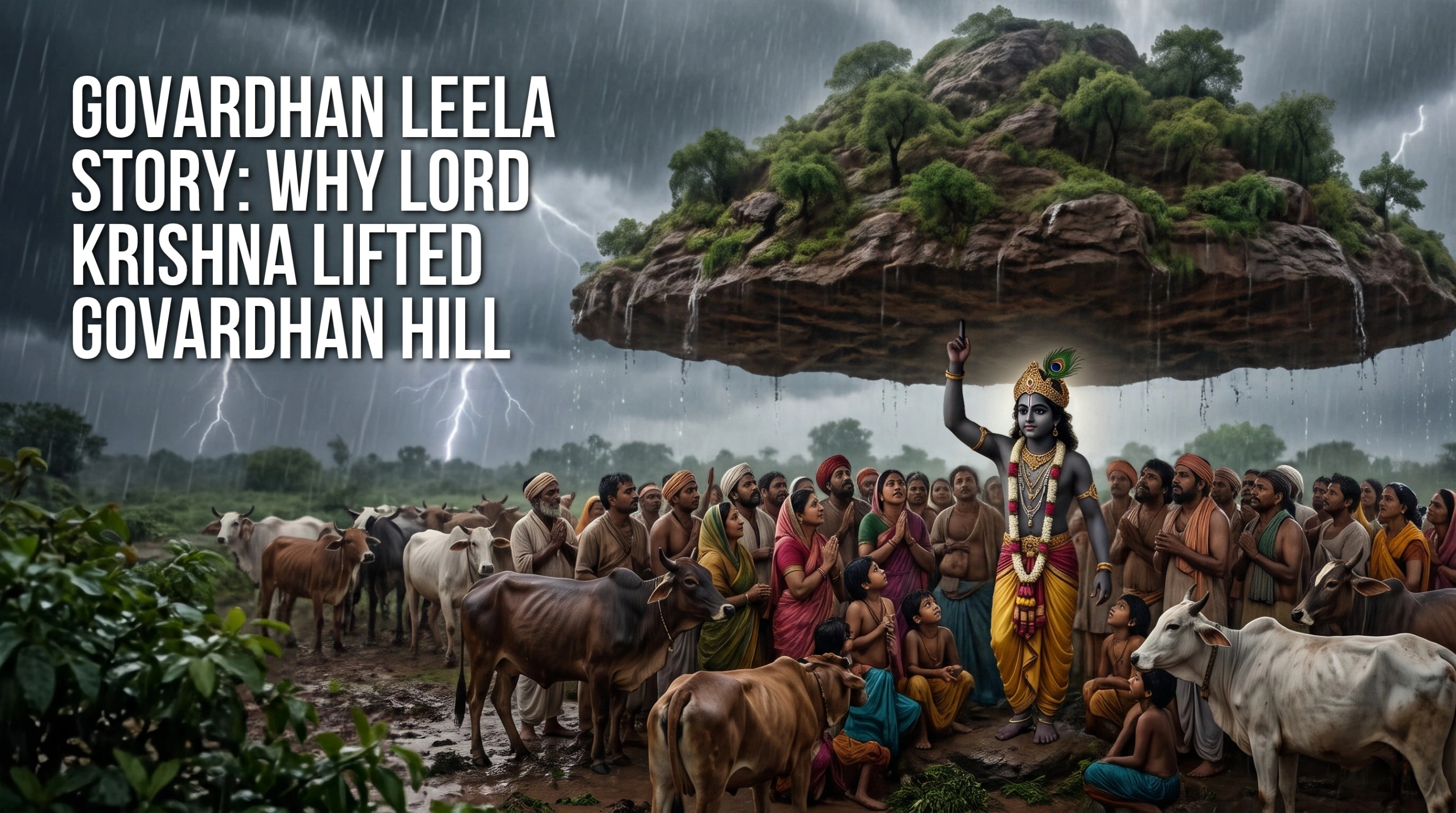
The Govardhan Leela is one of the most beloved stories from the childhood of Lord Krishna. It describes how Krishna lifted the enormous Govardhan Hill on his little finger to protect the people of Vrindavan from torrential rain sent by Lord Indra, the king of the gods.
But why did Krishna lift Govardhan Hill? Was it simply to save the villagers from a terrible storm, or did the divine act carry a deeper message about devotion, humility, nature, and faith?
According to the traditional Hindu account, the incident began when Krishna questioned the people of Vrindavan's custom of worshipping Indra for rainfall. He encouraged them to honour Govardhan Hill, the land, the cows, and the natural resources that directly supported their lives. Angered by this change, Indra unleashed a devastating storm. Krishna responded by lifting Govardhan Hill and providing shelter to the entire community.
The story is celebrated during Govardhan Puja, which is observed on the day after Diwali in many Hindu traditions. Its message continues to inspire devotees to cultivate humility, recognise the value of nature, and place their trust in the divine.
Let us explore the complete Govardhan Leela story, why Lord Krishna lifted the hill, and the spiritual lessons it offers.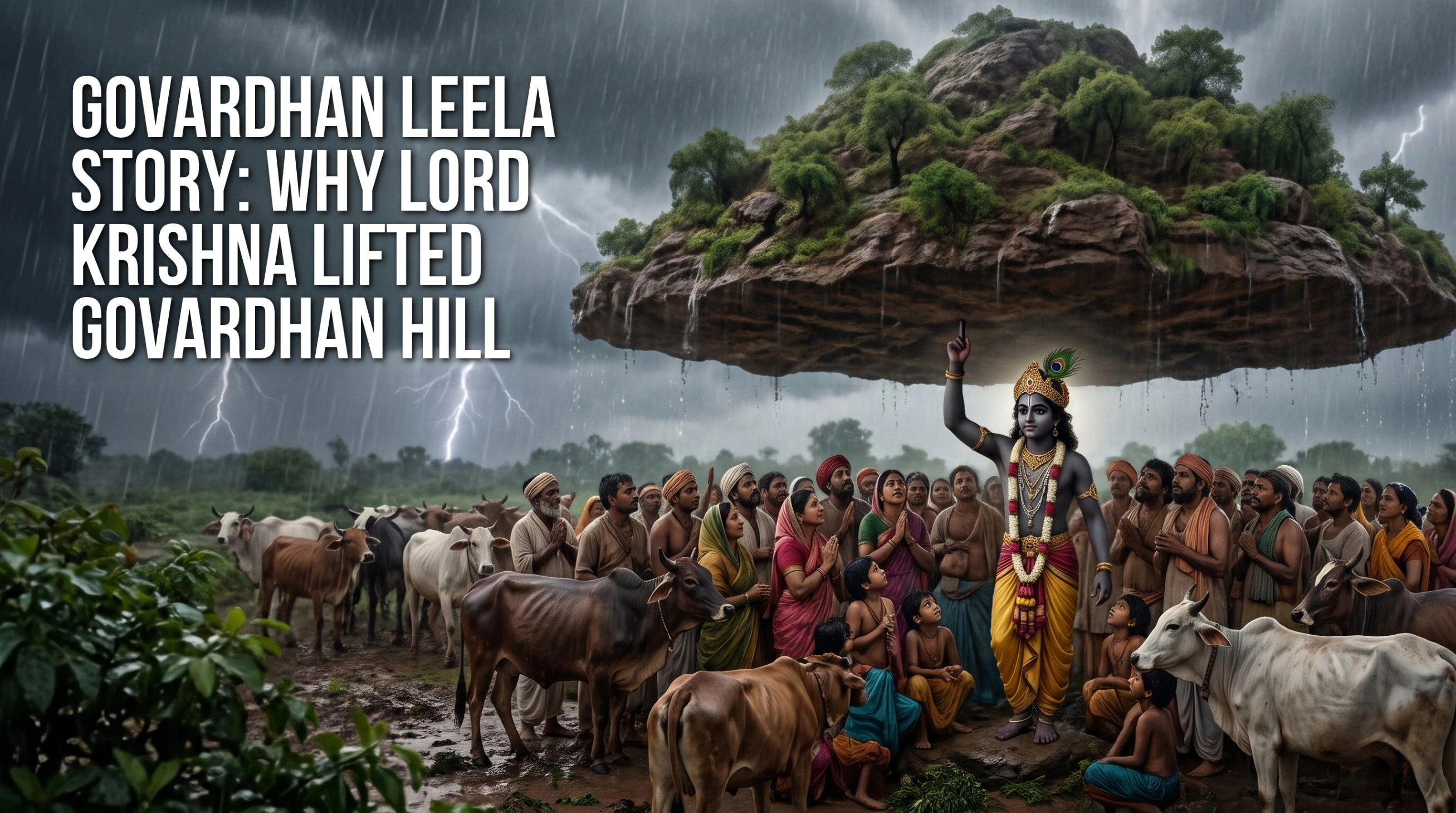
What Is the Govardhan Leela?
Govardhan Leela refers to the divine act of Lord Krishna lifting Govardhan Hill to protect the people and animals of Vrindavan from a powerful storm.
The story is traditionally associated with Krishna's childhood in the Braj region, where he lived among cowherds, cows, and the people who loved him. Govardhan Hill, located in the Braj region near Mathura, holds deep religious significance for devotees of Krishna.
In Hindu devotional traditions, this leela demonstrates Krishna's divine power and his loving relationship with his devotees. It also challenges the idea that spiritual life should be driven by fear, pride, or the expectation of rewards.
Rather than asking people to worship out of fear of a powerful deity, Krishna directs their attention toward gratitude, responsible living, and the natural world that sustains them.
The Govardhan Leela Story: Why Lord Krishna Lifted Govardhan Hill
1. The People of Vrindavan Prepare to Worship Lord Indra
According to the traditional story, the people of Vrindavan depended heavily on nature for their livelihood. They cared for cows, produced milk and dairy products, and relied on the surrounding land for grazing and other resources.
Like many communities dependent on agriculture and rainfall, they observed rituals to honour Lord Indra, who is associated in Hindu tradition with rain, storms, and the heavens.
The villagers prepared offerings and made arrangements for their customary worship of Indra. They believed that pleasing him would bring rainfall and support their well-being.
Krishna, who was still a young boy, observed these preparations and asked the villagers why they were conducting the ritual.
He encouraged them to think more deeply about the purpose of their worship and the things that directly sustained their lives.
Design Your Destiny
The stories of Lord Krishna offer opportunities to reflect on our choices, attitudes, and inner growth. Explore Design Your Destiny by Science Divine to deepen your self-awareness, discover meaningful perspectives, and bring greater consciousness into your everyday life. Begin your journey toward understanding yourself better and living with greater purpose.
Start Your Journey Today!2. Krishna Explains the Importance of Govardhan Hill
When the villagers explained their plans to worship Indra, Krishna offered a different perspective.
He encouraged them to recognise the importance of Govardhan Hill, the cows, the forests, the grasslands, and the natural resources that supported their community.
Govardhan provided grazing grounds for their cattle and formed an important part of their environment. The villagers depended on these resources for their livelihood and daily sustenance.
Krishna therefore encouraged them to express gratitude for the hill and the natural world around them.
The villagers accepted his suggestion and prepared offerings for Govardhan Hill. In the traditional account, they celebrated the occasion with food, prayers, and devotion.
This part of the story highlights a central lesson: gratitude should not be limited to distant hopes or future rewards. It can also be expressed toward the people, resources, and natural systems that support life every day.
3. Lord Indra Becomes Angry
When Lord Indra learned that the people of Vrindavan had changed their customary worship, he became furious.
He interpreted their actions as an insult to his authority. Instead of responding with understanding, he decided to punish the villagers for following Krishna's advice.
Indra commanded the storm clouds to unleash torrential rain over Vrindavan. Powerful winds, lightning, and relentless downpours threatened the homes, cattle, and lives of the villagers.
The storm continued to intensify, and the people became frightened. Their homes and surroundings were exposed to the destructive force of the weather.
Realising that they could not protect themselves from the storm, the villagers turned to Krishna for help.
4. Lord Krishna Lifts Govardhan Hill on His Little Finger
Seeing the suffering of the people and animals, Krishna decided to protect them.
According to the Bhagavata Purana's account of this leela, Krishna lifted Govardhan Hill with one hand, traditionally depicted as balancing it on the little finger of his left hand.
He invited the people of Vrindavan, along with their cattle and belongings, to take shelter beneath the raised hill.
The enormous hill became a protective canopy, shielding the community from the storm. Men, women, children, and animals gathered beneath it, finding safety together.
The sight of Krishna holding up an entire hill amazed the villagers. What appeared impossible became possible through his divine power.
Yet Krishna did not present the act as an opportunity to demand praise. He remained with his devotees and continued protecting them.
For devotees, this moment represents the compassionate nature of Krishna and his willingness to protect those who place their trust in him.
5. Krishna Protects Vrindavan for Seven Days
The traditional narrative describes Krishna holding Govardhan Hill for seven days and seven nights while the storm continued.
Throughout this period, the people and cattle remained sheltered beneath the hill. Krishna's companions and the villagers witnessed his extraordinary strength and unwavering concern for their safety.
The scene is often depicted in paintings and devotional images: Krishna standing peacefully with one arm raised, the hill resting above him, and the people of Vrindavan gathered beneath it.
The story also highlights the importance of community. The villagers and their animals find shelter together, reminding devotees that protection and compassion extend beyond individual needs.
Eventually, Indra realised that his storm had failed to defeat Krishna or harm the people under his protection.
6. Indra Realises His Mistake
After seven days, Indra understood that Krishna possessed a divine power far greater than his own authority over storms.
He stopped the rain, and the clouds cleared. Krishna gently lowered Govardhan Hill back into its place, allowing the people and animals to return safely to their lives.
Indra then recognised the error of his pride. He had allowed his sense of importance to lead him toward anger and unnecessary destruction.
In the traditional account, Indra approached Krishna and acknowledged his mistake. The encounter became an occasion for humility and recognition of Krishna's divine nature.
The story does not simply celebrate Krishna's strength. It also illustrates the importance of admitting wrongdoing and learning from one's mistakes.
Indra's position as a powerful deity did not make him free from pride. His transformation begins when he recognises the limits of his own understanding.
Kali Chaudas vs Naraka Chaturdashi : Are They the Same ?
Why Did Lord Krishna Lift Govardhan Hill?
Lord Krishna lifted Govardhan Hill to protect the people and cattle of Vrindavan from the destructive storm sent by Indra. However, the story also carries several deeper meanings within Hindu devotional traditions.
1. To Protect His Devotees
Krishna's action demonstrates his compassion toward the people who depended on him. Rather than allowing the storm to destroy their lives, he provided shelter and safety.
For devotees, this is a reminder of the protective and loving nature of the divine.
2. To Teach Indra Humility
Indra's anger arose from wounded pride and a desire to defend his authority. Krishna's act revealed that power and position do not justify arrogance.
The story encourages people to remain humble, even when they possess knowledge, wealth, influence, or responsibility.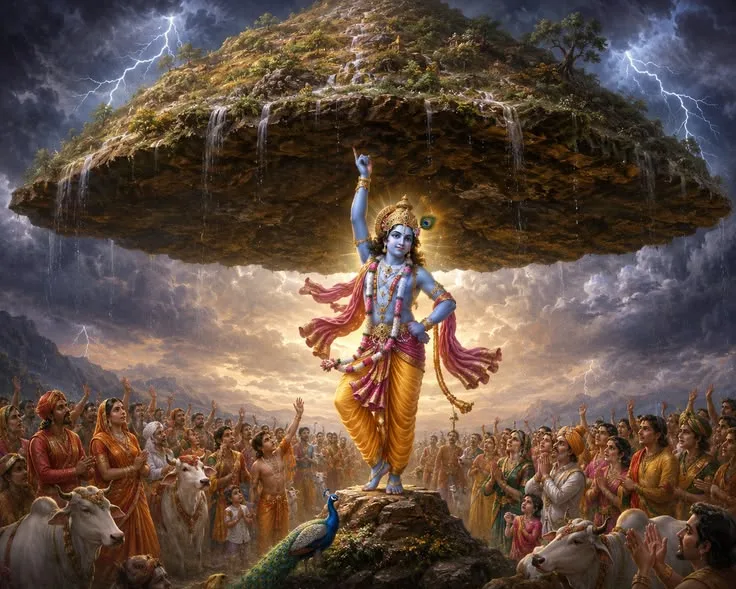
3. To Encourage Gratitude Toward Nature
Krishna's message to the villagers emphasised their dependence on Govardhan Hill, their cattle, and the natural resources around them.
The episode can be understood as an invitation to appreciate the environment and recognise the importance of caring for the natural world.
4. To Emphasise Faith Over Fear
The villagers initially followed their customary ritual because they expected it to secure favourable conditions. Krishna encouraged them to think beyond fear and develop a more thoughtful relationship with the world around them.
The story invites reflection on the difference between sincere devotion and actions motivated entirely by anxiety or the expectation of rewards.
What Is the Spiritual Significance of Govardhan Leela?
The Govardhan Leela is more than a story about a miraculous act. It is also a source of spiritual reflection for devotees.
Humility: Indra's pride leads him to misuse his power. His eventual apology shows the importance of recognising mistakes and remaining open to learning.
Compassion: Krishna protects the entire community, including its animals. His action illustrates care that extends to all living beings.
Gratitude: The villagers are encouraged to recognise the resources that support their daily lives rather than taking them for granted.
Faith: Krishna's response gives the frightened villagers hope when they face a situation beyond their control.
Community: The people find shelter together beneath Govardhan Hill. The episode reminds us of the value of collective care and mutual support during difficult times.
These lessons can be reflected upon in daily life through kindness, responsible choices, humility, and a greater awareness of our dependence on others and the natural world.
Why Is Govardhan Puja Celebrated?
Govardhan Puja commemorates Krishna's connection with Govardhan Hill and the episode in which he protected the people of Vrindavan.
It is widely observed on the day after Diwali, although festival dates and local customs can vary according to regional traditions and the Hindu lunar calendar.
Devotees mark the occasion through prayers, offerings, devotional activities, and the preparation of food. One well-known tradition is Annakut, meaning a mountain of food, in which a variety of dishes are offered to Krishna.
The offerings symbolise gratitude and devotion. In many communities, cows are also honoured because of their association with Krishna and their importance in traditional pastoral life.
Devotees may visit Govardhan Hill for pilgrimage and perform Govardhan Parikrama, a devotional circumambulation of the hill.
The observance provides an opportunity to remember Krishna's leela, reflect on its spiritual teachings, and express gratitude for the resources that sustain life.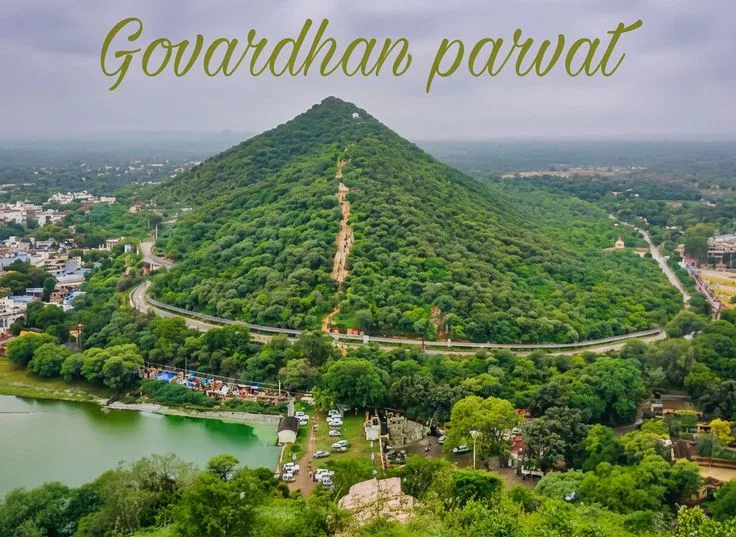
What Can We Learn From the Govardhan Leela Today?
The story remains relevant because its lessons can be applied beyond its religious setting.
Stay Humble, Whatever Your Position
Indra's mistake reminds us that authority and success should not become reasons for arrogance. True maturity includes listening to others and acknowledging when we are wrong.
Appreciate What Sustains You
Just as the people of Vrindavan depended on their natural surroundings, modern life depends on healthy ecosystems, clean water, fertile soil, and many other shared resources.
The story can inspire gratitude and responsible environmental choices.
Support Others During Difficult Times
Krishna does not protect only the strongest or most influential members of the community. Everyone finds shelter beneath the hill.
In everyday life, we can follow this spirit by helping people who are struggling, supporting our communities, and showing compassion toward animals.
Do Not Let Fear Guide Every Decision
The story encourages reflection rather than blind reactions driven by fear. When facing uncertainty, take time to understand your situation, consider your responsibilities, and make thoughtful decisions.
Recognise That Pride Can Prevent Growth
Indra's transformation begins when he accepts that he has made a mistake. Similarly, personal growth becomes possible when we are willing to question our assumptions and learn from experience.
How to Stay Happy Even When Life Is Difficult
Conclusion
The Govardhan Leela story explains why Lord Krishna lifted Govardhan Hill: to protect the people and cattle of Vrindavan from a devastating storm sent by Lord Indra.
Yet the story's significance extends beyond the miracle itself. It teaches humility, compassion, gratitude, faith, and the importance of caring for the world that sustains us.
As devotees celebrate Govardhan Puja, they remember Krishna's loving protection and the spiritual lessons of his leela.
The story invites us to approach life with greater awareness, to remain humble when we succeed, and to support others when they face difficulties.
The enduring message of Govardhan Leela is that true strength is expressed not through pride, but through compassion, protection, and a willingness to serve.
Personal Session
Would you like to explore your personal questions, challenges, and aspirations with greater clarity? Consider booking a personal session with Science Divine to reflect on your inner growth and discover practical ways to approach life's challenges with greater awareness. Take a thoughtful step toward personal development and a more conscious way of living.
Book Now
Read Latest Articles
How to Stop Overthinking and Anxiety: 12 Practical Ways to Calm Your Mind
Importance of Ekadashi Vrat: Meaning, Significance and Benefits