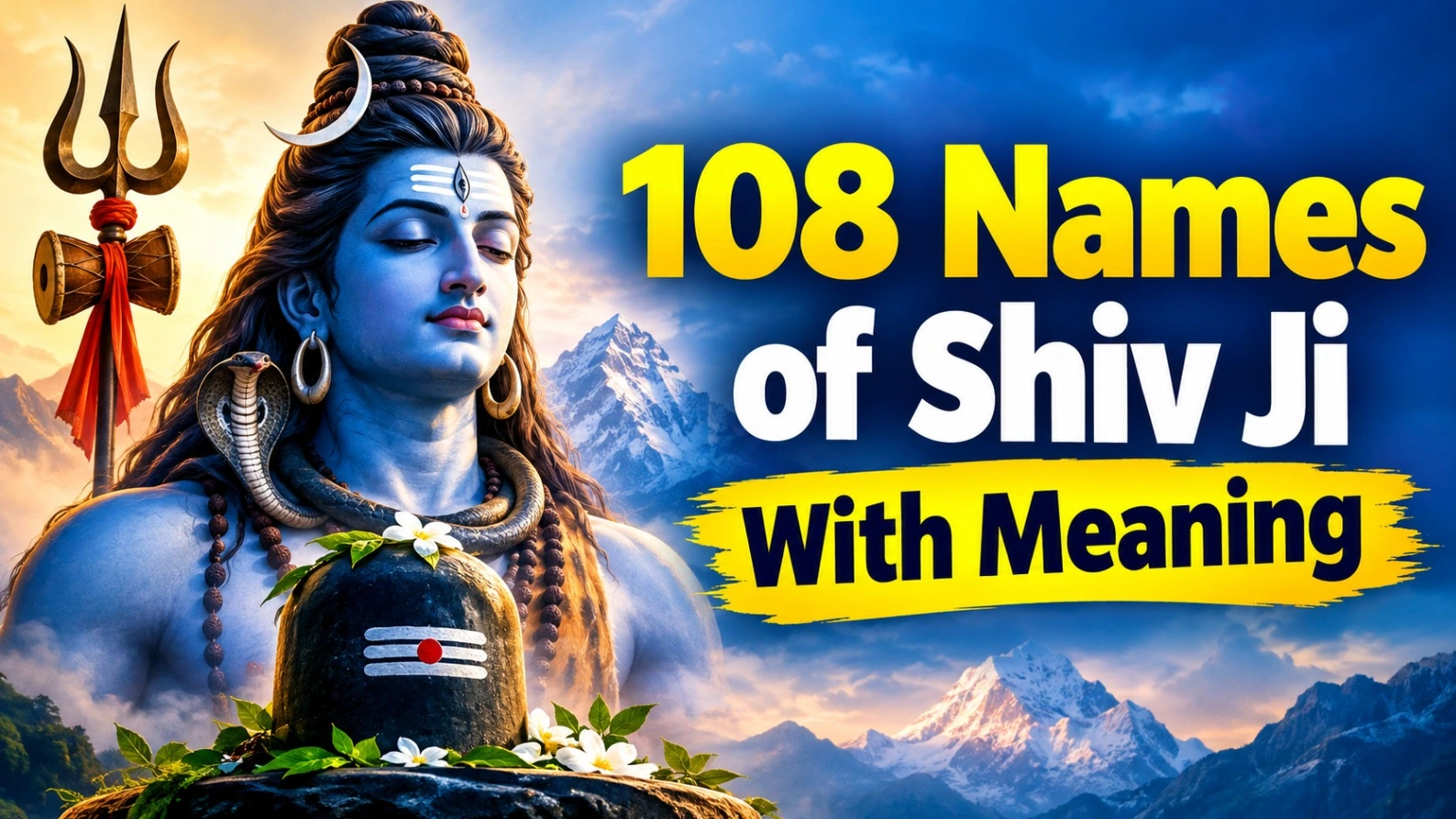
Lord Shiva is one of the most revered deities in Hinduism, worshipped as Mahadev, Bholenath, Shankar, and by many other sacred names. Each name reflects a different aspect of his divine nature, including wisdom, compassion, strength, meditation, and the power of transformation.
The 108 names of Shiv Ji with meaning are traditionally known as Shiva Ashtottara Shatanamavali. Devotees recite these names during daily puja, Monday worship, Shravan month, Pradosh Vrat, and Maha Shivratri. Each name offers a way to remember Lord Shiva's qualities and reflect on their spiritual significance.
In this guide, you will discover 108 traditional names of Lord Shiva with their meanings, the significance of chanting them, and a simple way to incorporate these sacred names into your daily spiritual practice.
What Are the 108 Names of Lord Shiva?
The Shiva Ashtottara Shatanamavali is a traditional collection of 108 names used in Shiva worship. The Sanskrit word Shatanamavali refers to a garland or series of names, while Ashtottara Shata refers to 108.
These names describe Lord Shiva through his divine attributes, cosmic role, appearance, relationships, and spiritual symbolism. For example, Maheshwara represents the great Lord, Gangadhara refers to the bearer of the River Ganga, and Trilochana describes the three-eyed deity.
The 108 names are traditionally recited as an act of devotion. In many forms of puja, devotees offer a flower, a bilva leaf, or another customary offering while reciting each name. Spellings and the order of certain names can vary across traditional recensions.
Design Your Destiny
Ready to Change the Way You Experience Life? Your thoughts do not have to define your entire experience. With greater self-awareness, mindful reflection, and consistent practice, you can begin responding to life's challenges with more clarity and balance.
Start Your Journey Today!
108 Names of Shiv Ji With Meaning in English
The following list follows a traditional Shiva Ashtottara Shatanamavali recension. Some Sanskrit names have layered meanings, so the explanations below provide concise devotional interpretations.
No. | Name of Lord Shiva | Meaning |
|---|---|---|
1 | Shivaya (Shiva) | The auspicious and benevolent one |
2 | Maheshwaraya (Maheshwara) | The great Lord |
3 | Shambhave (Shambhu) | The source of well-being |
4 | Pinakine (Pinaki) | The bearer of the Pinaka bow |
5 | Shashishekharaya (Shashishekhar) | The one crowned with the crescent moon |
6 | Vamadevaya (Vamadeva) | The gracious and beautiful divine form |
7 | Virupakshaya (Virupaksha) | The one with extraordinary eyes |
8 | Kapardine (Kapardin) | The one with matted locks |
9 | Nilalohitaya (Nilalohita) | The blue-and-red-hued one |
10 | Shankaraya (Shankara) | The giver of well-being |
11 | Shulapanaye (Shulapani) | The bearer of the trident |
12 | Khatvangine (Khatvangi) | The bearer of the khatvanga staff |
13 | Vishnuvallabhaya (Vishnuvallabha) | The beloved of Vishnu |
14 | Shipivishtaya (Shipivishta) | A traditional Vedic epithet of Shiva |
15 | Ambikanathaya (Ambikanatha) | The Lord of Ambika, Goddess Parvati |
16 | Shrikanthaya (Shrikantha) | The glorious-throated one |
17 | Bhaktavatsalaya (Bhaktavatsala) | The one who loves and cares for devotees |
18 | Bhavaya (Bhava) | The source of existence |
19 | Sharvaya (Sharva) | The remover of afflictions |
20 | Trilokeshaya (Trilokesha) | The Lord of the three worlds |
21 | Shitikanthaya (Shitikantha) | The one associated with the distinctive throat that held poison |
22 | Shivapriyaya (Shivapriya) | The beloved of Shiva's divine consort, Shiva or Parvati |
23 | Ugraya (Ugra) | The formidable and powerful one |
24 | Kapaline (Kapalin) | The bearer of the skull-bowl |
25 | Kaumaraye (Kaumaraya) | A traditional epithet associated with Kumara and Shiva |
26 | Andhakasurasudanaya (Andhakasurasudana) | The destroyer of the demon Andhaka |
27 | Gangadharaya (Gangadhara) | The bearer of the River Ganga |
28 | Lalatakshaya (Lalataksha) | The one with an eye on the forehead |
29 | Kalakalaya (Kalakala) | The one beyond time and death |
30 | Kripanidhaye (Kripanidhi) | The treasure of compassion |
31 | Bhimaya (Bhima) | The awe-inspiring and formidable one |
32 | Parashuhastaya (Parashuhasta) | The one holding an axe |
33 | Mrigapanaye (Mrigapani) | The one holding a deer |
34 | Jatadharaya (Jatadhara) | The wearer of matted hair |
35 | Kailasavasine (Kailasavasin) | The dweller on Mount Kailash |
36 | Kavachine (Kavachin) | The armoured one |
37 | Kathoraya (Kathora) | The firm and unyielding one |
38 | Tripurantakaya (Tripurantaka) | The destroyer of the three cities of Tripura |
39 | Vrishankaya (Vrishanka) | The one whose emblem is the bull |
40 | Vrishabharudhaya (Vrishabharudha) | The one who rides the bull |
41 | Bhasmoddhulitavigrahaya (Bhasmoddhulitavigraha) | The one whose body is adorned with sacred ash |
42 | Samapriyaya (Samapriya) | The one fond of Sama Vedic chants |
43 | Svaramayaya (Svaramaya) | The one associated with musical notes |
44 | Trayimurtaye (Trayimurti) | The embodiment of the three Vedas |
45 | Anishvaraya (Anishvara) | The one with no superior Lord |
46 | Sarvajnaya (Sarvajna) | The all-knowing one |
47 | Paramatmane (Paramatma) | The supreme Self |
48 | Somasuryagnilochanaya (Somasuryagnilochana) | The one whose eyes are the moon, sun, and fire |
49 | Havishay (Havish) | The sacred sacrificial offering |
50 | Yajnamayaya (Yajnamaya) | The one whose nature encompasses sacrifice |
51 | Somaya (Soma) | The moon-associated divine form; also linked with Uma |
52 | Panchavaktraya (Panchavaktra) | The five-faced one |
53 | Sadashivaya (Sadashiva) | The eternally auspicious one |
54 | Vishveshvaraya (Vishveshwara) | The Lord of the universe |
55 | Virabhadraya (Virabhadra) | The auspicious and valiant warrior form |
56 | Gananathaya (Gananatha) | The Lord of Shiva's attendant hosts |
57 | Prajapataye (Prajapati) | The Lord of living beings |
58 | Hiranyaretase (Hiranyaretas) | The golden-seeded creative principle |
59 | Durdharshaya (Durdharsha) | The invincible one |
60 | Girishaya (Girishaya) | The Lord of the mountain |
61 | Girishaya (Girish) | The one who dwells in the mountains |
62 | Anaghaya (Anagha) | The sinless and pure one |
63 | Bhujangabhushanaya (Bhujangabhushana) | The one adorned with serpents |
64 | Bhargaya (Bharga) | The radiant one who burns away impurities |
65 | Giridhanvane (Giridhanvan) | The one whose bow is associated with Mount Meru |
66 | Giripriyaya (Giripriya) | The one who loves the mountains |
67 | Krittivasase (Krittivasa) | The one clad in animal hide |
68 | Purarataye (Puraraati) | The enemy of the Tripura demons |
69 | Bhagavate (Bhagavan) | The glorious and blessed Lord |
70 | Pramathadhipaya (Pramathadhipa) | The chief of Shiva's attendant hosts |
71 | Mrityunjayaya (Mrityunjaya) | The conqueror of death |
72 | Sukshmatanave (Sukshmatanu) | The one of subtle form |
73 | Jagadvyapine (Jagadvyapin) | The one who pervades the universe |
74 | Jagadgurave (Jagadguru) | The teacher of the universe |
75 | Vyomakeshaya (Vyomakesha) | The one whose hair is the sky |
76 | Mahasenajanakaya (Mahasenajanaka) | The father of Mahasena, or Kartikeya |
77 | Charuvikramaya (Charuvikrama) | The one of graceful valour |
78 | Rudraya (Rudra) | The fierce divine form that dispels sorrow |
79 | Bhutapataye (Bhutapati) | The Lord of beings and spirits |
80 | Sthanave (Sthanu) | The immovable and steadfast one |
81 | Ahirbudhnyaya (Ahirbudhnya) | A traditional cosmic-serpent epithet |
82 | Digambaraya (Digambara) | The one whose clothing is symbolically the directions |
83 | Ashtamurtaye (Ashtamurti) | The one manifesting in eight forms |
84 | Anekatmane (Anekatma) | The one Self present in many forms |
85 | Sattvikaya (Sattvika) | The embodiment of purity and harmony |
86 | Shuddhavigrahaya (Shuddhavigraha) | The one of pure divine form |
87 | Shashvataya (Shashvata) | The eternal one |
88 | Khandaparashave (Khandaparashu) | The wielder of the axe |
89 | Ajaya (Aja) | The unborn one |
90 | Pashavimochakaya (Pashavimochaka) | The liberator from bonds |
91 | Mridaya (Mrida) | The gracious and compassionate one |
92 | Pashupataye (Pashupati) | The Lord of all creatures |
93 | Devaya (Deva) | The radiant divine one |
94 | Mahadevaya (Mahadeva) | The great God |
95 | Avyayaya (Avyaya) | The imperishable one |
96 | Haraye (Hari) | The remover; also a name associated with Vishnu in different traditions |
97 | Pushadantabhite (Pushadantabhit) | The one who broke Pushan's teeth |
98 | Avyagraya (Avyagra) | The calm and undistracted one |
99 | Dakshadhvaraharaya (Dakshadhvarahara) | The destroyer of Daksha's sacrifice |
100 | Haraya (Hara) | The remover of sorrow and impurities |
101 | Bhaganetrabhite (Bhaganetrabhit) | The one who struck Bhaga's eye |
102 | Avyaktaya (Avyakta) | The unmanifest one |
103 | Sahasrakshaya (Sahasraksha) | The thousand-eyed one |
104 | Sahasrapade (Sahasrapada) | The thousand-footed one |
105 | Apavargapradaya (Apavargaprada) | The giver of liberation |
106 | Anantaya (Ananta) | The endless and infinite one |
107 | Tarakaya (Taraka) | The deliverer who carries beings across |
108 | Parameshvaraya (Parameshwara) | The supreme Lord |
The Spiritual Significance of Lord Shiva's Names
Each name of Shiva expresses a quality that devotees contemplate during prayer and meditation.
1. Shiva: The Auspicious One
The name Shiva is associated with auspiciousness, purity, and benevolence. It reminds devotees to cultivate calmness, goodwill, and awareness in everyday life.
2. Shankara: The Giver of Well-Being
Shankara expresses the benevolent aspect of Shiva. The name inspires reflection on kindness, balance, and actions that contribute to the well-being of others.
Importance of Ekadashi Vrat: Meaning, Significance and Benefits
3. Gangadhara: The Bearer of Ganga
Gangadhara recalls the sacred story of the River Ganga descending to Earth through Shiva's matted locks. This image represents divine grace and the ability to channel immense power responsibly.
4. Neelkanth: The Blue-Throated Lord
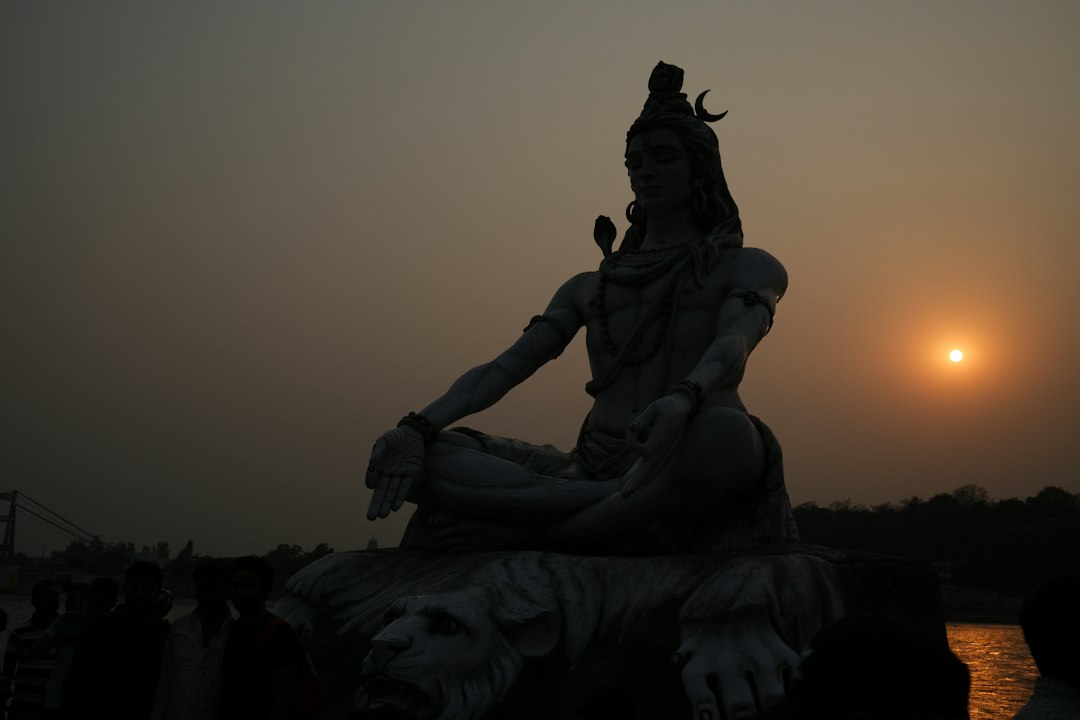
Neelkanth is a widely loved name associated with the Samudra Manthan story. Shiva holds the deadly poison in his throat to protect creation. Devotees often interpret this story as a reminder of courage, restraint, and responsibility.
5. Mrityunjaya: The Conqueror of Death
Mrityunjaya reflects Shiva's transcendence over death and his association with liberation. The name is particularly familiar to devotees through the Mahamrityunjaya Mantra.
6. Pashupati: The Lord of All Creatures
Pashupati highlights Shiva's connection with living beings. It encourages respect for life, compassion toward animals, and a sense of responsibility toward nature.
Why Is the Number 108 Sacred in Hinduism?
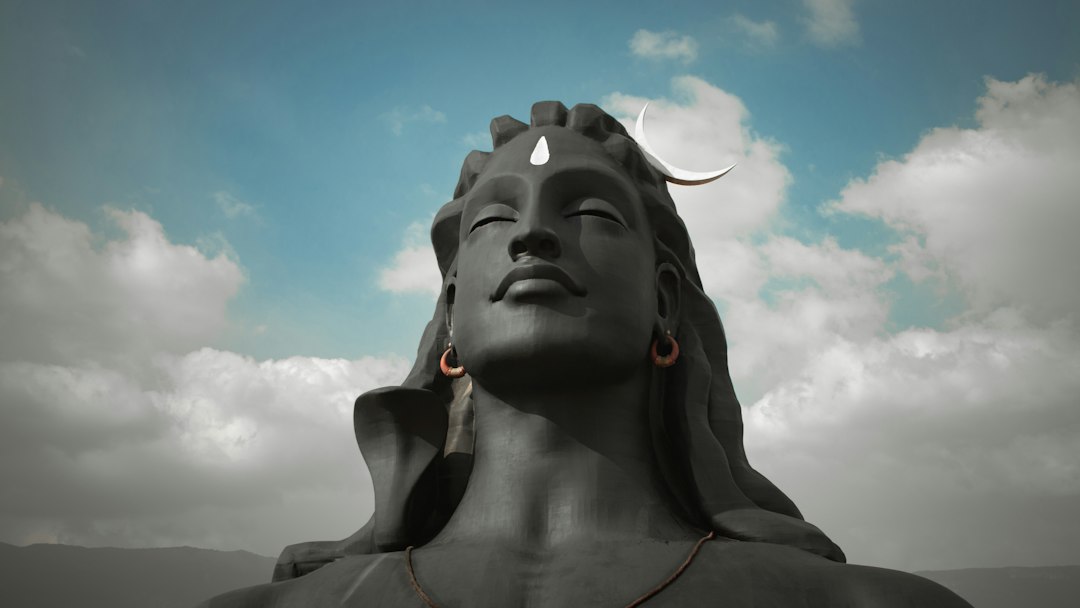
The number 108 holds significance in several Hindu spiritual practices. Japa malas commonly contain 108 beads, allowing devotees to repeat a mantra or prayer for one complete round.
Traditional explanations also connect 108 with patterns in Hindu cosmology, astronomy, and sacred symbolism. Interpretations differ, and there is no single explanation accepted by every tradition.
In Shiva worship, reciting 108 names offers a structured practice through which devotees can focus their attention on different aspects of the deity rather than repeating words without reflection.
How to Stay Happy Even When Life Is Difficult
Benefits of Chanting the 108 Names of Shiv Ji
Devotees chant the names of Lord Shiva as a form of prayer, remembrance, and spiritual discipline. Commonly described benefits include:
Greater concentration: Repeating names in a steady rhythm can help direct attention toward the prayer.
A sense of calm: Quiet chanting may become a peaceful part of a daily routine.
Devotional connection: Reflecting on Shiva's attributes can deepen a person's understanding of their religious tradition.
Mindful reflection: Names associated with compassion, purity, and steadfastness can inspire positive intentions.
Cultural continuity: Learning the names helps preserve traditional Sanskrit vocabulary and devotional practices.
These are spiritual and personal benefits, not guaranteed medical outcomes or promises that chanting will fulfil every wish.
How to Chant the 108 Names of Lord Shiva
You can incorporate the names into a simple daily puja without making the practice complicated.
Choose a quiet place. Sit comfortably and take a moment to settle your attention.
Begin with a prayer. Many devotees start with “Om Namah Shivaya.”
Read the names slowly. Pronounce each name as carefully as you can, using a trusted prayer text.
Make offerings if appropriate. In traditional archana, devotees may offer flowers, bilva leaves, or akshata with each name.
Reflect on the meanings. Consider the qualities represented by names such as Shambhu, Mrida, and Sarvajna.
Conclude with gratitude. End the practice with a short prayer or quiet contemplation.
The names may be recited on Mondays, during Shravan, on Pradosh, at Maha Shivratri, or whenever your personal tradition includes Shiva worship. There is no need to rush; attentive recitation is more useful than treating the list as a race.
Personal Session
Sometimes, taking a dedicated pause to reflect on your challenges can help you understand what matters most and identify your next steps. A personal session can offer space to explore your questions, reflect on your choices and consider a more purposeful way forward. Reach out to learn more about arranging a personal session.
Book Now
Read Latest Articles
How to Stop Overthinking and Anxiety: 12 Practical Ways to Calm Your Mind
Importance of Ekadashi Vrat: Meaning, Significance and Benefits
How to Stay Happy Even When Life Is Difficult
Frequently Asked Questions
What are the 108 names of Shiv Ji with meaning?
The 108 names of Shiv Ji are a traditional collection known as Shiva Ashtottara Shatanamavali. They describe Lord Shiva's divine qualities, forms, and cosmic roles. Names such as Maheshwara mean the great Lord, Gangadhara means the bearer of the River Ganga, and Mrityunjaya means the conqueror of death. Devotees recite these names during puja and other forms of worship.What is the name of Lord Shiva in Sanskrit?
Lord Shiva is known by many Sanskrit names, including Shiva, Maheshwara, Shambhu, Shankara, Rudra, Pashupati, and Parameshwara. Each name describes a different divine quality or aspect.Why does Lord Shiva have 108 names?
The 108 names form a traditional devotional collection that honours Shiva's many attributes. The number 108 is also important in practices such as mantra recitation using a 108-bead japa mala.When should devotees chant the 108 names of Lord Shiva?
Devotees may chant them during daily puja, on Mondays, during Shravan, on Pradosh, and on Maha Shivratri. The appropriate practice may vary by family and regional traditionCan beginners chant the 108 names of Lord Shiva?
Yes. Beginners can read the names from a reliable prayer text, learn their meanings gradually, and follow the pronunciation used in their tradition. A simple, sincere approach is a good starting point.