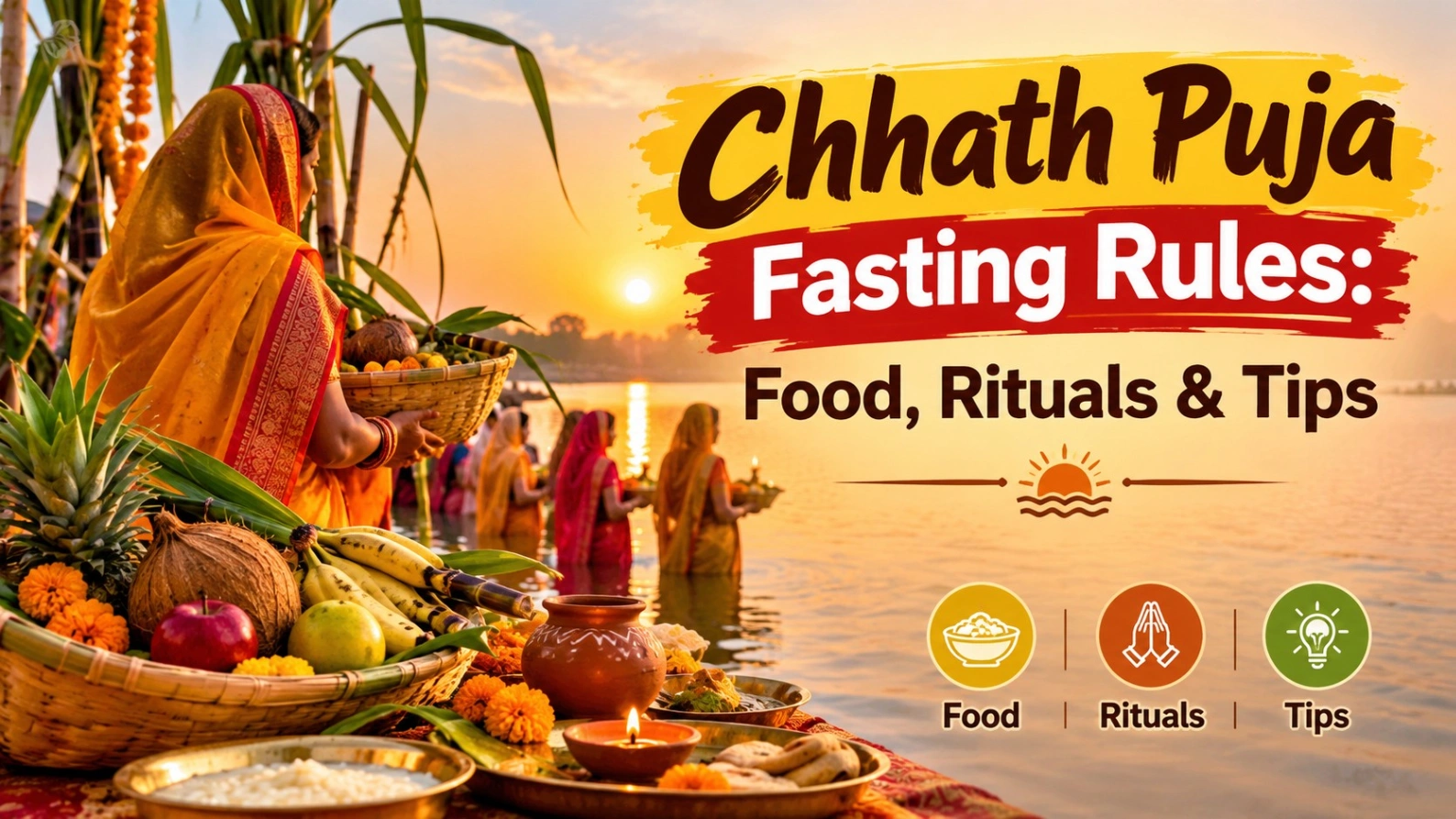
Chhath Puja is one of the most sacred Hindu festivals dedicated to Lord Surya, the Sun God, and Chhathi Maiya. Celebrated with deep devotion, this four-day festival brings families and communities together through fasting, prayer, traditional food preparation and offerings to the setting and rising sun. The observance is especially significant in Bihar, Jharkhand, eastern Uttar Pradesh and parts of Nepal.
Understanding the Chhath Puja fasting rules helps devotees prepare for each ritual with care and follow the customs traditionally observed by their families. From Nahay Khay and Kharna to Sandhya Arghya and Usha Arghya, every stage has its own significance.
Chhath Puja fasting is known for its discipline and simplicity. Devotees pay particular attention to cleanliness, food preparation, self-control and devotion. However, fasting practices can vary across households and regions.
In this guide, we explain Chhath Puja fasting rules, traditional foods, important rituals, common restrictions and practical preparation tips for devotees.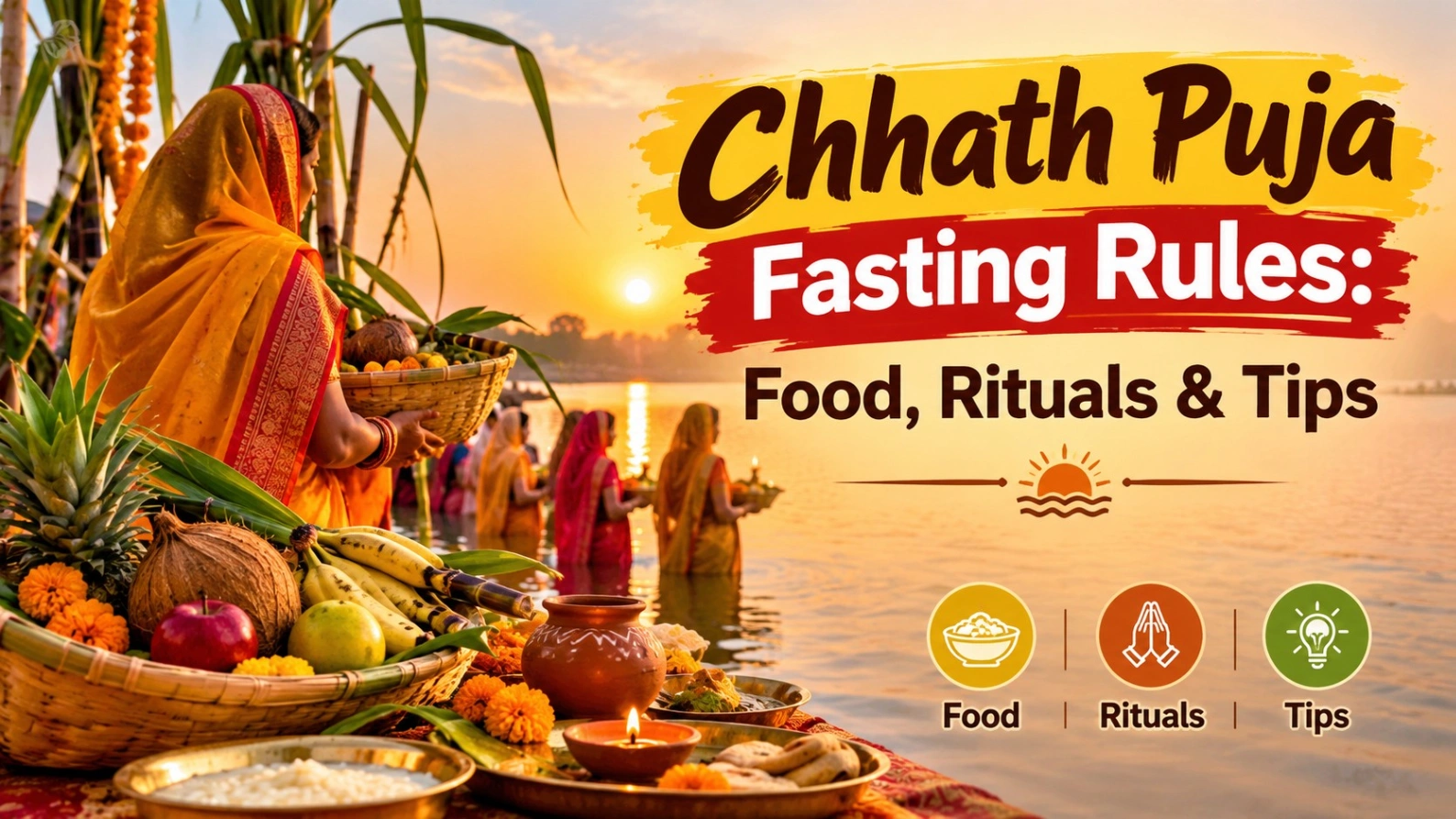
What Are the Chhath Puja Fasting Rules?
The traditional rules of Chhath Puja fasting focus on cleanliness, purity of preparation, devotion and self-discipline. Devotees commonly follow a four-day sequence that includes Nahay Khay, Kharna, Sandhya Arghya and Usha Arghya.
Some of the commonly followed practices include:
Cleaning the home and preparing a clean space for worship.
Preparing traditional food using ingredients and utensils reserved for the ritual where customary.
Following the prescribed fasting routine according to family tradition.
Preparing offerings such as fruits, thekua and other traditional prasad.
Offering Arghya to the setting sun and the rising sun.
Sharing prasad with family members and the wider community.
One important point is that not every devotee follows exactly the same fasting routine. The strict nirjala fast, which involves abstaining from both food and water, is a traditional practice observed by many devotees, but personal circumstances and established family customs matter. Anyone unsure about the appropriate observance should consult an experienced family elder or priest.
Design Your Destiny
Bring spiritual wisdom into your everyday life. Chhath Puja reminds us of the importance of gratitude, discipline and devotion. Discover how greater self-awareness and mindful living can help you build a more purposeful life with Science Divine Foundation.
Start Your Journey Today!Chhath Puja 2026: Dates and Four-Day Rituals
In 2026, Chhath Puja will be observed from 13 November to 16 November according to the New Delhi and Lucknow festival calendars. The precise sunrise and sunset timings vary by location.
Date | Ritual | Significance |
|---|---|---|
Friday, 13 November 2026 | Nahay Khay | Purification and preparation |
Saturday, 14 November 2026 | Kharna | Fasting and preparation of prasad |
Sunday, 15 November 2026 | Sandhya Arghya | Offerings to the setting sun |
Monday, 16 November 2026 | Usha Arghya and Parana | Offerings to the rising sun and conclusion of the fast |
These dates follow the published 2026 Chhath calendar. Check a local Panchang for location-specific ritual timings before planning your observance.
1. Nahay Khay: The First Day of Chhath Puja
Nahay Khay marks the beginning of Chhath Puja. It is traditionally associated with purification, cleanliness and preparing the home for the coming rituals.
Devotees bathe, clean their surroundings and prepare a simple meal according to their household customs. Traditional preparations may include rice, chana dal and bottle gourd, often cooked with minimal seasoning.
Nahay Khay fasting rules
Clean the kitchen and the area where food for the ritual will be prepared.
Use fresh ingredients and clean utensils.
Follow the traditional meal practices observed by your family.
Avoid foods that are excluded from your household's Chhath observance.
Begin preparing the ingredients and supplies needed for the next days.
The emphasis is on simplicity and cleanliness rather than elaborate meals. Nahay Khay also gives devotees an opportunity to prepare mentally and practically for the more demanding stages of the festival.
2. Kharna: Fasting and Preparing Prasad
Kharna is observed on the second day of Chhath Puja. Devotees traditionally fast during the day and perform the evening ritual before consuming the prepared prasad.
Traditional Kharna offerings often include jaggery-based kheer, roti and bananas. The exact preparation and ingredients may differ between families and regions.
Kharna fasting rules
Follow the fasting schedule prescribed by your family tradition.
Prepare the evening offering with care and clean utensils.
Avoid tasting food during preparation if that is part of your household's observance.
Offer the prepared prasad according to the customary ritual.
Share the prasad with family members after the offering.
Kharna marks the transition to the main fasting period for devotees who observe the traditional strict fast. In many households, the nirjala fast begins after the Kharna prasad and continues until the concluding morning ritual.
Because this can involve a prolonged period without water, devotees should understand the physical demands before undertaking it.
3. Sandhya Arghya: Offering Prayers to the Setting Sun
Sandhya Arghya is one of the central rituals of Chhath Puja. On the third day, devotees gather at riverbanks, ponds or other suitable water bodies to offer Arghya to the setting sun.
Offerings are traditionally arranged in bamboo baskets or other customary containers. Common items include fruits, thekua, sugarcane and other prasad associated with the festival.
Sandhya Arghya fasting rules
Prepare the offerings in advance.
Keep the prasad and worship materials clean.
Follow the family's customary method for arranging the offerings.
Reach the worship location early enough to prepare calmly.
Perform the evening offering according to the local sunset and family tradition.
Maintain the fasting observance prescribed for this stage of the festival.
Sandhya Arghya represents gratitude for the Sun's life-sustaining energy. Worshipping the setting sun also reminds devotees that every phase of life deserves respect, including moments of transition and change.
Why Is Sun Worshipped in Chhath Puja? Spiritual Significance
4. Usha Arghya: Worshipping the Rising Sun
Usha Arghya takes place on the fourth and final day of Chhath Puja. Devotees gather before sunrise to offer prayers to the rising sun.
After completing the ritual, devotees traditionally conclude their fast through Parana, following their family's customary procedure.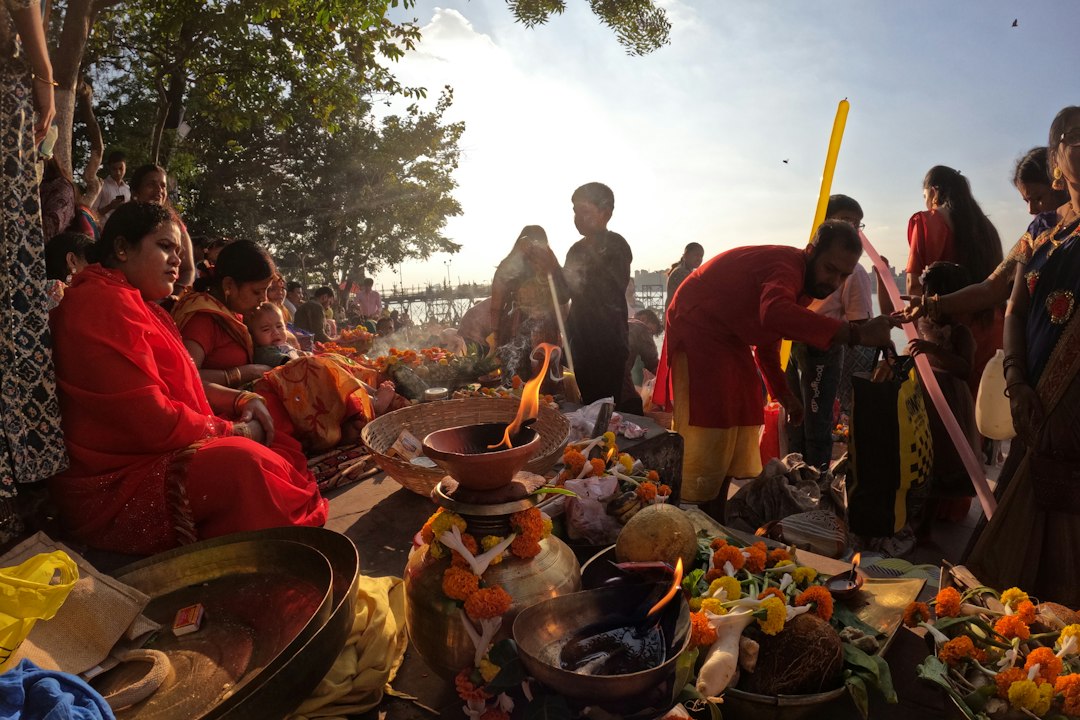
Usha Arghya and Parana rules
Prepare the final day's offerings before leaving for the worship location.
Check the local sunrise time rather than relying on another city's schedule.
Complete the morning offering according to the established tradition.
Break the fast only after the customary concluding ritual.
Resume eating gradually, especially after a prolonged fast.
Usha Arghya symbolises renewal, hope and gratitude. The completion of the observance is also an opportunity for families to come together and share prasad.
What Can You Eat During Chhath Puja Fasting?
The foods consumed during Chhath Puja depend on the ritual day and the family's established customs. Traditional preparations are often simple and made with carefully selected ingredients.
Common foods associated with the festival include:
Rice and chana dal: Often prepared for the Nahay Khay meal.
Bottle gourd: Commonly used in a simple traditional preparation.
Jaggery-based kheer: A customary offering during Kharna in many households.
Roti: Prepared as part of traditional Kharna prasad.
Thekua: A well-known festive offering made with flour and jaggery or sugar, depending on the recipe.
Bananas and other fruits: Frequently included in the offering baskets.
Sugarcane: Traditionally associated with Chhath Puja offerings.
These foods are examples of customary preparations, not a universal list of foods permitted during every stage of fasting. The strictness of the observance and the timing of meals differ according to family practice.
What Should Be Avoided During Chhath Puja Fasting?
Traditional Chhath observance places great importance on cleanliness and adherence to family customs. Depending on the household, devotees may avoid certain foods, ingredients or activities during the festival.
Common traditional precautions include:
Avoiding ingredients that are excluded from the family's ritual food preparations.
Keeping the kitchen and utensils used for prasad clean.
Avoiding unnecessary tasting or handling of food during ritual preparation when customary.
Following the prescribed sequence of fasting, offerings and Parana.
Avoiding distractions that interfere with worship and preparation.
Avoiding wasteful or careless handling of prasad.
There is no single restriction list that applies identically to every community. Devotees should follow their family's customary practices rather than treating every regional rule as universal.
Can You Drink Water During Chhath Puja Fasting?
This is one of the most common questions about Chhath Puja fasting rules.
During the traditional nirjala fast, devotees abstain from both food and water for the prescribed period. However, the practice differs from the lighter fasting routine followed on other days, including the preparation stage.
A prolonged waterless fast can be physically demanding and may cause dehydration, dizziness, weakness or other complications. People with medical conditions, those who take regular medication, pregnant or breastfeeding individuals, older adults and anyone who may be vulnerable to dehydration should seek medical advice before attempting a strict fast.
Religious devotion should not require someone to ignore serious symptoms or put their health at risk. Those unable to undertake a strict fast can discuss an appropriate form of observance with their family or religious guide.
Important Tips for Observing Chhath Puja
A little preparation can make the festival more organised and less stressful.
1. Prepare a checklist in advance. Make a list of fruits, ingredients, bamboo baskets, lamps and other ritual materials required by your family.
2. Plan the food preparation. Arrange the ingredients early and leave enough time for traditional cooking and preparation of prasad.
3. Keep the worship area clean. Cleanliness is an important part of the observance, particularly where food offerings are prepared.
4. Confirm local timings. Sunrise and sunset differ by city. Consult a reliable local Panchang for the correct timing of Arghya.
5. Prepare for the visit to the ghat. Consider safe transport, suitable footwear and the needs of children or older family members.
6. Respect individual circumstances. Fasting practices differ, and a person should not be pressured into a strict fast that may be unsafe for them.
7. Keep the purpose of the festival in mind. Alongside the rituals, Chhath Puja offers an opportunity to practise gratitude, patience, discipline and consideration for others.
Diwali Vastu Tips : Traditional Ways to Prepare Your Home
The Spiritual Meaning of Chhath Puja
Chhath Puja is more than a sequence of rituals. Its central themes include gratitude to the Sun, respect for nature, discipline and the value of collective devotion.
The Sun supports life on Earth, and the offerings made at sunrise and sunset remind devotees of this dependence. The preparation of prasad encourages care and attention, while the gathering of families and communities strengthens social bonds.
From a spiritual perspective, discipline becomes meaningful when it helps a person develop greater awareness and responsibility. The value of a religious observance is not limited to the completion of a ritual; it can also be reflected in how a person treats others and responds to everyday challenges.
This perspective connects naturally with the broader teachings of Indian spiritual traditions, including self-awareness, gratitude and mindful action. For Science Divine Foundation, Chhath Puja can be an opportunity to encourage people to bring these values into daily life.
Understanding the Chhath Puja fasting rules helps devotees prepare for Nahay Khay, Kharna, Sandhya Arghya and Usha Arghya with greater clarity. Traditional practices emphasise cleanliness, carefully prepared offerings, devotion and respect for family customs.
Food restrictions and fasting routines can differ between communities, so devotees should confirm the practices followed in their household. It is equally important to recognise the physical demands of prolonged fasting and seek appropriate medical guidance when necessary.
Ultimately, Chhath Puja reminds us to appreciate nature, practise gratitude and approach our responsibilities with sincerity. By carrying these values beyond the festival, devotees can make the observance a meaningful part of everyday life.
Personal Session
Take a step towards greater clarity and inner peace. Every spiritual journey is personal. If you want to understand yourself better, develop a more mindful approach to life or explore practical spiritual guidance, consider connecting with Science Divine Foundation. Explore a personal session and take the next step towards a more balanced, meaningful life.
Book Now
Read Latest Articles
Why Do We Celebrate Dhanteras? History, Story & Significance
Why Do We Celebrate Diwali ? Meaning , History and Significance
Frequently Asked Questions
How many days is Chhath Puja fasting observed?
Chhath Puja is a four-day festival that includes Nahay Khay, Kharna, Sandhya Arghya and Usha Arghya. The fasting routine varies by day and family tradition.What foods are allowed during Chhath Puja fasting?
Traditional foods include rice, chana dal, bottle gourd, jaggery-based kheer, roti, fruits and thekua, depending on the ritual day and household customs.Can you drink water during Chhath Puja fasting?
Devotees observing a traditional nirjala fast abstain from water as well as food during the prescribed period. This prolonged fast can be medically risky, so anyone with health concerns should consult a healthcare professional before attempting it.What is eaten during Kharna?
Kharna prasad commonly includes jaggery-based kheer, roti and bananas. Recipes and customary ingredients may vary across regions and households.What should be avoided during Chhath Puja?
Devotees traditionally avoid ingredients excluded from their ritual food preparations and take special care with cleanliness, prasad preparation and the sequence of worship. Specific restrictions vary by community.When does the Chhath Puja fast end?
For devotees following the traditional strict fast, it generally concludes after Usha Arghya, the offering to the rising sun, on the fourth day. Parana follows according to the family's established ritual practice.