Govardhan Puja is an important Hindu festival dedicated to Lord Krishna and his divine act of protecting the people of Braj by lifting Govardhan Hill. Celebrated around Diwali, the festival is also known as Annakut Puja, meaning the worship of a mountain of food offerings. Devotees prepare traditional dishes, worship Lord Krishna, and express gratitude for nature, food, and the blessings that sustain life.
If you are wondering about the Govardhan Puja 2026 date and time, this guide explains the expected date, puja muhurat, rituals, samagri, the story behind the festival, and its spiritual significance.
Because different calendars may follow different rules for determining the festival day, devotees should confirm the final date and puja timings using a trusted local panchang.
Govardhan Puja 2026 Date and Time
Govardhan Puja is observed on Kartik Shukla Pratipada, the first lunar day of the bright fortnight in the Hindu month of Kartik. It usually falls around the Diwali period, although the exact Gregorian date can vary from year to year.
For 2026, some panchang listings place the principal observance on Tuesday, 10 November, while others list an afternoon puja window on Monday, 9 November. This difference arises from the timing of Pratipada tithi and the rules used to select the appropriate worship period.
According to Drik Panchang's New Delhi listing, the morning muhurat for Govardhan Puja on 10 November 2026 is 6:40 AM to 8:50 AM. The precise date and timing should be checked against the panchang followed in your city.
Important: The tithi begins on 9 November and ends on 10 November, so do not assume that every location will follow the same puja window. Confirm your local calendar before planning the ritual.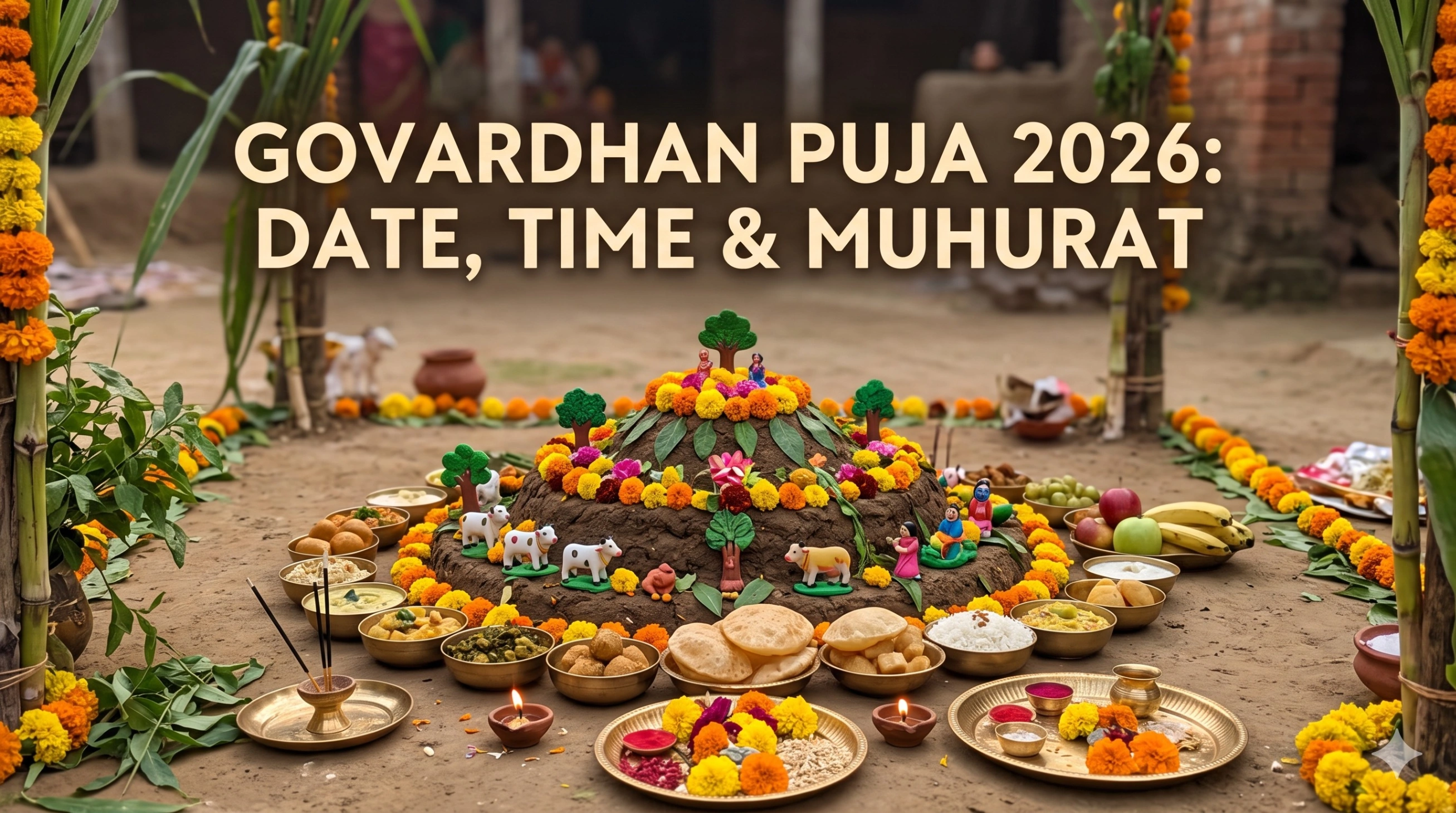
Govardhan Puja 2026: Key Details
Festival: Govardhan Puja, also called Annakut Puja
Year: 2026
Tithi: Kartik Shukla Pratipada
Date: Depending on the panchang tradition, 9 or 10 November 2026
Deity worshipped: Lord Krishna
Main rituals: Govardhan worship, Annakut offering, Krishna puja, and prayers of gratitude
The festival is particularly significant in Mathura, Vrindavan, and the wider Braj region, where traditions associated with Lord Krishna are celebrated with special devotion.
What Is Govardhan Puja?
Govardhan Puja celebrates Lord Krishna's protection of the people of Braj from torrential rain sent by Lord Indra. According to the traditional story, Krishna lifted Govardhan Hill and sheltered the villagers and their cattle beneath it.
The festival is also associated with gratitude towards nature and the land that provides food and nourishment. Devotees prepare Annakut, an elaborate arrangement of food offerings, to express their gratitude to Lord Krishna.
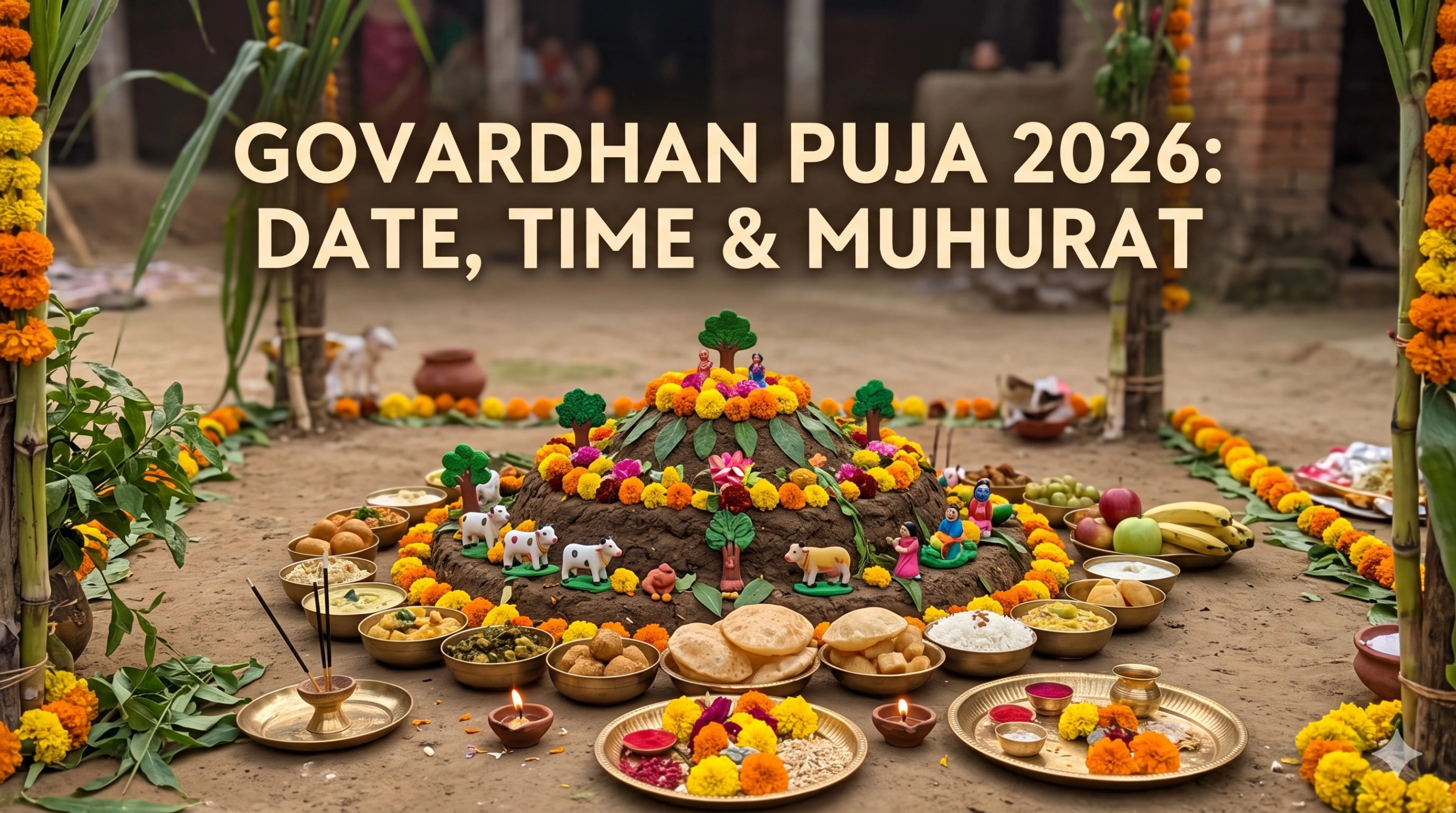
In many households, a symbolic Govardhan Hill is made using cow dung or another customary material and decorated with flowers. Families then perform puja and offer food according to their traditions.
Govardhan Puja is also celebrated as Annakut, particularly in temples where many dishes are arranged as an offering to the deity.
Design Your Destiny
Spiritual traditions remind us that meaningful living begins with awareness, intention, and the choices we make every day. Just as a festival invites us to pause and reconnect with the divine, everyday life offers opportunities to understand ourselves more deeply.
Start Your Journey Today!The Story of Govardhan Puja
The story of Govardhan Puja is rooted in the childhood legends of Lord Krishna in Vrindavan.
According to tradition, the people of Braj prepared offerings to worship Lord Indra, the deity associated with rain. Krishna encouraged them to recognise the importance of Govardhan Hill, their cattle, the land, and the natural environment that supported their livelihood.
Krishna explained that the community depended on the land and its resources for food and survival. Following his advice, the villagers worshipped Govardhan Hill and offered food in gratitude.
Lord Indra became displeased and sent heavy rain and storms over Braj. To protect the villagers and their cattle, Krishna lifted Govardhan Hill on his little finger, providing shelter beneath it.
The people remained safe under the hill until the storm subsided. Lord Indra eventually recognised Krishna's divine power, and the episode became a lasting symbol of protection, humility, and devotion.
Govardhan Puja commemorates this event and reminds devotees that pride should give way to wisdom, gratitude, and respect for nature.
Govardhan Puja Vidhi: How to Perform the Puja
The rituals may vary between regions and households, but a traditional home puja generally includes the following steps.
1. Clean the Puja Area
Clean the home and prepare a dedicated worship space. Place a picture or idol of Lord Krishna in the puja area and arrange the required items.
Many devotees decorate the space with flowers, rangoli, and traditional lamps.
2. Prepare a Symbolic Govardhan Hill
Some households create a small representation of Govardhan Hill using cow dung, soil, or materials customary to their tradition. The symbolic hill may be decorated with flowers, leaves, and small figures representing animals or village life.
This ritual honours the hill associated with Krishna's divine protection.
3. Worship Lord Krishna
Offer flowers, chandan, incense, a diya, and other customary items to Lord Krishna. Devotees may chant Krishna mantras, recite prayers, or listen to devotional readings.
Approach the puja with sincerity rather than focusing only on elaborate arrangements.
4. Prepare the Annakut Offering
Prepare a selection of vegetarian dishes, sweets, fruits, and other traditional foods. Arrange the offerings neatly before the deity.
The number and type of dishes vary according to the household or temple tradition. A simple offering can also be meaningful when made with devotion.
5. Perform Aarti
Perform Lord Krishna's aarti and offer prayers for the well-being of the family and community. Some traditions include circumambulation of the symbolic Govardhan Hill.
Follow the ritual sequence prescribed by your family or local priest.
6. Distribute Prasad
After the offering, distribute prasad among family members and others according to tradition. Sharing the food symbolises gratitude, generosity, and the blessings associated with the festival.
Govardhan Puja Samagri List
If you are preparing for Govardhan Puja at home, the following items may be useful:
Picture or idol of Lord Krishna
Flowers and garlands
Diya, cotton wicks, and ghee or oil
Incense sticks and dhoop
Chandan, kumkum, and akshat
Fruits and sweets
Traditional vegetarian food for Annakut
A clean plate or tray for offerings
Materials for a symbolic Govardhan Hill, according to family custom
Water and other customary puja items
You do not need every item on this list to perform a simple puja. The required materials depend on your local and family traditions.
What Is Annakut Puja?
Annakut literally means a mountain of food. On Govardhan Puja, devotees prepare a variety of dishes and arrange them as offerings to Lord Krishna.
Traditional Annakut offerings may include rice, vegetables, lentils, puri, sweets, seasonal foods, and other vegetarian preparations. Temple celebrations may feature many dishes, while household offerings are often simpler.
Annakut symbolises gratitude for food and the abundance provided by nature. It also reflects the belief that food should be respected, shared, and received with thankfulness.
After the offering, the food is distributed as prasad among devotees.
Why Is Govardhan Puja Celebrated?
Govardhan Puja has several important religious and spiritual meanings.
1. To honour Lord Krishna: The festival remembers Krishna's divine protection of the people of Braj and celebrates his role as a protector.
2. To express gratitude towards nature: Govardhan Hill represents the natural resources that support life. The festival encourages respect for the earth, animals, and agriculture.
3. To practise humility: The story of Lord Indra reminds devotees that pride and power should not overshadow wisdom and compassion.
4. To celebrate food and abundance: Annakut Puja expresses gratitude for nourishment and the effort involved in producing food.
5. To strengthen community bonds: Families prepare offerings, visit temples, and share prasad, reinforcing the values of generosity and togetherness.
These teachings make Govardhan Puja more than a ritual. It is an opportunity to reflect on how people relate to nature, society, and the divine.
What Is the Difference Between Govardhan Puja and Annakut Puja?
Govardhan Puja and Annakut Puja are closely connected names for observances associated with Lord Krishna and the Govardhan Hill story.
Govardhan Puja focuses on worshipping Lord Krishna and commemorating his protection of the people of Braj. Annakut highlights the mountain-like arrangement of food offerings presented to the deity.
In many temples and households, both are observed together on the same occasion. The precise rituals vary by region and tradition.
Tips for Observing Govardhan Puja in 2026
Check the local panchang for the correct date and puja muhurat.
Gather the puja samagri in advance.
Prepare Annakut dishes according to your household's customs.
Keep the worship area clean and arrange the offerings respectfully.
Avoid food waste by preparing quantities suitable for your family and community.
If visiting a temple, check its announced schedule before travelling.
Focus on the festival's values of gratitude, humility, compassion, and respect for nature.
Conclusion
Govardhan Puja is a celebration of Lord Krishna's divine protection, the abundance of nature, and the importance of humility and gratitude. Through Govardhan worship and Annakut offerings, devotees remember the story of Krishna lifting Govardhan Hill to protect the people of Braj.
If you are preparing for Govardhan Puja 2026, organise your puja items in advance and confirm the correct date and muhurat with your local panchang. Above all, let the festival inspire you to appreciate the food you receive, respect the natural world, and practise kindness in everyday life.