Karwa Chauth is one of the most cherished Hindu festivals, celebrated with devotion, love, and traditional rituals. On this day, married women observe a fast and pray for the long life, good health, and happiness of their husbands. From preparing the sargi before sunrise to performing the evening puja and offering arghya to the Moon, every ritual has its own significance.
If you are preparing for Karwa Chauth 2026, arranging the puja samagri in advance can make the celebrations more organised and stress-free. Having all the essential items ready ensures that you can focus on the prayers, rituals, and meaningful moments of the festival.
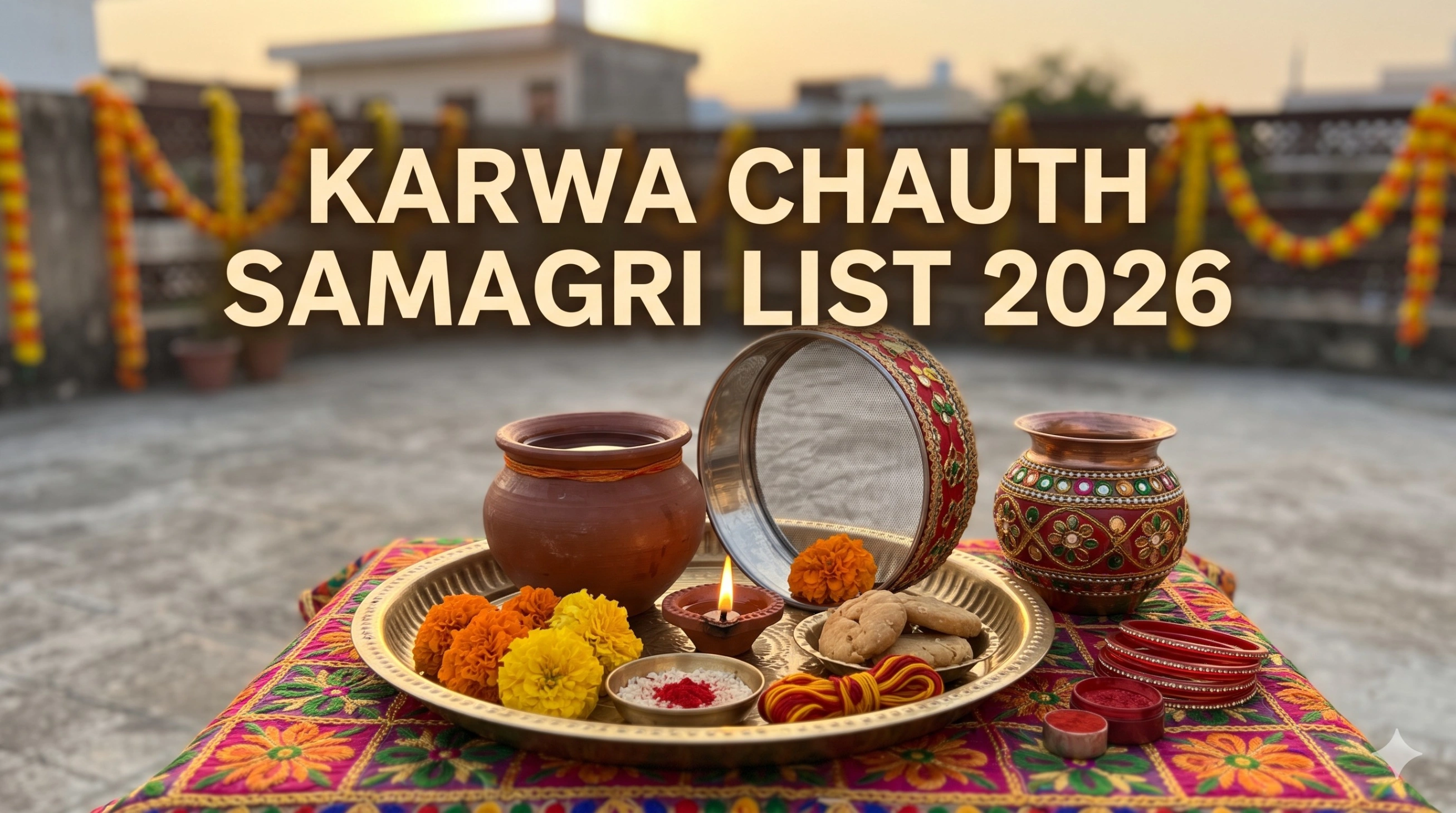
In this guide, you will find the complete Karwa Chauth Samagri List 2026, including puja thali essentials, karwa items, sargi ingredients, traditional offerings, and additional items required for the evening rituals.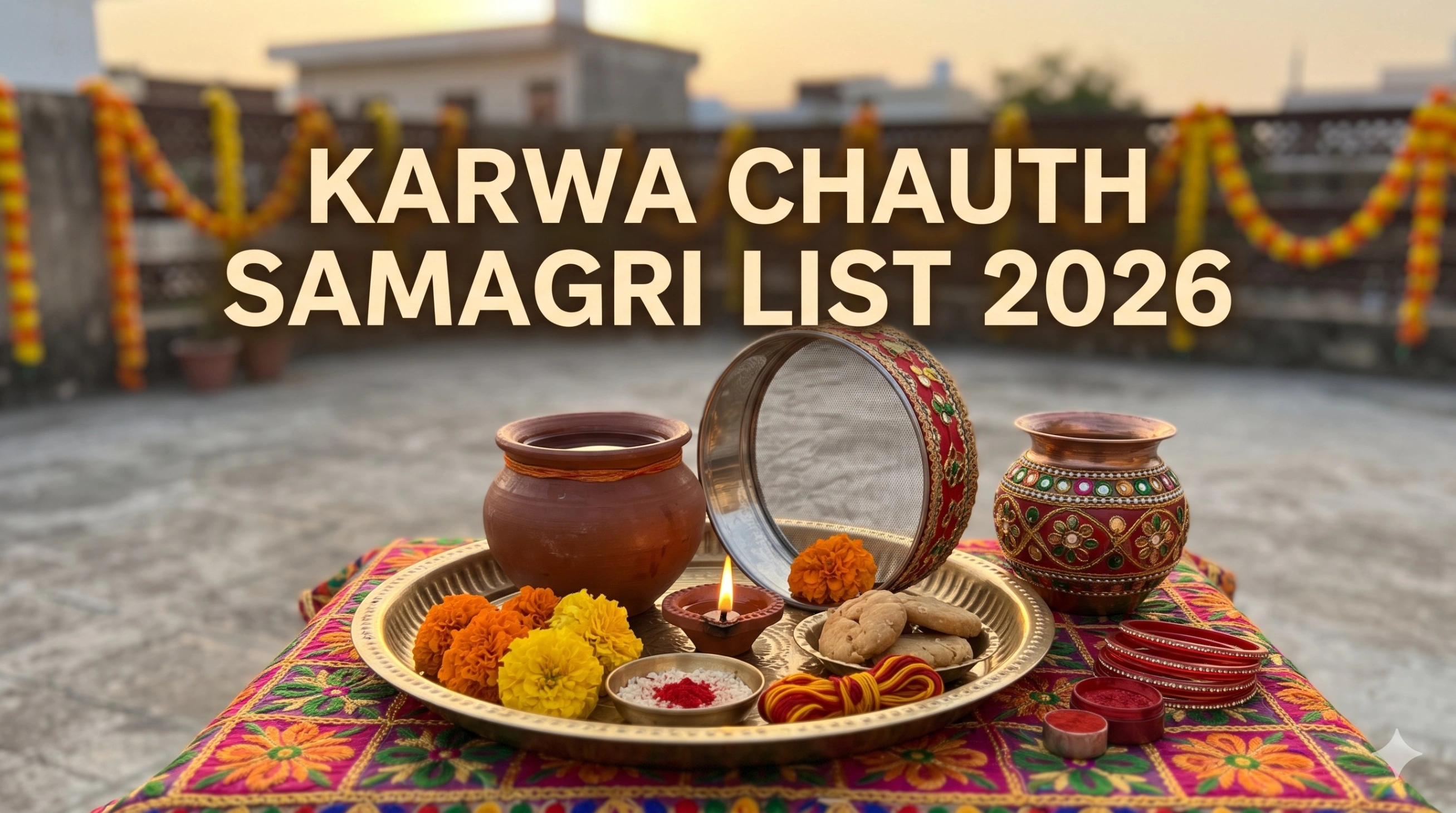
When Is Karwa Chauth in 2026?
Karwa Chauth will be celebrated on Thursday, 29 October 2026. It falls on Krishna Paksha Chaturthi in the Hindu lunar calendar and is traditionally observed by married Hindu women, particularly across North India.
The main rituals include preparing sargi before sunrise, observing the fast during the day, worshipping Goddess Parvati and Lord Shiva, listening to the Karwa Chauth vrat katha, and offering prayers to the Moon after moonrise.
The exact puja muhurat and moonrise time vary by location. Check a reliable local Panchang before planning your rituals.
Complete Karwa Chauth Samagri List 2026
The following checklist covers the commonly used items for Karwa Chauth puja. Some traditions differ by region and family, so you can adapt the list according to your household customs.
Design Your Destiny
Spiritual traditions remind us that meaningful living begins with awareness, intention, and the choices we make every day. Just as a festival invites us to pause and reconnect with the divine, everyday life offers opportunities to understand ourselves more deeply.
Start Your Journey Today!1. Karwa Chauth Puja Thali Items
The puja thali holds the essential items needed for the evening worship. Prepare it in advance so that everything is within reach during the puja.
Puja thali: A decorative steel, brass, or silver plate to arrange the offerings.
Diya: An earthen or metal lamp for lighting during the puja.
Cotton wicks: Required for lighting the diya.
Ghee or oil: Used to light the lamp.
Roli or kumkum: Applied as a traditional tilak.
Akshat: Unbroken rice grains used during worship.
Haldi: Turmeric powder for traditional rituals.
Chandan: Sandalwood paste or powder, according to family custom.
Flowers: Fresh flowers for offering to the deities.
Incense sticks: Used during worship.
Camphor: Used for aarti where customary.
Matchbox or lighter: For lighting the diya and incense.
Prasad: Sweets, fruits, or other traditional offerings.
Puja book: A printed or digital copy of the Karwa Chauth vrat katha and aarti.
You may also keep a small bell, a clean cloth, and a separate bowl for arranging the offerings.
2. Karwa Chauth Karwa and Water Offering Items
The karwa, a traditional pot, is one of the most recognisable elements of this festival. It symbolises the ritual offering of water and has an important place in many Karwa Chauth traditions.
Keep these items ready:
Karwa or kalash: A traditional earthen or metal pot.
Water: Clean water for the customary rituals.
Lid for the karwa: If required by your family tradition.
Decorative thread or kalava: Used in certain regional rituals.
Coins: Sometimes included as part of the traditional offering.
Sieve or channi: Used to view the Moon and, in many households, the husband during the evening ritual.
Small vessel or spoon: Useful for handling water during puja.
Some families use one karwa, while others arrange two pots for different parts of the ceremony. Follow your family's established practice rather than assuming that every household needs the same arrangement.
3. Items Required for Goddess Parvati, Lord Shiva, and Lord Ganesha Puja
Karwa Chauth puja commonly includes prayers to Goddess Parvati, Lord Shiva, and Lord Ganesha. These deities are associated with marital well-being, devotion, blessings, and the removal of obstacles.
Common puja items include:
Pictures or idols of Goddess Parvati, Lord Shiva, and Lord Ganesha.
A clean platform or chowki.
A fresh cloth for the platform.
Roli, kumkum, and haldi.
Akshat or unbroken rice.
Fresh flowers and flower garlands.
Fruits and traditional sweets.
Incense sticks and a diya.
Water for ritual offerings.
Prasad for distribution after the puja.
Some families also include a picture or symbolic representation of Goddess Karwa Mata. The precise arrangement depends on local and family traditions.
4. Karwa Chauth Shringar Samagri List
Traditional shringar items are an important part of Karwa Chauth celebrations. Many women dress in festive attire and wear traditional jewellery as part of the occasion.
The commonly used shringar samagri includes:
Sindoor.
Bangles or choodiyan.
Bindi.
Mehendi.
Kajal.
Mangalsutra.
Earrings.
Necklace.
Nose ring, if worn.
Payal or anklets.
Bichhiya or toe rings, according to personal custom.
Traditional outfit, such as a saree, lehenga, or suit.
Dupatta or chunri.
Comb and other personal grooming essentials.
You do not need to purchase every item specifically for the festival. Use the jewellery and accessories you already own and choose whatever feels comfortable and meaningful to you.
Kali Chaudas vs Naraka Chaturdashi : Are They the Same ?
5. Karwa Chauth Sargi Items List
Sargi is traditionally prepared before sunrise and is often given to a married woman by her mother-in-law. The meal is eaten before the fasting period begins.
The sargi menu varies across families, but the following items are commonly included:
Fresh fruits, such as bananas, apples, and pomegranates.
Dry fruits, such as almonds, cashews, raisins, and dates.
Sweets, such as mithai or homemade desserts.
Mathri or other traditional savoury snacks.
Roti, paratha, or another customary meal.
Curd or milk.
Coconut.
Water.
Other family-specific festive foods.
A balanced pre-fast meal with suitable fluids and nourishing foods may help you feel more comfortable throughout the day. Avoid assuming that everyone must follow an identical sargi menu.
If you have a medical condition, take regular medication, are pregnant, or have been advised against fasting, consult a qualified healthcare professional before observing a strict fast.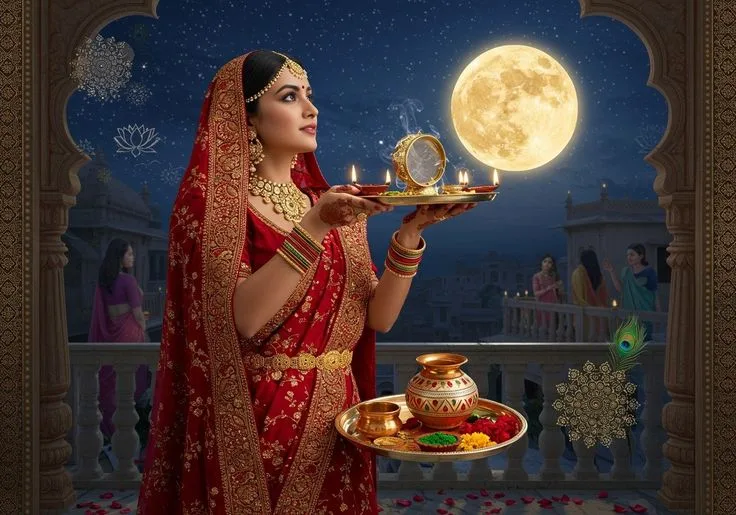
6. Karwa Chauth Vrat Katha and Aarti Items
Listening to or reading the vrat katha is a traditional part of Karwa Chauth puja in many households.
Keep the following ready:
Karwa Chauth vrat katha book or a reliable digital copy.
Aarti book or printed prayers.
Puja thali with diya and flowers.
Incense sticks and camphor.
Prasad for the conclusion of the puja.
Depending on the tradition, women may gather together to listen to the katha and participate in the rituals. In other households, the puja is performed privately with close family members.
7. Karwa Chauth Baya and Traditional Offerings
Baya is a traditional gift or collection of offerings associated with Karwa Chauth in several North Indian communities. It may be prepared by the woman's maternal family for presentation to her mother-in-law or according to other family customs.
Items may include:
Sweets or mithai.
Fruits.
Dry fruits.
Clothes or a chunri.
Money or shagun.
Decorative containers.
Other customary gifts.
There is no single mandatory baya arrangement followed by every family. The contents, presentation, and recipient can vary according to regional customs.
Karwa Chauth Puja Samagri Checklist: Quick Shopping List
Use this checklist while shopping or preparing your puja space.
Puja thali
Karwa or kalash
Water
Sieve or channi
Diya, cotton wicks, and ghee or oil
Roli, kumkum, haldi, and akshat
Flowers and garlands
Incense sticks and camphor
Matchbox or lighter
Pictures or idols of the deities
Clean cloth for the chowki
Fruits and sweets
Vrat katha and aarti
Sindoor, bangles, and other shringar items
Sargi ingredients
Baya or traditional gifts, if customary
A small vessel for water offerings
Check off each item as you arrange it. Keep fragile items, the diya, and anything that could spill in a safe and convenient place.
How to Prepare Your Karwa Chauth Puja Thali
A well-arranged puja thali makes the evening rituals easier to perform.
Step 1: Clean the thali. Wash and dry the plate before decorating it. You can add a simple floral design or traditional decoration.
Step 2: Arrange the essentials. Place the roli, kumkum, haldi, akshat, flowers, and other small offerings in separate bowls.
Step 3: Prepare the diya. Keep the diya, cotton wick, and ghee or oil together. Light it when required for the puja, following safe practices.
Step 4: Keep the karwa ready. Fill the karwa with water as required by your custom. Place its lid and any accompanying ritual items nearby.
Step 5: Arrange the sieve and prasad. Keep the channi accessible for the moon-sighting ritual and place the offerings where they will not be knocked over.
Step 6: Keep the vrat katha available. Have your katha and aarti text ready so that you do not need to search for them during the ceremony.

Karwa Chauth Puja Vidhi: Rituals to Follow
Once the samagri is ready, you can prepare for the day's rituals.
1. Prepare Sargi Before Sunrise
Eat the traditional sargi meal before the fasting period begins, according to your family's practice. Many women receive sargi from their mother-in-law as a gesture of love and blessings.
2. Observe the Vrat
Women traditionally observe the fast throughout the day. Fasting customs differ, and the decision to observe a strict or modified fast should take personal health into account.
3. Perform the Evening Puja
Arrange the deities, light the diya when appropriate, offer flowers and other samagri, and pray according to your family's ritual practice.
Why Is Kheer Kept Under Moonlight on Sharad Purnima
4. Listen to the Karwa Chauth Vrat Katha
The vrat katha is an important part of the observance in many communities. Listen to or read the traditional story and participate in the customary prayers.
5. Offer Arghya to the Moon
After the Moon becomes visible, many women offer water to the Moon and view it through a sieve. They may then look at their husband through the sieve and receive water or food to conclude the fast, following their family tradition.
The Moon's rising time differs from city to city, so check the local Panchang for the correct timing.
Tips for Karwa Chauth Preparation
Shop early: Purchase flowers, fruits, sweets, and other perishable items closer to the festival.
Separate the essentials: Keep the puja thali, karwa, sieve, and katha together.
Check family customs: Rituals and offerings may vary by region and household.
Verify the local muhurat: Avoid relying on a timing published for a different city.
Prepare sargi in advance: Plan your meal and arrange its ingredients the previous evening.
Keep the puja space safe: Place lamps on a stable, heat-resistant surface and keep them away from loose fabric.
Keep the celebration personal: The meaning of the festival lies in devotion, love, and shared traditions, not in the price or quantity of the samagri.
Conclusion
The Karwa Chauth Samagri List 2026 helps you prepare for the festival with confidence and avoid last-minute shopping. From the karwa and puja thali to sargi, shringar essentials, flowers, sweets, and the vrat katha, having the required items ready makes the observance more organised.
Remember that traditional practices differ across families and regions. Use this checklist as a practical guide, confirm the local puja timings, and prepare the rituals according to your family's customs.
May Karwa Chauth bring love, peace, happiness, and harmony into your home.
Personal Session
Sometimes, taking the next step becomes easier when you have the opportunity to reflect on your personal questions and aspirations with individual guidance.
Book NowRead Latest Articles