Devutthana Ekadashi is one of the most significant Ekadashis dedicated to Lord Vishnu. The word “Devutthana” can be understood as the awakening or rising of the divine. According to Hindu tradition, Lord Vishnu enters a state of Yoga Nidra, or yogic sleep, on Devshayani Ekadashi and awakens approximately four lunar months later on Devutthana Ekadashi.
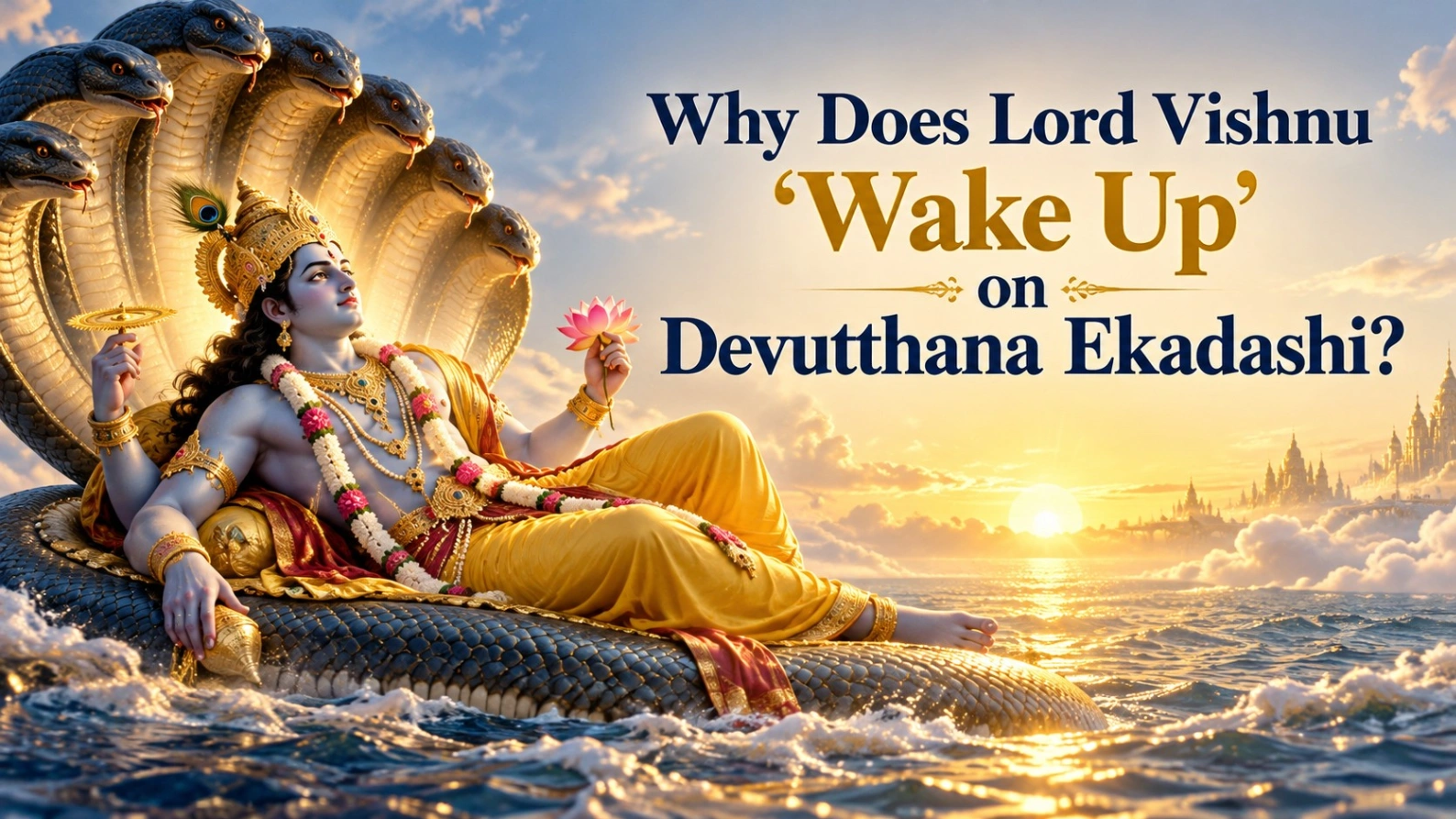
This period is known as Chaturmas or Chaturmasya. It is traditionally regarded as a time of restraint, devotion, introspection, fasting and spiritual practice. Puranic traditions describe Lord Vishnu as resting on Sheshanaga in the cosmic Kshira Sagara during this period.
But does Lord Vishnu literally sleep like a human being?
The deeper meaning of the tradition goes far beyond physical sleep. Vishnu’s Yoga Nidra represents a cosmic state of withdrawal, stillness and inwardness. His awakening on Devutthana Ekadashi symbolically represents renewed activity, awareness, auspicious beginnings and movement from inner preparation into conscious action.
That is why the significance of Lord Vishnu waking up has both a religious and a profound spiritual dimension.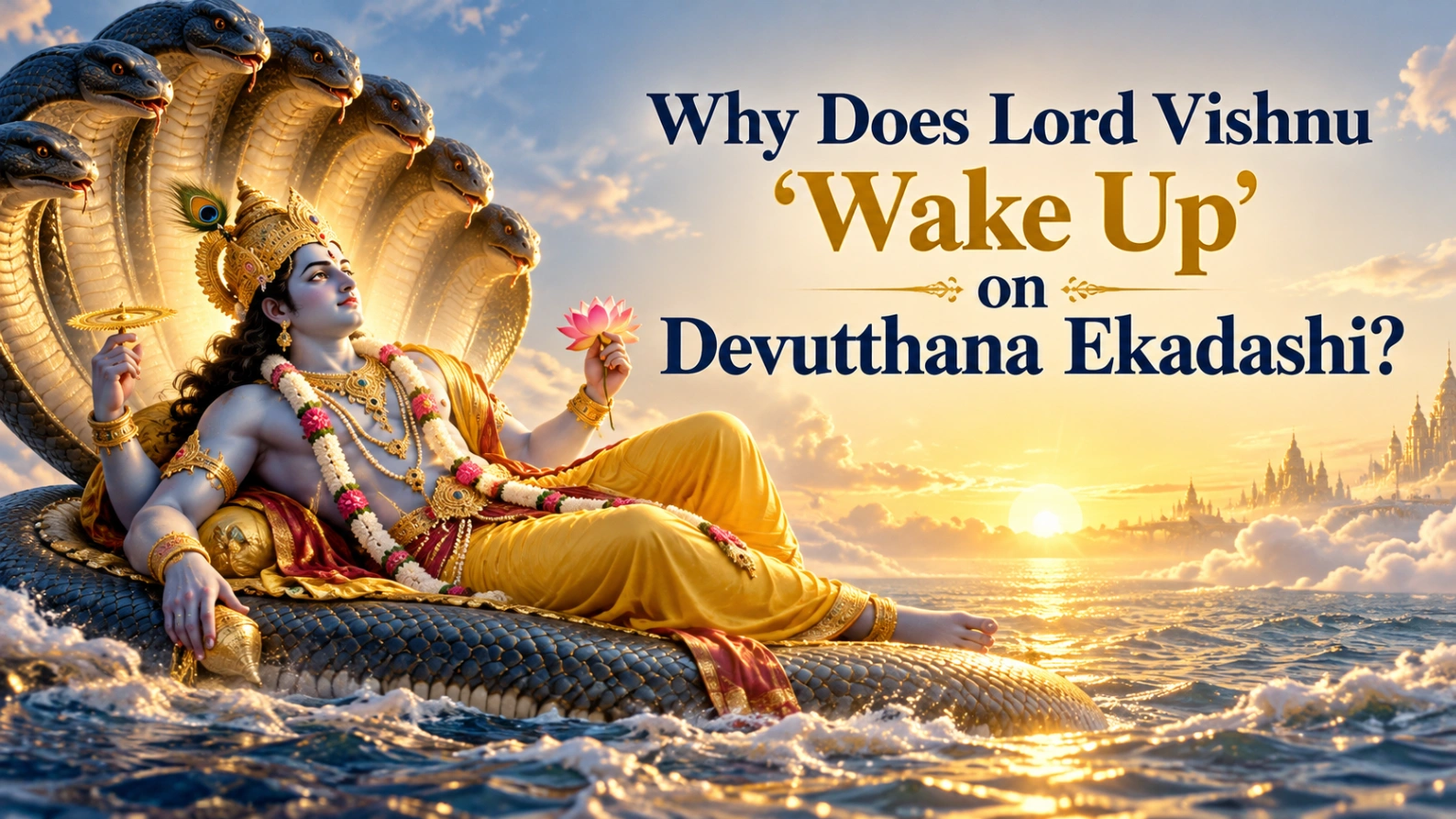
What Is Devutthana Ekadashi?
Devutthana Ekadashi falls on the Ekadashi Tithi of Kartik Shukla Paksha, the waxing phase of the lunar month of Kartik. It is also called Dev Uthani Ekadashi, Prabodhini Ekadashi, Devotthani Ekadashi and Hari Bodhini Ekadashi in different traditions.
The word “Prabodhini” itself relates to awakening or becoming conscious.
In 2026, Devutthana Ekadashi is commonly listed for Friday, November 20, 2026, while certain Vaishnava observances fall on November 21. The Kartik Shukla Ekadashi Tithi runs across this period, and exact fasting observances can differ according to tradition and location.
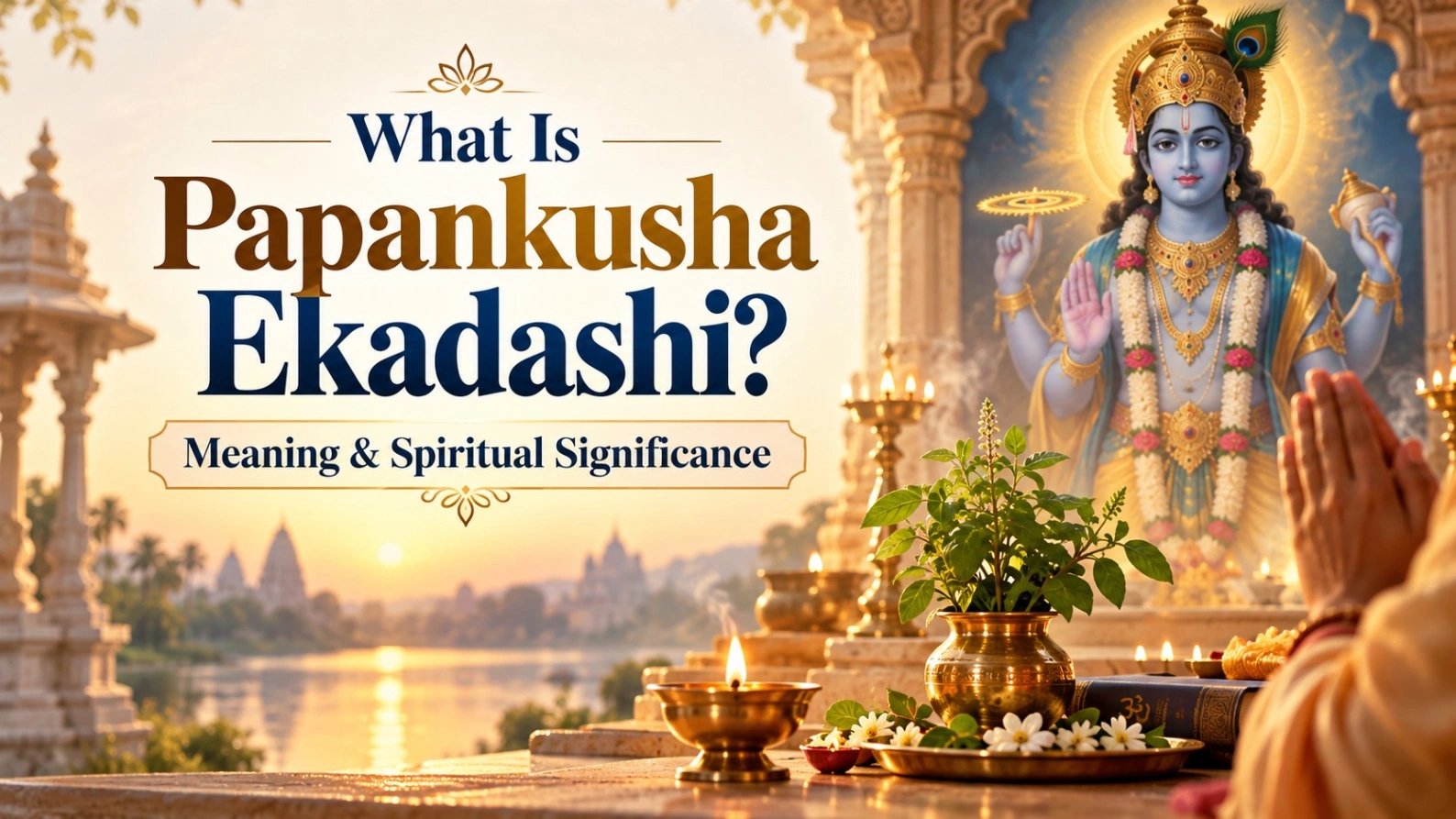
Devotees traditionally worship Lord Vishnu, observe an Ekadashi vrat, chant his names, offer Tulsi leaves and engage in prayer and devotional practices.
Design Your Destiny
Your destiny changes when the way you experience and respond to life changes. Explore Design Your Destiny and discover practical spiritual wisdom that can help you understand your mind, become more aware of your inner patterns and move through life with greater clarity, balance and consciousness.
Start Your Journey Today!Why Does Lord Vishnu Sleep for Four Months?
According to traditional Hindu belief, Lord Vishnu enters Yoga Nidra on Devshayani Ekadashi, which occurs during Ashadha Shukla Paksha.
This marks the beginning of Chaturmas.
Lord Vishnu is described as resting upon Sheshanaga in Kshira Sagara, the cosmic ocean, until his awakening on Devutthana or Prabodhini Ekadashi. The period from Ashadha Shukla Ekadashi to Kartik Shukla Ekadashi is therefore traditionally associated with Vishnu’s yogic rest.
However, Yoga Nidra should not simply be understood as ordinary sleep.
In yogic and spiritual symbolism, sleep or withdrawal can represent turning consciousness away from constant external activity. Chaturmas similarly encourages devotees to reduce distractions, practise discipline and focus more deeply on spiritual development.
Therefore, the four months are not merely about the deity “sleeping.” They are also an invitation for the individual to pause and look within.
What Is Lord Vishnu’s Yoga Nidra?
Yoga Nidra can be understood as a state of profound yogic rest or conscious withdrawal.
In the imagery associated with Vishnu, the Lord remains in cosmic repose while still representing the sustaining principle of existence. His rest does not imply that the universe has been abandoned. Rather, it conveys stillness within consciousness.
This distinction is important when understanding why Lord Vishnu wakes up on Devutthana Ekadashi.
The awakening is not simply the moment at which a sleeping deity opens his eyes. It symbolically represents a shift from inwardness toward expression, from pause toward action and from contemplation toward new beginnings.
In our own lives, periods of stillness can serve a similar purpose. Before meaningful action comes clarity. Before transformation comes reflection. Before a new beginning, something old often needs to become quiet.
Devshayani Ekadashi 2026: Date, Muhurat & Puja Vidhi
What Is the Connection Between Devshayani and Devutthana Ekadashi?
Devshayani Ekadashi and Devutthana Ekadashi form two ends of the Chaturmas cycle.
Devshayani Ekadashi represents the beginning of Lord Vishnu’s Yoga Nidra, while Devutthana Ekadashi represents his awakening.
The period between these two Ekadashis becomes spiritually significant because devotees traditionally adopt greater discipline during Chaturmas. Practices can include fasting, japa, prayer, charity, simplicity, restraint and spending more time on spiritual study.
Traditional sources also associate Chaturmas with the rainy-season practice of saints remaining in one place rather than travelling extensively.
Thus, Devutthana Ekadashi carries the feeling of completion. A period of inward discipline reaches its culmination, and a new spiritual cycle begins.
Why Is Devutthana Ekadashi Called Prabodhini Ekadashi?
Another important name for Devutthana Ekadashi is Prabodhini Ekadashi.
“Prabodhini” points toward awakening, understanding or becoming conscious. This makes the name particularly meaningful.
Lord Vishnu’s awakening can therefore be interpreted on two levels. At the devotional level, Vishnu awakens from his four-month Yoga Nidra. At the inner level, the devotee is reminded to awaken from unconscious living.
Most people move through daily life surrounded by thoughts, attachments, anxieties, expectations and habits. Spiritual awakening begins when we become capable of observing those patterns rather than automatically becoming controlled by them.
Seen this way, Prabodhini Ekadashi becomes an invitation to ask: Am I truly awake in the way I am living my life?
What Is the Spiritual Significance of Lord Vishnu Waking Up?
The significance of Lord Vishnu waking up lies in the transition from stillness into conscious action.
During Chaturmas, the emphasis is traditionally on restraint and introspection. When Vishnu awakens, it symbolically signals that the period of inward preparation is complete.
This idea contains an important lesson.
Spirituality is not meant to remain limited to prayer, meditation or rituals. Inner awareness eventually has to become visible in how we think, speak, make decisions, build relationships and respond to challenges.
The journey is therefore not simply about withdrawing from life. It is about returning to life with greater consciousness.
Devutthana Ekadashi reminds us that true awakening means carrying awareness into action.
Why Does Chaturmas End on Devutthana Ekadashi?
Devutthana Ekadashi traditionally marks the conclusion of the period associated with Vishnu’s yogic sleep.
Chaturmas begins around Devshayani Ekadashi and concludes around Devutthana Ekadashi, although exact observance traditions can vary among communities. Classical religious customs consequently treat this period as one of increased spiritual discipline and restraint.
With Vishnu’s awakening, the symbolism changes. The period of withdrawal gives way to renewed activity.
This is also why many Hindu communities traditionally regard the period following Devutthana Ekadashi as suitable once again for important auspicious ceremonies.
Why Do Auspicious Ceremonies Begin After Dev Uthani Ekadashi?
Traditional Hindu calendars often avoid certain major auspicious ceremonies during Chaturmas because Lord Vishnu is believed to be in Yoga Nidra.
After Dev Uthani Ekadashi, the divine awakening symbolically reopens a period associated with auspicious beginnings.
This is why Devutthana Ekadashi is popularly connected with the return of wedding ceremonies and other important samskaras.
However, Devutthana Ekadashi itself does not mean that every date immediately becomes an auspicious wedding date. Individual Vivah Muhurats are still calculated using Panchang and astrological considerations.
The broader significance is that Vishnu’s awakening marks the traditional end of the Chaturmas restriction period.
What Is the Connection Between Devutthana Ekadashi and Tulsi Vivah?
Tulsi Vivah is closely associated with Devutthana Ekadashi and the days surrounding it.
The ceremonial marriage of Tulsi Devi with Lord Vishnu, often represented through Shaligram or another form of Vishnu, is celebrated according to regional and family traditions.
Traditional descriptions permit Tulsi Vivah to be performed around Prabodhini Ekadashi and related auspicious days.
Symbolically, Tulsi Vivah reinforces the idea that the divine period of rest has ended and a season of auspicious activity has begun.
Tulsi herself is deeply associated with Vishnu worship, which makes this connection especially significant for Vaishnava devotees.
What Does Vishnu’s Awakening Teach Us About Life?
The most powerful lesson of Devutthana Ekadashi may not simply be that Lord Vishnu awakens. It is the question his awakening places before us:
When do we awaken?
A person can be physically awake but psychologically living on autopilot.
We repeat old reactions. We carry past hurt into new situations. We become attached to outcomes. We worry about the future, replay the past and often forget to experience the present moment clearly.
The symbolism of Devutthana Ekadashi reminds us that spiritual awakening begins when awareness enters these unconscious patterns.
To “wake up” spiritually is to see before reacting, understand before judging and act without becoming completely trapped by fear, attachment or expectation.
Lord Vishnu’s awakening thus becomes a powerful metaphor for the awakening of consciousness within every individual.
Devutthana Ekadashi: From Yoga Nidra to Awareness
The journey from Devshayani Ekadashi to Devutthana Ekadashi can be understood as a spiritual cycle.
First comes withdrawal.
Then comes reflection.
Then comes awakening.
Finally comes conscious action.
This pattern is relevant far beyond one festival. Every meaningful transformation follows something similar. We pause, observe, understand and then move forward differently.
Chaturmas gives importance to the pause. Devutthana Ekadashi gives importance to awakening after that pause.
That is why the festival is not simply a celebration of Lord Vishnu rising from Yoga Nidra. It is also a reminder that stillness becomes meaningful when it leads to greater awareness.
Personal Session
Sometimes understanding the teaching is only the beginning. Applying it to your own relationships, emotions, career decisions and inner conflicts requires deeper clarity. Book a Personal Session to explore the challenges you are currently facing, understand the patterns influencing your decisions and discover a more conscious way forward.
Book Now
Read Latest Articles