

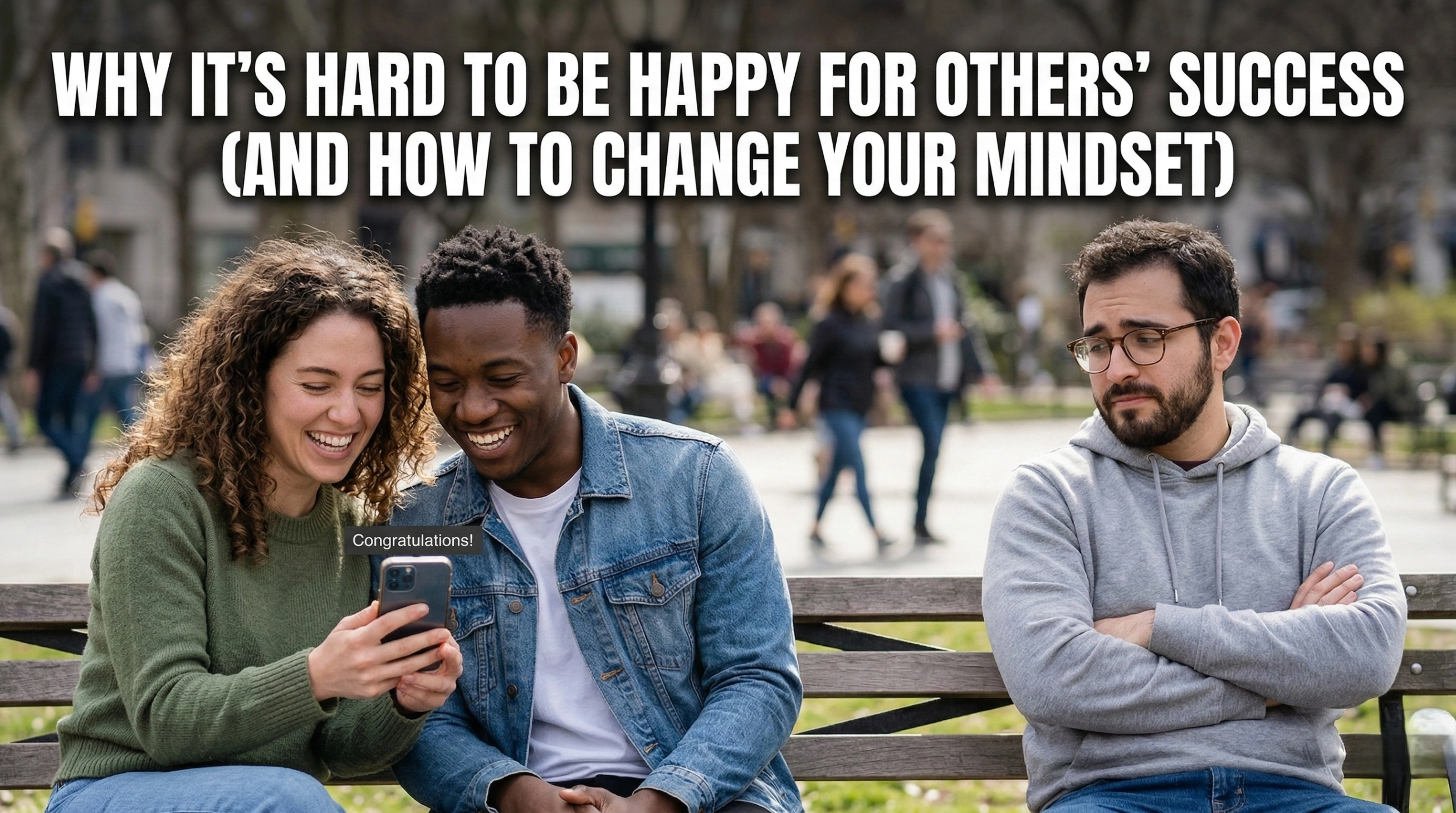
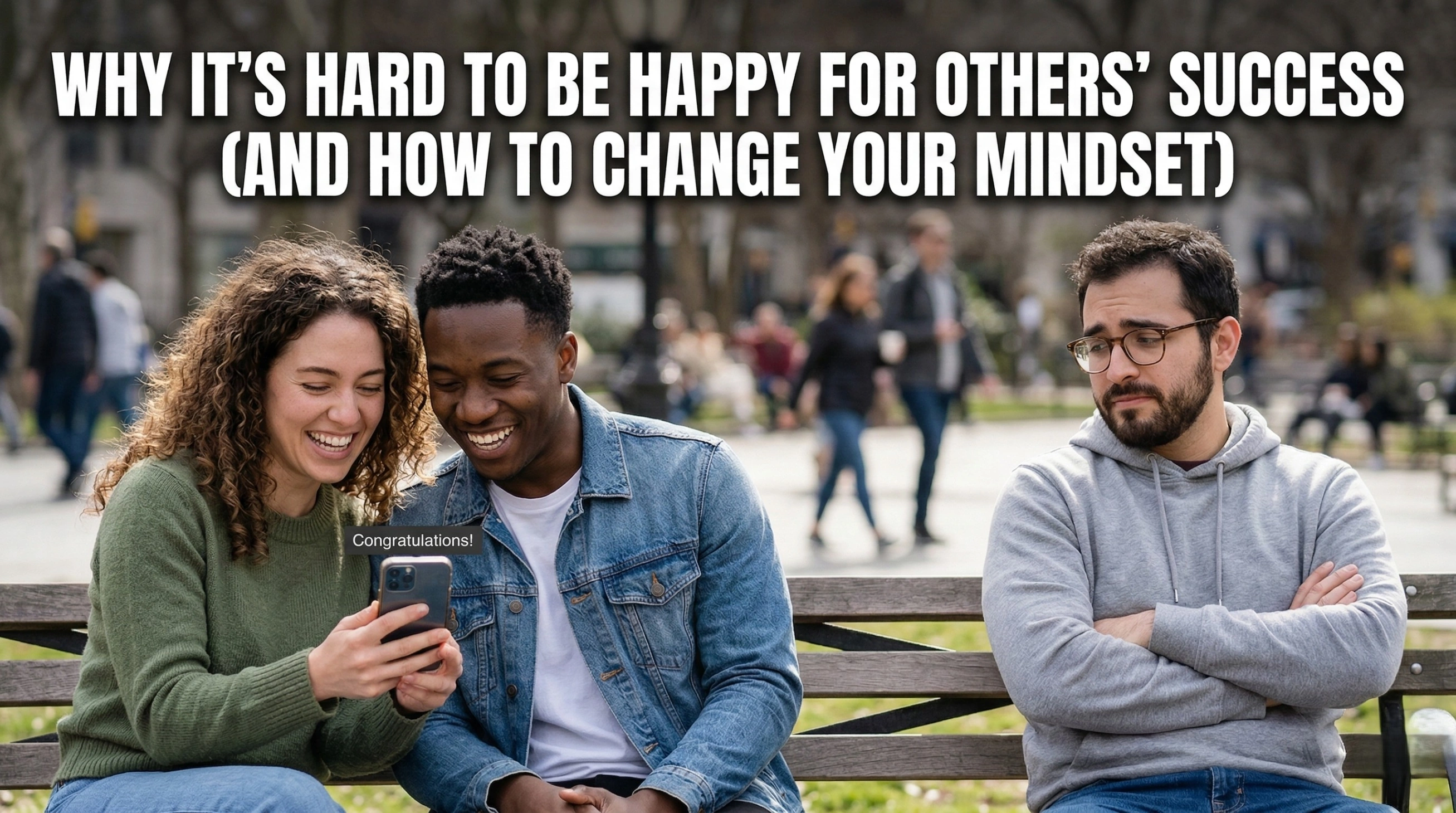
Seeing someone else succeed should be a moment of inspiration. But for many people, it triggers something very different — discomfort, comparison, or even jealousy.
The jealousy of others success is a common emotional experience that most people face at some point in life. When a colleague gets promoted, a friend starts earning more, or someone in your circle achieves recognition, the mind often reacts with comparison instead of celebration.
This reaction doesn’t mean you are a bad person. It simply reflects how the human mind works. Understanding jealousy psychology and the comparison trap psychology can help you transform this reaction into something healthier and more empowering.
In this article, we will explore why we feel jealous of others success, how comparison affects happiness, and practical ways to shift your mindset toward growth, confidence, and inner peace.
Why We Compare Ourselves to Others
Human beings naturally engage in social comparison psychology. Our brains constantly evaluate our position in relation to others.
This instinct developed as part of survival. In ancient societies, knowing where you stood within a group helped determine safety, resources, and influence. Today, however, this same mechanism can create insecurity and dissatisfaction.
When someone else achieves something we desire, the mind often interprets it as a threat.
Instead of seeing another person’s success as independent from our own journey, the mind believes:
“If they are ahead, I must be behind.”
This belief fuels comparison and self esteem issues, making us feel inadequate or left behind.
The Psychology of Jealousy and Envy
To understand this emotion better, it helps to explore the psychology of jealousy and envy.
Jealousy often arises from three psychological triggers:
1. Scarcity Mindset
A scarcity mindset assumes that success is limited.
If someone else wins, we believe there is less opportunity left for us. This perspective is the opposite of an abundance mindset vs scarcity mindset.
In reality, success is not a fixed resource. One person’s achievement does not reduce your potential.
2. Insecurity and Self-Worth
Sometimes why other people's success bothers you is directly connected to personal insecurity.
When we measure our self-worth through external achievements, every success around us feels like competition.
Developing self confidence and self worth is essential to break this pattern.
3. Ego and Identity
The ego and jealousy connection is powerful. The ego constantly seeks validation and superiority.
When someone else shines, the ego may feel threatened. This is why jealousy and ego psychology often appear together.
Why Comparison Makes Us Unhappy
The effects of comparing yourself to others can be deeper than we realize.
Constant comparison often leads to:
• Lower confidence
• Reduced happiness
• Increased stress
• Negative thinking patterns
• Lack of self appreciation
In today’s digital age, social media has intensified the comparison mindset psychology. We are exposed to curated versions of other people’s lives, achievements, and success stories.
Over time, this can create the illusion that everyone else is doing better than us.
This is why many psychologists say comparison steals happiness.
The Comparison Trap Psychology
The comparison trap psychology works like a mental loop.
You notice someone else's success
You compare your progress with theirs
You feel inadequate
You doubt your abilities
Your motivation drops
Instead of inspiring growth, comparison begins to drain confidence.
Escaping this trap requires awareness and intentional mindset change.

How to Stop Comparing Yourself to Others
Learning how to stop comparing yourself to others is a powerful step toward emotional freedom.
Here are some practical mindset shifts that can help.
1. Recognize Your Unique Journey
Every individual has a different timeline in life.
Different opportunities, backgrounds, skills, and circumstances shape each person’s path.
When you accept this truth, comparison loses its power.
Your journey is not supposed to look like anyone else's.
2. Transform Jealousy into Inspiration
One of the most powerful ways of how to turn jealousy into motivation is to ask a simple question:
“What can I learn from this person?”
Instead of feeling threatened by someone’s achievement, study their mindset, discipline, and habits.
This shift transforms jealousy into inspiration.
3. Build a Success Mindset
Developing a success mindset psychology means believing that growth is always possible.
People who cultivate a personal growth mindset see other people's achievements as proof that success is achievable.
They focus on learning rather than competing.
4. Focus on Your Own Progress
The best comparison is with your past self.
Ask yourself:
Am I improving?
Am I learning?
Am I becoming better than yesterday?
When your focus shifts to personal progress, the urge to compare fades naturally.
5. Practice Emotional Intelligence
Emotional intelligence and jealousy are closely related.
Emotionally aware people do not suppress jealousy. Instead, they observe it without judgment.
When you acknowledge your emotions, you gain control over them.
This awareness helps build self awareness and emotional growth.
The Spiritual Perspective on Jealousy
Many spiritual traditions emphasize the importance of overcoming comparison.
From a spiritual perspective, jealousy is often linked to the ego and lack of awareness.
The spiritual meaning of jealousy is not simply an emotional reaction. It is often a signal pointing toward inner insecurity.
Through spiritual growth and self awareness, individuals begin to understand that every person has a unique role in life.
Instead of competing with others, the focus shifts to personal transformation and purpose.
Practices like mindfulness to overcome jealousy help individuals observe their thoughts and detach from negative emotions.

How to Be Happy for Others’ Success
Learning how to celebrate others success without jealousy is a powerful sign of emotional maturity.
Here are a few ways to develop this mindset.
Practice Gratitude
Gratitude shifts your focus from what you lack to what you already have.
This simple habit strengthens a positive mindset and emotional balance.
Appreciate the Effort Behind Success
Success rarely happens overnight.
When you understand the dedication behind someone's achievement, appreciation naturally replaces jealousy.
Build Compassion
Developing compassion for others success strengthens relationships and reduces negative emotions.
When you genuinely celebrate others, your own mind becomes lighter and happier.
How to Overcome Jealousy and Insecurity
Overcoming jealousy requires both psychological and emotional growth.
Here are key practices:
• Build self confidence through small achievements
• Focus on skill development and personal growth
• Reduce comparison triggers like social media
• Practice mindfulness and emotional awareness
• Surround yourself with supportive people
Over time, these habits create inner confidence and emotional stability.
The Power of an Abundance Mindset
A powerful antidote to jealousy is cultivating an abundance mindset.
An abundance mindset believes:
There is enough opportunity for everyone.
When you truly understand this, someone else’s success becomes inspiring rather than threatening.
The world is full of possibilities. Your path does not need to compete with anyone else's.
Feeling jealous when others succeed is a natural human reaction.
But staying stuck in that mindset can limit happiness and personal growth.
Understanding jealousy psychology, the comparison trap, and the effects of comparing yourself to others helps you take control of your mindset.
When you shift from comparison to self-awareness, from insecurity to confidence, and from jealousy to inspiration, something remarkable happens.
You stop competing with others and start growing into your true potential.
And that is where real success begins.
Your mindset shapes your future.
If you want to break free from comparison, develop self-awareness, and build a powerful success mindset, explore the Design Your Destiny program.
Learn practical wisdom to transform your thinking, overcome inner limitations, and consciously create the life you truly desire.
Start your journey today and design the destiny you deserve.