
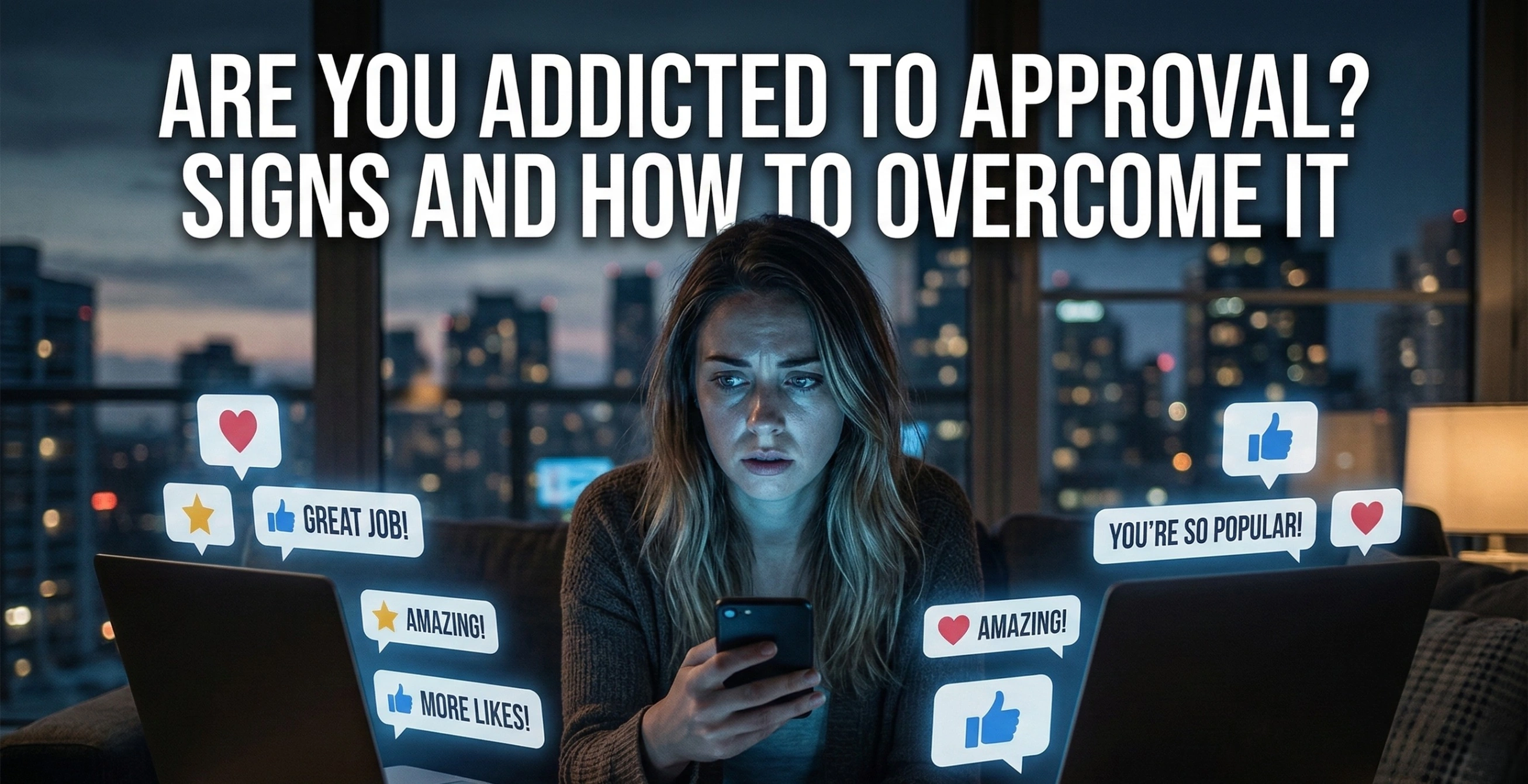
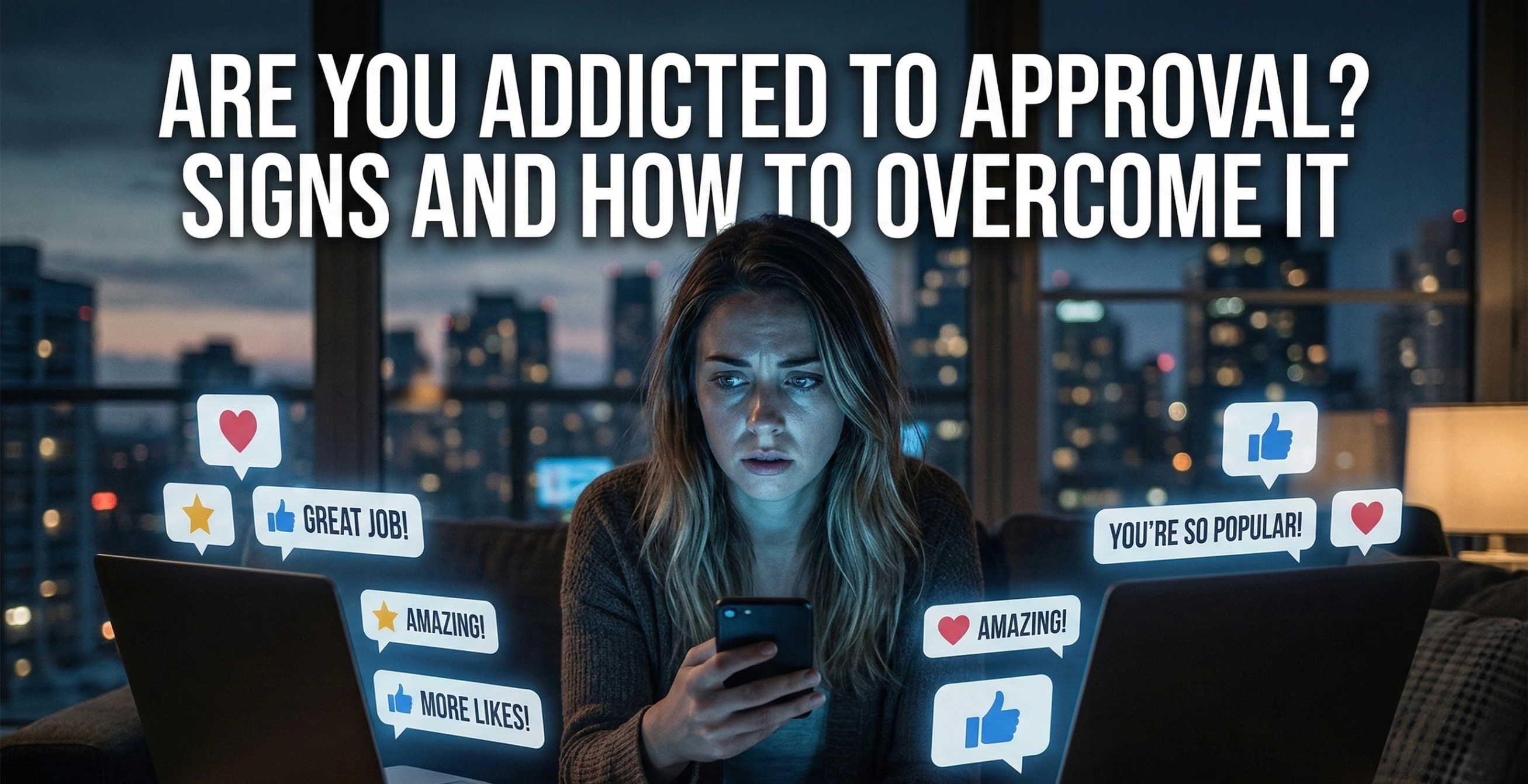
Do you often feel uneasy when people disagree with you? Do you constantly check if others approve of your choices, words, or actions? If yes, you may be experiencing approval addiction—a psychological pattern where your sense of self-worth depends heavily on validation from others.
Many people struggle with approval seeking behavior without realizing it. They seek praise, reassurance, and acceptance from others to feel good about themselves. While it may seem harmless at first, being addicted to approval can slowly damage confidence, emotional independence, and personal growth.
The need for approval psychology explains why humans naturally desire acceptance. However, when the constant need for validation becomes excessive, it can lead to people-pleasing, fear of rejection, and low self-esteem.
The good news is that approval addiction can be overcome. With awareness, mindset shifts, and self-validation practices, it is possible to break free from the habit of seeking approval from others.
In this article, we’ll explore the signs of approval addiction, the psychology behind approval seeking, and practical steps to overcome the need for validation.
What Is Approval Addiction?

Approval addiction refers to a psychological tendency where a person constantly seeks validation, praise, or acceptance from others to feel worthy or confident.
Instead of trusting their own judgment, people with approval addiction rely on external opinions to define their value.
This behavior often appears as:
Approval seeking behavior
People pleasing habits
Fear of rejection
Emotional dependency on others
Constant need for validation
When your self-worth depends on external validation, your emotional state becomes controlled by others.
If someone praises you, you feel confident. If someone criticizes you, your confidence collapses.
This is the core of validation addiction.
The Psychology Behind Approval Seeking
To understand why we seek approval from others, we need to explore human psychology.
Humans are social beings. Throughout history, acceptance by a group was essential for survival. Being rejected meant isolation, which was dangerous in early societies.
Because of this evolutionary conditioning, the brain developed a strong need for acceptance psychology.
However, modern society amplifies this instinct through:
Social media validation
Workplace competition
Social comparison
Cultural pressure to succeed
Over time, this conditioning can create validation seeking behavior, where individuals measure their worth based on others’ opinions.nnnnnnnnnnnnnnnnnn
This often leads to psychology of insecurity and emotional dependency.
Signs You Are Addicted to Approval
Many people struggle with approval addiction without realizing it. Here are some common signs of approval addiction.
1. You Constantly Seek Validation
If you frequently ask others whether your decisions are right, it may indicate validation addiction.
You may ask questions like:
“Do you think I did the right thing?”
“Was my presentation good?”
“Do you think people liked me?”
This constant need for validation can weaken self-confidence over time.
2. You Fear Judgment or Criticism
Another sign is a strong fear of judgment psychology.
You might avoid expressing your opinions because you worry about what others will think.
Even constructive criticism may feel like rejection.
This fear often stems from low self esteem and validation dependence.
3. You Struggle to Say No
People with approval addiction often become people pleasers.
They agree to requests even when it causes stress or exhaustion.
This people pleasing behavior develops because they fear losing approval or acceptance.
4. Your Mood Depends on Others’ Opinions
If praise instantly boosts your confidence but criticism ruins your day, it may indicate external validation dependence.
This emotional instability occurs when your self worth and validation are tied to external feedback.
5. You Avoid Disagreement
Approval seekers often try to maintain harmony at all costs.
They avoid debates, disagreements, or expressing different opinions.
This happens because disagreement can trigger fear of rejection psychology.
Why People Become People Pleasers
Many factors contribute to people pleasing psychology and approval addiction.
Childhood Conditioning
Children who receive love only when they behave “perfectly” may develop approval-seeking habits.
They learn that acceptance depends on pleasing others.
This conditioning creates emotional dependency on others.
Low Self-Esteem
When people lack inner confidence, they seek external validation to feel worthy.
This creates a cycle of low self esteem and validation seeking behavior.
Social Comparison
Constant comparison with others can damage self-worth.
This leads people to seek reassurance and approval to validate their value.
Effects of Seeking Validation
Being addicted to approval can negatively impact mental health and relationships.
Loss of Authenticity
When you constantly seek approval, you start adjusting your personality to please others.
This prevents authentic self-expression.
Emotional Dependency
Approval addiction creates emotional dependency on others.
Your happiness becomes dependent on external opinions rather than internal confidence.
Anxiety and Stress
Constantly worrying about others’ opinions creates mental pressure and anxiety.
This is one reason approval seeking affects mental health.
Lack of Self-Confidence
When you rely on external validation, you never develop strong self-trust.
This weakens personal growth and self confidence.
External Validation vs Self Validation
Understanding the difference between external validation vs self validation is crucial.
External Validation
External validation comes from:
Praise from others
Social media likes
Approval from family or colleagues
Public recognition
While external validation can feel good, relying on it constantly creates emotional instability.
Self Validation
Self validation means recognizing your own worth without needing approval.
It involves:
Trusting your decisions
Accepting your imperfections
Appreciating your efforts
Developing self validation is the key to overcoming approval addiction.

How to Overcome Approval Addiction
Breaking free from the need for approval from others requires conscious effort and self-awareness.
Here are practical steps to overcome approval addiction.
1. Build Self Awareness
The first step is recognizing approval seeking behavior.
Ask yourself:
Do I change my opinions to please others?
Do I feel anxious when people disagree with me?
Do I depend on praise to feel confident?
Developing self awareness and emotional intelligence helps identify unhealthy patterns.
2. Practice Self Validation
Instead of seeking reassurance from others, start validating yourself.
After completing a task, say:
“I did my best and that is enough.”
This strengthens self worth and validation from within.
3. Accept Imperfection
No one can please everyone.
Accepting this truth helps reduce the fear of judgment psychology.
When you stop chasing perfection, approval loses its power over you.
4. Learn to Say No
Setting boundaries is essential for emotional independence.
Practice saying no politely but firmly.
This reduces people pleasing habits and builds confidence.
5. Focus on Personal Growth
Instead of seeking approval, focus on improving yourself.
Develop skills, learn new things, and grow emotionally.
This shift creates mindset shift from validation to self confidence.
6. Stop Comparing Yourself
Comparison fuels insecurity.
Everyone’s journey is different.
Focusing on your own progress helps build inner confidence and emotional independence.
The Freedom of Self Acceptance
When you overcome approval addiction, life becomes simpler.
You stop worrying about what everyone thinks.
You begin to trust yourself.
Self acceptance leads to:
stronger self confidence
emotional independence
healthier relationships
authentic living
Learning how to stop caring what others think is not about ignoring feedback. It is about not letting external opinions control your identity.
True confidence comes from within.
Approval addiction is more common than we realize. Many people live their lives constantly seeking validation from others.
But the truth is, your worth does not depend on approval.
Breaking free from approval seeking behavior requires self-awareness, self-validation, and emotional independence.
When you stop chasing approval, you gain something far more powerful—inner confidence and authentic self-worth.
The moment you learn to validate yourself, you stop being controlled by others’ opinions.
And that is the real freedom.
Ready to Break Free From Limiting Mindsets?
If you want to develop self-confidence, emotional independence, and a powerful mindset, explore the Design Your Destiny program.
Learn how to transform your thinking, overcome insecurity, and create a life driven by purpose; not approval.