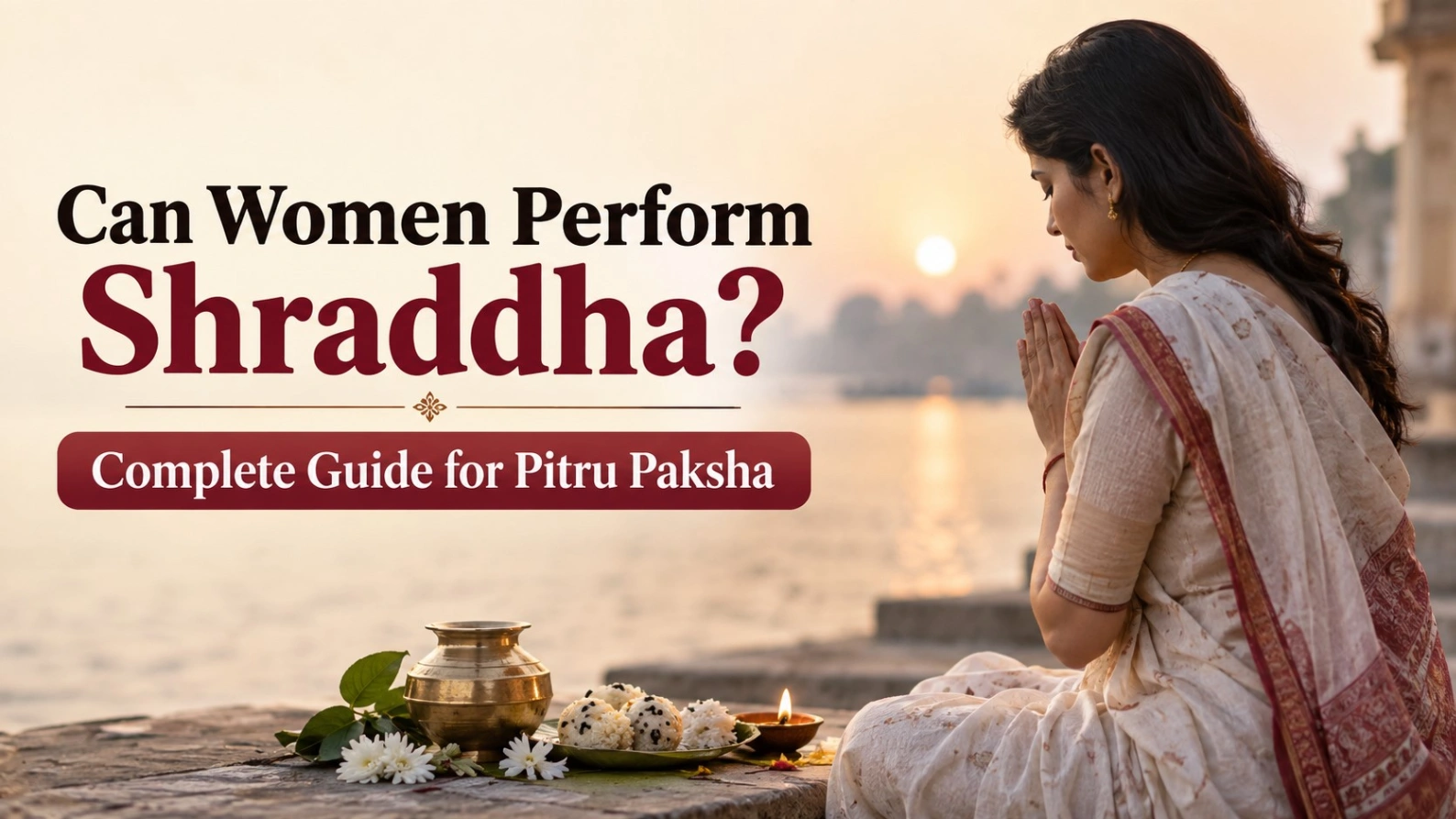
Pitru Paksha is a sacred period dedicated to remembering ancestors with gratitude, prayer and traditional rituals such as Shraddha, Tarpan and Pind Daan. Yet one question arises frequently in many Hindu families: Can women perform Shraddha?
The simple answer is that women can perform Shraddha in many Hindu traditions and circumstances, particularly when they are the appropriate family member to carry forward the ancestral remembrance. However, specific practices concerning who acts as the karta, which mantras are recited and how Tarpan or Pind Daan is performed can differ according to family tradition, region and sampradaya.
Traditionally, the eldest son has often been given primary responsibility for ancestral rites. However, this does not mean that every Hindu tradition completely excludes women. Some ritual traditions recognize daughters, wives, mothers, daughters-in-law and other relatives as eligible to perform Shraddha under particular circumstances.
Therefore, rather than asking only “Can women do Shradh?”, it is useful to understand the deeper meaning of Shraddha, who may perform it and how different traditions approach women participating in Pitru Paksha rituals.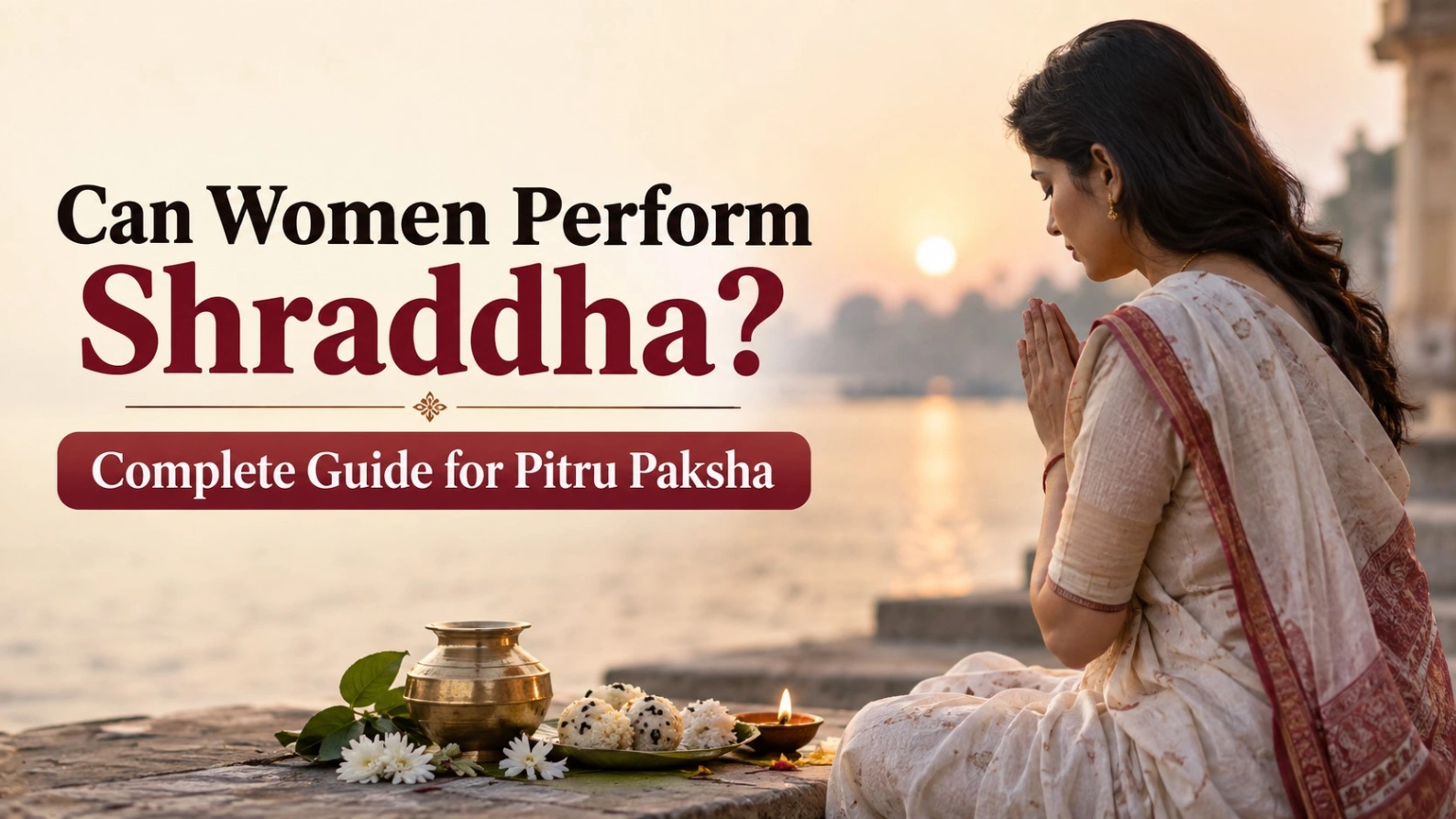
What Is Shraddha?
The word Shraddha comes from the idea of performing an action with shraddha like faith, sincerity and reverence.
Shraddha refers to rituals performed in memory of departed ancestors. During Pitru Paksha, families remember their forefathers and express gratitude for the lineage, values and life they have received.
Common elements associated with Shraddha may include prayers for ancestors, Tarpan or offerings of water, Pind Daan, food offerings, feeding Brahmins or people in need, charity and remembrance of departed family members.
The exact procedure can vary considerably across regions and families.
The deeper purpose of Shraddha is not merely the mechanical performance of a ritual. It represents remembrance, gratitude and the continuing connection between generations.
Design Your Destiny
Ancient wisdom is not meant only to be read—it is meant to transform how you think, act and live. Through Design Your Destiny, discover practical spiritual wisdom that can help you understand your mind, break limiting patterns, make conscious choices and create a more peaceful, purposeful life. Begin your journey with Design Your Destiny and take charge of the life you are creating.
Start Your Journey Today!Can Women Perform Shraddha?
Yes, women may perform Shraddha according to a number of Hindu traditions, especially when circumstances require it.
Traditionally, a son may be considered the first person responsible for performing the rites. However, several traditional explanations of Shraddha eligibility extend responsibility beyond the son to relatives such as a daughter, wife, mother or daughter-in-law when appropriate.
This is particularly relevant today when a family may have only daughters, when a male relative is unavailable, when a woman is the primary surviving family member or when family tradition itself permits women to perform the rites.
At the same time, Hindu practices are diverse. Some families follow stricter hereditary customs concerning the person who performs particular Vedic rites. Therefore, anyone planning a formal Shraddha ceremony should ideally consult a knowledgeable priest familiar with the family's tradition.
The important distinction is that participation in ancestral remembrance should not automatically be confused with one standardized ritual rule applicable to every Hindu family.
Can Women Perform Shraddha in Pitru Paksha?
A related question is: Can women perform Shraddha in Pitru Paksha?
In many traditions, yes.
Pitru Paksha is the annual period specifically associated with honoring ancestors. Families generally perform Shraddha according to the lunar tithi on which the ancestor passed away.
Women may participate through prayer, food offerings, charity and remembrance, and in families or traditions where permitted, they may also take responsibility for performing Shraddha.
For Pitru Paksha 2026, Purnima Shraddha falls on September 26, 2026, followed by Pratipada Shraddha on September 27. Sarva Pitru Amavasya falls on October 10, 2026. The precise observance should be checked according to one's location and Panchang.
Sarva Pitru Amavasya is especially significant for remembering ancestors collectively and is commonly observed when the exact death tithi is unknown or when the relevant Shraddha could not be performed earlier.
Can a Daughter Perform Shraddha for Her Parents?
One of the most searched questions associated with this topic is “Can a daughter perform Shraddha?”
In traditions that recognize daughters as eligible performers, a daughter can perform Shraddha for her parents, particularly when there is no son or when she is the appropriate surviving family member.
The belief that ancestral remembrance must disappear simply because a family has no male heir does not reflect every Hindu tradition.
Some traditional listings of eligible relatives specifically include a daughter among those capable of performing Shraddha.
For an only daughter or a daughter whose brothers are unavailable, the best approach is to speak with the family priest and perform the ritual according to the family's customary method.
Can a Married Daughter Perform Shraddha?
Whether a married daughter performs the formal rites can depend on family custom.
Some families permit a married daughter to perform Shraddha for her parents, particularly where she is the only child or no eligible male relative is available. Other traditions may follow a different order of relatives.
Therefore, there is no need to assume automatically that marriage removes a daughter's ability to remember or honor her parents.
The exact ritual procedure should be determined according to the family's kulachar, regional tradition and priestly guidance.
Can a Wife Perform Shraddha for Her Husband?
A wife may also have a role in performing ancestral rites for her deceased husband under certain traditions and circumstances.
Traditional discussions of Shraddha eligibility include the wife among family members who may assume responsibility when required.
A widow may therefore consult a knowledgeable purohit about the appropriate form of Shraddha, Sankalpa, offerings and prayers.
What matters is avoiding the assumption that there is one identical rule across all communities.
Can Women Perform Tarpan?
Tarpan generally involves offering water to ancestors with remembrance and prayer. It is an important part of many Pitru Paksha observances.
Whether women perform the complete traditional Tarpan procedure varies more significantly between traditions.
Some contemporary priestly traditions allow women to perform Pitru Tarpan, particularly when no eligible male descendant is available. Other traditions distinguish between general offerings of water and specific forms of Tarpan performed using particular mantras or ritual procedures.
This makes Tarpan one area where personal guidance is especially useful.
A woman who wants to perform Tarpan should therefore follow the procedure prescribed by her family tradition rather than combining instructions found randomly online.
Regardless of the formal procedure, prayer, remembrance, charity and respectful offerings in memory of ancestors remain meaningful ways of observing Pitru Paksha.
Shradh Puja at Home: Pitru Paksha Shradh, Samagri & Mantras
Can Women Perform Pind Daan?
Another common question is “Can women perform Pind Daan?”
Pind Daan involves offering pindas, traditionally prepared using ingredients such as rice and sesame, for departed ancestors.
Practices regarding who performs Pind Daan differ according to region and tradition. In many families, the son traditionally performs it. However, some pilgrimage and priestly traditions allow daughters, wives or other relatives to perform Pind Daan in appropriate circumstances.
Gaya in Bihar is one of India's most famous destinations associated with Pind Daan. A popular sacred tradition connected with Gaya recounts that Mata Sita offered Pind Daan for King Dasharatha near the Phalgu River, and Sita Kund continues to be associated with this tradition.
Because Pind Daan can involve detailed ritual procedures, especially at pilgrimage sites, women wishing to perform it should seek guidance from an experienced priest at the location.
Pitru Paksha Rules for Women
Women observing Pitru Paksha can focus on simplicity, devotion and respect.
Depending on family custom, observances may include bathing and maintaining personal cleanliness before worship, remembering ancestors by name, preparing simple sattvic food, offering food or water, giving charity, feeding people or animals, avoiding unnecessary indulgence and spending time in prayer or contemplation.
Where formal Shraddha, Tarpan or Pind Daan is being performed, the required materials, mantras, Sankalpa and procedure should follow the family's tradition.
There is no benefit in turning Pitru Paksha into a source of fear.
The central spirit of the observance is Shraddha, sincere remembrance and gratitude toward one's ancestors.
What If There Is No Son in the Family?
This is perhaps the most important practical question.
If there is no son, families should not assume that their ancestors cannot be remembered.
Depending on tradition, the responsibility may pass to another family member, including a daughter, wife, grandson or other close relative.
A daughter who sincerely wants to perform Shraddha for her parents should consult a knowledgeable priest who respects the family's circumstances and can guide her according to the appropriate tradition.
The purpose of Pitru Paksha is remembrance, gratitude and responsibility toward one's lineage, not anxiety about whether one's family structure matches that of previous generations.
Shraddha, Tarpan and Pind Daan: Are They the Same?
Although these terms are connected, they are not identical.
Shraddha is the broader ancestral rite performed with devotion.
Tarpan generally refers to offerings of water made for ancestors.
Pind Daan refers to offering pindas to departed ancestors as part of particular ancestral rituals.
This distinction is useful because a tradition may permit a woman to participate in Shraddha while prescribing specific rules for who performs a particular form of Tarpan or Pind Daan.
That is why questions such as “Can women perform Shradh?”, “Can women perform Tarpan?” and “Can women perform Pind Daan?” may not always have exactly the same ritual answer.
Living The Gita Movement
The Bhagavad Gita is not merely something to be read or listened to. It is the art of awakening within oneself and experiencing the truth of life. The vision of the Living the Gita Movement is to bring the wisdom of the Gita out of books and transform it into a lived experience.
Join NowDoes Devotion Matter More Than Gender?
The name Shraddha itself emphasizes faith and reverence.
Ritual discipline has an important place in Hindu tradition, but the spiritual intention behind remembering one's ancestors is equally significant.
Respect for one's parents, grandparents and lineage extends beyond a single ceremony. Caring for elders, preserving family values, helping others, practicing gratitude and remembering departed loved ones are also ways through which ancestral respect becomes part of everyday life.
Therefore, women who wish to honor their ancestors should not feel that meaningful remembrance is unavailable to them.
Formal ritual requirements can be clarified with a priest, while remembrance, gratitude and prayer remain accessible to everyone.
Pitru Paksha 2026: Meaning, Significance and the Science of Gratitude
Can Women Perform Shraddha?
So, can women perform Shraddha?
In many Hindu traditions and circumstances, yes, women can perform Shraddha, particularly daughters or wives when they are the appropriate family members to carry out the ancestral rites.
However, Hindu ritual traditions are diverse. Rules regarding the formal karta, Vedic mantras, Tarpan and Pind Daan may vary according to family lineage, region and sampradaya.
Rather than treating the issue as a simple prohibition, families should understand their own tradition and seek guidance from a knowledgeable priest where necessary.
Ultimately, Pitru Paksha reminds us of something deeper: our lives are connected to generations that came before us. Remembering them with gratitude, sincerity and Shraddha keeps that connection alive.
Personal Session
Every person's questions, challenges and inner journey are different. A Personal Session gives you an opportunity to seek deeper guidance for the situations you are facing and gain greater clarity about your spiritual and personal journey. Book your Personal Session and take the next step toward greater clarity, awareness and inner transformation.
Book NowRead Latest Articles