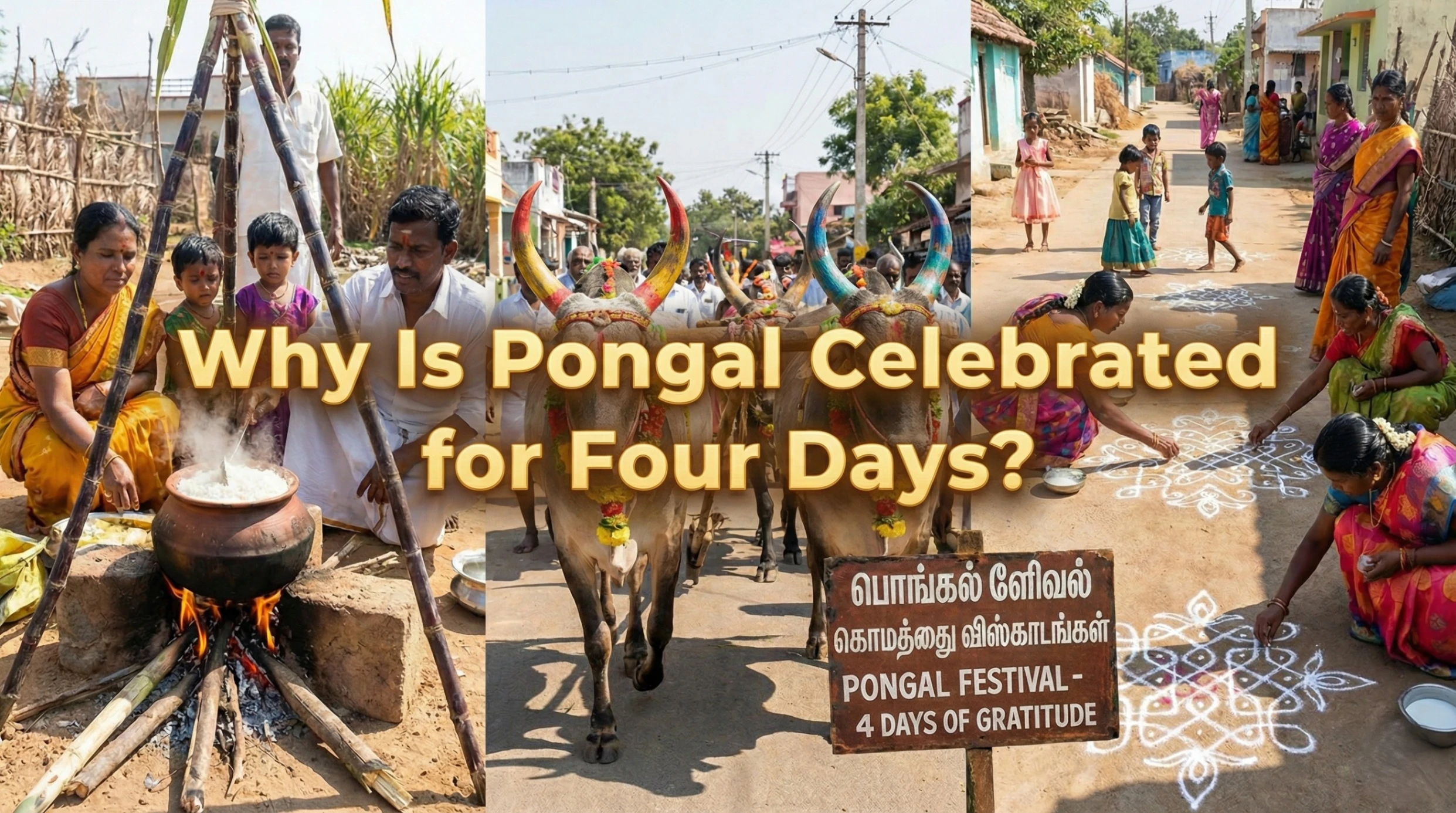
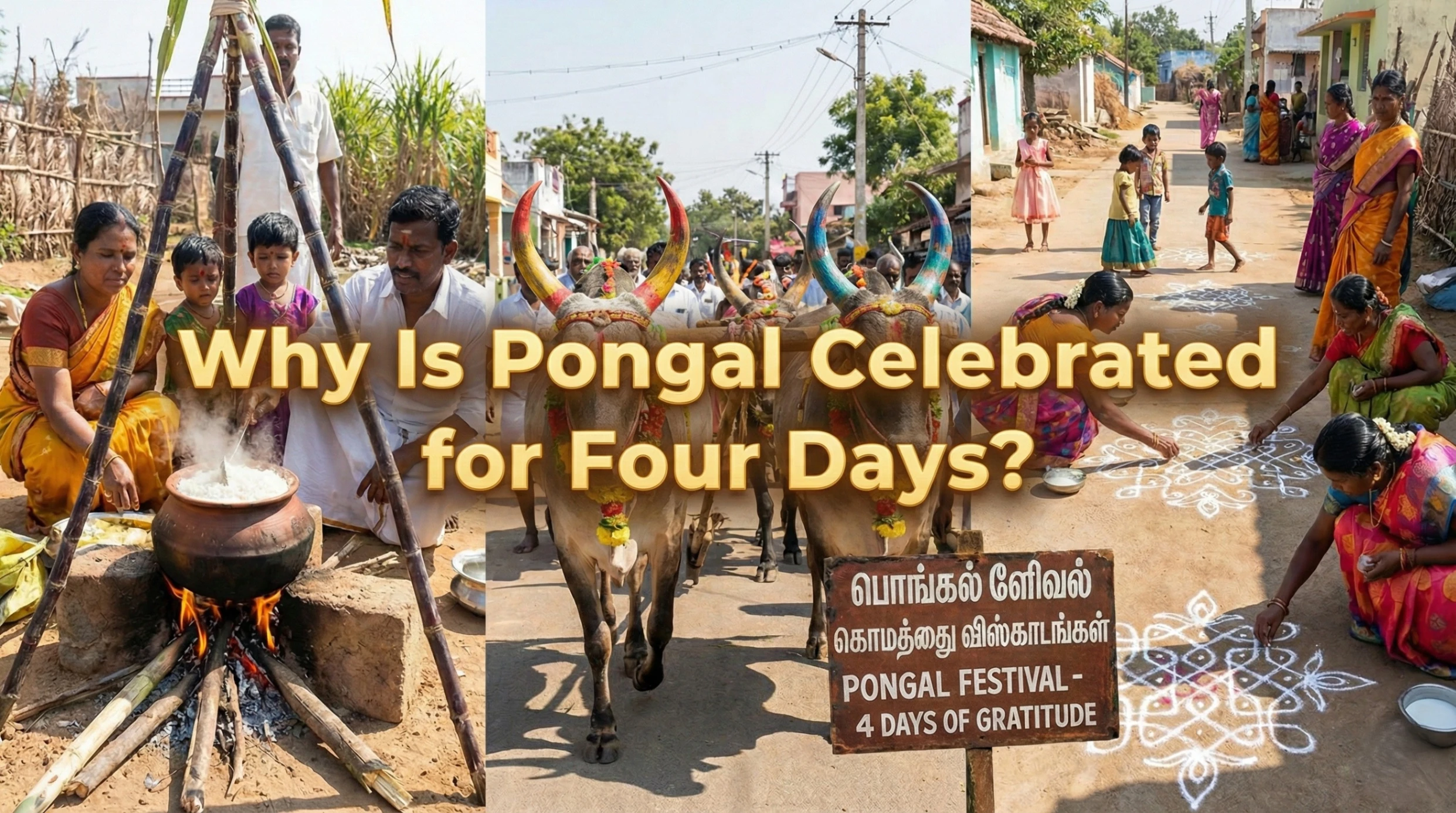
Why is Pongal celebrated for four days? This is one of the most commonly asked questions around the Pongal festival, especially by those curious about its deeper cultural and spiritual meaning. Pongal is not just a one-day harvest celebration; it is a thoughtfully structured four-day festival that reflects gratitude, renewal, harmony with nature, and community bonding. Each day of Pongal— Bhogi, Thai Pongal, Mattu Pongal, and Kaanum Pongal has a unique significance, ritual purpose, and symbolic message rooted deeply in Tamil culture.
Unlike many festivals that focus on a single deity or event, Pongal unfolds over four days to honor different elements of life: letting go of the past, thanking the Sun, respecting animals, and celebrating relationships. Together, these four days create a complete cycle of spiritual, agricultural, and social balance.
Understanding the Pongal Festival and Its Four Days
Pongal is primarily a harvest festival celebrated in Tamil Nadu and by Tamil communities worldwide. It marks the end of the winter solstice and the beginning of the Sun’s northward journey, known as Uttarayan. The festival coincides with the harvesting of crops, making it a time of abundance, gratitude, and joy.
The significance of Pongal lies in its connection to nature. Farmers thank the Sun God, the Earth, cattle, and all elements that contribute to agricultural prosperity. This gratitude is not compressed into a single day; instead, it is spread across four meaningful days, each with its own rituals and emotional depth.
Let’s explore why Pongal is celebrated for four days and what each day represents.
Day 1: Bhogi Pongal – Letting Go of the Old
Bhogi Pongal significance lies in renewal and cleansing. Celebrated on the first day, Bhogi marks the end of the old and the beginning of the new. People clean their homes, discard unused items, and symbolically burn old possessions in a Bhogi fire.
This ritual is not merely physical cleaning; it carries deep spiritual meaning. Bhogi encourages individuals to release outdated habits, negative emotions, and mental clutter. Just as the old items are let go, people are reminded to shed limiting beliefs and welcome freshness into their lives.
Bhogi Pongal meaning is also linked to gratitude for the past year. It acknowledges what has served its purpose and makes space for growth. In Tamil culture, Bhogi represents inner and outer purification; an essential preparation before welcoming abundance.
Day 2: Thai Pongal – The Heart of the Festival
Thai Pongal is the most important day of the four-day celebration and the main reason Pongal is often identified as a harvest festival. Celebrated on the first day of the Tamil month “Thai,” this day is dedicated to the Sun God.
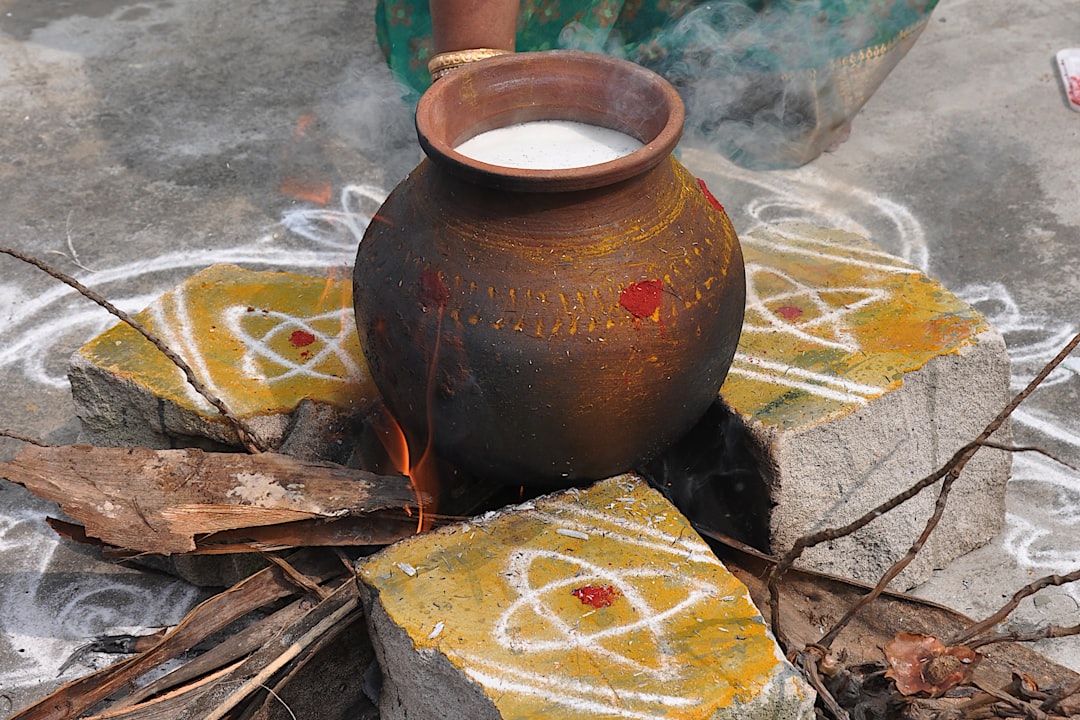
Thai Pongal significance revolves around gratitude and abundance. Families prepare a special dish called Pongal by boiling freshly harvested rice with milk and jaggery. When the milk overflows, people chant “Pongalo Pongal,” symbolizing prosperity and overflowing blessings.
Thai Pongal rituals and meaning emphasize humility and thankfulness. The Sun, considered the source of all life, is worshipped for providing energy, warmth, and nourishment. This day reinforces the belief that human effort alone is not enough nature’s support is equally essential.
In Tamil culture, Thai Pongal represents hope, success, and new beginnings. Many people start new ventures, make important decisions, or set intentions on this day.
Day 3: Mattu Pongal – Honoring Animals and Agriculture
Mattu Pongal significance highlights respect for cattle, especially cows and bulls, which play a vital role in agriculture. On this day, animals are bathed, decorated, and worshipped as a sign of gratitude for their contribution to farming and daily life.
The cultural importance of Mattu Pongal goes beyond rituals. It reflects a worldview where humans, animals, and nature coexist in mutual dependence. By honoring cows, people acknowledge that prosperity is a collective effort involving all living beings.
Why cows are worshipped on Mattu Pongal is deeply connected to sustainability and balance. Cows provide milk, manure for crops, and labor for farming. Mattu Pongal reminds society not to exploit nature but to respect and care for it.
Spiritually, this day teaches compassion, humility, and coexistence values that remain relevant even in modern life.
Day 4: Kaanum Pongal – Celebrating Relationships and Community
Kaanum Pongal significance lies in togetherness and social harmony. The word “Kaanum” means “to see,” and this day is dedicated to meeting family members, friends, and loved ones.
People visit relatives, go on outings, share meals, and strengthen social bonds. In many regions, sisters pray for their brothers’ well-being, making Kaanum Pongal an emotional and relational celebration.
The significance of Kaanum Pongal in Tamil Nadu is deeply social. After days of spiritual rituals and gratitude, this day brings joy, laughter, and human connection. It completes the Pongal cycle by reminding people that prosperity is meaningful only when shared.
Why Pongal Is Celebrated for Four Days
The four days of Pongal are not random. Each day represents a pillar of balanced living:
Bhogi teaches letting go and renewal
Thai Pongal teaches gratitude and abundance
Mattu Pongal teaches respect for nature and animals
Kaanum Pongal teaches relationships and community
Together, they form a holistic celebration of life. This structure explains why Pongal is celebrated for four days instead of one. It mirrors the rhythm of nature and human life; preparation, gratitude, respect, and connection.
Spiritual Significance of Pongal
The spiritual significance of Pongal lies in conscious living. Pongal rituals and traditions encourage mindfulness, gratitude, and balance. Worshipping the Sun God reminds people of cosmic order, while honoring cattle and community reinforces humility and compassion.
Pongal festival spiritual meaning also emphasizes abundance not just material wealth, but emotional and spiritual richness. The overflowing Pongal pot symbolizes hope, positivity, and limitless blessings.
Pongal Festival Meaning in Tamil Culture
Pongal significance in Tamil culture is deeply emotional and identity-driven. It is a celebration of roots, land, and traditions passed down through generations. Even today, Pongal connects modern life with ancient wisdom, reminding people of the importance of harmony with nature.
Whether celebrated in villages or cities, Pongal retains its essence; gratitude, simplicity, and joy.
Pongal Festival 2026 and Its Relevance Today
Pongal festival 2026, like every year, will be celebrated with the same traditional spirit. In a fast-paced world, the relevance of Pongal continues to grow. It offers a pause; a chance to reflect, reconnect, and realign with nature and loved ones.
Understanding how many days Pongal is celebrated and why helps people appreciate the festival beyond rituals. It becomes a reminder of balanced living in a modern lifestyle.
Meaning of the Four Days of Pongal in Simple Words
For those new to the festival, the meaning of four days of Pongal can be explained simply:
First, clean your life. Second, say thank you. Third, respect all beings. Fourth, celebrate togetherness.
This simplicity is what makes Pongal timeless and universal.
Want to Understand the Deeper Meaning of Pongal?
If you’re curious not just about why Pongal is celebrated for four days, but also why and when Pongal is celebrated in India, its origins, timing, and sacred rituals, you’ll find deeper insights in our detailed guide. This blog explores the meaning of Pongal, its connection to the Sun’s transition, harvest traditions, and spiritual symbolism across India.
Read next: Why and When Pongal Is Celebrated in India: Meaning & Rituals