

Ganesh Chaturthi is one of the most loved and widely celebrated Hindu festivals, marked by devotion, joy, prayers, music, sweets, family gatherings, and beautifully decorated idols of Lord Ganesha. For several days, devotees welcome Ganpati Bappa into their homes and communities, perform aarti, offer modaks and flowers, chant mantras, and seek blessings for wisdom, prosperity, and the removal of obstacles. Yet the festival eventually reaches an emotional moment when the same idol that has been worshipped with so much affection is carried away for immersion in water. This naturally raises an important question: why is Ganesh Visarjan done?
Ganesh Visarjan is much more than simply the conclusion of Ganesh Chaturthi. The ritual carries a deeper spiritual meaning connected with creation, impermanence, detachment, gratitude, renewal, and the understanding that the divine cannot be confined to a physical form. The farewell may appear sad on the surface, but within it lies an important spiritual lesson: everything that takes form eventually changes, while the essence behind that form continues.
Understanding the Ganesh Visarjan meaning can therefore transform the ritual from an emotional goodbye into a profound reminder about the nature of life itself.
What Is Ganesh Visarjan?
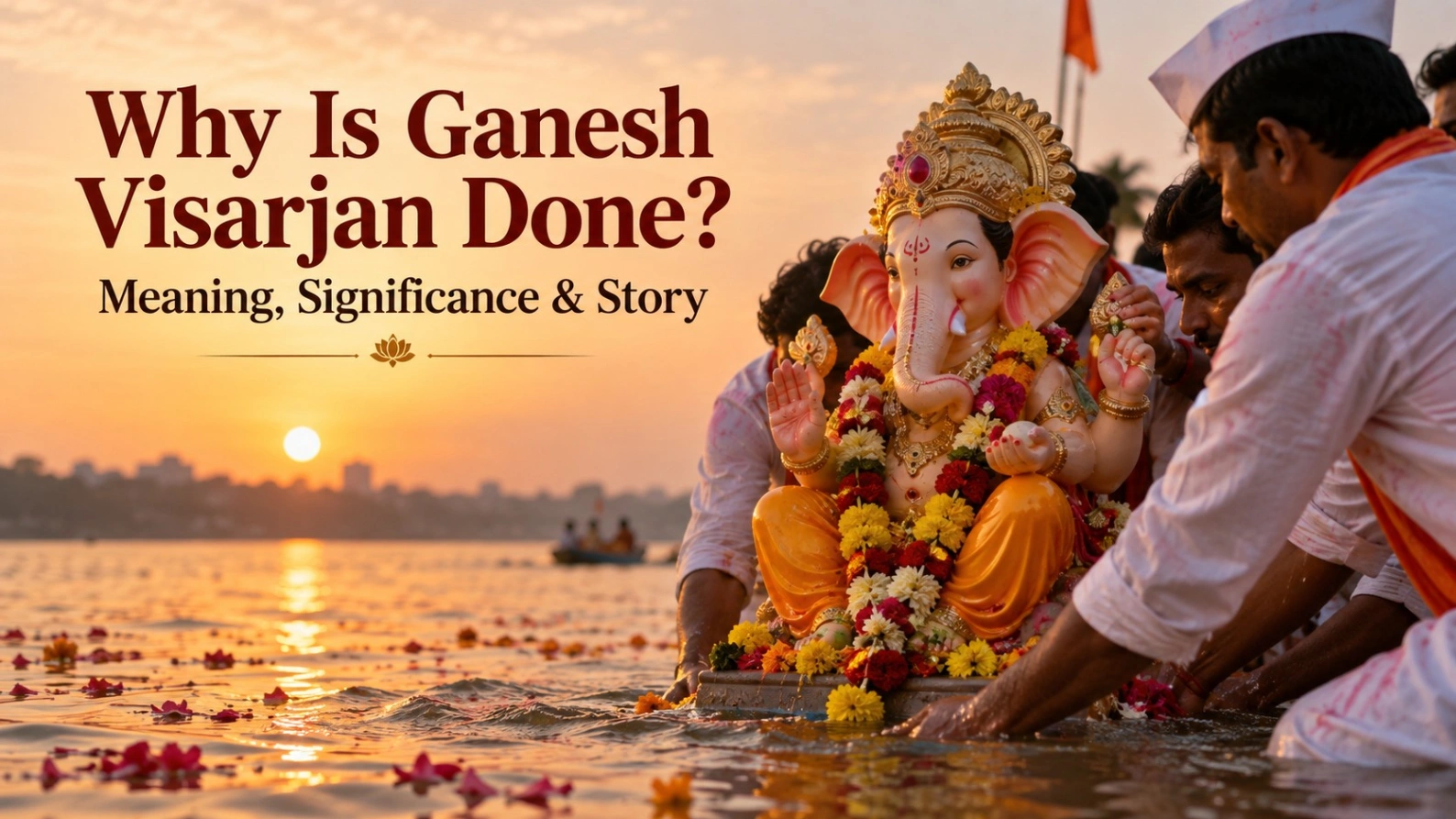
Ganesh Visarjan refers to the ceremonial immersion of the idol of Lord Ganesha in water after the completion of Ganesh Chaturthi worship. The word “Visarjan” broadly refers to respectfully sending forth or concluding the worship of a deity after the prescribed period of devotion.
At the beginning of Ganesh Chaturthi, devotees bring an idol of Lord Ganesha into their home or pandal and perform rituals associated with welcoming the deity. During the festival, the idol becomes the centre of prayers, aarti, offerings, devotional singing, and family celebrations. When the period of worship comes to an end, devotees perform final prayers and prepare to bid farewell to Ganesha.
The idol is then carried toward a river, sea, lake, artificial immersion tank, or another designated place. The journey is often accompanied by dancing, music, drums, prayers, and the famous chant, “Ganpati Bappa Morya, Pudhchya Varshi Lavkar Ya,” which expresses the hope that Lord Ganesha will return again the following year.
This explains the external ritual, but the true Ganpati Visarjan meaning becomes clearer when we look at the symbolism behind the immersion.
Design Your Destiny
Ganesh Visarjan reminds us that transformation often begins with the courage to release what we can no longer hold onto. Design Your Destiny helps you take spiritual wisdom beyond rituals and apply it to your thoughts, choices, relationships and everyday life. Discover how greater awareness can help you move beyond limiting patterns and consciously shape your journey with clarity and purpose.
Start Your Journey Today!Why Is Ganesh Visarjan Done?
The traditional understanding of why Ganpati Visarjan is done is that Lord Ganesha is welcomed into the earthly realm during Ganesh Chaturthi and, after accepting the devotion and prayers of devotees, symbolically returns to his divine abode when the festival ends.
The immersion therefore represents both completion and return. Devotees do not see Visarjan as permanently losing Ganesha. Instead, they lovingly bid farewell with the confidence that Bappa will return again.
At a deeper spiritual level, however, Ganesh Visarjan reminds us that physical forms are temporary. During the festival, devotion is expressed through the visible form of the idol. Devotees decorate it, worship before it, offer food, and develop a strong emotional connection with it. Yet when the time arrives, that very form has to be released.
This teaches an important lesson. Spirituality does not ask us never to become involved with life. It asks us to love, participate, celebrate, and experience life fully without believing that anything in physical form can remain unchanged forever.
That is one of the most profound aspects of Ganesh Visarjan significance.
Why Is the Ganesh Idol Immersed in Water?
One of the most commonly asked questions surrounding the festival is why Ganesh idol is immersed in water.
Traditionally, Ganesh idols were made from natural clay. When such an idol is immersed in water, it gradually dissolves and returns to the natural elements from which it was formed. This physical process has come to represent a deeper spiritual truth: every form emerges, exists for some time, and eventually returns to its source.
The idol provides devotees with a visible form through which they can express devotion. They can look at Ganesha, decorate the idol, offer flowers, perform aarti, and establish an emotional connection. During Visarjan, however, that visible form dissolves.
The deeper message is that the divine itself has not disappeared.
Lord Ganesha is not limited to the clay idol. The wisdom, courage, clarity, humility, and ability to overcome obstacles that Ganesha represents are meant to continue within the devotee even after the idol has been immersed.
In this way, the ritual encourages a movement from external worship toward inner transformation.
Ganesh Visarjan Meaning and the Lesson of Impermanence
The Ganesh Visarjan meaning is closely connected with the idea of impermanence. Human beings naturally become attached to people, possessions, achievements, situations, and experiences. We often wish that the things we love could remain exactly as they are forever.
But life is constantly changing.
Childhood becomes adulthood. Relationships evolve. Careers change. Success comes and goes. Possessions eventually deteriorate. Even our own thoughts, emotions, and physical bodies continue to change.
Ganesh Visarjan symbolically places this reality before us.
For several days, the idol becomes an important part of the home or community. There is joy around its arrival, devotion during its presence, and emotion at the time of departure. Yet eventually the form must be released.
This does not make the celebration meaningless. In fact, its temporary nature may make it even more precious.
Ganesh Visarjan reminds us that something does not need to last forever in order to be meaningful. An experience can be temporary and still leave a permanent impression on our consciousness.
Ganesh Visarjan Significance and the Art of Letting Go
Another important aspect of Ganpati Visarjan significance is the spiritual practice of letting go.
It is easy to speak about detachment when we are not emotionally connected to something. The real challenge begins when we must release something we deeply value.
During Ganesh Chaturthi, devotees develop a strong emotional connection with Bappa. The idol becomes part of daily prayers, family conversations, celebrations, and routines. Then, despite all that love, the devotee must eventually say goodbye.
This makes Visarjan a powerful symbolic lesson in detachment.
Detachment does not mean that love disappears. Devotees do not love Lord Ganesha any less because the idol is immersed. Instead, the ritual teaches that love can continue even when a physical form is no longer present.
This lesson can be applied to many areas of life. We can love without trying to possess. We can value experiences without demanding that they last forever. We can appreciate what life gives us while also developing the strength to release it when the time comes.
Transform Your Life
What Is the Ganesh Visarjan Story?
People searching for the Ganesh Visarjan story may encounter different explanations depending on family, region, and devotional tradition. A commonly shared understanding is that Lord Ganesha visits devotees during Ganesh Chaturthi and returns to Mount Kailash after the celebration concludes.
In this devotional interpretation, Visarjan represents the return journey of Ganesha after receiving the prayers and offerings of his devotees.
This is why the farewell is accompanied not only by sadness but also by celebration and hope. The chant “Pudhchya Varshi Lavkar Ya” means that devotees are already looking forward to welcoming Bappa again the next year.
Ganesh Visarjan therefore contains a beautiful contradiction. It is an ending filled with the promise of another beginning.
Devotees may feel emotional while watching the idol being immersed, yet the farewell is not hopeless. It carries the confidence that the divine presence has not vanished and that Ganesha will once again be welcomed with the same devotion.
Ganesh Visarjan Tradition Through the Years
The Ganesh Visarjan tradition has both private and public dimensions. Ganesh worship has ancient roots, while the large-scale public celebration of Ganesh Chaturthi became particularly prominent in Maharashtra in the late nineteenth century.
Lokmanya Bal Gangadhar Tilak is widely associated with transforming Ganesh Chaturthi into a large public celebration during the colonial period. Community celebrations brought people together around shared worship, cultural programmes, and collective participation.
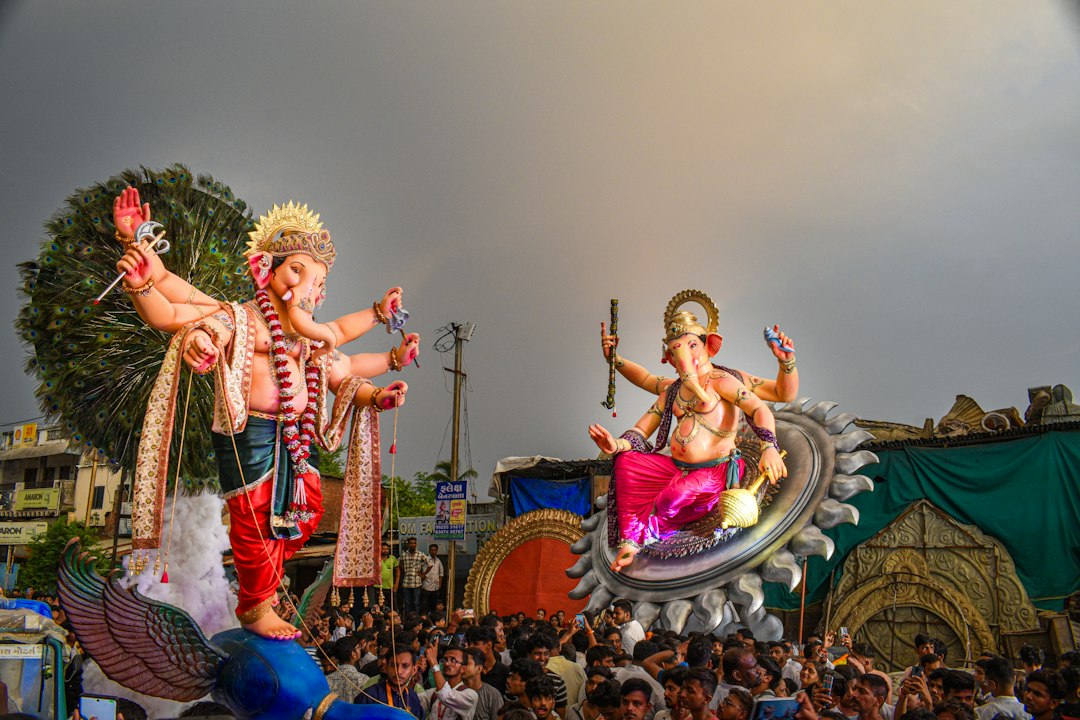
Over time, large public pandals and Visarjan processions became an important feature of Ganeshotsav.
Today, the festival is celebrated across India and by Hindu communities in many parts of the world. Some families install a small Ganesh idol at home, while large community pandals may welcome thousands of devotees.
The scale may differ, but the emotional essence remains similar: welcoming Ganesha, worshipping him with devotion, expressing gratitude, and respectfully completing the celebration through Visarjan.
Understanding the Ganesh Visarjan Ritual
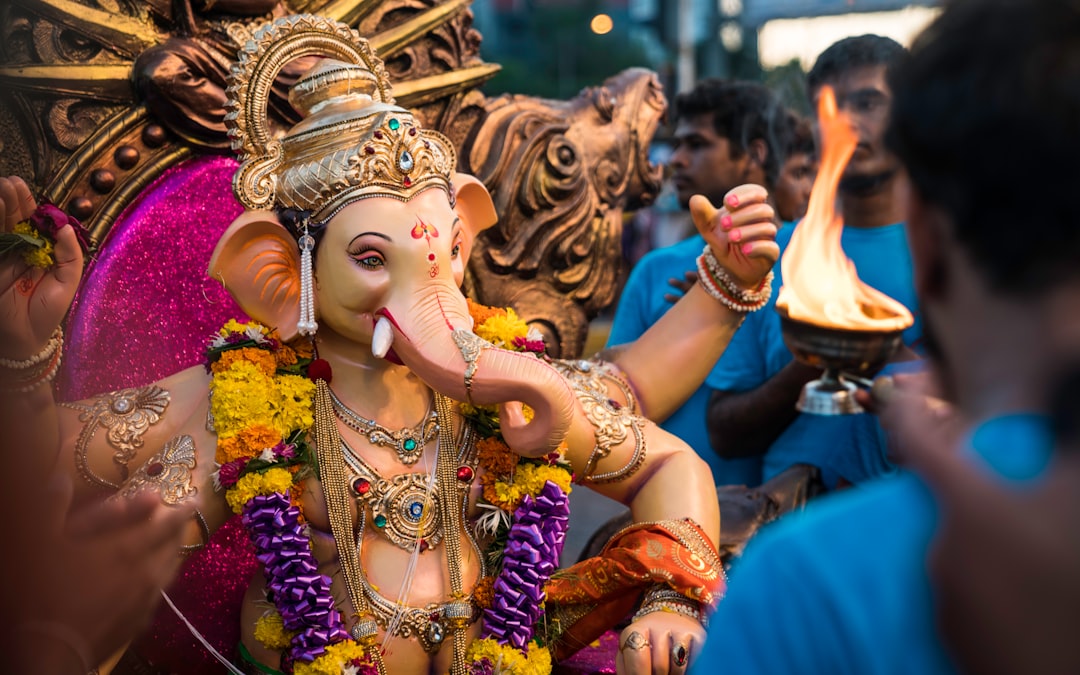
The Ganesh Visarjan ritual usually begins with final prayers and aarti. Devotees offer flowers, sweets, and other traditional offerings while expressing gratitude to Lord Ganesha for his presence and blessings.
In many traditions, a concluding puja is performed before the idol is moved from its place of worship. Family members or devotees may gather together for the final aarti before beginning the procession toward the immersion site.
The journey itself often becomes a celebration. Devotees sing, dance, play drums, and chant the name of Ganesha. Despite the emotional farewell, the atmosphere is filled with energy because Visarjan is not considered a tragic ending.
The idol is eventually immersed respectfully in water.
Many families perform Visarjan on different days depending on their traditions. Some may keep the idol for a shorter period, while the large concluding immersion of the traditional ten-day festival is associated with Anant Chaturdashi.
The precise customs may differ from one household or region to another, but gratitude and respectful farewell remain central to the ritual.
Ganesh Visarjan and the Cycle of Creation and Dissolution
The process of creating a clay idol and later dissolving it in water beautifully represents the cycle of creation and dissolution.
The clay begins without a specific form. An artisan shapes it into Lord Ganesha. The form is decorated, worshipped, loved, and eventually immersed. Slowly, the clay dissolves and loses the shape that once made it recognizable as an idol.
Yet the material itself has not disappeared. It has simply changed form.
This symbolism reflects a larger spiritual understanding of existence. Forms continuously arise and dissolve. Nothing in the material world remains exactly the same forever.
Ganesh Visarjan therefore invites devotees to look beyond appearances and understand the essence behind the form.
The idol dissolves, but devotion continues. The festival ends, but its teachings remain. The visible presence of Bappa disappears, but the values represented by Ganesha can continue to guide the devotee.
What Ganesh Visarjan Can Teach Us About Everyday Life
The true value of a spiritual ritual becomes evident when its meaning begins influencing everyday life.
Ganesh Visarjan can teach us to accept endings without believing that every ending is a loss.
Sometimes a phase of life must end so that something new can begin. A habit may need to be released. An old way of thinking may no longer serve us. An expectation may need to be surrendered. A difficult experience may need to be accepted before we can move forward.
In such moments, the symbolism of Visarjan becomes deeply relevant.
Letting go does not mean rejecting what came before. It means honouring the experience while recognising that life continues to move.
Just as devotees say goodbye to Ganesha with gratitude rather than resentment, we too can learn to release certain phases of life with greater awareness.
Living The Gita Movement
The Bhagavad Gita is not merely something to be read or listened to. It is the art of awakening within oneself and experiencing the truth of life. The vision of the Living the Gita Movement is to bring the wisdom of the Gita out of books and transform it into a lived experience.
Join NowWhy Ganesh Visarjan Is More Than the End of Ganesh Chaturthi
If Ganesh Visarjan were merely about ending the festival, its emotional and spiritual impact would probably not be so powerful.
Its deeper significance lies in what happens after the idol is gone.
The question becomes whether the qualities associated with Ganesha remain alive within us.
Lord Ganesha represents wisdom. Can we approach problems more wisely?
He is known as Vighnaharta, the remover of obstacles. Can we recognise and overcome the obstacles created by our own fear, ego, confusion, or attachment?
Ganesha is also associated with auspicious beginnings. Can an ending become an opportunity for a new beginning?
If the festival inspires these changes within us, then Visarjan has not removed Ganesha from our lives. It has moved the teaching from an external form into our inner awareness.
The Real Meaning and Significance of Ganesh Visarjan
So, why is Ganesh Visarjan done?
At the level of tradition, it marks the completion of Ganesh Chaturthi worship and the respectful farewell of Lord Ganesha, symbolising his return to his divine abode.
At a deeper spiritual level, Ganesh Visarjan represents impermanence, transformation, detachment, gratitude, and renewal.
The idol is immersed, but faith remains. The visible form dissolves, but the divine qualities it represents can continue within us. The festival ends, but its wisdom does not have to end with it.
Perhaps this is the most beautiful Ganesh Visarjan significance of all.
We welcome Bappa with joy. We worship him with love. We release his physical form with gratitude. And then we carry his wisdom forward into our own lives.
Ganesh Visarjan therefore teaches us not merely how to say goodbye, but how to understand endings differently. Every ending can contain gratitude for what has been, acceptance of what is changing, and faith in what is yet to come.
Ganpati Bappa Morya. Pudhchya Varshi Lavkar Ya.
Personal Session
Book a personal session for one-to-one guidance tailored to the questions, challenges and inner conflicts you are currently facing. Take the next step towards greater self-awareness, clarity and conscious living with a personal guidance session.
Book NowRead Latest Articles