
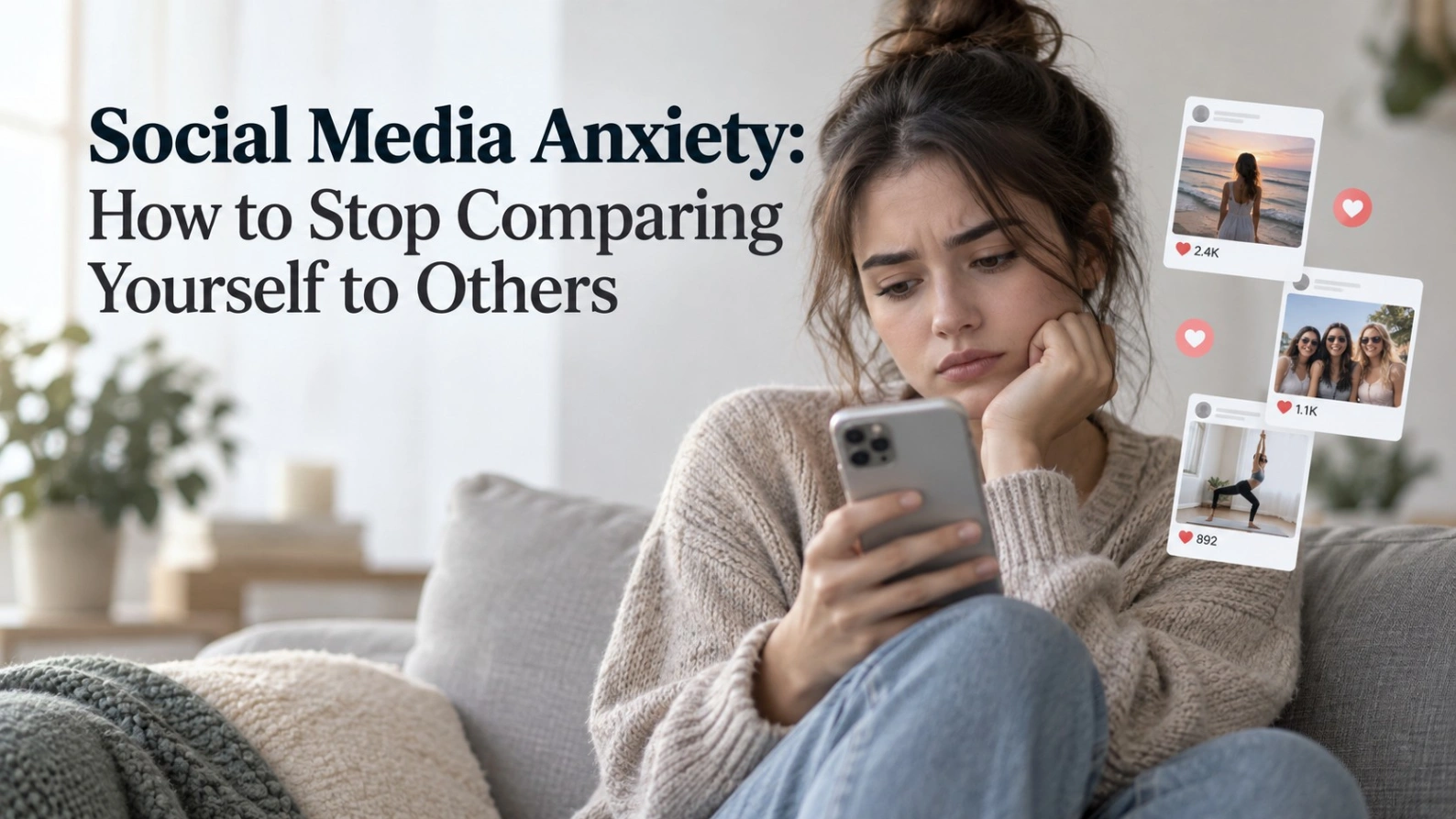
You open Instagram for five minutes and suddenly someone your age appears to have a better career, another person is travelling across Europe, someone has announced an engagement, someone else has transformed their body, and another creator seems to be living the kind of life you thought you would have by now.
Nothing in your own life has actually changed during those five minutes, yet somehow you feel behind.
This is one of the most common experiences behind social media anxiety. Social platforms can connect us, entertain us, teach us, and expose us to inspiring people and ideas. At the same time, they give us almost unlimited opportunities to compare our appearance, relationships, careers, lifestyles, popularity, and achievements with other people's lives.
The problem is not simply that other people have things we want. The deeper problem begins when comparison changes the way we see ourselves.
A friend's promotion becomes evidence that our career is moving too slowly. Someone else's holiday makes our weekend feel boring. A perfectly edited photograph makes us question our appearance. An engagement announcement creates anxiety about our relationship status. Seeing someone's business succeed can suddenly make our own progress appear insignificant.
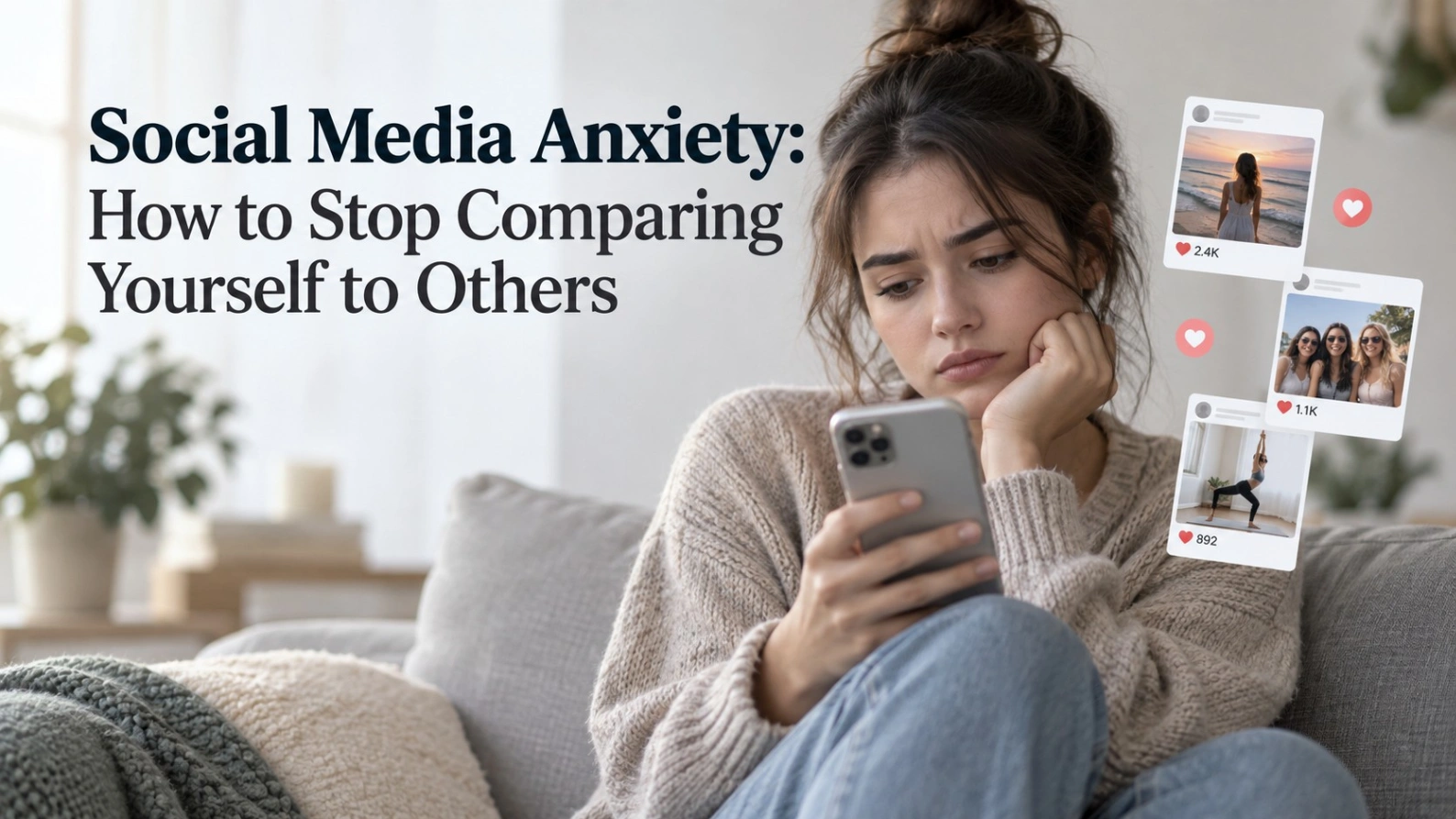
This is how social media comparison anxiety can quietly enter everyday life.
Research increasingly supports the connection between problematic social media use, anxiety, social comparison, fear of missing out, and self-esteem. A 2024 systematic review and meta-analysis covering 209 studies and more than 252,000 participants found positive associations between problematic social networking use and several forms of anxiety, including generalized anxiety, social anxiety and fear of missing out. These findings describe associations rather than proving that social media alone causes anxiety, but they highlight how closely these experiences can overlap.
Understanding that connection is the first step. The next is learning how to stop comparing yourself to others without believing that the only solution is deleting every social media app forever.
Why Social Media Makes Comparison So Easy
Human beings have always compared themselves with others. Social media did not invent comparison. What it changed was its frequency, scale and accessibility.
Earlier, your comparison group might have included classmates, relatives, colleagues or neighbours. Today, you can compare your life with thousands of people within minutes.
More importantly, you are rarely comparing like with like.
You may be comparing an ordinary Tuesday afternoon in your own life with someone's best photograph from a two-week vacation. You compare your unfiltered reflection with someone's carefully selected image. You compare the uncertain middle of your career with somebody else's achievement announcement.
Social media frequently gives us access to outcomes without showing us the complete journey behind them.
You see the promotion, not every rejection before it. You see the relationship anniversary, not every disagreement. You see the successful business, not the years of uncertainty. You see the fitness transformation, not necessarily the routine, genetics, lighting, editing or sacrifices behind the image.
Yet the mind often treats what appears on the screen as complete reality.
That is when comparing yourself to others on social media can become emotionally exhausting.
Design Your Destiny
Your life was never meant to be measured against someone else's timeline. Design Your Destiny helps you turn your attention inward, understand the patterns shaping your thoughts and choices, and begin living with greater awareness, purpose and clarity.
Start Your Transformation Today!Social Media Comparison and Self-Esteem
Comparison becomes especially damaging when another person's success is interpreted as evidence of our inadequacy.
Someone else's beauty does not logically make you less attractive. Their promotion does not reduce your potential. Their relationship does not make your life incomplete. Their popularity does not determine your worth.
But emotionally, comparison can make it feel that way.
A 2024 study involving university students examined fear of missing out, social comparison, self-esteem and problematic social media use. The researchers found associations between greater fear of missing out, greater social comparison and lower self-esteem, with social comparison and self-esteem helping explain the relationship between FOMO and problematic social media use.
This helps explain why social media and low self esteem can sometimes reinforce each other.
If you already feel uncertain about yourself, you may seek external reassurance through likes, comments, views and followers. But once those metrics become measures of self-worth, every low-performing post can feel personal.
The question changes from, "Did people engage with this post?" to, "Do people like me?"
That is a much heavier question for any app to answer.
Why We Compare Our Behind-the-Scenes With Someone Else's Highlights
One of the most important ways to reduce comparison anxiety is to remember that social media is selective.
This does not mean everything online is fake. Many people authentically share their lives. The issue is that almost everyone naturally chooses what to show.
Think about your own camera roll. You probably do not upload every photograph. You select one where the lighting is good, the angle feels right, and you like how you look.
Other people are doing the same.
Yet once their selected photograph appears on our screen, the mind often forgets this process.
We compare their most presentable moment with our complete reality—the good days, boring days, confused days, failures, insecurities and unfinished goals.
It is an unfair comparison because the information available on both sides is fundamentally different.
When you recognise this, the question changes from "Why is their life so much better than mine?" to "How much do I actually know about their life from this post?"
Usually, the answer is: very little.
How to Stop Comparing Yourself to Others
The goal is not to become someone who never notices another person's life. Comparison thoughts may still appear. The more realistic goal is to stop automatically believing every comparison your mind creates.
When you notice yourself thinking, "She is doing better than me," pause and examine the statement.
Better in what way?
Do you know her entire situation?
Are you comparing two people with different opportunities, challenges, timelines, priorities and circumstances?
Most importantly, why does another person's progress need to become evidence against your own?
This small pause interrupts automatic comparison.
You can admire someone's success without turning it into criticism of yourself.
Instead of thinking, "She has what I don't have," you might think, "Her achievement shows that this kind of outcome is possible."
The external situation has not changed. Your relationship with it has.

Stop Measuring Your Life Through Someone Else's Timeline
Social media creates the illusion that there is one correct timeline for life.
By a certain age you should have a particular salary. You should be married. You should own a home. You should travel internationally. You should look a certain way. You should have established your career.
Then you encounter someone younger who appears to have achieved one of those milestones, and suddenly your own journey seems late.
But life is not one standardized race.
People begin from different circumstances. They value different things. They face different challenges. They receive different opportunities. Most importantly, they are trying to build different lives.
If two people are heading toward different destinations, comparing how quickly they are travelling makes little sense.
One of the healthiest answers to how to stop comparison anxiety is therefore to become clearer about your own definition of progress.
Ask yourself what actually matters to you when nobody else is watching.
Not what looks impressive online. Not what receives applause. Not what your peer group is currently achieving.
What kind of life genuinely feels meaningful to you?
Clarity about your own direction makes other people's timelines less threatening.
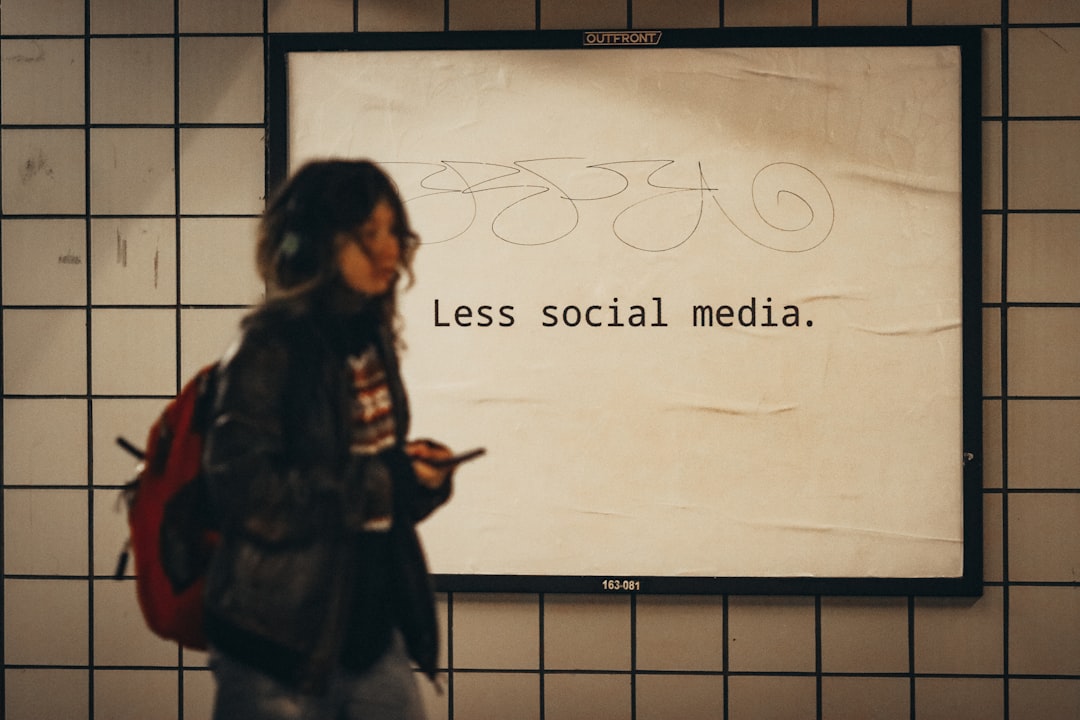
Protect Your Mind From Unnecessary Comparison
You do not need to follow every account that consistently makes you feel inadequate.
Your feed is not something that simply happens to you. To some extent, you can shape it.
Notice how you feel after consuming certain kinds of content.
Some accounts may motivate you. Some educate you. Some make you laugh. Others may repeatedly leave you feeling inadequate, angry, anxious or obsessed with things you previously did not even want.
Unfollowing, muting or limiting exposure is not necessarily jealousy. Sometimes it is simply awareness.
Research involving young women has also found an association between more passive social networking use and greater psychological anxiety, while highlighting the roles of social comparison and self-concept.
That does not mean scrolling automatically produces anxiety for everyone. It does suggest that being conscious about how you use social platforms matters.
Ask yourself whether you are using social media intentionally or consuming whatever the algorithm places in front of you.
There is a major difference.
Living The Gita Movement
Living The Gita Movement
The Bhagavad Gita is not merely something to be read or listened to. It is the art of awakening within oneself and experiencing the truth of life. The vision of the Living the Gita Movement is to bring the wisdom of the Gita out of books and transform it into a lived experience.
Join NowStop Turning Likes Into a Measure of Self-Worth
A number on a screen is one of the easiest things to measure and one of the poorest ways to measure a human being.
Likes cannot measure kindness. Followers cannot measure wisdom. Views cannot measure character. Comments cannot measure the quality of your relationships.
Yet social platforms convert attention into visible numbers, and visible numbers invite comparison.
Someone has more followers. Someone's photograph received more likes. Someone's video went viral.
Once the mind begins measuring worth through these numbers, peace becomes dependent on an algorithm.
Try separating what you create from how people respond to it.
You can ask whether you expressed yourself honestly, created something useful, documented a meaningful memory or shared something you genuinely enjoyed.
Those are things you can influence.
How many people happen to see or approve of it is not entirely under your control.
What the Bhagavad Gita Can Teach Us About Online Comparison
This is where the wisdom of the Bhagavad Gita becomes surprisingly relevant to modern digital life.
Bhagavad Gita 2.47 teaches a principle commonly understood as focusing on one's action rather than becoming attached to the fruits of that action.
Social media constantly tempts us to reverse this principle.
Instead of asking, "What am I creating?" we ask, "How many likes did I get?"
Instead of asking, "Am I growing?" we ask, "Am I growing faster than that person?"
Instead of asking, "Is this meaningful to me?" we ask, "Will other people approve?"
The Gita redirects attention from uncontrollable external outcomes toward conscious action.
That can mean posting something because you genuinely value it without repeatedly checking how people respond. It can mean working toward your career goals without allowing somebody else's LinkedIn announcement to destroy your confidence. It can mean caring for your health without turning someone else's body into the standard for your own.
The teaching is not to become passive. It is to become less controlled by external validation.
Your Mind Can Become Your Friend or Your Enemy
Bhagavad Gita 6.5 presents another powerful idea: the mind can become one's friend, but it can also work against oneself.
That teaching feels remarkably contemporary when applied to social media.
The same platform can inspire one person and trigger relentless comparison in another. Even the same content can affect you differently depending on your current state of mind.
The deeper question is therefore not only, "What am I seeing?" but "What is my mind doing with what I am seeing?"
A photograph appears.
The photograph itself may last three seconds on your screen.
But your mind may spend the next hour constructing a story: "Everyone is happier than me. I'm behind. My life isn't exciting enough. I should be doing more."
Awareness allows you to notice when this story begins.
You do not need to fight every thought. You can simply recognise: "This is comparison. This is not the complete truth about my life."
That small distance between you and the thought is powerful.
Turn Comparison Into Self-Awareness
Comparison is not always useless. Sometimes it reveals something important.
If someone's career makes you jealous, ask what specifically you admire. Perhaps you want more creative freedom.
If someone's travel photographs bother you, perhaps you genuinely want to prioritise experiences.
If someone's fitness transformation triggers you, maybe your own health has been receiving less attention than you would like.
Instead of remaining stuck in envy, convert comparison into information.
Ask, "What is this feeling trying to show me about what I value?"
Then return attention to your own action.
That is far more productive than spending hours analysing another person's life.
Living the Gita in the Social Media Age
Living the Gita means taking wisdom out of theory and applying it where our minds actually struggle.
Today, one of those places is the smartphone screen.
You are living the Gita when another person's success appears on your feed and you can celebrate it without using it as evidence against yourself.
You are living the Gita when your post receives fewer likes than expected and your self-worth remains intact.
You are living the Gita when you notice comparison arising and consciously return attention to your own action.
You are living the Gita when you stop asking the digital world to continuously prove that you are enough.
The goal does not have to be abandoning social media.
The deeper freedom is being able to use social media without allowing social media to decide how you feel about yourself.
Finding Peace Beyond Comparison
If you are struggling with social media anxiety, remember that somebody else's visible success does not represent your failure.
You are seeing fragments of other people's lives while living every detail of your own.
Those two things cannot be fairly compared.
Your life does not become less meaningful because someone else's looks exciting. Your progress does not disappear because somebody is moving faster. Your appearance does not lose value because another person photographs beautifully. Your worth does not increase when a post performs well or decrease when it does not.
The healthiest relationship with social media begins when you stop using it as a scoreboard.
Observe what you consume. Question comparison thoughts. Define success for yourself. Protect your attention. Focus on the actions available to you and release the need to continuously measure yourself against someone else's results.
The world will always give you someone to compare yourself with.
Freedom begins when you no longer need to.
Personal Session
Book a personal session for one-to-one guidance tailored to the questions, challenges and inner conflicts you are currently facing. Take the next step towards greater self-awareness, clarity and conscious living with a personal guidance session.
Book NowRead Latest Articles