
Every year, Dussehra fills India with towering effigies of Ravana, colourful processions, Ramleela performances, prayers, fairs and celebrations. But beyond the spectacle lies a deeper question: why is Dussehra celebrated?
Dussehra, also known as Vijayadashami, represents the triumph of righteousness over wrongdoing, wisdom over ego and light over darkness. The most widely known Dussehra story comes from the Ramayana and commemorates Lord Rama's victory over Ravana. In other traditions, Vijayadashami also marks Goddess Durga's victory over the buffalo demon Mahishasura.
Therefore, the Dussehra significance goes far beyond remembering an ancient battle. Spiritually, the festival asks us to recognize and conquer the negative tendencies within ourselves.
Understanding the spiritual significance of Dussehra can transform the festival from a yearly celebration into a powerful reminder of self-awareness, courage, dharma and inner victory.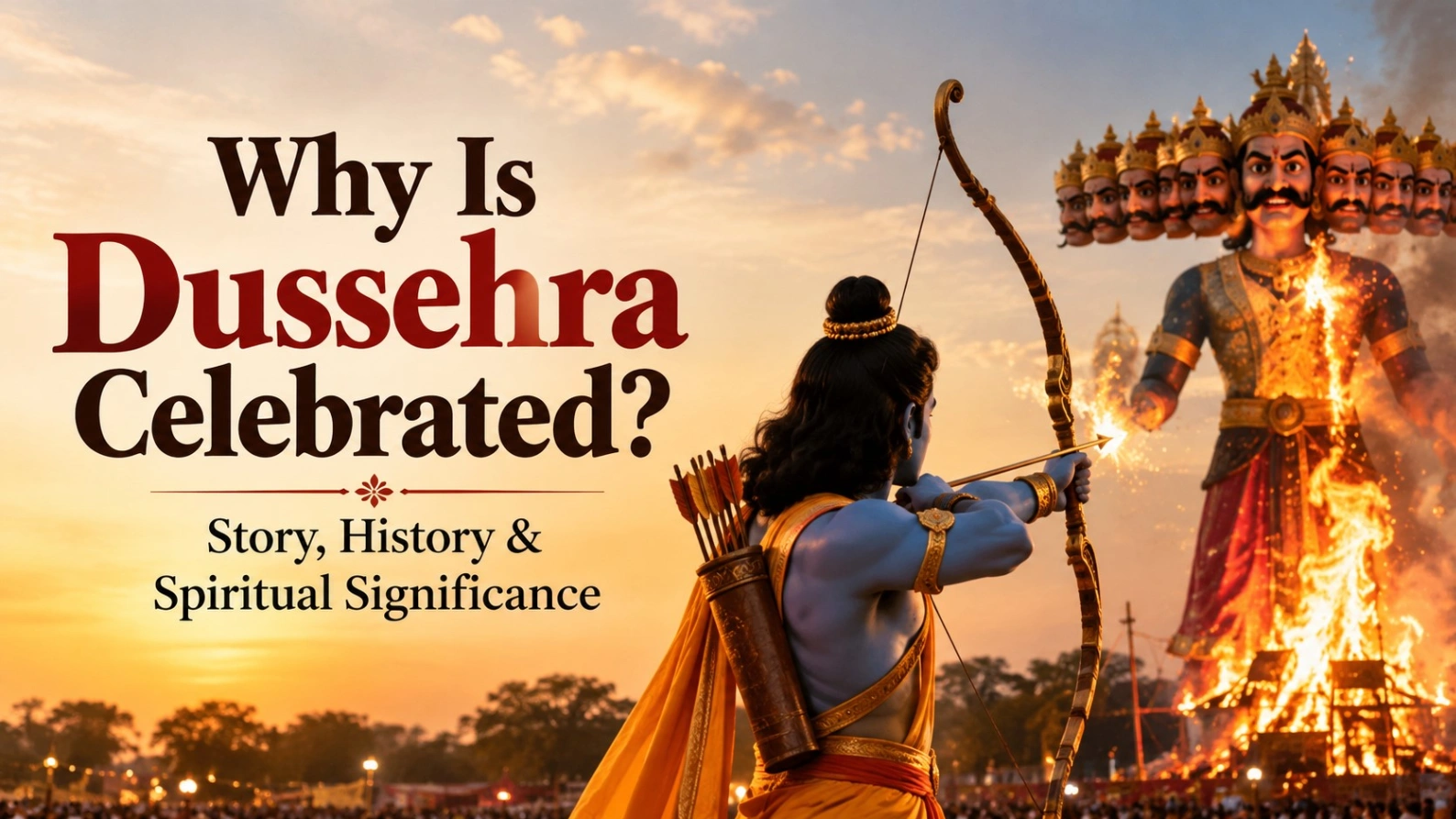
Why Is Dussehra Celebrated?
Dussehra is celebrated to commemorate the victory of Lord Rama over Ravana and symbolize the triumph of good over evil. Vijayadashami is also associated with Goddess Durga's victory over Mahishasura. Spiritually, the festival reminds us to overcome ego, anger, greed and other negative tendencies within ourselves.
The word Vijayadashami combines two Sanskrit words: Vijaya, meaning victory, and Dashami, referring to the tenth lunar day.
The festival is observed on the tenth day following the nine nights of Navratri.
For millions of people, the answer to why do we celebrate Dussehra is therefore both historical and spiritual. It celebrates an outer victory recorded in sacred traditions while encouraging an inner victory in our own lives.
Design Your Destiny
Dussehra reminds us that the most important battles are often not outside us, but within. If you want to understand your patterns, rise above limiting beliefs and consciously create a more peaceful and purposeful life, Design Your Destiny can help you begin that inner journey. Move from reacting unconsciously to living with greater awareness, clarity and inner strength.
Start Your Journey Today!Dussehra Story: Lord Rama's Victory Over Ravana
The best-known Dussehra story comes from the Ramayana.
According to the epic, Ravana, the powerful king of Lanka, abducted Sita, the wife of Lord Rama. Rama then began a journey to rescue her with the support of Lakshmana, Lord Hanuman and an army of vanaras.
After an intense battle, Rama ultimately defeated Ravana.
Ravana was extraordinarily learned, powerful and accomplished. Yet his wisdom did not protect him from the consequences of arrogance, desire and misuse of power.
This is what gives the story lasting spiritual relevance.
Rama represents adherence to dharma, discipline, courage and righteous action, while Ravana's downfall represents what can happen when knowledge is dominated by ego.
The victory of Rama over Ravana therefore became one of India's most enduring symbols of the victory of righteousness over adharma.
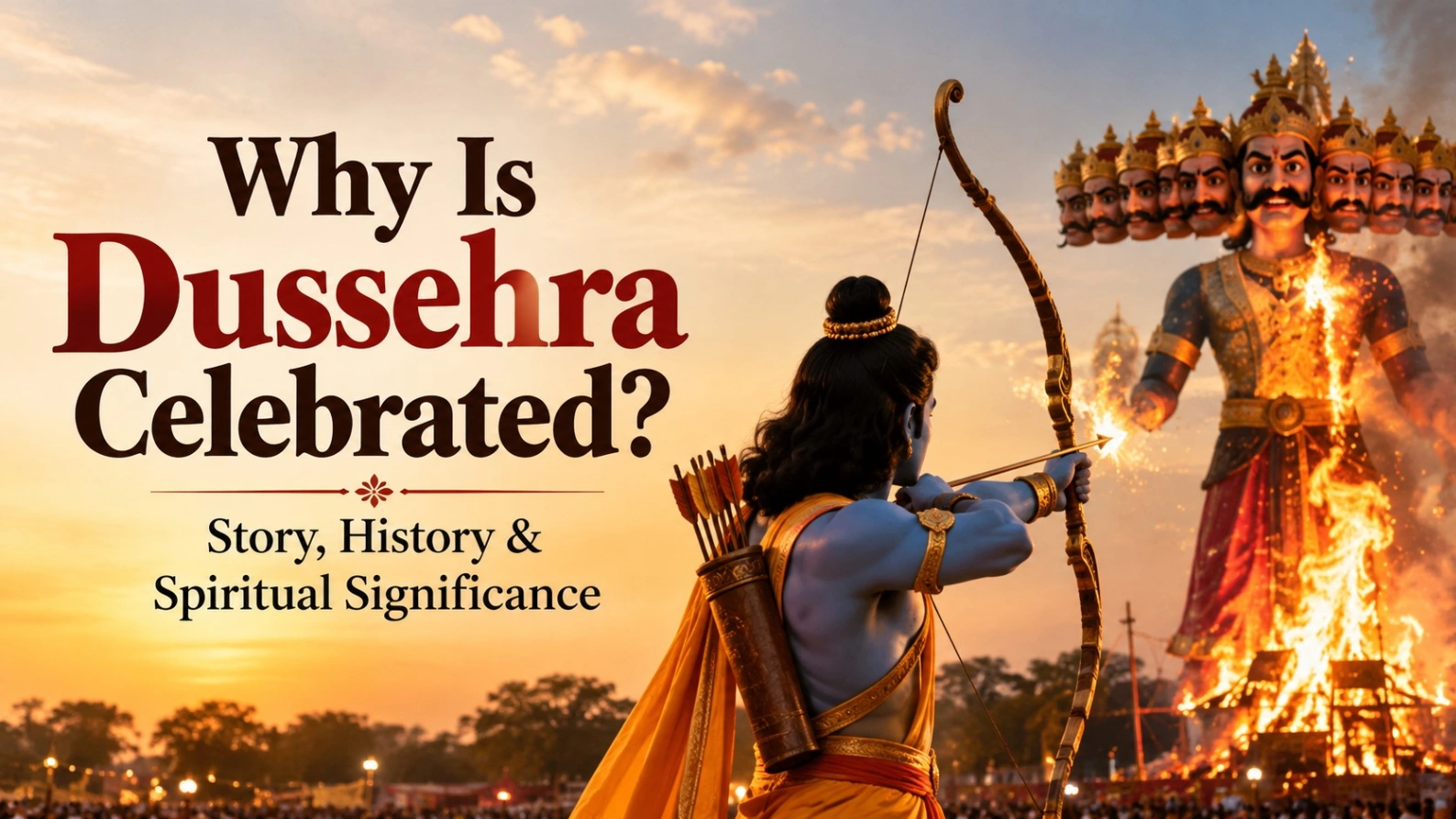
In many parts of North India, this story is retold through Ramleela performances during the days leading to Dussehra. On Vijayadashami, large effigies of Ravana, Meghnad and Kumbhakarna are traditionally burned.
The burning of Ravana symbolizes the destruction of negative forces.
Why Is Ravana Burnt on Dussehra?
One of the most recognizable Dussehra traditions is Ravana Dahan.
Large effigies of Ravana are burned as crowds gather to witness the symbolic victory of Lord Rama.
But Ravana Dahan carries a message beyond the destruction of one mythological character.
Ravana's ten heads are often interpreted symbolically as representing negative human tendencies. Different spiritual traditions describe these tendencies differently, but they commonly include qualities such as:
Ego
Anger
Greed
Attachment
Desire
Jealousy
Pride
Hatred
Delusion
Self-centredness
This interpretation gives the ritual a deeply personal meaning.
Instead of merely watching an effigy burn, a spiritual seeker can ask:
Which Ravana within me needs to be overcome?
That question captures the deeper spiritual significance of Dussehra.
Dussehra History and Origin
The Dussehra history is connected with multiple religious and regional traditions across India.
The celebration associated with Lord Rama is deeply rooted in the Ramayana tradition. Over centuries, communities across the country developed different ways of observing the festival.
In North India, Dussehra is strongly associated with Ramleela and Ravana Dahan.
In parts of eastern India, Vijayadashami marks the culmination of Durga Puja and the farewell of Goddess Durga.
In southern India, traditions may include worship of tools, books, instruments and objects connected with one's profession and learning.
In several western regions, Vijayadashami is associated with auspicious beginnings, social gatherings and traditional worship.
These differences show that the Dussehra festival significance is broader than one ritual.
Across traditions, a common theme remains:
Divine or righteous power ultimately triumphs over destructive forces.
Dussehra 2026 Date and Time: Vijayadashami Story, Rituals & Significance
Vijayadashami Story: Goddess Durga and Mahishasura
The Vijayadashami story is also closely connected with Goddess Durga.
According to Hindu tradition, Mahishasura was a powerful demon whose growing strength created suffering and imbalance. Goddess Durga battled him and ultimately defeated him.
Her victory is celebrated as the triumph of Shakti, divine power, over destructive forces.
This is why the nine nights of Navratri culminate in Vijayadashami.
Symbolically, Goddess Durga's victory reminds devotees that spiritual strength is not passive. Awareness, courage and right action are sometimes necessary to overcome ignorance and negativity.
Thus, whether one looks at Rama's victory over Ravana or Durga's victory over Mahishasura, the underlying Vijayadashami significance remains remarkably similar.
Both narratives represent the restoration of balance and dharma.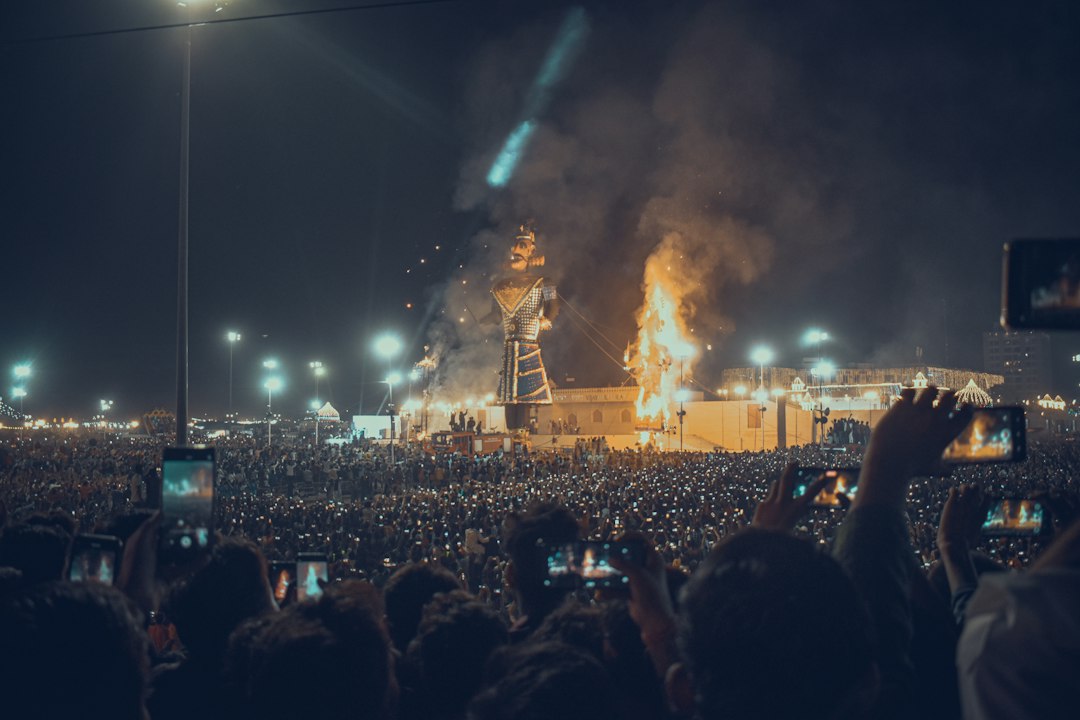
Dussehra Meaning: What Does the Festival Really Symbolize?
The deeper Dussehra meaning lies in transformation.
The festival teaches that the greatest battle is not always between two external forces. Often, it takes place within the human mind.
We may carry our own versions of Ravana through:
Ego
Fear
Resentment
Anger
Excessive attachment
Comparison
Greed
Negative thinking
Dussehra becomes spiritually meaningful when we identify these tendencies and consciously work to overcome them.
Therefore, burning Ravana can be understood as a symbolic declaration:
I choose awareness over unconsciousness.
The festival becomes not merely the destruction of evil but the awakening of a better way of living.
Spiritual Significance of Dussehra
The spiritual significance of Dussehra can be understood through several powerful lessons.
1. Good and Evil Exist Within Us
It is easy to divide the world into good people and bad people.
Spirituality asks a more difficult question: what tendencies are operating within us?
Dussehra encourages introspection instead of merely judging others.
Our own anger, pride, jealousy or attachment can disturb our peace long before they affect anybody else.
Real victory begins with awareness.
2. Knowledge Without Humility Is Incomplete
Ravana is traditionally portrayed as highly learned and accomplished.
Yet knowledge alone did not lead him toward liberation.
This offers an important spiritual lesson: intelligence without humility can strengthen the ego instead of dissolving it.
True wisdom changes how we live.
It creates awareness, compassion and balance.
3. Dharma May Require Courage
Lord Rama's story reminds us that following what is right is not always convenient.
Dharma can demand patience, sacrifice, courage and discipline.
The Dussehra significance therefore includes choosing what is right even when the easier option is more attractive.
4. The Greatest Ravana Is the Ego
From a spiritual perspective, ego is not merely confidence or self-respect.
It is excessive identification with the idea of “I,” “me” and “mine.”
When ego dominates, we become overly attached to recognition, control and being right.
Dussehra invites us to observe this inner Ravana.
When awareness grows, the ego loses some of its control over our decisions.
5. Every Ending Can Become a New Beginning
Vijayadashami is traditionally considered an auspicious occasion for beginning meaningful activities.
Spiritually, this represents renewal.
You do not have to remain trapped in an old pattern simply because it has existed for years.
Every moment of awareness creates the possibility of a new beginning.
Dhanteras 2026 Date and Time: Puja Muhurat & Shubh Muhurat
Why Is Dussehra Celebrated After Navratri?
Another commonly searched question is: why is Dussehra celebrated after Navratri?
Navratri consists of nine nights devoted to different forms of the Divine Feminine. Vijayadashami follows on the tenth day and represents victory or culmination.
Symbolically, the sequence carries a beautiful meaning.
The nine days may be understood as a journey of purification, devotion and awakening, while Vijayadashami represents the victory that follows inner transformation.
The message is that spiritual victory is not accidental.
It emerges through conscious effort.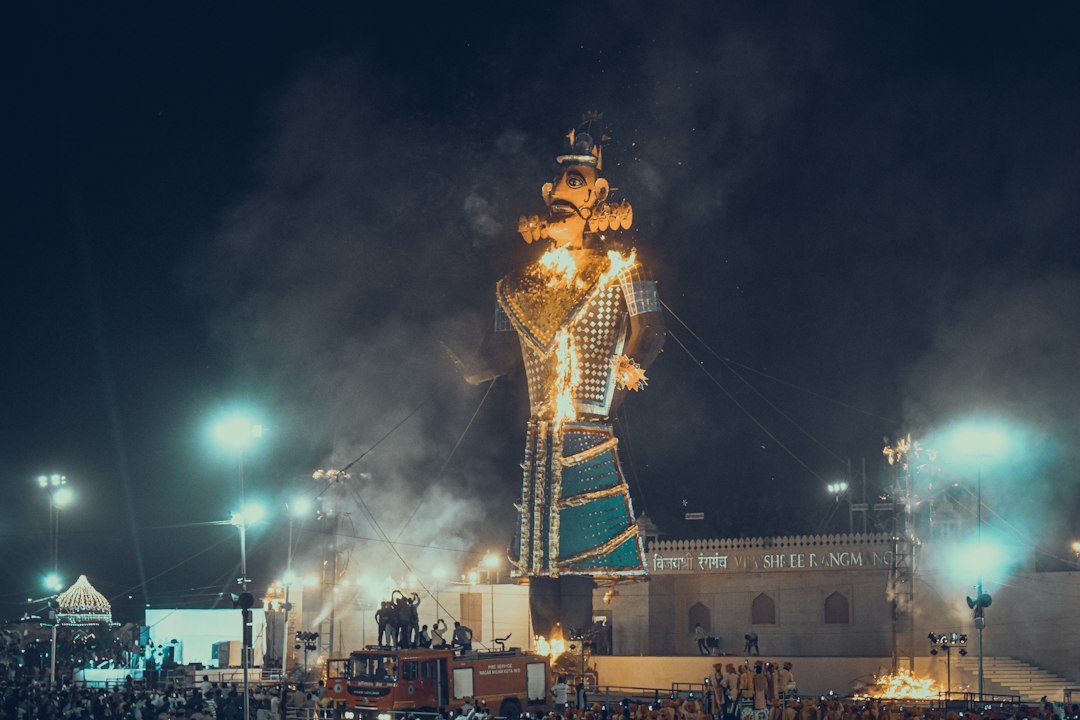
Why Do We Celebrate Dussehra in Modern Life?
The question why Dussehra is celebrated becomes even more relevant when we apply its teachings to contemporary life.
Modern Ravanas may not appear with ten physical heads.
They may appear as:
Constant comparison
Obsession with status
Anger
Excessive material attachment
Addiction to validation
Dishonesty
Jealousy
Negative self-talk
Uncontrolled desires
Lack of compassion
Dussehra invites us to identify these patterns.
A meaningful celebration can therefore include more than attending a fair or watching Ravana Dahan.
We can consciously decide to let go of one destructive habit and cultivate one positive quality.
That makes the festival personal.
How to Apply the Spiritual Message of Dussehra
You can bring the teachings of Vijayadashami into everyday life through a few simple practices.
Observe your inner Ravana
Identify one quality that repeatedly creates suffering in your life.
It might be anger, ego, fear or attachment.
Do not condemn yourself for it. Become aware of it.
Choose one quality to cultivate
Replace anger with patience, jealousy with gratitude, fear with courage or ego with humility.
Transformation becomes easier when we focus not only on what we want to remove but also on what we want to develop.
Practice conscious action
Before reacting in a difficult situation, pause.
Ask yourself:
“Is this reaction coming from awareness or ego?”
Even a short pause can change the outcome.
Reflect on dharma
Ask whether your choices are aligned with your deeper values.
Dharma is not only a philosophical idea; it is expressed through everyday actions.
Dussehra Festival Significance: Victory Begins Within
The lasting Dussehra festival significance lies in its universal spiritual message.
Lord Rama defeating Ravana represents righteousness overcoming destructive power.
Goddess Durga defeating Mahishasura represents divine strength overcoming chaos.
But at an individual level, these stories point toward something even more intimate.
Every human being faces an internal battle between awareness and unconscious habits.
Dussehra reminds us that awareness can win.
The festival therefore does not merely say:
“Good will defeat evil.”
Its deeper message is:
“Become conscious enough to recognize what needs to be transformed within you.”
When the inner Ravana falls, clarity rises.
That may be the most meaningful Vijayadashami of all.
Personal Session
Sometimes we know what needs to change but struggle to understand why the same emotional patterns, fears or conflicts keep returning. A personal session can help you explore these patterns more deeply and receive guidance for your individual spiritual journey. Book a personal session and take a conscious step toward greater clarity, balance and inner freedom.
Book NowRead Latest Articles