
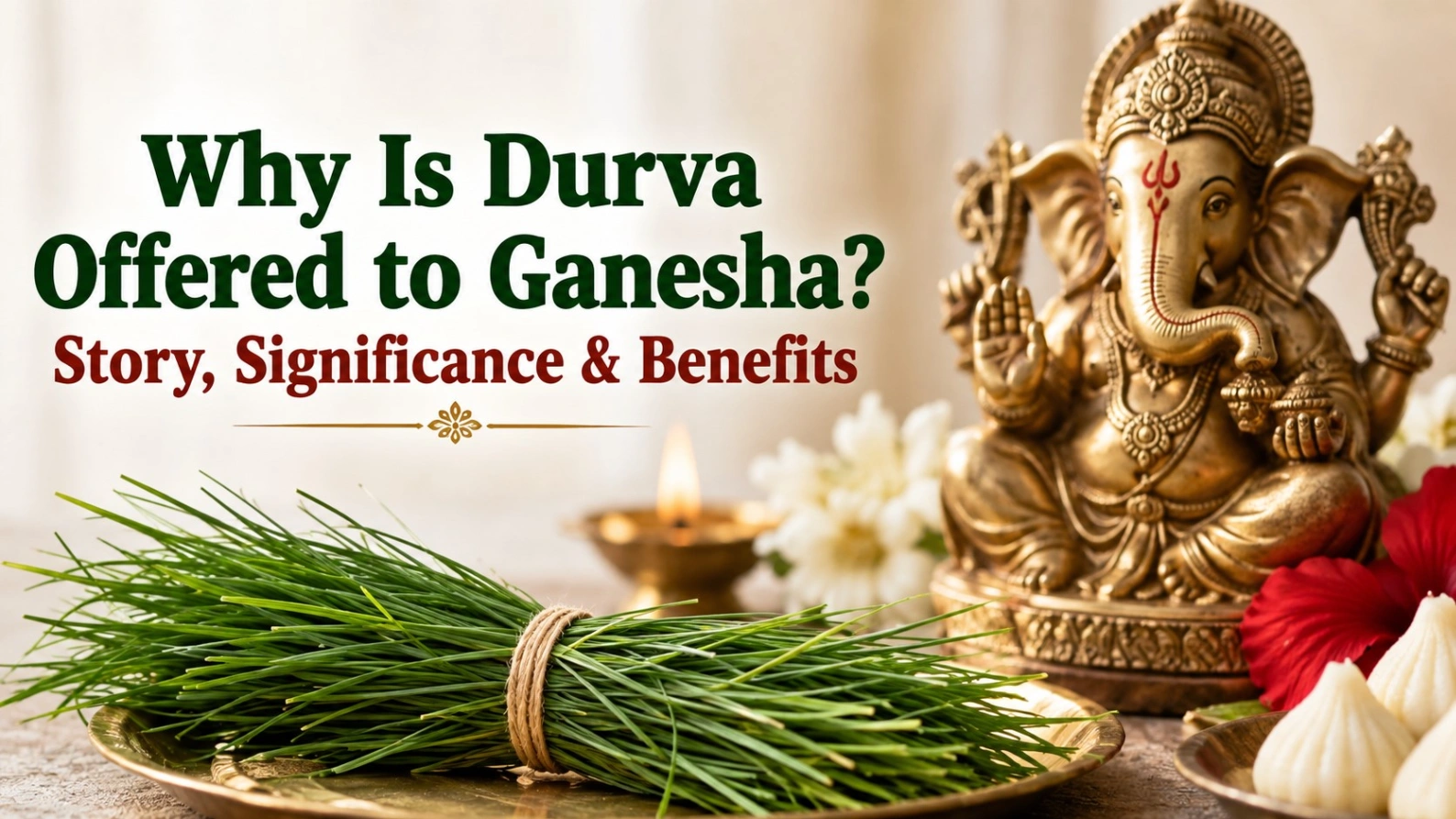
Lord Ganesha is worshipped as the remover of obstacles, the giver of wisdom and the deity invoked before new beginnings. Devotees offer him modaks, flowers, fruits, incense and many other sacred items. Yet one of the simplest offerings associated with Lord Ganesha is also considered one of the most meaningful Durva grass.
This often raises a fascinating question: Why is Durva offered to Ganesha?
The answer lies in devotional tradition, an ancient story associated with the demon Analasura, and the deeper spiritual symbolism of Durva itself. The grass represents simplicity, resilience, surrender and purity. Its connection with Ganesha also explains why Ganesha loves Durva grass and why devotees continue to include it in Ganesh puja across generations.
Durva is traditionally identified with Cynodon dactylon, commonly known as doob or Bermuda grass. It is a hardy perennial grass found widely in India and other warm regions. Botanical and Ayurvedic literature identifies Durva with Cynodon dactylon.
Understanding the significance of Durva grass in Ganesh puja therefore takes us beyond a simple ritual. It opens the door to a beautiful spiritual message about devotion, humility and overcoming the inner obstacles of life.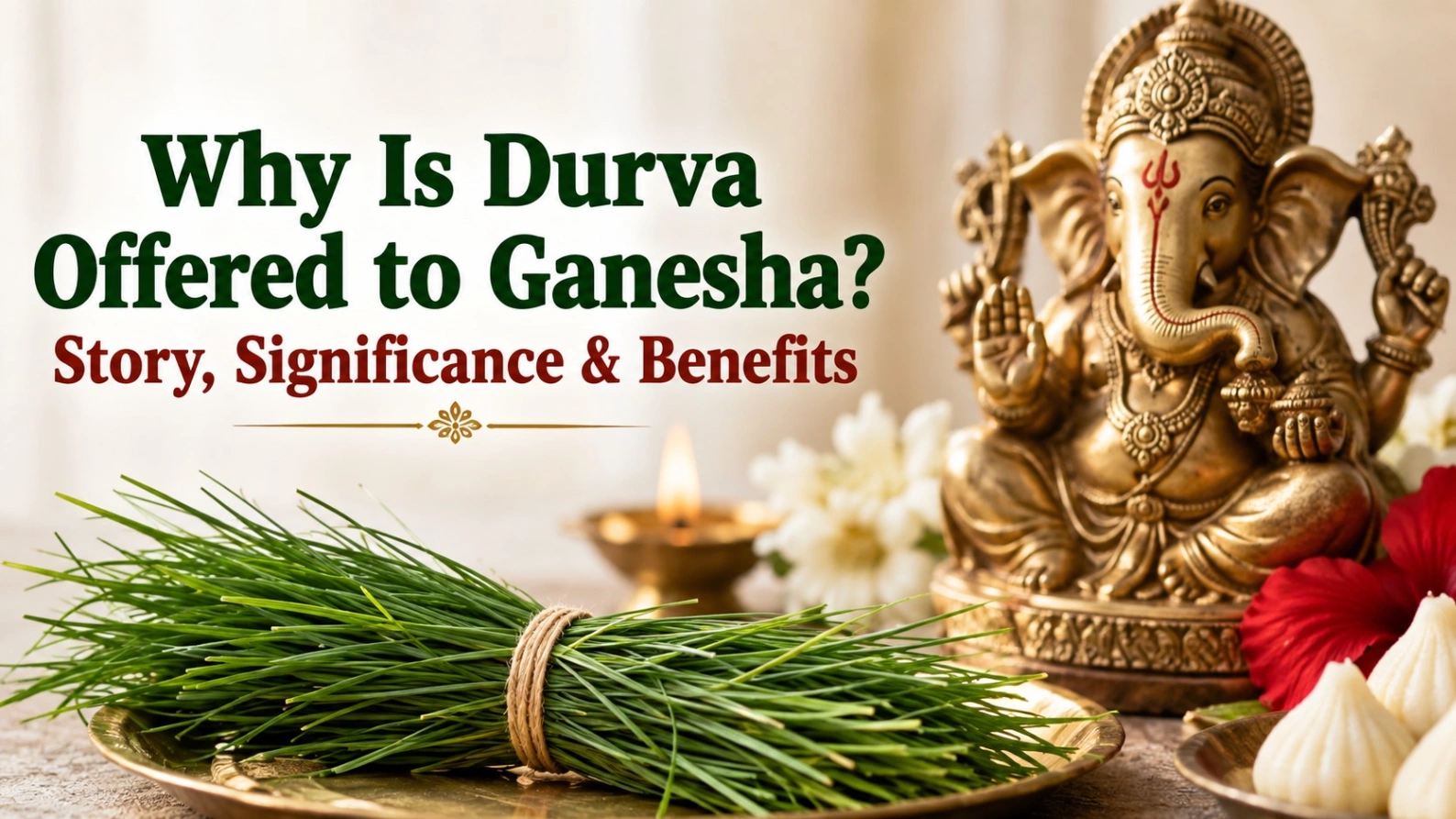
What Is Durva Grass?
Durva is a small, green creeping grass that grows easily and spreads even in difficult conditions. In different regions of India it is also known by names such as doob, dub, durva and garike.
Although it appears ordinary, Durva occupies a special place in Hindu worship, particularly in rituals dedicated to Lord Ganesha. Current ritual guides commonly describe fresh, tender Durva as a traditional offering to Ganesha, often using shoots with three or five leaflets.
Its simplicity itself carries a spiritual lesson. Devotion does not necessarily depend upon expensive or elaborate offerings. A small blade of grass, when offered with sincerity and reverence, can become spiritually meaningful.
This is one of the reasons the importance of Durva in Ganesh puja remains so powerful. Durva reminds devotees that the intention behind an offering can matter more than its material value.
Design Your Destiny
Understanding spiritual wisdom is only the beginning. The real transformation begins when that wisdom becomes part of the way you think, respond and live. Join Design Your Destiny and discover practical spiritual principles that can help you understand your mind, overcome inner limitations, create greater clarity and consciously shape the direction of your life. Start your journey with Design Your Destiny and move from simply knowing spiritual truths to actually living them.
Start Your Journey Today!Why Is Durva Grass Offered to Ganesha?
The most widely told explanation for why Durva grass is offered to Ganesha comes from the traditional story of Lord Ganesha and the fiery demon Analasura.
According to popular devotional retellings, Analasura possessed a fierce fiery energy and caused suffering wherever he went. Unable to stop him, the devas and sages sought Lord Ganesha's help.
Ganesha confronted Analasura and ultimately swallowed the demon. Although the threat was destroyed, Analasura's fiery nature caused an intense burning sensation within Ganesha.
Different remedies were reportedly attempted to cool him, but the discomfort remained. Finally, Durva grass was offered or placed upon Ganesha, and its cooling nature brought him relief.
Because of this episode, devotional tradition came to regard Durva as especially dear to Lord Ganesha. The Analasura narrative remains one of the dominant explanations given today for the Durva offering to Ganesha, although details differ between regional and devotional retellings.
Thus, when devotees ask why do we offer Durva to Lord Ganesha, the Analasura story gives one traditional explanation: the grass that soothed Ganesha became a symbol of devotion and a cherished offering in his worship.
Why Ganesha Likes Durva: The Deeper Spiritual Meaning
The story explains the traditional origin of the practice, but the Durva grass Ganesha significance becomes even richer when viewed symbolically.
Durva grows close to the earth. It does not attract attention through colourful blossoms or an impressive appearance. In this sense, it naturally represents humility and simplicity.
Offering Durva can therefore symbolize surrendering one's pride and ego before the Divine.
Lord Ganesha is associated with wisdom and the removal of obstacles. Yet some of the biggest obstacles human beings face are internal — anger, attachment, ego, fear, greed and uncontrolled desires.
Durva can remind the devotee to approach Ganesha with a simple and receptive mind.
The grass is also remarkably resilient. It can spread and grow again even after being cut or disturbed. This characteristic has led many devotional interpretations to associate Durva with perseverance, continuity and the ability to rise again after difficulty.
Therefore, the question why Ganesha likes Durva can be understood on two levels: through the traditional Analasura story and through the qualities that this humble grass represents.
Lord Ganesha Birth Story Behind Ganesh Chaturthi Celebration
Why Does Ganesha Love Durva Grass?
The phrase why Ganesha loves Durva grass is commonly searched because devotees want to understand why such an ordinary plant receives such importance.
The answer points toward one of the most beautiful principles of Bhakti: spiritual value is not measured by material cost.
A devotee does not need wealth to express devotion. A simple offering made with awareness can carry profound meaning.
Durva represents freshness, simplicity and resilience. When offered to Ganesha, it can symbolically express:
humility before wisdom, calmness over agitation, perseverance during difficulties and surrender of the ego.
The ritual therefore becomes more meaningful when the devotee understands what the offering represents rather than performing it mechanically.
Why Are 21 Durva Offered to Ganesha?
Another important question closely connected with why Durva is offered to Ganesha is why the number 21 is traditionally associated with the offering.
Many Ganesh puja traditions use 21 shoots or bunches of Durva, although exact customs may vary according to family, temple, region or sampradaya. Ritual sources and contemporary devotional guides consistently note the association between Ganesha worship and the number 21.
Several symbolic interpretations of the number exist.
One popular interpretation views the 21 as representing different aspects of human existence that are surrendered before the Divine. Interpretations vary, but often include combinations of the senses, organs of action, vital energies, subtle elements and mind.
Rather than treating one interpretation as universally binding, it is more useful to understand the underlying idea: the offering represents complete surrender.
When a devotee offers 21 Durva to Ganesha, the ritual can become a reminder to offer not merely grass, but one's thoughts, actions, senses and ego at the feet of the Divine.
Significance of Durva Grass in Ganesh Puja
The significance of Durva grass in Ganesh puja can therefore be understood through several interconnected spiritual ideas.
First comes humility. Durva is an ordinary grass, reminding us that sincere devotion does not require luxury.
Second comes resilience. Durva continues to grow and spread despite being cut or disturbed. Spiritually, this can represent the determination required to continue growing despite life's difficulties.
Third comes calmness. In the Analasura story, Durva cools Ganesha's intense internal heat. Symbolically, this can remind devotees that spiritual awareness can cool anger, restlessness and emotional agitation.
Fourth comes surrender. By placing Durva at Ganesha's feet, a devotee symbolically offers the ego and asks for wisdom to overcome inner obstacles.
Finally comes renewal. Its fresh green appearance makes Durva a natural symbol of vitality and regeneration.
These layers explain why the importance of Durva in Ganesh puja goes much deeper than following a ritual tradition.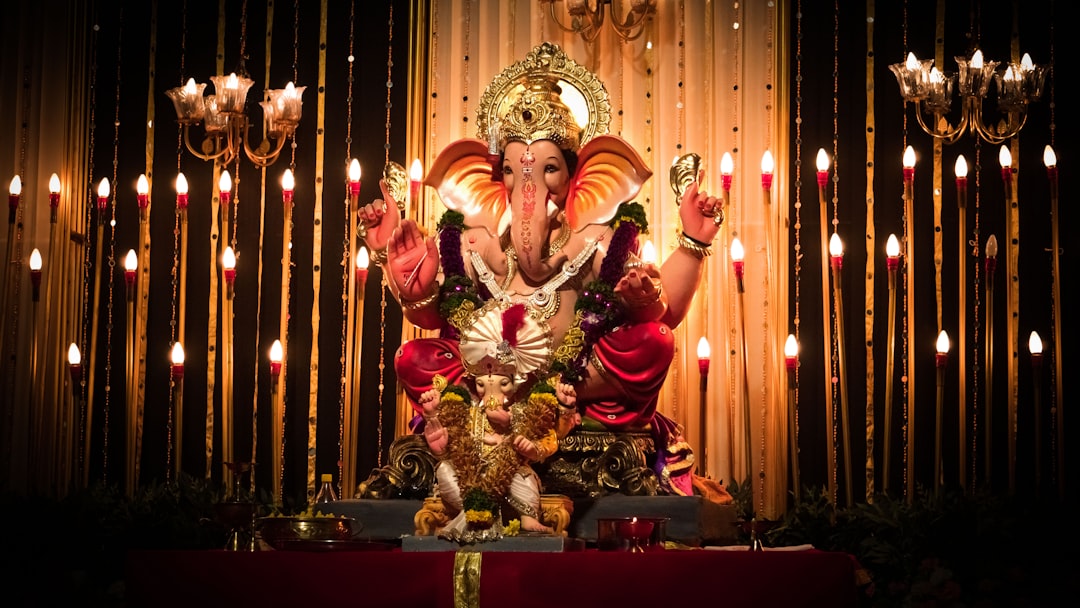
Benefits of Offering Durva to Ganesha
When discussing the benefits of offering Durva to Ganesha, it is important to understand them primarily in a devotional and spiritual sense rather than as guaranteed material outcomes.
Traditionally, devotees worship Ganesha to seek wisdom, clarity and the removal of obstacles. Offering Durva can become a moment of focused prayer in which a person consciously surrenders anxiety, pride and mental restlessness.
The practice may encourage humility because the offering itself is simple. It may remind the devotee of resilience because Durva continues growing under difficult conditions. It can also create a sense of spiritual discipline because the offering is performed with attention and reverence.
Durva also has a history in Ayurveda. Research reviewing Cynodon dactylon notes traditional Ayurvedic descriptions of the plant and studies exploring properties such as anti-inflammatory, antioxidant and wound-healing activity. These medicinal traditions should not, however, be confused with the spiritual benefits of offering Durva during puja or treated as medical advice.
The greatest spiritual benefit of the ritual may therefore be the reminder it provides: when ego becomes smaller and awareness becomes stronger, many inner obstacles begin to lose their power.
Ganesh Chaturthi Puja 2026: Samagri, Mantra & Puja Muhurat
How to Offer Durva to Lord Ganesha
The exact Durva offering to Ganesha may differ according to regional, family and temple traditions, so devotees should follow their customary puja practice where applicable.
Generally, fresh and clean Durva is selected and gently washed before being offered. Traditional guides often recommend tender shoots with three or five tips and commonly associate the offering with 21 shoots or bunches.
During the puja, the devotee may chant Ganesha's name or mantra while respectfully placing the Durva before the deity or on the murti according to their tradition.
A simple mantra commonly used during Ganesha worship is:
Om Gan Ganapataye Namah
More important than performing the ritual anxiously is approaching it with devotion, cleanliness and awareness.
If a particular family or temple follows a specific method, that tradition should be respected.
Living The Gita Movement
The Bhagavad Gita is not merely something to be read or listened to. It is the art of awakening within oneself and experiencing the truth of life. The vision of the Living the Gita Movement is to bring the wisdom of the Gita out of books and transform it into a lived experience.
Join Now!Durva and the Spiritual Lesson of Lord Ganesha
The deeper message behind why Durva is offered to Ganesha is remarkably relevant to everyday life.
Human beings often search for happiness through achievement, recognition and possessions. Yet Durva teaches almost the opposite lesson.
Something ordinary can become sacred when consciousness changes.
A small blade of grass can represent devotion.
A difficult experience can build resilience.
A restless mind can become peaceful through awareness.
An obstacle can become an opportunity for inner transformation.
Lord Ganesha represents wisdom that helps us move through obstacles. Durva reminds us of the attitude required for that wisdom to arise like simplicity, humility, perseverance and surrender.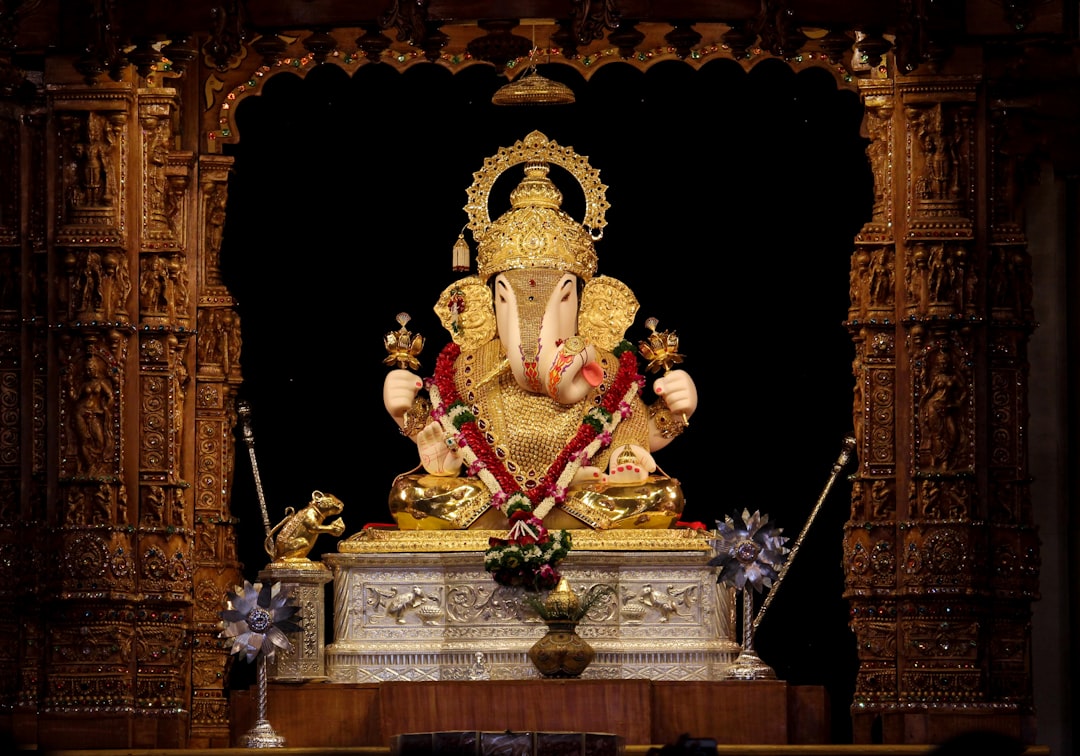
This is what transforms the ritual from an external action into an internal spiritual practice.
So, why is Durva offered to Ganesha?
According to the widely told Analasura tradition, Durva became especially dear to Lord Ganesha after it helped soothe the intense heat he experienced after defeating the fiery demon. Over time, the grass became deeply connected with Ganesha worship.
Yet the spiritual significance extends far beyond the story.
Durva symbolizes humility, resilience, renewal, surrender and simplicity. Offering it to Ganesha reminds devotees that the Divine does not require extravagance; sincere devotion can be expressed through even the simplest offering.
The next time you place Durva before Lord Ganesha, do not see it as merely a ritual ingredient. Let it become a reminder to surrender your ego, calm your inner restlessness and develop the wisdom to move consciously through life's obstacles.
That understanding reveals the true significance of Durva grass in Ganesh puja.
Personal Session
Every person's inner journey is different. Sometimes, general knowledge is not enough to understand the patterns, questions and challenges appearing in your own life. Book a Personal Session for deeper, one-to-one guidance designed to help you gain clarity, understand your inner obstacles and move forward with greater awareness. Take the next step toward clarity, consciousness and meaningful transformation.
Book NowRead Latest Articles