
If you have been practicing yoga or meditation for a while, you have likely heard the term "Samadhi" whispered with a sense of reverence. It is often described as the peak of the mountain; the final destination of a long spiritual trek. But what is Samadhi, exactly? Is it just a really deep nap, or is it something more profound?
In the ancient philosophy of yoga, specifically within the framework of Dhyana Yoga, Samadhi represents the ultimate state of consciousness. It is the moment where the internal chatter stops, the ego dissolves, and you experience true oneness with the universe. While it might sound like a mystical concept reserved for Himalayan sages, understanding Samadhi can transform your daily practice, giving you a clear direction in your journey toward spiritual enlightenment.
In this guide, we will break down the meaning of Samadhi, how it differs from Dhyana (meditation), and the practical steps laid out in the Patanjali Yoga Sutras to help you move closer to this state of pure bliss.
The True Meaning of Samadhi
To understand Samadhi, we first have to look at the word itself. In Sanskrit, Sam means "together" or "completely," a means "toward," and dha means "to put" or "to place." When put together, Samadhi essentially translates to "placing together" or a state of complete absorption.
It is often translated as "bliss" or "enlightenment," but those words don't quite capture the mechanics of it. Think of it this way: In our normal waking state, there is always a duality. There is "you" (the observer) and the "world" (the observed). When you look at a flower, you know that you are separate from the flower.
However, in the Samadhi state of consciousness, that separation vanishes. The observer and the observed merge into one. You don't just "see" the flower; you experience the essence of the flower. It is a state of hyper-awareness where the mind becomes so still that it reflects reality perfectly, without the distortion of your thoughts, fears, or desires.
Dhyana Yoga vs. Samadhi: What’s the Difference?
A common point of confusion for many students is the difference between Dhyana and Samadhi. Since they are often mentioned together, are they the same thing?
Not quite. They are consecutive steps on the same ladder.
According to Raja Yoga (the "Royal Path" of yoga), Dhyana is the practice, and Samadhi is the result. Dhyana is what we commonly call deep meditation. It is the continuous flow of attention toward a single point. Imagine pouring oil from one vessel to another; the stream is unbroken. That is Dhyana.
In Dhyana, you are still aware that you are meditating. You might think, "I am focusing on my breath." There is still a subtle effort involved.
Samadhi happens when that effort disappears. You no longer think, "I am meditating." You simply are. The practice of Dhyana Yoga naturally matures into Samadhi when the concentration becomes effortless and all-consuming. You stop doing yoga, and you start being yoga.
The 8 Limbs of Yoga: The Roadmap to Bliss
To truly grasp how one reaches this state, we have to look at the map provided by the Patanjali Yoga Sutras. Sage Patanjali outlined Ashtanga Yoga, or the 8 limbs of yoga, as a systematic path to purify the body and mind. Samadhi isn't an accident; it's the final step in this engineered process.
Yama: Ethical standards and sense of integrity (non-violence, truthfulness).
Niyama: Self-discipline and spiritual observances.
Asana: Physical postures to keep the body healthy and steady.
Pranayama: Breath control to regulate energy.
Pratyahara: Withdrawal of the senses from the outside world.
Dharana: Concentration (binding the mind to a single place).
Dhyana: Meditation (uninterrupted flow of concentration).
Samadhi: Total absorption (the ultimate goal).
Notice the progression? You start with the external world (ethics and body), move to the breath, withdraw the senses, focus the mind, sustain that focus (Dhyana), and finally, transcend the self (Samadhi).
Without practicing the 8 limbs of yoga, trying to jump straight to Samadhi is like trying to build a roof without walls. The foundation of Dhyana Yoga prepares the nervous system to handle the high-voltage energy of spiritual awakening.
The Stages of Samadhi
Samadhi is not a single "on/off" switch. It is a spectrum of experiences. The ancient texts describe different stages of Samadhi, primarily categorizing them into two main types: Savikalpa Samadhi and Nirvikalpa Samadhi.
1. Savikalpa Samadhi (Samadhi with Form)
This is the preliminary stage. In Savikalpa Samadhi, the mind is concentrated on an object (like a mantra, a deity, or a concept like peace), and you achieve a state of temporary bliss. However, the seeds of desire and thought are still present, lying dormant.
You might lose your sense of time and body consciousness, feeling immense joy, but you eventually return to normal consciousness. It is a glimpse of the peak, but you cannot stay there yet.
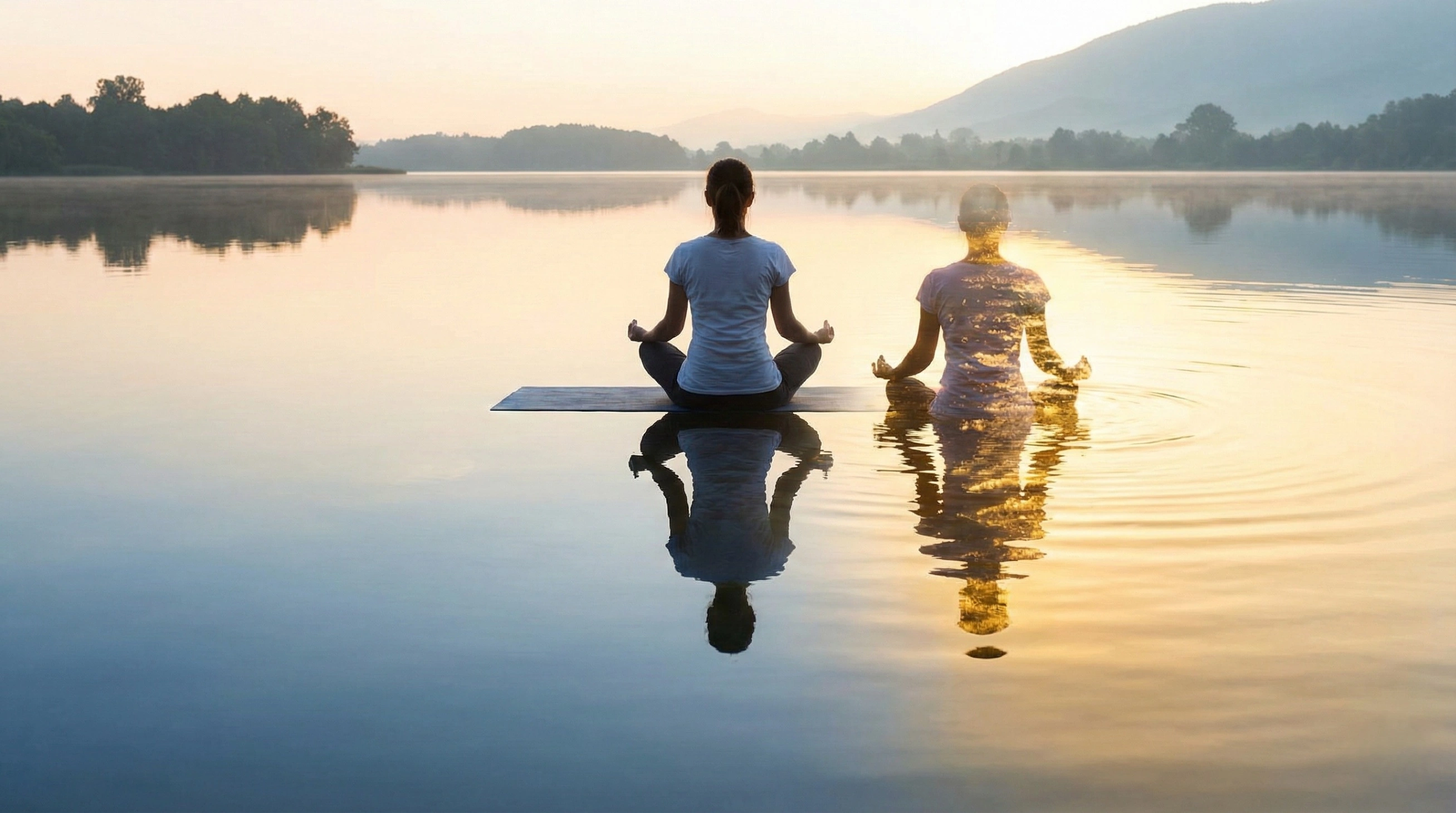
2. Nirvikalpa Samadhi (Samadhi without Form)
This is the higher, formless state. In Nirvikalpa Samadhi, there is no object of focus. The mind dissolves completely into pure consciousness. There are no thoughts, no images, and no duality.
This is often described as the highest state of spiritual enlightenment. The yogi who attains this no longer identifies with the ego or the body. They realize self-realization in its truest form that they are infinite, eternal consciousness.
How to Achieve Samadhi: Is It Possible for Everyone?
The question everyone asks is: How to achieve Samadhi? Is this only for monks living in caves, or can a modern person with a job and family experience it?
The philosophy of Raja Yoga suggests that Samadhi is the birthright of every human being. It is not something you "get" from the outside; it is your natural state that has been covered up by the noise of the mind.
Here is how you can orient your practice toward this goal:
Master Consistency: You cannot binge-watch Netflix all week and expect Samadhi on Sunday. Consistent Dhyana Yoga practice is key. Even 20 minutes of deep meditation daily builds the neural pathways required for higher states.
Purify the Mind: This is where the first two limbs (Yama and Niyama) come in. If your life is full of lies, conflict, and chaos, your mind will be too turbulent to settle into Samadhi. Achieving inner peace in your daily life is a prerequisite for inner peace on the mat.
Let Go of the Goal: Ironically, craving Samadhi is the biggest obstacle to Samadhi. Craving creates tension. The ultimate goal of yoga is realized when you stop grasping for results and surrender to the present moment.
Common Misconceptions: What Samadhi Is NOT
Because the concept is so subtle, there are many misunderstandings surrounding it.
It is NOT Sleep (Yoga Nidra) People often confuse the deep relaxation of Yoga Nidra (yogic sleep) with Samadhi. While Yoga Nidra is a powerful technique for relaxation and healing, it occupies a state between waking and sleeping. Samadhi, on the other hand, is a state of super-consciousness. You are more awake than you have ever been, not less.
It is NOT Escapism Some think Samadhi is about zoning out or escaping reality. Real transcendence isn't running away from the world; it's seeing the world clearly for the first time. Yogis who experience these states often return to their daily lives with more compassion, efficiency, and love, not less.
It is NOT Instant We live in a world of instant gratification. We want "McEnlightenment." But the path to enlightenment is a slow burn. It requires patience. The benefits of Dhyana Yoga accrue over years, not days.
The Benefits of Striving for Samadhi
Even if you don't reach full Nirvikalpa Samadhi in this lifetime, aiming for it brings immense benefits to your life right now. The journey itself is transformative.
Deep Inner Peace: As you practice the concentration required for Samadhi, your baseline stress levels drop dramatically.
Emotional Resilience: You learn to detach from the roller coaster of emotions, finding a bliss state (Ananda) that isn't dependent on external circumstances.
Clarity of Purpose: With the noise of the ego quieted, your true intuition and purpose can shine through.
Cosmic Consciousness: You begin to feel a connection to all living things, reducing feelings of loneliness and isolation.
What is Samadhi? It is the homecoming of the soul. It is the moment the drop of water rejoins the ocean and realizes it was the ocean all along.
While the concepts of Kundalini awakening, Nirvana, and cosmic consciousness can feel overwhelming, remember that every great journey begins with a single step. That step is sitting down, closing your eyes, and turning inward.
Through the dedicated practice of Dhyana Yoga, you are polishing the mirror of your mind. One day, when the dust settles, you will look into that mirror and see not just your face, but the infinite.