
The Shiva Purana Maha Shivratri section offers one of the clearest scriptural explanations of why this night is considered supremely sacred in Shaiva tradition. According to the Shiva Purana, Maha Shivratri is not merely a festival but a spiritually potent observance prescribed by Lord Shiva himself, promising purification, liberation, and divine grace to sincere devotees. Unlike popular folklore, the Purana presents Maha Shivratri as a night of conscious restraint, inner stillness, and unwavering devotion, emphasizing the spiritual science behind fasting, vigil, and worship.
Maha Shivratri According to the Shiva Purana
The Shiva Purana explains that Maha Shivratri falls on the fourteenth night (Chaturdashi) of the Krishna Paksha in the month of Phalguna. This night is described as exceptionally conducive to spiritual awakening because tamasic inertia recedes and sattvic clarity increases naturally. The Purana does not portray this night as symbolic alone; it explicitly states that the cosmic and spiritual conditions of Maha Shivratri amplify the effects of worship and penance.
According to the text, Lord Shiva declared that worship performed on this night yields results far greater than those achieved through routine rituals conducted throughout the year.
Why Maha Shivratri Is Mentioned in the Shiva Purana
The Shiva Purana dedicates detailed sections to Maha Shivratri because it is considered Lord Shiva’s most beloved observance. The Purana narrates that Shiva himself instructed sages and celestial beings about the importance of observing this vrata with discipline and sincerity.
The scripture emphasizes that Maha Shivratri is not a celebratory event but a night of conscious spiritual alignment, where the devotee mirrors Shiva’s state of detachment, stillness, and transcendence.
Maha Shivratri Story in the Shiva Purana
One of the most significant narratives in the Shiva Purana involves a hunter who unknowingly observed Maha Shivratri. By offering bel leaves and water to a Shiva Lingam throughout the night while remaining awake, he fulfilled the conditions of the vrata without deliberate intent. The Purana states that due to the power of the night and the purity of the act, the hunter attained liberation.
This story is repeatedly cited to emphasize that intention combined with the sacred timing of Maha Shivratri holds transformative power, even surpassing ritual complexity.
Shiva Purana Shivratri Night Significance
The Shiva Purana explains that the night vigil (jagran) is central to Maha Shivratri. Staying awake symbolizes mastery over tamas and ignorance. Shiva, being the lord of dissolution and awareness, is said to be easily pleased when devotees remain alert and inwardly focused during this night.
The text makes it clear that sleeping through Maha Shivratri diminishes the spiritual benefits of the vrata, while mindful wakefulness enhances merit.
Maha Shivratri Fasting According to the Shiva Purana
The Shiva Purana Shivratri vrat significance lies in restraint, not self-torture. The Purana prescribes fasting to quiet the senses and redirect energy inward. Fasting is described as a means to dissolve accumulated karmic impurities rather than an act of punishment.
Importantly, the scripture allows variations in fasting depending on physical capability, emphasizing sincerity over severity.
Shiva Purana Shivratri Puja Method
The Shiva Purana outlines a simple yet profound method of worship:
Abhishekam with water, milk, or pure substances
Offering bel patra with devotion
Chanting Shiva mantras
Maintaining silence or minimal speech
The Purana repeatedly warns against ostentatious worship, stating that inner purity outweighs external grandeur.
Spiritual Meaning of Maha Shivratri in the Shiva Purana
From a philosophical perspective, the Shiva Purana describes Maha Shivratri as the night when Shiva tattva dominates cosmic consciousness. Shiva represents pure awareness beyond creation and destruction. Observing Maha Shivratri aligns the devotee with this state of inner stillness.
The Purana associates this alignment with freedom from fear, ego dissolution, and clarity of perception.
Shiva Purana on Liberation and Moksha on Maha Shivratri
The Shiva Purana explicitly states that those who observe Maha Shivratri with devotion, fasting, and vigilance are freed from repeated cycles of birth. This promise of moksha is not metaphorical within the text; it is presented as a direct assurance from Shiva himself.
However, the scripture emphasizes that liberation arises from conscious observance, not mechanical ritual.
What Happens If You Fast on Maha Shivratri According to the Shiva Purana
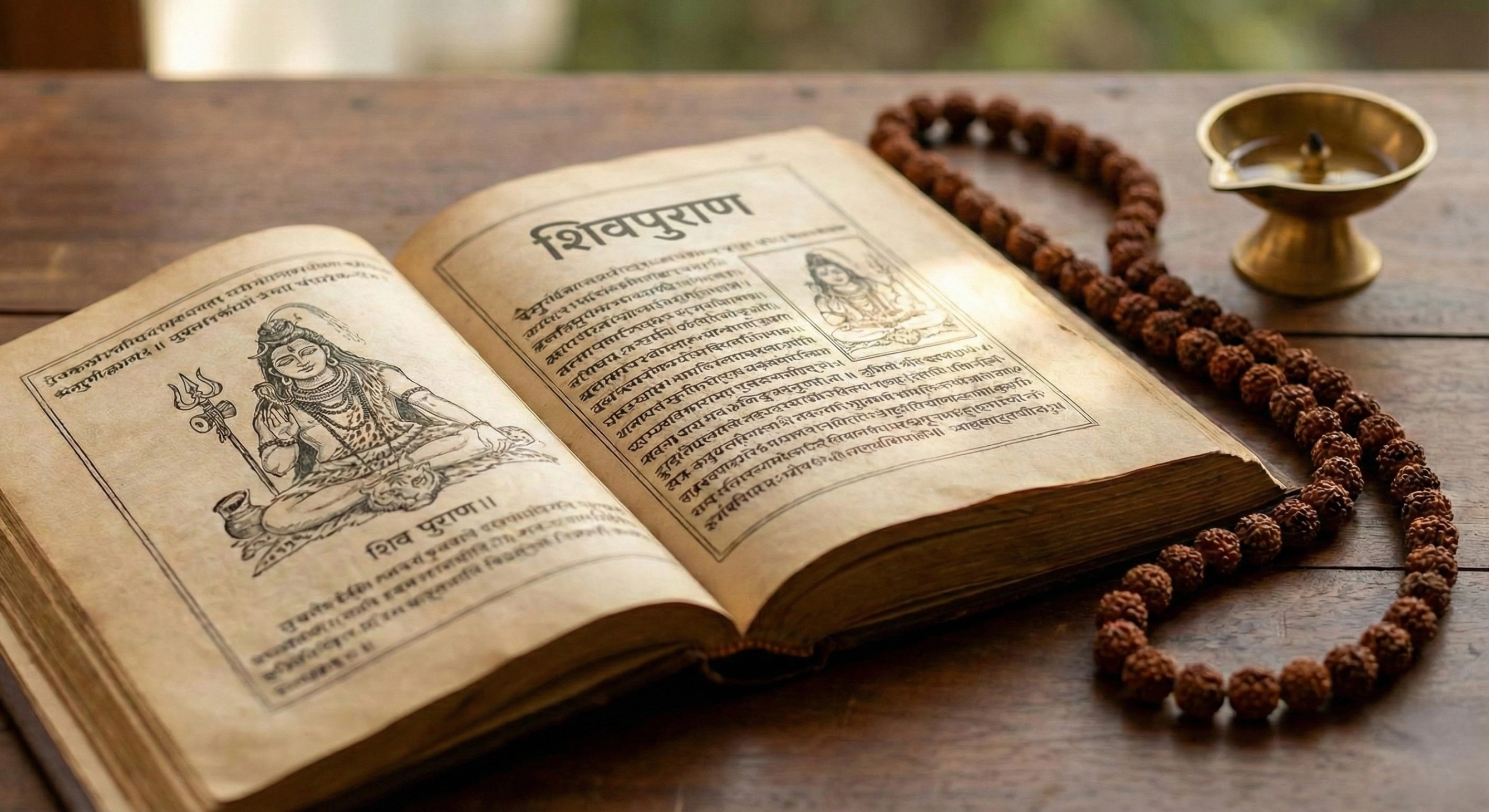
The Purana states that fasting on Maha Shivratri purifies past karmas, strengthens discipline, and brings the devotee closer to Shiva’s grace. It also mentions relief from mental disturbances and spiritual stagnation as secondary benefits.
Fasting without devotion is considered incomplete; devotion without awareness is considered ineffective.
Shiva Purana Shivratri Benefits
According to the Shiva Purana, the benefits of observing Maha Shivratri include:
Dissolution of accumulated karmic burdens
Attainment of spiritual clarity
Fulfillment of righteous desires
Gradual movement toward liberation
These benefits are presented not as rewards, but as natural outcomes of alignment with Shiva consciousness.
Want to observe Maha Shivratri the right way this year? Read our next blog “Maha Shivaratri 2026: Date, Significance, Puja Vidhi & Fasting Rules” to understand the exact date, correct rituals, and authentic fasting guidelines as prescribed in the scriptures.