
Raksha Bandhan is one of India's most cherished festivals, celebrating love, protection, responsibility and the sacred bond between siblings. Every year, as Raksha Bandhan approaches, one question becomes especially important for families: What is the best Rakhi tying time?
In 2026, this question becomes even more relevant because devotees want to perform the Rakhi ceremony during an auspicious period while avoiding Bhadra Kaal.
If you are looking for the Rakhi tying time 2026, Raksha Bandhan muhurat 2026, or the exact Raksha Bandhan shubh muhurat 2026, this guide brings together the essential date, Purnima Tithi, Bhadra information, puja timing and traditional considerations you should know.
According to Panchang calculations for New Delhi, Raksha Bandhan 2026 will be celebrated on Friday, August 28, 2026. The auspicious Rakhi-tying period falls in the morning, after Bhadra has ended and while Purnima Tithi is still present.
Raksha Bandhan 2026 Date and Time
Raksha Bandhan 2026 Date: Friday, August 28, 2026
For New Delhi, the important Panchang timings are:
Purnima Tithi Begins: 9:08 AM on August 27, 2026
Purnima Tithi Ends: 9:48 AM on August 28, 2026
Rakhi Thread Ceremony Time: 5:57 AM to 9:48 AM on August 28
Total Auspicious Window: Approximately 3 hours and 51 minutes
Bhadra: Ends before sunrise on August 28
Therefore, for New Delhi, the practical best time to tie Rakhi 2026 is between 5:57 AM and 9:48 AM on August 28.
These timings can vary slightly depending on sunrise and geographical location. For example, the listed Rakhi ceremony begins at 5:58 AM in Gurgaon and 6:19 AM in Pune, although Purnima Tithi ends at 9:48 AM in these Panchang calculations.
For this reason, devotees should ideally check the local Panchang for their city before performing the ceremony.
What Is the Rakhi Tying Time 2026?
The Rakhi tying time 2026 refers to the auspicious period during which the traditional Raksha Bandhan ceremony can be performed.
For New Delhi, the recommended window is:
5:57 AM to 9:48 AM on Friday, August 28, 2026.
This period is particularly significant because Bhadra has already ended before sunrise and Purnima Tithi continues until 9:48 AM.
This makes the morning of August 28 the key Rakhi shubh muhurat for families following traditional Panchang timings.
Devotees living outside Delhi should remember that the starting time can change depending on their location.
Raksha Bandhan Shubh Muhurat 2026
A Shubh Muhurat is an auspicious period selected according to traditional Hindu Panchang calculations.
Raksha Bandhan is traditionally observed on Shravana Purnima, the full-moon day of the Shravan month.
An important traditional consideration is avoiding Bhadra Kaal while tying Rakhi. Panchang traditions generally advise that auspicious Raksha Bandhan rituals should not be performed during Bhadra.
In 2026, Bhadra concludes before sunrise on August 28 for New Delhi. This creates a convenient morning period in which devotees can perform the Rakhi ceremony while Purnima Tithi is still active.
Thus, the Raksha Bandhan shubh muhurat 2026 for New Delhi extends from approximately 5:57 AM until 9:48 AM.
Why Is Muhurat Important for Raksha Bandhan?
Hindu festivals are traditionally connected with specific Tithis and auspicious periods.
The purpose of choosing a Rakhi tying muhurat is not simply to follow a clock. It is a way of performing a sacred ritual with mindfulness, devotion and respect for tradition.
Raksha Bandhan itself symbolizes protection.
The word Raksha means protection, while Bandhan means bond or connection. When a sister ties the sacred Rakhi or Raksha Sutra on her brother's wrist, the act traditionally represents love, blessings, responsibility and mutual protection.
Choosing a Raksha Bandhan auspicious time therefore adds a spiritual dimension to the ceremony.
However, devotion, sincerity and purity of intention remain central to the meaning of the festival.
What Is Bhadra Kaal on Raksha Bandhan?
One of the most searched questions around Raksha Bandhan is:
Can we tie Rakhi during Bhadra?
According to traditional Panchang guidance, Raksha Bandhan rituals are generally avoided during Bhadra Kaal.
Bhadra is associated with the Vishti Karana and is traditionally considered unsuitable for many auspicious ceremonies.
That is why searches for Raksha Bandhan Bhadra time 2026 increase significantly before the festival.
The good news for devotees celebrating Raksha Bandhan in New Delhi in 2026 is that Bhadra ends before sunrise on August 28.
Therefore, families following the Delhi Panchang do not need to wait for Bhadra to end later in the day. The auspicious ceremony can begin after sunrise and continue until Purnima Tithi ends.
Why Is Raksha Bandhan Celebrated on Purnima?
Raksha Bandhan is traditionally celebrated on Shravana Purnima, the full-moon day occurring during the Hindu month of Shravan.
Purnima holds deep spiritual significance in Hindu traditions and is often associated with completeness, purity, devotion and spiritual illumination.
Raksha Bandhan transforms this sacred lunar day into a celebration of relationships and responsibility.
The Rakhi thread becomes more than a decorative thread. It symbolizes a prayer:
May you remain protected, blessed and guided on the path of dharma.
This is why both the presence of Purnima Tithi and the avoidance of traditionally unsuitable periods such as Bhadra are considered when determining the Rakhi muhurat 2026.
Raksha Bandhan Puja Time 2026
The Raksha Bandhan puja time 2026 can generally be kept within the auspicious Rakhi ceremony window.
For New Delhi, families may perform the puja between 5:57 AM and 9:48 AM on August 28, 2026.
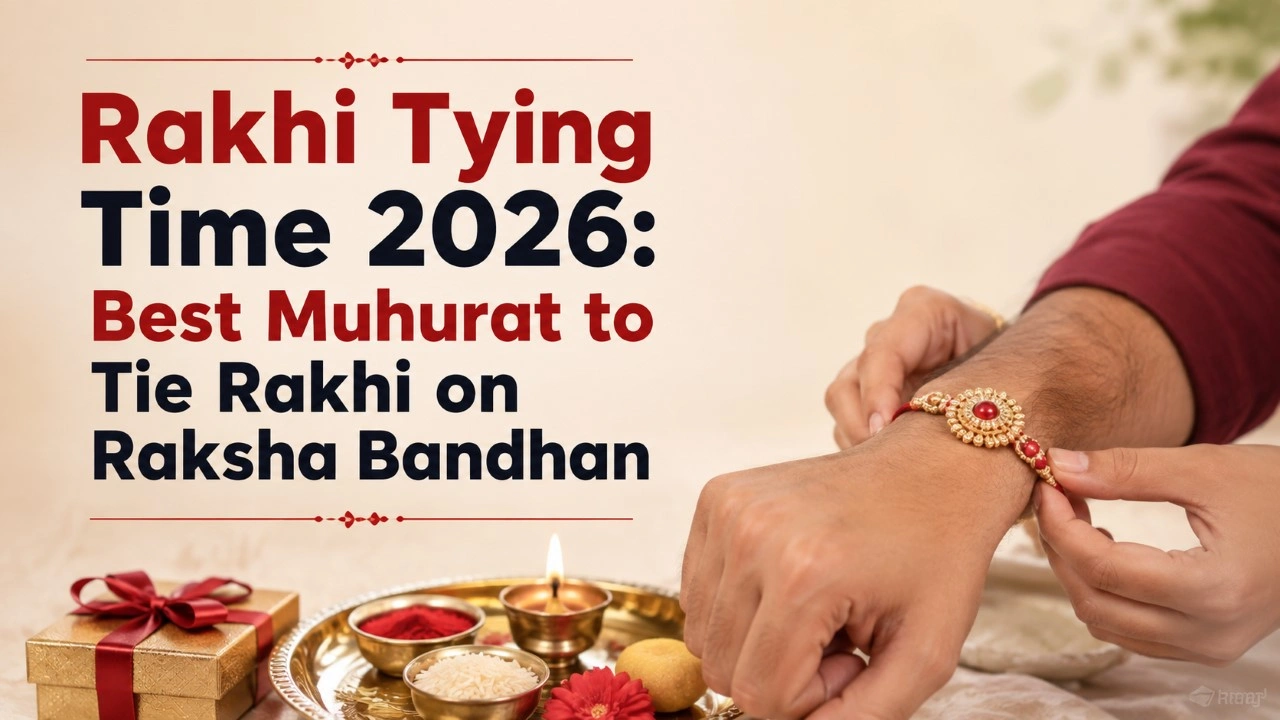
A simple Raksha Bandhan puja thali may contain:
Rakhi or Raksha Sutra
Kumkum or roli
Akshat or unbroken rice
Diya
Sweets
Flowers
The ceremony can begin by remembering the Divine and praying for protection, wisdom and well-being.
The sister traditionally applies tilak on her brother's forehead, offers Akshat, performs Aarti and ties Rakhi on his wrist. Sweets are then exchanged.
The brother traditionally offers a gift or token of affection and promises love, support and protection.
Today, the meaning of Raksha Bandhan is increasingly understood as mutual protection and responsibility, rather than a one-sided promise.
How to Tie Rakhi According to Tradition
If you wish to follow the traditional procedure, use these simple steps.
1. Prepare Yourself and the Puja Space
Take a bath, wear clean clothes and prepare a peaceful place for the ceremony.
2. Prepare the Rakhi Thali
Keep Rakhi, diya, kumkum, rice, flowers and sweets together.
3. Offer a Short Prayer
Begin by remembering God and seeking blessings for harmony, protection and spiritual growth.
4. Apply Tilak
The sister applies roli or kumkum on the brother's forehead and places Akshat over it.
5. Perform Aarti
Light the diya and perform a simple Aarti.
6. Tie the Rakhi
Tie the sacred Raksha Sutra on the wrist during the recommended Rakhi time 2026.
7. Exchange Sweets and Blessings
Offer sweets and exchange heartfelt wishes.
The outer ritual becomes truly meaningful when performed with genuine affection, gratitude and awareness.
Which Hand Should Rakhi Be Tied On?
Traditionally, Rakhi is generally tied on the right wrist.
The right side has long been associated with auspicious actions, rituals and sacred vows in many Hindu traditions.
However, regional customs may vary. Families should feel comfortable following their own established traditions.
The spiritual significance of Rakhi ultimately lies in the intention of protection, love and responsibility symbolized by the thread.
Can Rakhi Be Tied After the Shubh Muhurat?
This is another common question.
For New Delhi, Purnima Tithi ends at approximately 9:48 AM on August 28, 2026, which is why the main listed Rakhi ceremony window closes at that time.
Those wishing to follow Panchang timings strictly should therefore try to perform the ceremony during the recommended period.
If circumstances make that impossible, families may consult a knowledgeable priest or a reliable Panchang for location-specific guidance.
Avoid assuming that a single timing applies everywhere, because sunrise and local Panchang calculations vary by city.
Spiritual Meaning of the Rakhi Muhurat
It is easy to focus entirely on finding the perfect Raksha Bandhan timing 2026, but Raksha Bandhan carries a deeper lesson.
The sacred thread reminds us that relationships require:
Love without selfishness
Protection without control
Responsibility without expectation
Respect without ego
Blessings without conditions
A Shubh Muhurat creates an auspicious setting, but the true sanctity of Raksha Bandhan comes from the consciousness with which the ritual is performed.
A Rakhi tied mechanically is merely a thread.
A Rakhi tied with awareness, prayer and unconditional affection becomes a symbol of a sacred bond.
Raksha Bandhan 2026 at a Glance
Festival: Raksha Bandhan
Date: Friday, August 28, 2026
Purnima Begins: August 27 at 9:08 AM
Purnima Ends: August 28 at 9:48 AM
Rakhi Tying Time in New Delhi: 5:57 AM–9:48 AM
Bhadra: Ends before sunrise
Best Period: Morning of August 28 before Purnima ends
Remember that location-specific timings may differ.
The Rakhi tying time 2026 is an important consideration for devotees who wish to celebrate Raksha Bandhan according to traditional Panchang guidance.
Raksha Bandhan 2026 falls on Friday, August 28. For New Delhi, the main Raksha Bandhan shubh muhurat 2026 is from approximately 5:57 AM to 9:48 AM. Bhadra ends before sunrise, while Purnima Tithi concludes at 9:48 AM.
While choosing an auspicious Rakhi muhurat 2026 is meaningful, the deeper message of Raksha Bandhan goes beyond time and ritual.
Rakhi is ultimately a sacred reminder to protect love, uphold responsibility and honour the relationships life has given us.
Celebrate Raksha Bandhan with awareness, gratitude and a genuine prayer for the happiness, wisdom and well-being of those you love.