
Radha Ashtami is one of the most cherished festivals for devotees of Radha and Krishna. Celebrated as the divine appearance day of Radha Rani, the festival represents far more than a traditional religious observance. It symbolizes pure devotion, selfless love, surrender and the soul's longing for union with the Divine.
Understanding the Radha Ashtami significance therefore requires looking beyond rituals and celebrations. Radha Rani is revered in several Vaishnava traditions as the embodiment of the highest form of devotion to Lord Krishna. Her love asks for nothing in return. It represents a state in which devotion itself becomes the purpose of life.
In 2026, Radha Ashtami falls on Saturday, September 19. The festival is traditionally observed on the Ashtami Tithi of Shukla Paksha in the Hindu month of Bhadrapada and is especially celebrated in the Braj region, including Barsana and Vrindavan.
But what is the deeper Radha Ashtami spiritual meaning? Why is Radha Rani's appearance celebrated with such devotion?
To understand that, we must first understand what Radha represents.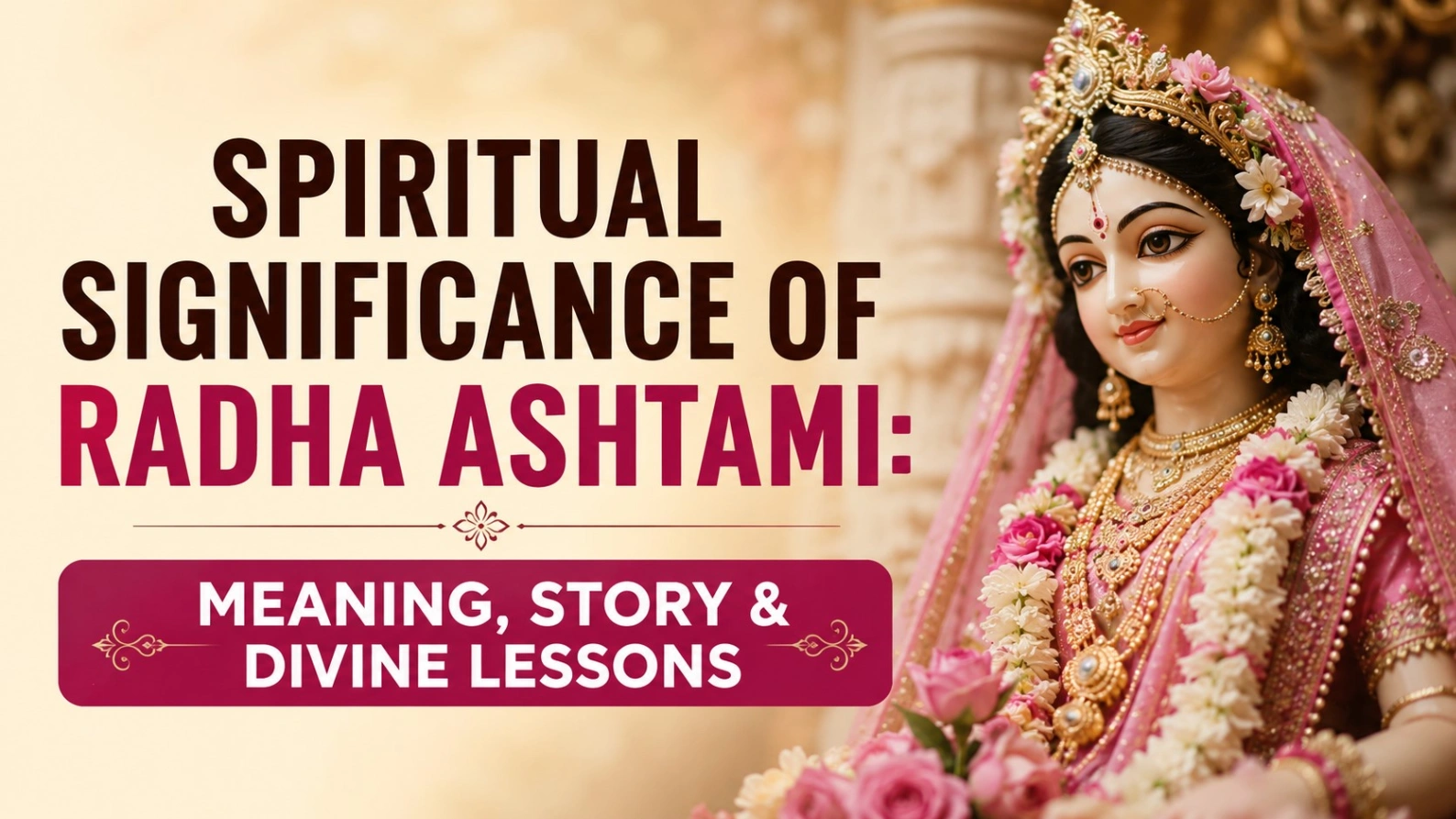
What Is Radha Ashtami?
Radha Ashtami, also known as Radhashtami or Radha Jayanti, commemorates the divine appearance of Radha Rani.
It is observed on the eighth lunar day of the bright fortnight of Bhadrapada, traditionally around fifteen days after Krishna Janmashtami.
While Krishna Janmashtami celebrates the appearance of Lord Krishna, Radha Ashtami honours Radha Rani, whose devotion to Krishna has become one of the most powerful symbols of Bhakti, loving devotion to God.
Devotees may observe fasting, perform puja, sing bhajans and kirtans, chant the names of Radha and Krishna, listen to spiritual discourses and contemplate Radha Rani's qualities.
The deeper purpose, however, is not merely external worship. Radha Ashtami invites devotees to ask:
How deeply and selflessly do we love the Divine?
That question lies at the heart of the meaning of Radha Ashtami.
Design Your Destiny
Reading spiritual wisdom can inspire us, but transformation begins when we start living it. Design Your Destiny can help you understand your inner patterns, move beyond limiting beliefs and apply timeless spiritual principles to everyday challenges. Begin your journey toward greater clarity, inner peace and conscious living with Design Your Destiny.
Start Your Journey Today!Why Is Radha Ashtami Celebrated?
One of the most commonly searched questions is: why is Radha Ashtami celebrated?
Radha Ashtami is celebrated to honour the appearance of Radha Rani and to remember her unparalleled devotion to Lord Krishna.
In devotional traditions, Radha represents the highest expression of Prema Bhakti, love for God that is free from selfish desire.
Her devotion is not based on asking Krishna for wealth, success, recognition or worldly rewards. The focus is Krishna himself.
This transforms the festival into a spiritual lesson.
Human relationships frequently include expectations: What will I receive? How will this person make me happy? What benefit will I gain?
Radha's devotion points toward another possibility: love that expresses itself through giving, remembering, serving and surrendering.
Therefore, the importance of Radha Ashtami lies not only in celebrating Radha Rani but in understanding the quality of consciousness she represents.
Radha Rani Birth Story: The Divine Appearance of Radha
The Radha Rani birth story is narrated in different forms across devotional traditions and regional accounts.
A widely cherished tradition associates Radha Rani with King Vrishabhanu and Queen Kirtida of the Braj region. Devotional narratives describe her appearance as extraordinary rather than ordinary, emphasizing her divine nature.
Some traditions recount that Vrishabhanu discovered the infant Radha upon a lotus. Another beloved devotional account says that Radha initially kept her eyes closed and opened them when she received the darshan of Krishna.
Rather than treating these stories merely as historical biography, devotees understand them symbolically and spiritually.
The story of Radha opening her eyes for Krishna expresses a profound spiritual idea:
True vision begins when consciousness turns toward the Divine.
The Radha Rani appearance story therefore becomes more than an account of her arrival. It symbolizes awakening to divine love.
Barsana, closely associated with Radha Rani and her family, remains one of the major centres of Radha devotion. Radha Ashtami is celebrated there with exceptional enthusiasm, worship and devotional gatherings.
Radha Ashtami History and Tradition
The history of Radha Ashtami is deeply connected with traditions of Radha-Krishna devotion, particularly those that flourished throughout the Braj region.
Over centuries, saints, poets and Bhakti traditions celebrated Radha as the supreme example of loving devotion to Krishna.
Vrindavan, Barsana, Raval and other sacred places connected with Radha-Krishna traditions became important centres of devotion.
Different Vaishnava traditions may explain Radha's theological position in different ways, but a common thread remains: Radha represents extraordinary love and devotion toward Krishna.
On Radha Ashtami, temples dedicated to Radha and Krishna may organize:
Abhishek or ceremonial bathing of the Deities
Special darshan and decoration
Bhajans and kirtans
Chanting of Radha-Krishna names
Spiritual discourses
Fasting
Offerings of flowers and food
Reading or listening to Radha-Krishna pastimes
Seva and charitable activities
These practices turn the festival into both an outward celebration and an inward journey of devotion.
Radha Ashtami 2026: Exact Date, Time, Tithi & Puja Muhurat
Spiritual Significance of Radha Ashtami
The spiritual significance of Radha Ashtami can be understood through one central principle:
Radha represents devotion in its purest form.
In Gaudiya Vaishnava theology, Radha Rani is described as Krishna's Hladini Shakti, or divine pleasure potency, and as the highest embodiment of loving devotional service.
This means Radha and Krishna are not understood merely as two characters in a traditional love story.
Their relationship represents a profound spiritual reality: the relationship between Divine Love and the Divine Beloved.
For the spiritual seeker, Radha represents the heart that longs completely for God.
Krishna represents the Supreme toward whom that love flows.
This understanding gives the Radha Ashtami festival significance its depth. The celebration encourages devotees to move from ritual toward relationship and from religious habit toward genuine love for the Divine.
Radha Ashtami Significance in Hinduism
The Radha Ashtami significance in Hinduism, particularly within Krishna-bhakti traditions, is closely connected to the concept of Bhakti Yoga.
Bhakti Yoga teaches that spiritual realization can unfold through loving devotion, remembrance, prayer, chanting and surrender to God.
Radha Rani embodies these qualities at their highest level.
Her devotion illustrates that spirituality does not always require withdrawing from the world or mastering complicated philosophy. Transformation can also happen through the heart.
Love becomes meditation.
Remembrance becomes prayer.
Service becomes worship.
Surrender becomes liberation from ego.
This is why Radha's devotion continues to inspire countless spiritual seekers.
What Does Radha Rani Symbolize Spiritually?
Radha Rani represents several essential qualities on the path of Bhakti.
1. Pure Love
Radha's love for Krishna symbolizes devotion untouched by selfish motives.
True spiritual love asks not, “What can God give me?”
Instead, it asks, “How can my life become an expression of love?”
2. Complete Surrender
Surrender does not mean becoming passive or weak.
Spiritually, surrender means releasing excessive ego, control and attachment while trusting a higher wisdom.
Radha represents this inner surrender.
3. Single-Pointed Devotion
The human mind constantly jumps between desires, worries and ambitions.
Radha's devotion represents complete spiritual focus.
For modern seekers, this teaches the value of directing our scattered attention toward something sacred and meaningful.
4. Selflessness
Radha's love is remembered as love without bargaining.
This makes her a powerful symbol of Nishkama Bhakti — devotion without selfish expectation.
5. Divine Compassion
Radha Rani is also associated with tenderness, mercy and compassion.
Devotees seek her grace as they progress on the path of Krishna bhakti.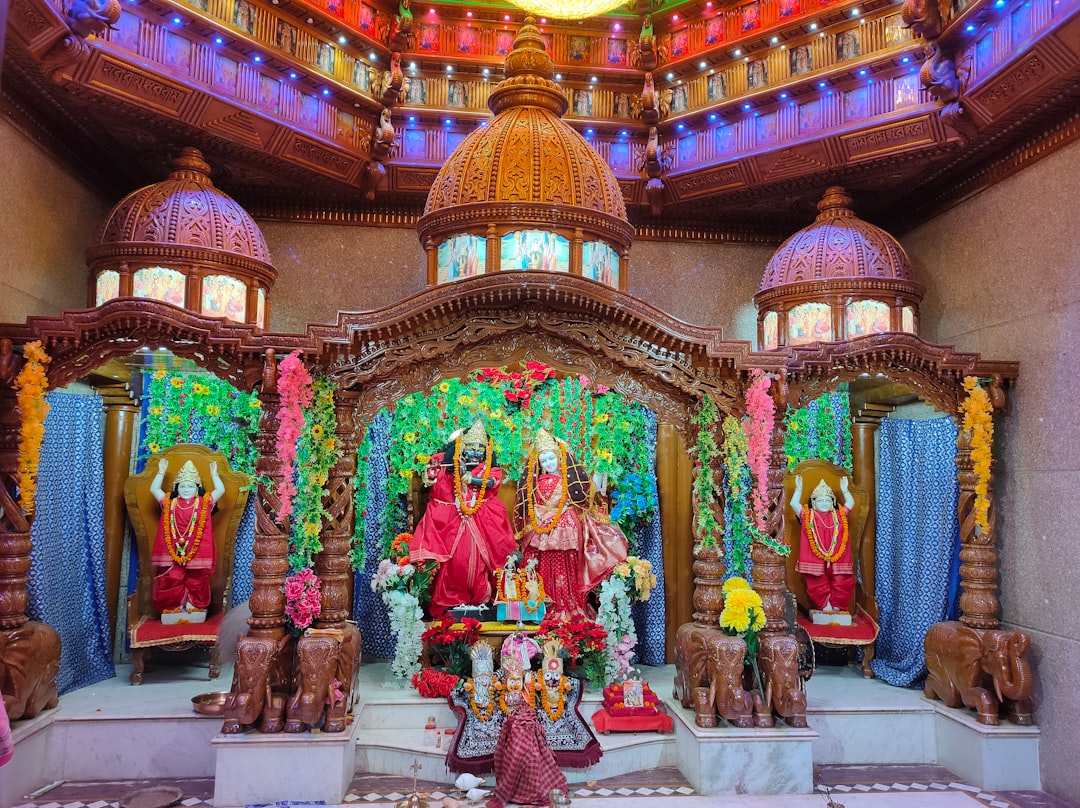
Radha and Krishna: The Spiritual Meaning of Divine Love
Radha and Krishna are often represented together because their relationship carries deep philosophical meaning.
At a surface level, people sometimes understand their story simply as romantic love.
Within devotional philosophy, however, Radha-Krishna divine love points to something far deeper.
Radha symbolizes the devotee's intense longing for the Divine.
Krishna symbolizes the Divine Beloved.
Their relationship demonstrates how spiritual love gradually dissolves the ego-driven sense of separation between the devotee and God.
This is why Radha-Krishna devotion emphasizes remembrance, chanting, surrender and loving service.
Their love reminds us that spirituality is not only about understanding God intellectually.
It is about experiencing the Divine through the heart.
Radha Ashtami 2026: When, Date, Shubh Muhurat & Puja Vidhi
7 Divine Lessons From Radha Ashtami
1. Love Without Expectation
One of Radha Rani's greatest spiritual lessons is to love without constantly calculating what we will receive in return.
Applied to everyday life, this means giving affection, kindness and support without turning every relationship into an exchange.
2. Let Devotion Become a Daily Practice
Spirituality becomes powerful when it moves beyond occasional festivals.
Radha Ashtami reminds us to bring devotion into ordinary days through prayer, mantra chanting, gratitude, seva or mindful remembrance of God.
3. Reduce the Ego
The ego constantly wants recognition:
I did this. I deserve this. I should receive more.
Bhakti shifts attention away from self-importance toward surrender and service.
Radha's devotion teaches us that spiritual growth often begins where ego begins to soften.
Living the Gita Movement
The Bhagavad Gita is not merely something to be read or listened to. It is the art of awakening within oneself and experiencing the truth of life. The vision of the Living the Gita Movement is to bring the wisdom of the Gita out of books and transform it into a lived experience.
Join Now4. Turn Longing Into Spiritual Growth
Human beings constantly long for happiness, success, relationships and security.
Radha's story invites us to examine our deepest longing.
Behind many external desires may lie a deeper search for completeness.
Spiritual practice redirects that longing toward inner transformation and Divine connection.
5. Develop Compassion
Devotion cannot remain limited to prayer.
If spiritual practice does not make us kinder, more patient and more compassionate, something essential is missing.
Radha Rani's qualities encourage devotees to express love through their behaviour toward others.
6. Practice Surrender Without Giving Up Action
Surrender does not mean avoiding responsibility.
It means performing sincere action while releasing excessive anxiety over results.
Do your best.
Remain devoted.
Allow life to unfold without trying to control everything.
This principle can create remarkable inner peace.
7. Make Love the Foundation of Spirituality
Perhaps the deepest Radha Ashtami meaning is that spirituality ultimately returns us to love.
Rituals, meditation, chanting and spiritual knowledge are valuable, but their deeper purpose is transformation of the heart.
Radha reminds us that the highest devotion is not fear of God but love for the Divine.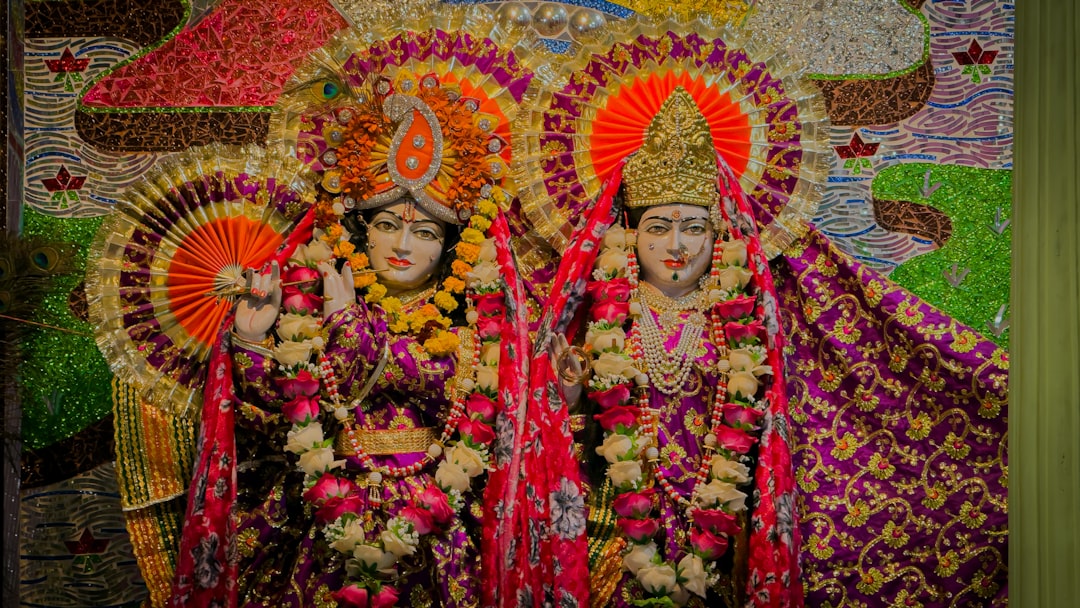
How to Apply the Message of Radha Ashtami in Daily Life
You do not have to wait for Radha Ashtami to practice its teachings.
Begin with simple actions.
Spend a few minutes daily chanting or remembering Radha-Krishna.
Practice gratitude before beginning your day.
Perform one act of kindness without seeking recognition.
Notice moments when ego creates conflict.
Try to listen more deeply in relationships.
Offer your actions mentally to the Divine.
Read spiritual teachings that strengthen devotion.
Most importantly, ask yourself:
“Is my spiritual practice making me more loving?”
That simple question captures much of the spiritual essence of Radha Ashtami.
The Radha Ashtami significance extends far beyond the celebration of a sacred festival.
It introduces us to one of the deepest ideas within Bhakti spirituality: that pure love itself can become a path toward the Divine.
The Radha Ashtami story, Radha Rani's appearance, her devotion to Krishna and the traditions surrounding her teach us about surrender, compassion, selflessness and unwavering love.
Understanding the Radha Ashtami spiritual meaning therefore means understanding what Radha represents within the heart of a devotee.
She reminds us that spiritual life is not simply about performing more rituals or acquiring more knowledge.
It is about transforming the quality of our love.
When devotion becomes selfless, when ego becomes quieter and when our actions begin to arise from compassion, spirituality moves from something we practise occasionally to something we live every day.
And that is perhaps the most beautiful lesson of Radha Ashtami.
Personal Session
Sometimes a general teaching is not enough. Your questions, challenges and spiritual journey are uniquely yours. A Personal Session gives you an opportunity to receive focused guidance, gain clarity about the challenges you are facing and understand how spiritual wisdom can be applied practically in your life. Book a Personal Session and take your next step toward clarity, awareness and inner transformation.
Book NowRead Latest Articles