

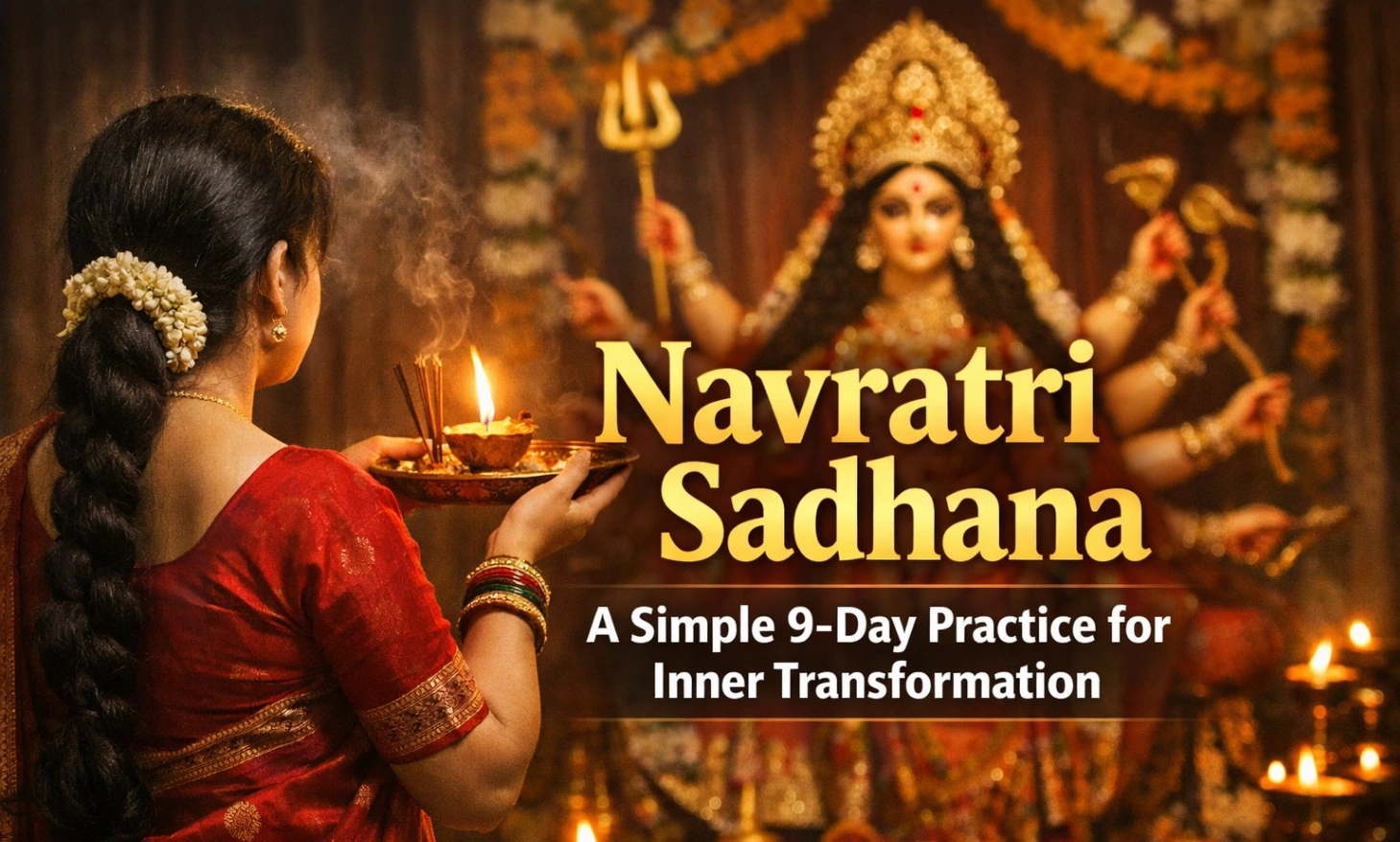
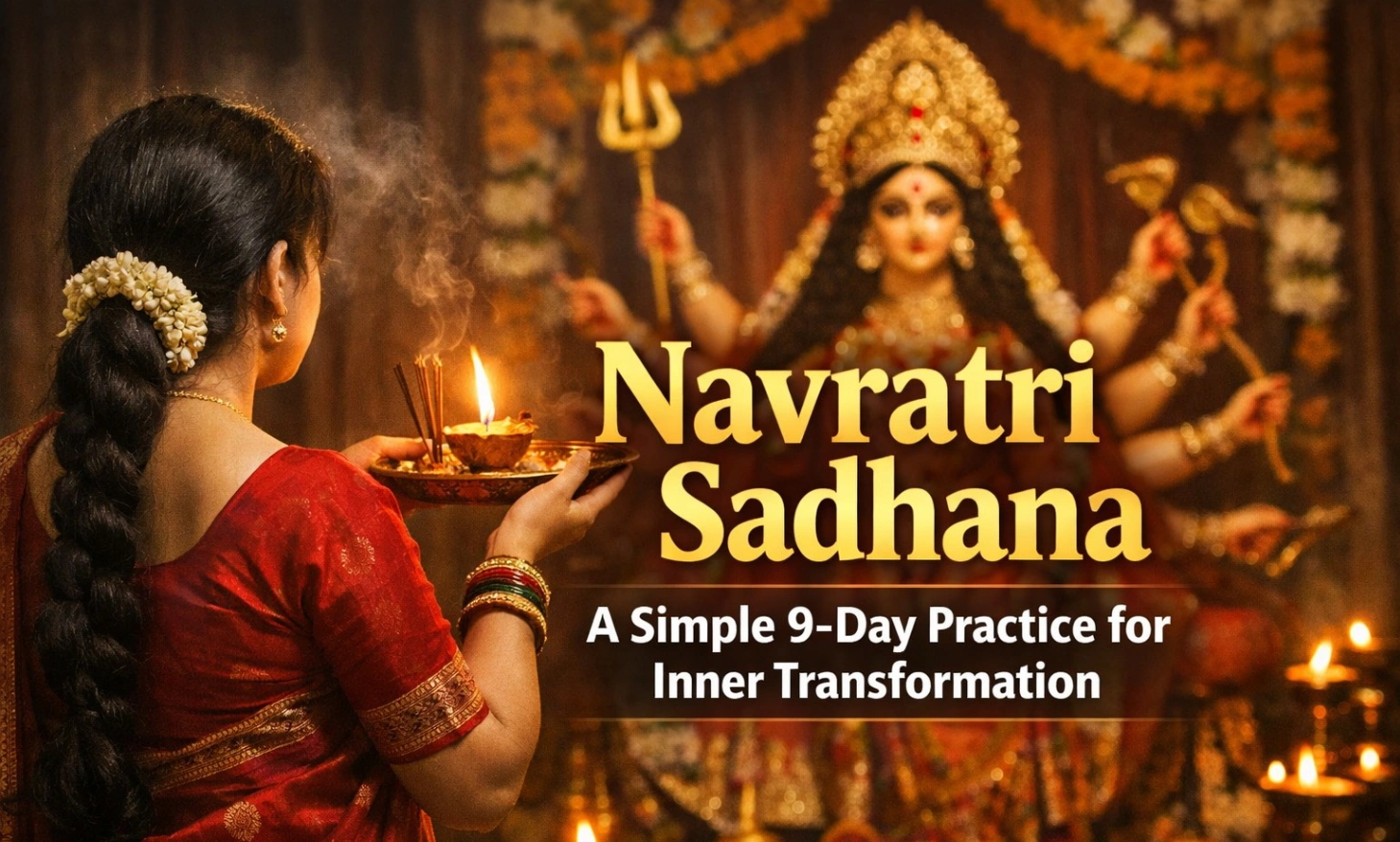
Navratri is not only a festival of celebration, devotion, and rituals. At its deeper level, it is a powerful period for spiritual growth and inner transformation. For centuries, spiritual seekers have used this sacred time for Navratri sadhana, meditation, fasting, and conscious living.
The nine days of Navratri symbolize the journey from ignorance to awareness, from inner chaos to spiritual clarity. When practiced with intention, Navratri spiritual practices can help purify the mind, awaken inner energy, and strengthen self-discipline.
In this guide, we will explore a simple Navratri sadhana routine that anyone can follow. Whether you are new to spirituality or already walking the path of self-growth, these practices can help you experience Navratri inner transformation and spiritual awakening.
Understanding the Spiritual Meaning of Navratri
Before beginning any Navratri meditation practice, it is important to understand the Navratri spiritual significance.
The word Navratri literally means nine nights. Spiritually, these nine nights represent the process of cleansing, awakening, and transformation.
During these nine days, devotees worship Goddess Durga, the symbol of divine feminine energy and inner power. But the deeper meaning of Navratri goddess Durga worship is not only external devotion. It is also about awakening the inner divine energy within us.
This is why many spiritual traditions recommend Navratri sadhana for spiritual growth. The energy during this period supports meditation, prayer, fasting, and spiritual discipline.
Navratri becomes a time when one can consciously begin a Navratri spiritual journey toward self-transformation.
Why Navratri Is Ideal for Spiritual Practices
Navratri is often considered one of the most powerful times for Navratri spiritual practices. During these nine days, many people follow fasting, mantra chanting, meditation, and self-reflection.
But why is Navratri so significant for spiritual seekers?
Because this period encourages:
Inner cleansing practices
Spiritual discipline
Meditation and awareness
Devotion and surrender
Connection with divine feminine energy
These practices gradually shift a person toward Navratri consciousness awakening and inner stability.
The true purpose of Navratri spiritual rituals is not merely religious observance but awakening inner power and clarity.
Preparing for Navratri Sadhana
Before beginning your Navratri sadhana guide, prepare yourself mentally and physically.
Spiritual growth requires consistency and discipline. Therefore, during Navratri, try to simplify your lifestyle and create a supportive environment for practice.
Here are a few simple steps to prepare:
1. Set a Clear Intention
Decide why you want to practice Navratri sadhana.
It may be for inner peace, spiritual awakening, emotional healing, or self-transformation.
2. Create a Sacred Routine
A daily Navratri spiritual routine can include meditation, mantra chanting, prayer, and self-reflection.
3. Simplify Your Lifestyle
Reduce unnecessary distractions like excessive social media or negativity.
This supports Navratri inner cleansing practices.
4. Follow Conscious Eating
Many people practice Navratri fasting and spirituality together because fasting helps improve awareness and discipline.
Even if you do not fast strictly, try to eat light and pure food.
A Simple 9-Day Navratri Sadhana Practice

Here is a simple Navratri meditation and spirituality routine that can help you move toward inner transformation.
You do not need complex rituals. The essence of Navratri sadhana steps lies in awareness, devotion, and consistency.
Day 1–3: Cleansing the Mind
The first three days of Navratri are associated with Goddess Durga, symbolizing the destruction of negativity.
During these days, focus on mental cleansing and awareness.
Practice:
• Morning meditation for 10–15 minutes
• Chant a simple Navratri mantra meditation such as “Om Dum Durgaye Namah”
• Reflect on your thoughts and emotional patterns
These practices support Navratri spiritual energy purification and help release mental clutter.
Day 4–6: Cultivating Inner Strength
The next three days symbolize the energy of Goddess Lakshmi, representing abundance, balance, and strength.
This stage of Navratri sadhana for spiritual growth focuses on building inner discipline and gratitude.
Practice:
• Gratitude journaling
• Conscious breathing meditation
• Acts of kindness and generosity
These steps strengthen Navratri devotion and meditation practices.
Day 7–9: Awakening Higher Awareness
The final three days represent Goddess Saraswati, the symbol of wisdom and higher consciousness.
At this stage, your focus shifts toward Navratri consciousness and devotion.
Practice:
• Longer meditation sessions
• Reading spiritual texts
• Deep self-reflection
These practices gradually support Navratri spiritual awakening and inner transformation.
Navratri Meditation for Beginners
If you are new to spirituality, you may wonder how to do sadhana during Navratri without complicated rituals.
The truth is, Navratri meditation for beginners can be very simple.
Start with just three steps:
Step 1: Sit in Silence
Find a quiet space and sit comfortably.
Close your eyes and observe your breath.
Step 2: Observe Your Thoughts
Do not try to control the mind.
Just watch your thoughts without judgment.
This builds self-awareness and inner clarity.
Step 3: End with Gratitude
Before finishing your meditation, express gratitude for life and the opportunity to grow.
This small practice becomes a powerful step in your Navratri spiritual path.
The Role of Discipline During Navratri
One of the most powerful lessons of Navratri is self-discipline.
Spiritual growth requires consistent effort.
During these nine days, even small commitments like waking early, meditating daily, or practicing mindfulness can create deep transformation.
This is why many spiritual teachers emphasize Navratri self-discipline practices.
Discipline strengthens the mind and supports Navratri spiritual lifestyle changes.
The Deeper Symbolism of Nine Days
The Navratri nine days spiritual meaning can also be understood psychologically.
Each day represents a stage of inner evolution:
Awareness of negativity
Letting go of old patterns
Building courage
Cultivating gratitude
Strengthening discipline
Developing compassion
Expanding awareness
Deepening devotion
Realizing inner peace
When practiced consciously, Navratri becomes a journey of self-transformation and spiritual awakening.
Benefits of Navratri Sadhana
Consistent Navratri spiritual growth practices can bring powerful benefits.
Some of the most common Navratri spiritual benefits include:
Inner Calm
Meditation and prayer reduce mental noise and emotional stress.
Improved Self-Awareness
You become more conscious of your thoughts, habits, and reactions.
Stronger Discipline
Daily spiritual practices improve focus and self-control.
Emotional Healing
Devotion and reflection help release negative emotions.
Connection with Higher Consciousness
Spiritual practices deepen your connection with divine feminine energy.

Navratri as a Journey of Self-Transformation
Ultimately, the purpose of Navratri spiritual transformation guide is not limited to nine days.
Navratri reminds us that spiritual growth is a lifelong journey.
These nine days simply create an opportunity to reconnect with ourselves.
When practiced sincerely, Navratri sadhana can awaken inner strength, clarity, and compassion.
And once you experience this transformation, you realize that spirituality is not separate from life.
It becomes a way of living consciously every day.
Navratri is much more than a festival. It is a sacred opportunity for inner awakening.
By practicing Navratri meditation, prayer, fasting, and self-reflection, you gradually move toward greater awareness and balance.
You do not need complicated rituals or strict rules.
What truly matters is sincerity, discipline, and devotion.
A simple 9-day Navratri sadhana practice can begin a powerful journey of self-transformation and spiritual awakening.
Let this Navratri be a time to reconnect with your inner strength, awaken your consciousness, and embrace the deeper meaning of life.
True transformation does not happen in just nine days. It begins with awareness and continues as a lifelong journey.
If you want to understand how to transform your mind, habits, and life consciously, explore the Design Your Destiny program by Sakshi Shree.
This powerful program combines spirituality, psychology, and practical wisdom to help you unlock your inner potential and create the life you truly desire.
Start your journey of self-transformation today.