
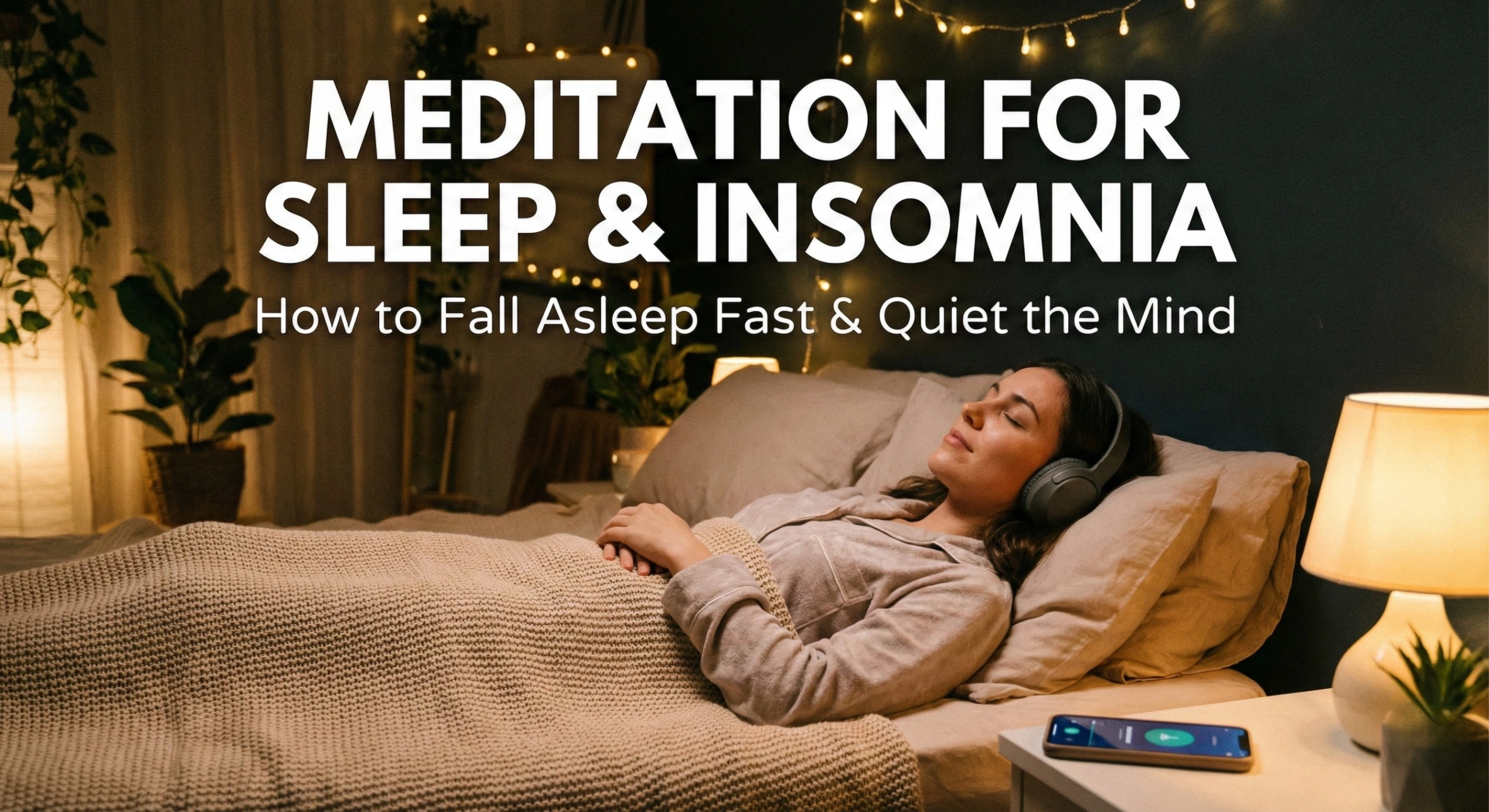
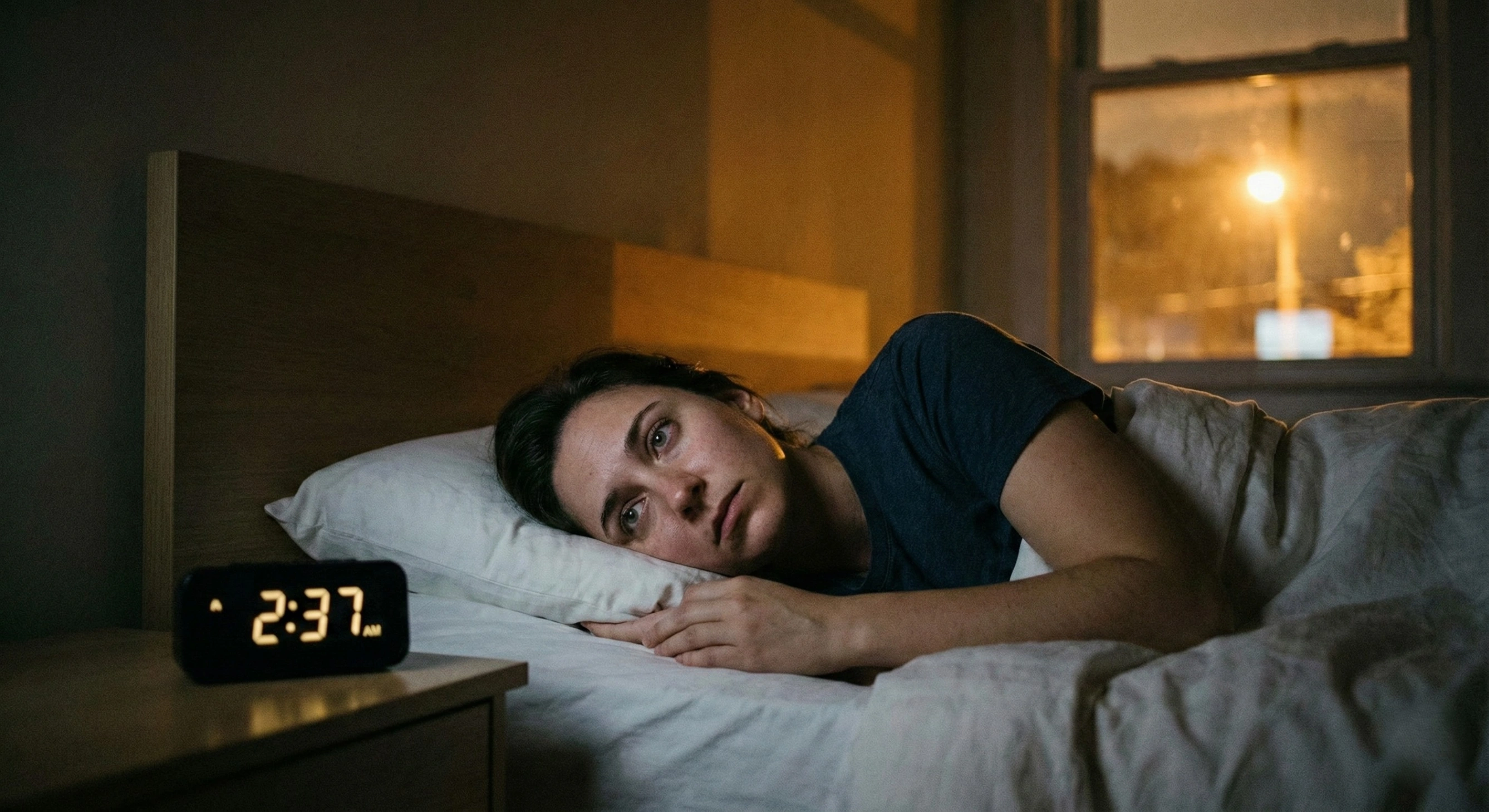
It’s 2:00 AM. You are exhausted. Your body is heavy, and your eyes are burning. But your brain? Your brain is wide awake, replaying an awkward conversation from three years ago or drafting a grocery list for next Tuesday.
If this sounds familiar, you are likely dealing with the frustration of racing thoughts at night. It is one of the most common reasons people suffer from sleep deprivation. You want to sleep, but you simply don't know how to quiet the mind once the lights go out.
While pills and supplements are common quick fixes, meditation for sleep offers a powerful, natural solution that addresses the root cause of the problem: a hyperactive nervous system.
In this guide, we will explore why your brain refuses to shut off and walk you through actionable techniques from progressive muscle relaxation to Yoga Nidra that will help you fall asleep fast and stay asleep.
Why Can’t I Shut My Brain Off to Sleep?
To solve the problem, we first have to understand it. When you lay down and find yourself suffering from overthinking at night, your body is essentially stuck in the wrong gear.
Modern life is stressful. Throughout the day, deadlines, caffeine, and screens keep your sympathetic nervous system (your "fight or flight" mode) active. Ideally, when you get into bed, your body should switch to the parasympathetic nervous system (the "rest and digest" mode).
For those with sleep anxiety or chronic insomnia, this switch doesn't flip. Your body is in bed, but your brain is still scanning for threats or solving problems. This is where meditation for insomnia comes in. It isn't just about "thinking nothing"; it is a physiological tool to manually flip that switch from alert to relaxed.
Does Meditation Help Insomnia? The Science
You might be skeptical. Can breathing and thinking really fix a biological issue like insomnia? The short answer is yes.
Studies have shown that mindfulness for sleep practices can lower cortisol (the stress hormone), reduce blood pressure, and slow down your heart rate. By giving your brain a single point of focus whether it’s your breath or a visualization; you interrupt the cycle of can't sleep anxiety.
You stop worrying about the fact that you aren't sleeping (which only keeps you awake longer) and start drifting into a state of deep sleep meditation.
4 Best Meditation Techniques to Fall Asleep Fast
You don’t need to be a monk or have a dedicated cushion to do this. You can do these right now, in your pajamas, under the covers. Here are four proven relaxation techniques for sleep.
1. The Body Scan for Sleep
This is perhaps the most effective technique for beginners. When we are stressed, we hold tension physically in our jaw, shoulders, and hands without realizing it. A body scan forces you to release that tension.
How to do it: Lie on your back. Close your eyes. Start at your toes. Focus all your attention there and consciously relax them. Slowly move your attention up to your ankles, calves, knees, and thighs, releasing tension as you go.
The Goal: By the time you reach the top of your head, your body should feel heavy and limp, primed for sleep.
2. 4-7-8 Breathing
Developed by Dr. Andrew Weil, this is a rhythmic breathing pattern that acts as a natural tranquilizer for the nervous system.
How to do it: Exhale completely through your mouth. Close your mouth and inhale quietly through your nose to a count of 4. Hold your breath for a count of 7. Exhale completely through your mouth, making a whoosh sound to a count of 8.
Why it works: The long exhale forces your heart rate to slow down, making it physically difficult to remain anxious.
3. Progressive Muscle Relaxation (PMR)
If you find that your body is restless or twitchy (often called "tired but wired"), progressive muscle relaxation is your best bet.
How to do it: Unlike the body scan where you just "let go," in PMR you actively squeeze your muscles first. Tense your toes as hard as you can for 5 seconds, then abruptly release. Feel the tension drain away. Move to your calves, then thighs, working your way up the body.
The Benefit: The contrast between extreme tension and release helps your brain recognize what "relaxation" actually feels like.
4. Guided Imagery for Sleep
If your racing thoughts at night are visual meaning you are picturing tomorrow's meeting; you need to replace those images with calming ones.
How to do it: Imagine a scenario that is perfectly safe and boringly pleasant. Maybe you are walking down a long, warm beach. Maybe you are floating in a canoe on a still lake. Focus on the sensory details: the smell of the pine trees, the warmth of the sun, the sound of water.
The Result: You trick your brain into a dream-like state before you are actually asleep.
Guided vs. Unguided: Which is Better?
Should you do this alone or listen to a recording?
If you are a beginner, silence can sometimes be deafening. If it’s too quiet, your thoughts might get louder. In this case, guided sleep meditation is incredibly helpful.
Sleep Talk Down: These are audio tracks where a narrator speaks in a rhythmic, soothing voice to guide you into sleep. They often use NLP (Neuro-Linguistic Programming) to talk your subconscious down from high alert.
Sleep Music: If voices distract you, try ambient sleep music or binaural beats designed to mimic the brain wave frequencies of deep sleep (Delta waves).
You can find thousands of free options on YouTube or apps like Calm and Headspace. Look for titles like "Deep Sleep Meditation" or "Yoga Nidra for Sleep" (a powerful form of "non-sleep deep rest").
Creating the Perfect Environment
Meditation is powerful, but it can’t fight a terrible sleep environment. To maximize your chances of success, pair your meditation with these natural sleep aids and hygiene tips:
Cool the Room: Your body temperature needs to drop to initiate sleep. Keep your bedroom around 65°F (18°C).
Darkness Matters: Even a little light from a streetlamp can disrupt melatonin. Use blackout curtains or an eye mask.
The "Brain Dump": If you are worried about forgetting tasks, write them down on a piece of paper before you get into bed. This helps clear your mind before bed by assuring your brain that the information is safe.
When to Seek Help
If you have tried these techniques for a month and still suffer from chronic trouble falling asleep, you may have a sleep disorder that requires professional attention. However, for the vast majority of people, the barrier to sleep is stress and an overactive mind.
Learning how to fall asleep fast is a skill. Just like going to the gym, it takes a few reps to see results. Tonight, when you crawl under the covers, don't pressure yourself to "sleep instantly." Instead, focus on "resting deeply." Try the 4-7-8 breathing or a simple body scan.
You might be surprised at how quickly the morning comes.