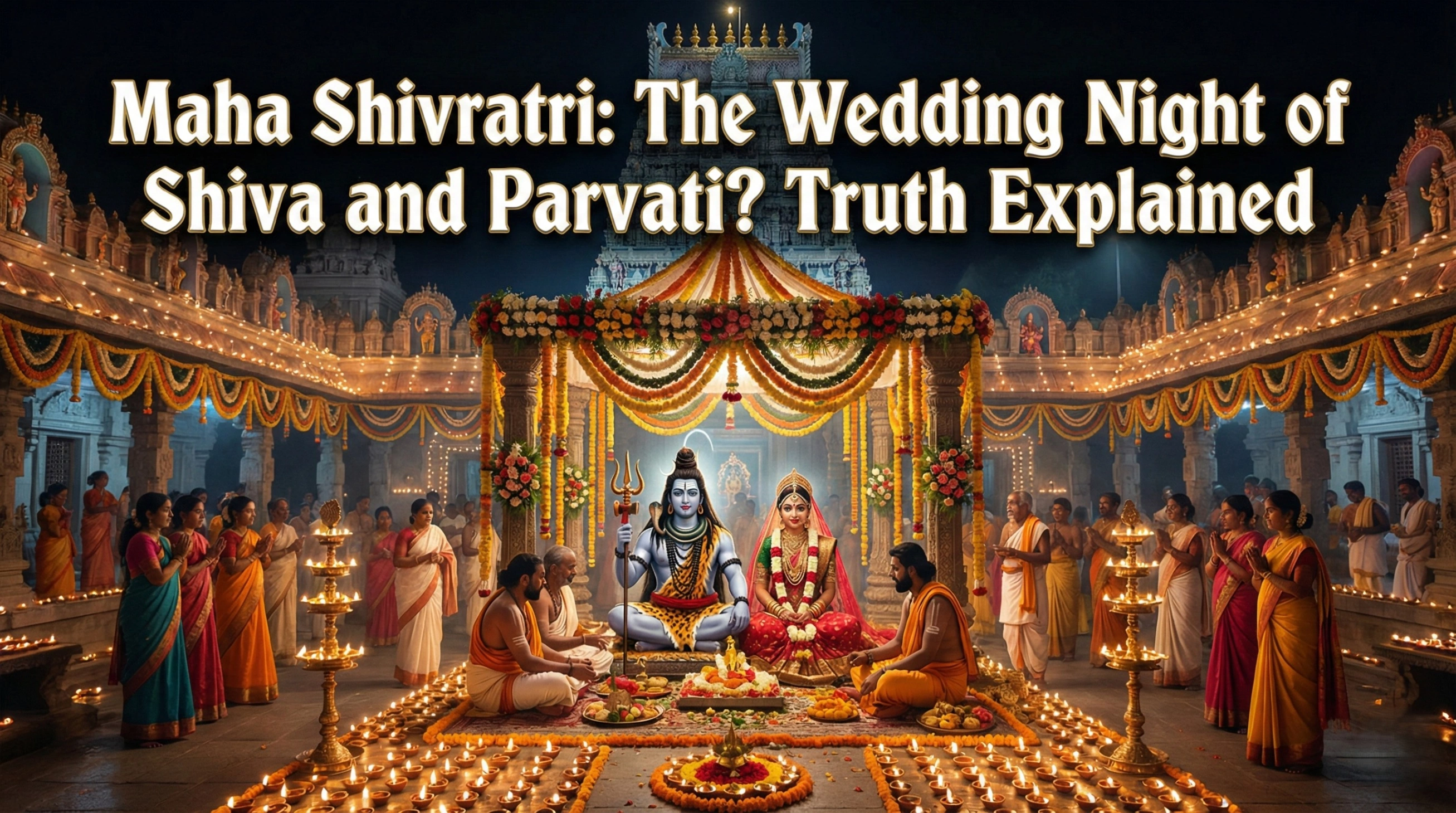
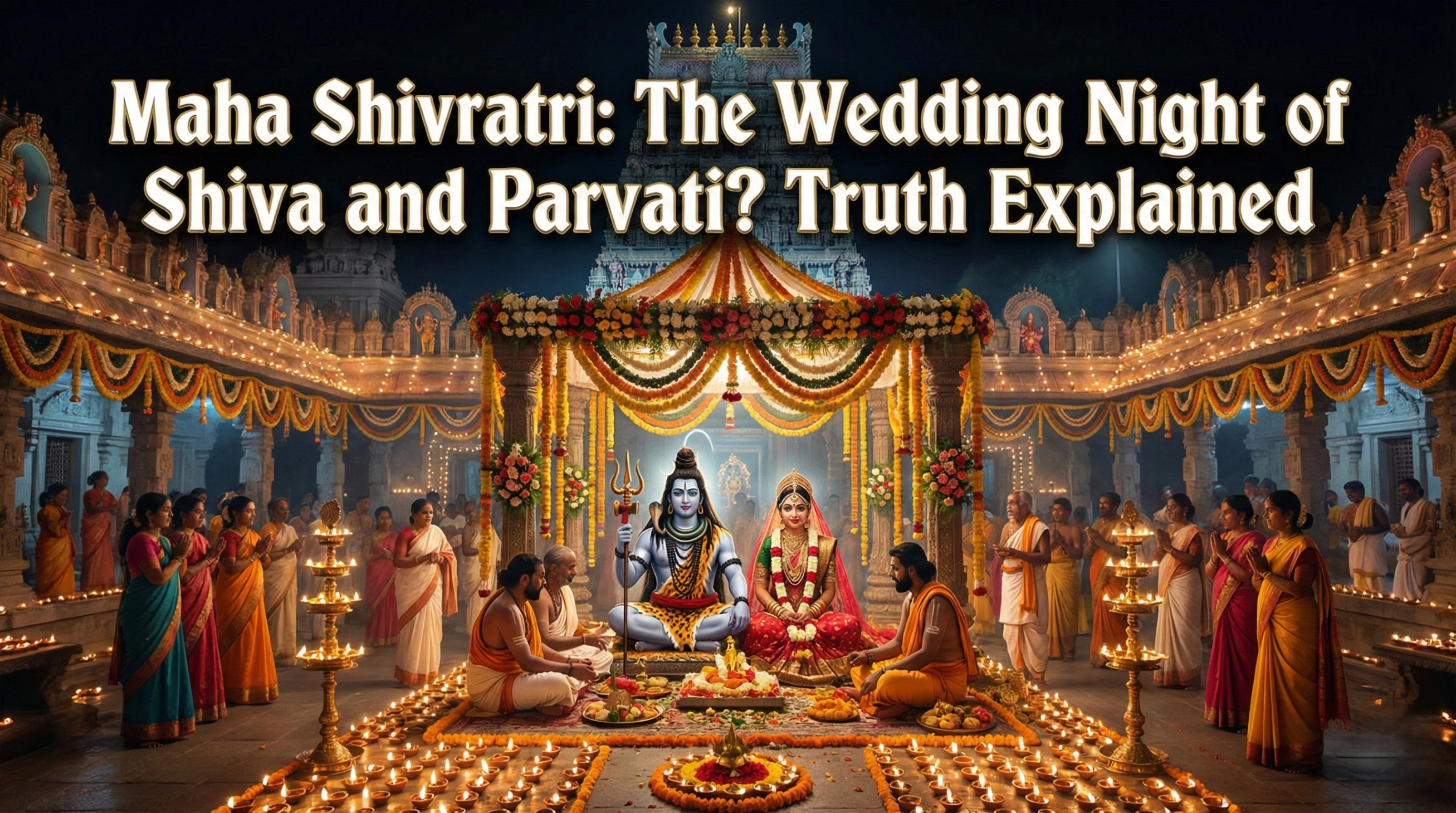
Many people believe that Maha Shivratri is the wedding night of Lord Shiva and Goddess Parvati. This idea is widely shared in conversations, social media posts, and even casual religious discussions. But is Maha Shivratri really Shiva and Parvati’s marriage night, or is there a deeper spiritual truth behind this sacred night?
In this blog, we’ll gently separate myth from reality, explore why this belief exists, and understand the true spiritual significance of Maha Shivratri according to Hindu philosophy, yogic traditions, and ancient scriptures.
Why Do People Believe Maha Shivratri Is Shiva–Parvati’s Wedding Night?
The association between Maha Shivratri and the marriage of Shiva and Parvati comes mainly from regional folklore and devotional storytelling. In several parts of India, especially in North India, devotees celebrate Maha Shivratri with symbolic wedding rituals, processions, and songs describing Parvati’s union with Shiva.
Over time, this cultural expression became interpreted literally leading many to believe that Maha Shivratri marks Shiva and Parvati’s wedding anniversary.
However, tradition and scripture don’t always mean the same thing.
Did Shiva Marry Parvati on Maha Shivratri?
This is one of the most searched questions related to Maha Shivratri and the answer is no, not exactly.
Classical Hindu texts such as the Puranas do describe the marriage of Shiva and Parvati, but they do not unanimously state that the wedding took place on Maha Shivratri. Different scriptures and regional traditions mention different timelines.
Maha Shivratri, as described in ancient texts, is not primarily a marriage celebration; it is a night of intense spiritual transformation.
Maha Shivratri Meaning in Hinduism
The term Shivratri literally means “the night of Shiva.” But this night is not about external celebration; it’s about inner awakening.
According to yogic and spiritual understanding, Maha Shivratri is significant because:
It marks a time when natural energies support meditation
The planetary alignment is believed to help the upward movement of consciousness
It symbolizes transcending the physical self
This is why Maha Shivratri is observed with fasting, night-long vigils, silence, and meditation, not festivities.
The Spiritual Significance of Maha Shivratri
Rather than focusing on marriage rituals, the spiritual essence of Maha Shivratri lies in self-realization.
Shiva represents pure consciousness, while Parvati represents creative energy (Shakti). Their union is symbolic, not literal.
This night signifies:
The merging of energy and awareness
The balance between stillness and movement
The awakening of higher consciousness
In spiritual terms, Maha Shivratri is about inner union, not outer ceremony.
Shiva–Shakti Union: Symbolic, Not Literal
One of the most misunderstood aspects of Maha Shivratri is the idea of “union.”
The Shiva–Shakti union is not about a physical wedding. It represents:
Consciousness (Shiva) awakening within energy (Shakti)
A seeker moving from ignorance to awareness
The dissolution of ego and attachment
This is why many yogic traditions consider Maha Shivratri a powerful night for spiritual growth, not a romantic or celebratory event.
Maha Shivratri Myth vs Reality
The Myth:
Maha Shivratri is the wedding night of Shiva and Parvati, celebrated like an anniversary.
The Reality:
Maha Shivratri is a spiritually charged night dedicated to meditation, stillness, and inner transformation. The wedding symbolism is devotional and cultural, not scriptural fact.
Both expressions coexist but confusing symbolism with literal history leads to misunderstanding.
Why Is Maha Shivratri Celebrated at Night?
Unlike most Hindu festivals celebrated during the day, Maha Shivratri is observed through the night.
This is because:
Night represents silence and inward focus
Shiva is associated with stillness and transcendence
Yogic practices are believed to be more effective at night
Staying awake is symbolic of remaining conscious, not slipping into ignorance or unconscious living.
Maha Shivratri Yogic Significance
In yogic philosophy, Maha Shivratri is deeply connected to Adiyogi, the first yogi.
It is believed that on this night:
Shiva became completely still
Consciousness reached its peak
The science of yoga was transmitted
This is why serious spiritual seekers treat Maha Shivratri as a night of discipline, not celebration.
Maha Shivratri Rituals and Their Meaning
Many rituals associated with Maha Shivratri are symbolic:
Fasting → Control over desires
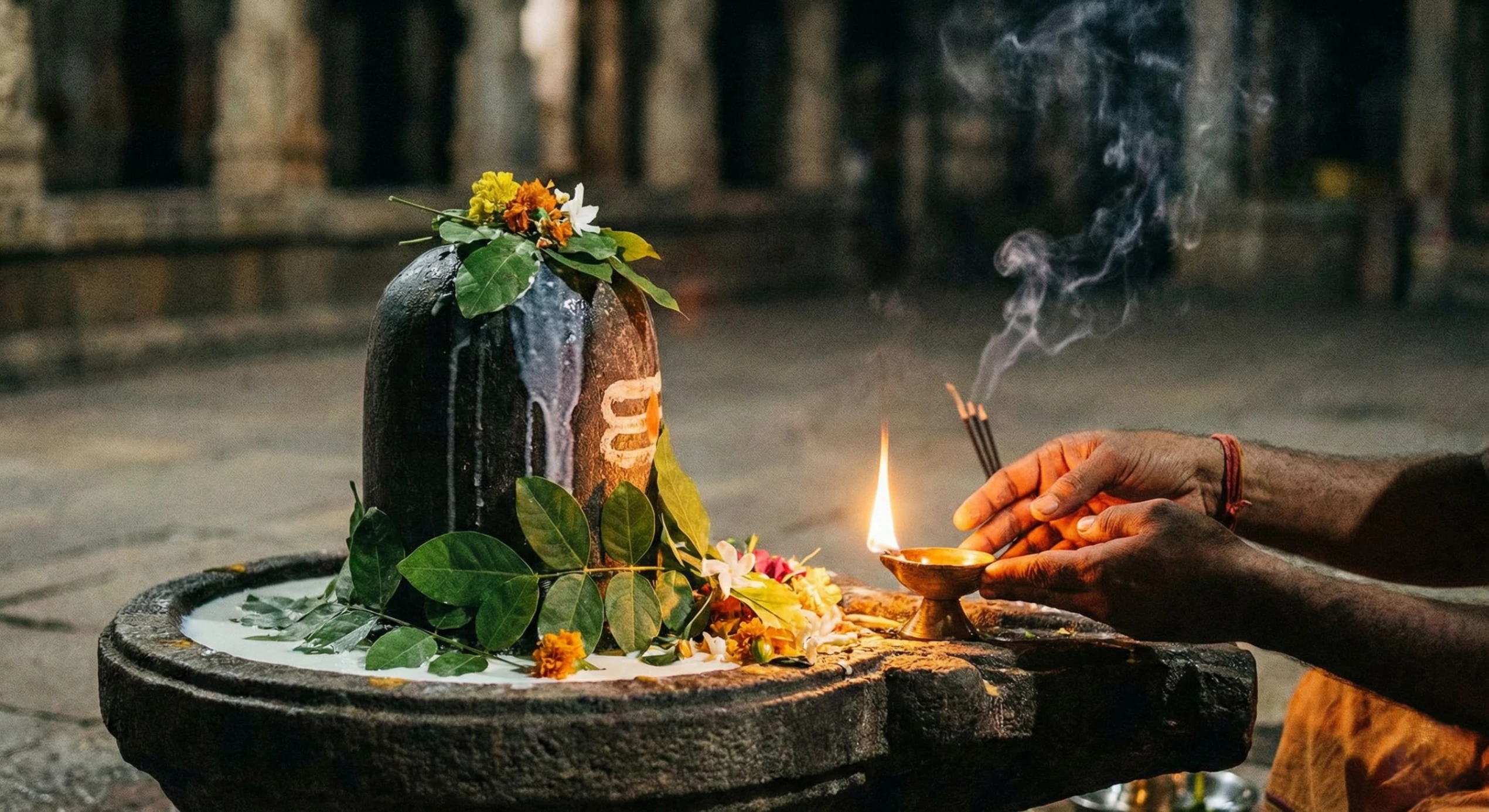
Abhishekam → Purification of awareness
Bilva leaves → Letting go of ego
Chanting “Om Namah Shivaya” → Aligning with higher truth
None of these rituals point to a wedding; they point to inner cleansing.
Is Maha Shivratri a Marriage Day or a Spiritual Night?
This question captures the heart of the confusion.
Maha Shivratri can be seen as:
A devotional celebration for householders
A spiritual opportunity for seekers
Both are valid, but the core essence of Maha Shivratri remains spiritual awakening, not marriage.
Maha Shivratri 2026 and Beyond: What Should We Remember?
As Maha Shivratri continues to be celebrated every year, it’s important to reconnect with its deeper meaning.
Rather than asking:
“Is this Shiva and Parvati’s wedding night?”
A more powerful question is:
“How can this night help me rise above ignorance?”
That’s where the true blessing of Maha Shivratri lies.
Maha Shivratri is not literally the wedding night of Shiva and Parvati. The idea exists due to cultural storytelling and devotional symbolism. Spiritually and scripturally, Maha Shivratri is about the union of consciousness and energy within the seeker.
It’s a night to dissolve ego, deepen awareness, and reconnect with the timeless stillness that Shiva represents.
Still wondering how to truly align with the energy of Maha Shivratri? Learn the exact date, deeper significance, proper puja steps, and fasting rules to observe Shivratri with awareness and devotion.
Read Next: Maha Shivaratri 2026: Date, Significance, Puja Vidhi & Fasting Rules