

A deep blend of spirituality, psychology, and modern science
Inner peace is not an external luxury — it is an internal skill.
Yet in modern life, even the simplest moments feel heavy. Many people silently ask:
“Why can’t I keep my mind peaceful?”
“Why does my mind keep wandering?”
“Why do I lose peace so easily?”
The problem is not you.
It is the condition of your mind—shaped by lifestyle, trauma, overstimulation, and spiritual disconnection.
In this detailed guide, we will deeply explore why the mind becomes restless and how you can reclaim inner calm, using both scientific understanding and spiritual wisdom.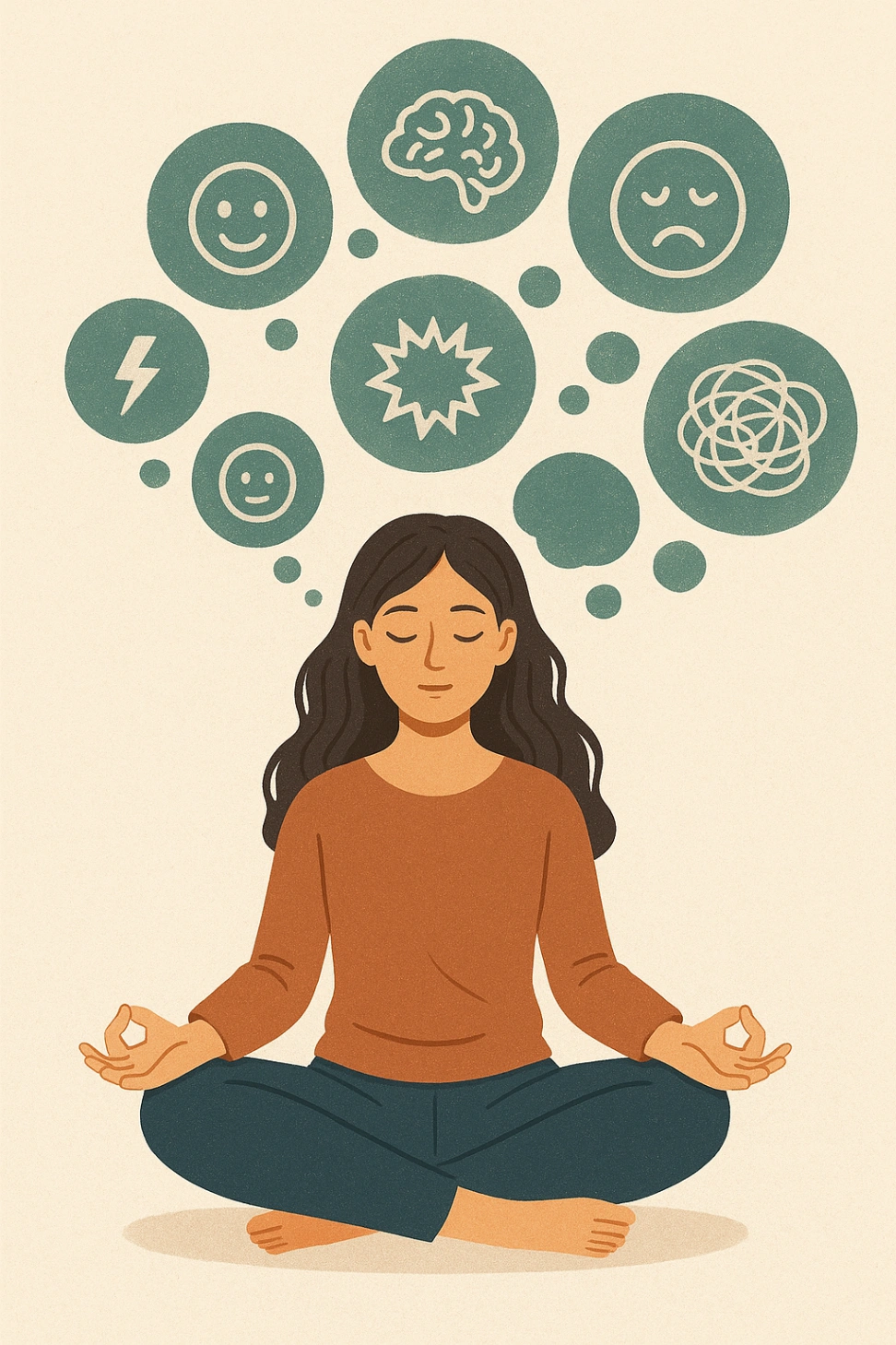
Why the Mind Becomes Restless
Understanding the root causes in depth
A restless mind is not an accident. There are clear reasons why millions struggle with internal chaos.
The Overstimulated Modern Brain
We live in a world where the brain receives more data in a day than it used to receive in a month.
Notifications
Reels
Messages
Emails
Constant news
Unlimited content consumption
Every ping forces the mind to switch, and switching is mental labor.
This leads to cognitive overload, and cognitive overload leads to mental restlessness.
This is why many people now say:
“Why my mind is never peaceful — even when I am not doing anything?”
Because your mind is not resting.
It is processing.
Emotional Overload & Suppression
Humans were never taught how to deal with emotions.
We were taught:
“Don’t cry.”
“Stay strong.”
“Ignore it.”
“Move on.”
But emotions don’t disappear.
They get stored.
Suppressed emotions create internal turbulence. They return as:
overthinking
irritation
anxiety
random sadness
anger
low self-worth
This emotional backlog is one of the biggest reasons behind mental restlessness.
Psychological Conditioning: The Mind Loves Problems
The human mind evolved for survival, not happiness.
Your mind constantly scans for:
danger
threats
mistakes
fear
what can go wrong
This is why “why does the mind create unnecessary stress?” is actually a biological instinct.
Your mind thinks it is protecting you, but in reality, it is exhausting you.
Inner Conflict: When Life and Spirit Don’t Match
Spiritually, restlessness arises when:
your choices don’t match your truth
your actions don’t match your values
your lifestyle doesn’t match your soul
you are living for society, not for yourself
This internal conflict creates a silent inner war.
The soul whispers, “This is not right.”
The mind answers, “But I have to.”
This friction destroys peace.
Why Overthinking Destroys Mental Peace
Overthinking is not “thinking too much.”
It is “thinking in circles without resolution.”
The Chemistry of Overthinking
When you overthink, your brain releases:
cortisol (stress hormone)
adrenaline (fear hormone)
These chemicals keep the mind in fight-or-flight mode.
This is why overthinking feels like:
racing thoughts
heaviness
tightness in the chest
rapid heartbeat
uneasy feeling
This is why “Why does overthinking disturb mental peace?” is not just emotional — it is physiological.
Overthinking Creates Imaginary Problems
Most things people worry about never happen.
But the mind lives them as if they are real.
Your body reacts to imagined danger exactly like real danger.
That’s why an overthinker feels tired even after resting.
The Belief Trap
Overthinking creates false stories:
“I am not good enough.”
“People will judge me.”
“What if something goes wrong?”
“What if I fail?”
These stories feel real but are just mental projections.
The Overthinking Loop
Every overthinking cycle goes like this:
Trigger → Thought → Fear → More Thoughts → Overload → Exhaustion
This loop keeps you trapped unless you consciously break it.
WANT TO BREAK THE OVERTHINKING LOOP?
Try our 5-Minute Guided Peace Meditation — specially designed for racing thoughts.
Link at the end of the blog.
How Social Media Steals Inner Peace
This is one of the most important insights for modern life.
People ask:
“How does social media affect inner peace?”
Here is the truth:
Comparison Poisoning
When you scroll, you see only the best parts of others:
best moments
best photos
best achievements
You compare them with your real life.
This creates:
insecurity
self-doubt
jealousy
dissatisfaction
a feeling of not being enough
Comparison kills peace faster than anything else.
Dopamine Hijack
The brain gets a dopamine hit every time you scroll.
Dopamine = craving.
This turns your mind into an addict that constantly wants:
more content
more stimulation
more distraction
This is why meditation feels difficult — your brain is addicted to noise.
Reduced Attention Span
Short videos rewiring your brain for 10-second attention windows.
A mind that can’t focus, can’t be peaceful.
Emotional Contamination
You don’t realize it, but your feed exposes you to:
bad news
arguments
extreme opinions
hate
toxic content
Even if you scroll past, your subconscious absorbs it.
This weakens emotional stability.
Why the Mind Wanders (And How to Control It)
Many people ask:
“How to stop the mind from wandering?”
First, understand why it wanders.
The Mind Seeks Escape
The mind escapes reality because:
reality feels boring
reality feels uncomfortable
reality feels painful
The wandering mind is trying to escape the present moment.
The Mind Craves Novelty
Your brain loves new things.
The moment something feels repetitive, it drifts away.
Untrained Mind = Unfocused Mind
A wandering mind is like a child.
It needs training.
Meditation is that training.
How to Reduce Wandering
Focus on breath
Focus on senses
Practice micro-meditations
Reduce digital distraction
Write thoughts down
Do one task at a time
These techniques train the mind to stay present.
The Spiritual Reasons Behind Mental Restlessness
This is where ancient wisdom answers
“What is the spiritual reason behind mental restlessness?”
You Think You Are the Mind
Spiritual texts teach:
You are the witness, not the mind.
But we over-identify with thoughts.
This creates suffering.
Karmic Imprints
Unhealed karma creates emotional turbulence.
This is why some people feel heavy or restless even without a reason.
Desire & Attachment
Buddha said:
“Desire is the root of suffering.”
When your happiness depends on external things, your peace becomes unstable.
Living Against Inner Truth
When you live:
against your values
against your intuition
against your purpose
the soul becomes restless.
True peace comes when your inner and outer worlds align.
How to Regain Inner Peace in Daily Life
Here’s how to practically learn
“how to find inner peace in daily life.”
Emotional Hygiene
Just like physical hygiene, you need emotional cleaning:
journaling
expressing feelings
healthy communication
therapy or spiritual counseling
Emotionally clean = mentally peaceful.
Digital Boundaries
Try:
No phone for the first 1 hour of morning
No scrolling 1 hour before sleep
Social media fast once a week
This alone brings enormous peace.
Nature Therapy
Nature heals overstimulation.
Just 15 minutes in nature reduces cortisol by 30%.
Breathwork
Breath is the remote control of the mind.
Slow breath = calm mind
Fast breath = anxious mind
Doing One Thing at a Time
Multitasking kills peace.
Focus brings peace.
Best Meditation for a Restless Mind
If you’re searching for the best meditation for a restless mind, here are the top ones:
Anapanasati (Breath Awareness)
Most effective for beginners.
Mantra Meditation
Repetitive sound anchors a wandering mind.
Body Scan Meditation
Great for anxiety and overthinking.
Open Awareness
Observe, don’t fight the mind.
This creates mental silence naturally.
How to Maintain Peace in Stressful Moments
People ask:
“How to maintain peace of mind in stressful situations?”
Here are 5 powerful tools:
Respond, don’t react
Slow breathing
Detach from outcome
Ground your senses
Change perspective
These break emotional overload instantly.
How to Achieve Mental Silence
Mental silence is not thoughtlessness.
It is spaciousness between thoughts.
You achieve it by:
meditation
reducing stimulation
healing emotional wounds
simplifying life
self-awareness
Mental silence brings clarity.
Clarity brings peace.
If you truly want to experience deep inner peace, join our upcoming event : https://sciencedivine.org/event-new/
FREE “Calm Your Mind” Guided Meditation Session
Designed specifically for:
✔ Overthinkers
✔ People with anxiety
✔ Restless minds
✔ Emotional overwhelm
Click here to book your session.
POPULAR FAQS
1. Why can’t I keep my mind peaceful?
Because of overstimulation, emotional overload, and lack of mental training.
2. What is the root cause of a restless mind?
Fear, trauma, overstimulation, and unhealed emotions.
3. How does social media affect inner peace?
It overstimulates the brain, destroys attention span, and triggers comparison.
4. Why does overthinking disturb mental peace?
Because it activates stress chemicals and keeps the mind in fight-or-flight mode.
5. How do I stop the mind from wandering?
Through meditation, breathwork, grounding, and reducing digital distractions.
6. What is the spiritual reason behind mental restlessness?
Disconnection from the true self, karmic imprints, desires, and lack of alignment.