

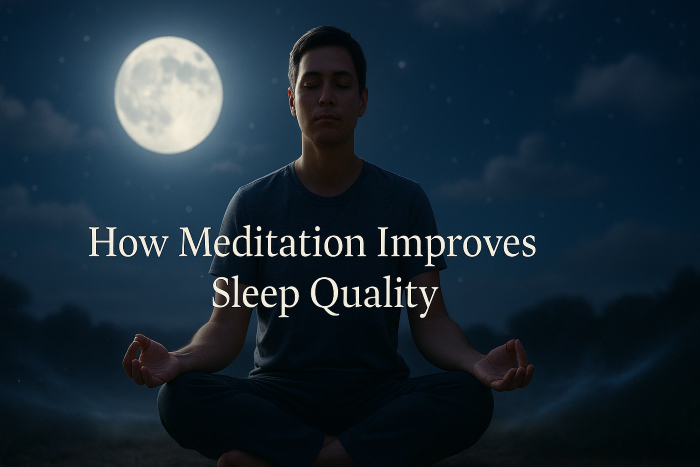
In today’s fast-paced world, sleeplessness and racing thoughts have become common companions at night. Many people lie awake scrolling their phones or worrying about the next day. But what if the secret to deep, restful sleep wasn’t in a pill or gadget but in your breath and awareness? That’s where meditation and sleep beautifully connect. Studies show that practicing meditation before sleep can improve your sleep quality, reduce insomnia, and promote overall relaxation. In this blog, we’ll explore how meditation affects sleep, why it works scientifically, and simple meditation techniques you can try tonight for better rest.
The Connection Between Meditation and Sleep
Meditation and sleep share one essential goal — calming the mind and relaxing the body. When you meditate, your brain shifts from beta waves (active thinking) to alpha and theta brain waves, which are also present during the early stages of sleep. This overlap helps your body transition naturally from wakefulness to rest.
Through mindfulness meditation, yoga nidra, or guided sleep meditation, your mind learns to release the day’s stress and gently drift into sleep. Meditation slows down your heart rate, reduces cortisol (the stress hormone), and promotes the release of melatonin; the hormone responsible for regulating your sleep cycle.
The Science of How Meditation Affects Sleep
Modern neuroscience explains that how meditation changes brain and sleep patterns is both fascinating and measurable.
When you meditate regularly:
The amygdala (the brain’s stress center) becomes less reactive.
The prefrontal cortex (responsible for focus and control) strengthens.
The production of serotonin and melatonin increases, helping you feel calm and sleepy.
Meditation activates your parasympathetic nervous system, also known as the “rest and digest” mode. This natural response slows your breathing, relaxes your muscles, and signals to your brain that it’s safe to sleep.
Research has shown that people who meditate for even 10 minutes before bed fall asleep faster, experience fewer night awakenings, and wake up feeling more refreshed.
Why Meditation Helps You Sleep Better
The reason why meditation helps you sleep lies in its power to control thoughts and emotions. Most sleep problems arise not from physical fatigue but from mental overactivity; the endless stream of “what-ifs” that keep your brain buzzing.
Through guided sleep meditation or mindfulness breathing, you redirect your attention from anxious thoughts to the present moment. This helps reduce overthinking, improve emotional stability, and restore your natural sleep rhythm.
Meditation also helps balance your circadian rhythm — your body’s internal clock which is often disrupted by screen time and stress.
Meditation vs Sleep: Are They the Same?
Many people ask, can meditation replace sleep? The short answer is not entirely. Meditation can mimic certain stages of sleep (especially the deep relaxation of theta waves), but it doesn’t fully replace it.
However, experienced meditators often need less sleep because meditation provides restful awareness — a state that recharges the brain more efficiently than light sleep. In essence, meditation doesn’t replace sleep; it enhances it. It’s like giving your brain a power nap of pure awareness.
Best Meditation Techniques for Sleep
Here are some simple yet powerful techniques to help you sleep better with meditation:
1. Mindfulness Meditation
Sit or lie down comfortably. Focus on your breath. When thoughts arise, observe them without judgment and return to your breathing. This trains your mind to detach from worries and prepares you for sleep.
2. Body Scan Meditation
Lie on your back and bring awareness to each part of your body from your toes to your head. Feel the tension dissolve as you breathe deeply. This method is great for relaxation techniques before bed.
3. Guided Sleep Meditation
Use a recording or app where a soothing voice leads you through imagery and relaxation cues. These guided meditations help quiet mental chatter and gently transition you into deep sleep and relaxation.
4. Yoga Nidra (Yogic Sleep)
This ancient technique takes you to the edge between wakefulness and sleep; the “hypnagogic” state. In yoga nidra for sleep, you follow structured guidance to achieve profound rest. Many call it the “sleep of the yogis” because 30 minutes of yoga nidra can feel like hours of deep sleep.
5. Breathing Exercises Before Bed
Try 4-7-8 breathing: inhale for 4 seconds, hold for 7, exhale for 8. This activates the parasympathetic nervous system and reduces anxiety making it one of the best sleep meditation techniques.
Creating a Nighttime Meditation Routine
A consistent bedtime meditation routine can reset your mind and body’s relationship with sleep. Here’s how to begin:
Turn off screens 30 minutes before bed.
Dim the lights and light a candle or use soft instrumental music.
Meditate for 10–15 minutes focusing on your breath or a guided sleep track.
Keep a gratitude journal to release the day’s stress.
Over time, this habit teaches your brain that meditation signals rest, helping you fall asleep faster and sleep more deeply.
Spiritual Connection Between Meditation and Sleep
In spiritual traditions, sleep and meditation are seen as bridges to the subconscious mind. During deep meditation, the conscious mind quiets, and the subconscious healing begins; similar to what happens during deep sleep.
When you meditate regularly, you may experience lucid dreaming, vivid imagery, or heightened awareness during sleep; signs of a mind becoming more conscious even at rest.
Ancient yogis describe yogic sleep as a doorway to self-realization where the body sleeps, but awareness remains awake.
How Much Sleep Do Meditators Need?
Interestingly, people who meditate daily often report needing less sleep while feeling more energized. Studies suggest that regular meditators can maintain alertness with fewer hours of sleep, as meditation replenishes mental clarity and reduces fatigue. However, for most people, meditation complements, not replaces; the need for 7–8 hours of quality sleep.
The Benefits of Meditation for Sleep
Fall asleep faster and stay asleep longer
Reduce symptoms of insomnia and anxiety
Lower heart rate and blood pressure
Balance melatonin production
Improve overall mood and focus
Enhance dream recall and subconscious awareness
With daily practice, meditation becomes not just a sleep aid but a lifestyle that aligns mind, body, and spirit.
Frequently Asked Questions (FAQs)
Q1. Can meditation replace sleep?
No, meditation cannot fully replace sleep, but it enhances rest quality by calming the nervous system and reducing the total sleep needed.
Q2. What is the best meditation for sleep?
Yoga nidra, mindfulness breathing, and guided sleep meditation are the best techniques for improving sleep quality.
Q3. How long should I meditate before bed?
Start with 10–15 minutes of meditation before sleep. Even short sessions can help relax your body and clear your mind.
Q4. Can meditation cure insomnia?
Yes, regular meditation helps reduce insomnia by lowering stress and reprogramming your mind to relax naturally.
Q5. What are alpha and theta brain waves in meditation?
Alpha waves indicate relaxed wakefulness, while theta waves occur in light sleep and deep meditation both help transition the body into rest.
The mysteries of meditation and sleep are no longer mysteries — they’re science-backed truths. By making meditation part of your nightly routine, you allow your body to rest deeply, your mind to clear, and your soul to heal.
So tonight, instead of scrolling your phone, close your eyes, breathe deeply, and let meditation guide you into blissful rest.