How is Maha Shivaratri celebrated, and why does this sacred night hold such deep importance for millions of devotees? Maha Shivaratri is not just another Hindu festival marked by rituals and fasting. It is a spiritually charged night dedicated to Lord Shiva, symbolizing inner awakening, discipline, and the dissolution of ignorance. Celebrated on the 14th night of the lunar month of Phalguna, Maha Shivaratri invites devotees to turn inward through worship, meditation, and conscious awareness.
Unlike festive celebrations filled with outward joy, Maha Shivaratri is inward, silent, and transformative. Let us explore how Maha Shivaratri is celebrated, step by step, and understand the deeper meaning behind each tradition.
The Spiritual Significance of Maha Shivaratri
The significance of Maha Shivaratri in Hinduism goes far beyond mythology. Spiritually, this night represents the convergence of cosmic energies that support inner stillness and heightened awareness. According to yogic traditions, the planetary alignment on this night makes it easier for a seeker to experience higher states of consciousness.
This is why Maha Shivaratri is celebrated at night. Staying awake is not meant as a physical challenge, but as a spiritual practice to remain alert, mindful, and present. Lord Shiva represents pure consciousness, and Maha Shivaratri is the night dedicated to aligning oneself with that state.
How Maha Shivaratri Celebration Begins
Maha Shivaratri celebrations usually begin early in the morning with purification rituals. Devotees wake up before sunrise, bathe, and wear clean or white clothes as a symbol of purity. Homes and temples are cleaned, and Shiva temples begin preparations for day-long and night-long worship.
Many devotees observe a Maha Shivaratri vrat, or fast, as an act of self-discipline and devotion. Fasting rules vary, but the essence remains the same: controlling the senses to deepen spiritual focus.
Maha Shivaratri Fasting Rules and Their Meaning
Maha Shivaratri fasting rules are an important part of the celebration. Some devotees observe a strict nirjala fast, abstaining from both food and water, while others consume fruits, milk, and light vrat-friendly foods.
Why do people fast on Maha Shivaratri? Fasting is believed to purify the body and mind, reduce distractions, and conserve energy for spiritual practices like chanting and meditation. It is not about punishment, but about awareness and restraint.
Importantly, fasting is not compulsory on Maha Shivaratri. Devotion, sincerity, and mindfulness matter more than rigid rules.
Maha Shivaratri Puja Rituals and Abhishekam
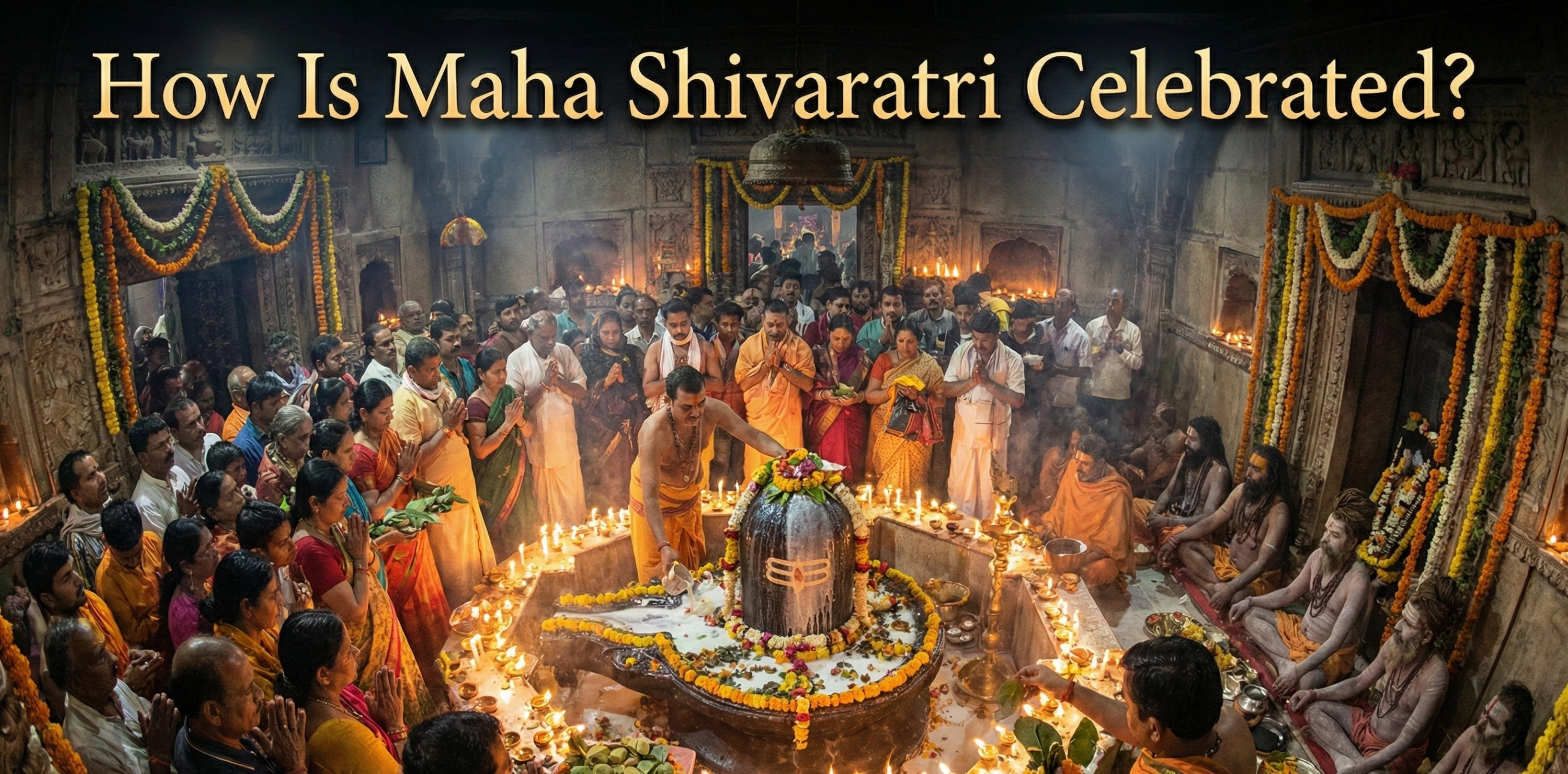
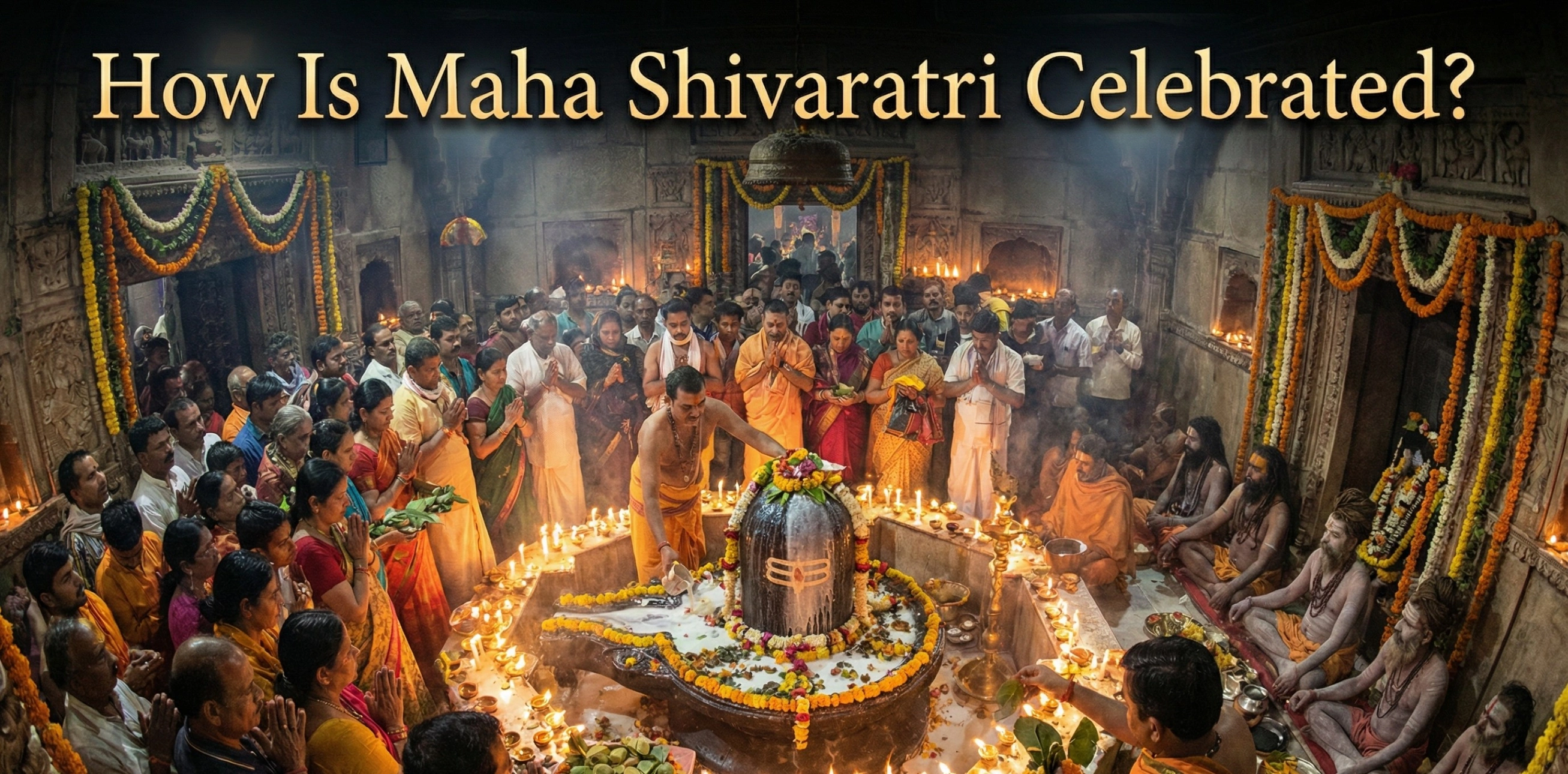
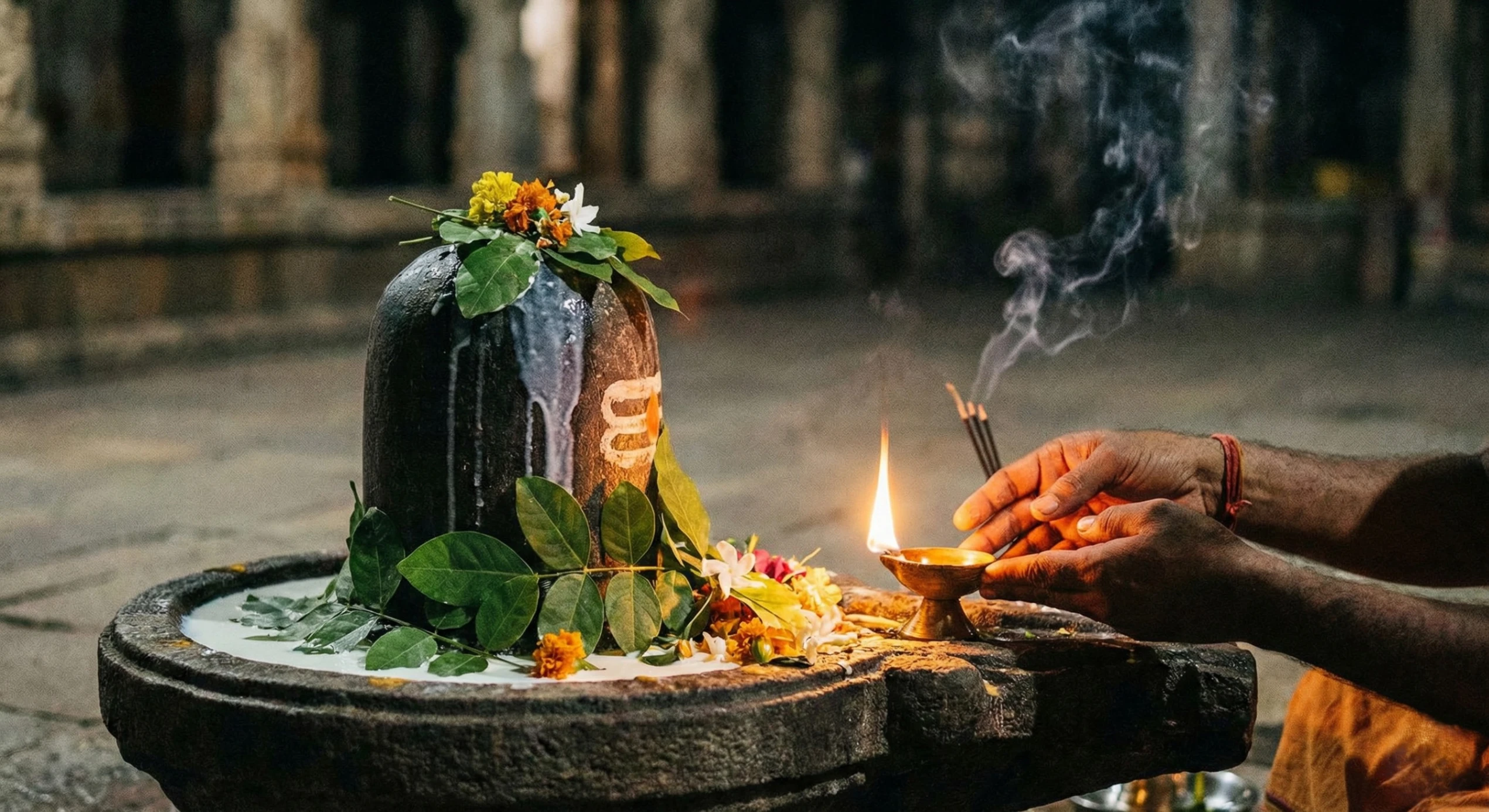
One of the central aspects of how Maha Shivaratri is celebrated is the worship of the Shivling. Devotees perform Maha Shivaratri puja rituals either at temples or at home.
The most significant ritual is Shivaratri Abhishekam, where the Shivling is bathed with water, milk, curd, honey, ghee, and sometimes sugarcane juice. Each offering holds symbolic meaning:
Water signifies purification
Milk represents nourishment and compassion
Honey symbolizes sweetness and unity
Bel patra reflects surrender and devotion
Shivling puja on Maha Shivaratri is accompanied by chanting of “Om Namah Shivaya” and other Shiva mantras.
Night Worship: Why Staying Awake Matters
Maha Shivaratri night worship is what sets this festival apart. Temples remain open all night, and devotees participate in four rounds of puja, known as the four prahars.
Why stay awake on Maha Shivaratri night? Spiritually, night symbolizes ignorance, and staying awake represents awareness overcoming darkness. Yogic traditions believe that meditating during this night can accelerate inner awakening and dissolve deep-rooted mental patterns.
Many devotees spend the night in meditation, chanting, or silent contemplation, making Maha Shivaratri meditation benefits deeply experiential.
Meditation on Maha Shivaratri
Meditation on Maha Shivaratri is considered extremely powerful. This night naturally supports stillness, making it easier to sit in silence. Even beginners often report deeper focus and calm.
The best time to meditate on Maha Shivaratri is during the late night hours, especially around midnight, when external distractions are minimal. Practices may include breath awareness, mantra meditation, or simply observing thoughts without attachment.
This is where Maha Shivaratri transitions from a ritualistic festival into a deeply personal spiritual experience.
How Devotees Celebrate Maha Shivaratri Across India
Maha Shivaratri celebration in India varies across regions, yet the core essence remains the same. In Kashi, Rishikesh, and Ujjain, massive temple gatherings take place. In South India, devotees perform elaborate abhishekams, while in the Himalayas, the night is marked by intense meditation and chanting.
At home, many people set up a small altar and perform simple puja with sincerity. How to celebrate Maha Shivaratri at home does not require grandeur only devotion and awareness.
What to Do and What Not to Do on Maha Shivaratri
People often wonder what should we do on Maha Shivaratri. The essentials are simple: maintain purity of thought, practice restraint, chant Shiva mantras, and remain mindful.
What not to do on Maha Shivaratri includes engaging in excessive indulgence, anger, or negative emotions. Can we sleep on Maha Shivaratri? While it is not forbidden, staying awake is encouraged for those who can, as it enhances spiritual focus.
The Deeper Spiritual Meaning of Maha Shivaratri
The spiritual meaning of Maha Shivaratri lies in transcendence. Lord Shiva symbolizes the destruction of ego, ignorance, and illusion. Celebrating Maha Shivaratri is about letting go of attachments, identities, and mental clutter.
Inner awakening on Maha Shivaratri happens when one moves from doing rituals mechanically to understanding their symbolism. This is why Maha Shivaratri is celebrated not as a social festival, but as a night of transformation.
Importance of Maha Shivaratri in Modern Life
In today’s fast-paced world, the importance of Maha Shivaratri lies in its invitation to pause. It reminds us to slow down, reflect, and reconnect with our inner stillness.
Whether through fasting, puja, meditation, or quiet reflection, Maha Shivaratri offers a powerful opportunity to reset mentally, emotionally, and spiritually.
Read next: Maha Shivaratri Dos and Don’ts: What to Do and Avoid on This Sacred Night
Discover the key practices to follow, common mistakes to avoid, and how to observe Maha Shivaratri with true awareness and devotion.