
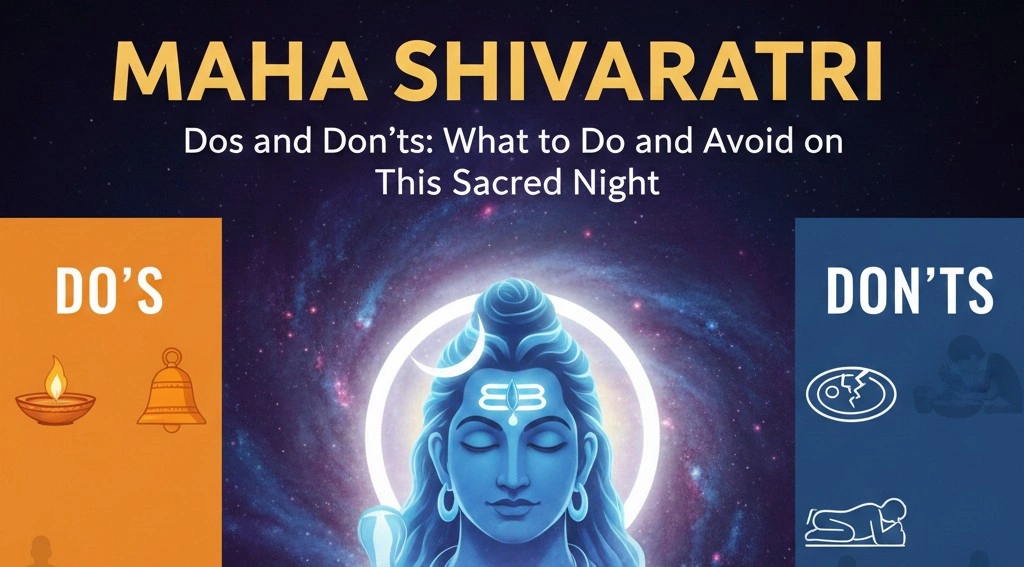
Maha Shivaratri dos and don’ts are not just ritual instructions; they are spiritual guidelines meant to align the body, mind, and soul with the transformative energy of Lord Shiva. Observed once a year, Maha Shivaratri is considered the most powerful night for spiritual awakening, inner purification, and divine grace. Knowing what to do and what not to do on Maha Shivaratri helps devotees receive the full spiritual benefits of this sacred night.
Unlike other festivals, Maha Shivaratri is about stillness, discipline, and conscious awareness. Every action fasting, prayer, silence, or meditation carries deeper meaning. Let’s understand the dos and don’ts of Maha Shivaratri, covering fasting rules, puja guidelines, spiritual conduct, and common mistakes to avoid.
The Spiritual Significance of Maha Shivaratri Night
Maha Shivaratri marks the night when cosmic energies are naturally heightened, making it easier for human consciousness to rise. Spiritually, this night represents the union of Shiva and Shakti, consciousness and energy. According to yogic traditions, remaining awake during Nishita Kaal Shivaratri helps align one’s inner energy with the universal rhythm.
This is why Maha Shivaratri night meditation, mantra chanting, and silence are strongly recommended. The goal is not celebration, but transformation.
Maha Shivaratri Dos: What You Should Do
1. Observe a Clean and Conscious Fast
One of the most important Maha Shivaratri dos is fasting with awareness. Fasting rules may vary, but the intention should remain pure.
You may observe:
Nirjala fast (without food and water)
Phalahar fast (fruits, milk, nuts)
Single meal fast (satvik food)
Milk is allowed in Maha Shivaratri vrat and is commonly offered during Shiva Abhishek. Fruits are also permitted during Shivaratri fast, especially for those observing vrat for health or spiritual balance.
2. Perform Maha Shivaratri Puja with Devotion
Following proper Maha Shivaratri puja rules enhances spiritual connection. Shiva Linga abhishek is traditionally done with milk, water, honey, curd, and ghee.
Important puja elements include:
Bel patra offering
Rudra Abhishek
Chanting “Om Namah Shivaya”
Offering incense and diyas
The focus of Maha Shivaratri puja vidhi is devotion, not complexity.
3. Stay Awake During the Night
Can we sleep on Maha Shivaratri night? Spiritually, staying awake is advised because the night is considered ideal for inner awakening. Even if you cannot stay awake all night, staying conscious during Nishita Kaal is highly beneficial.
If staying awake is difficult, practice silent meditation or light chanting instead of sleep.
4. Practice Silence, Meditation, and Self-Reflection
Maha Shivaratri night meditation is one of the most powerful practices. Silence helps conserve energy and turn awareness inward. Journaling, mantra chanting, or simply sitting quietly are all meaningful ways to honor this night.
5. Maintain Physical and Mental Purity
Wake up early, take a bath, wear clean clothes, and keep your surroundings pure. Equally important is maintaining mental purity; avoid negative thoughts, anger, and distractions.
Maha Shivaratri Don’ts: What to Avoid on This Sacred Night
1. Avoid Tamasic Foods
One of the key Maha Shivaratri fasting don’ts is consuming foods that disturb mental clarity.
Avoid:
Onion and garlic
Grains and pulses (unless tradition permits)
Alcohol and stimulants
Non-vegetarian food
Salt is avoided by many devotees, though some traditions allow rock salt. Follow your family or spiritual guidance.
2. Avoid Daytime Sleeping
Sleeping during the day on Maha Shivaratri reduces alertness at night and is discouraged. Resting is allowed if needed, but deep sleep should be avoided to preserve energy for night sadhana.
3. Avoid Negative Emotions and Arguments
Maha Shivaratri is about inner stillness. Arguments, gossip, anger, and harsh speech disrupt the spiritual atmosphere. Practicing forgiveness and compassion is part of the vrat niyam.
4. Avoid Over-Complicating Rituals
Many people make the mistake of focusing more on ritual perfection than devotion. Lord Shiva is Bhole Nath—simplicity and sincerity matter more than elaborate arrangements.
5. Avoid Ignoring Personal Health
If you are unwell, fasting should be modified. Spiritual discipline should never harm the body. Shiva consciousness includes balance and self-awareness.
Maha Shivaratri Rules According to Scriptures
Scriptural references emphasize:
Observing vrat with purity
Staying awake during Nishita Kaal
Chanting Shiva mantras
Offering bel patra
Practicing restraint and self-control
Women can fast on Maha Shivaratri, and many observe it for spiritual growth rather than marital reasons alone.
Maha Shivaratri 2026: Special Guidelines
For Maha Shivaratri 2026, devotees are advised to check exact Maha Shivaratri date and rules 2026, especially Nishita Kaal timing, as it varies by location.
Maha Shivaratri 2026 dos and don’ts remain rooted in tradition:
Follow fasting rules as per capacity
Focus on meditation and mantra
Avoid distractions and excess indulgence
Common Mistakes to Avoid on Maha Shivaratri
Some common mistakes include:
Treating the fast as a diet
Skipping puja entirely
Staying awake but scrolling on phones
Eating vrat food excessively
Ignoring spiritual intent
Maha Shivaratri is not about endurance; it is about awareness.

Spiritual Benefits of Following Maha Shivaratri Dos and Don’ts
When observed correctly, Maha Shivaratri helps:
Calm the mind
Purify emotions
Strengthen inner discipline
Deepen spiritual connection
Align personal energy with cosmic energy
This sacred night offers a reset; not externally, but internally.
Understanding the dos and don’ts of Maha Shivaratri allows you to experience the festival beyond rituals. Whether through fasting, meditation, silence, or devotion, what matters is sincerity. When observed mindfully, Maha Shivaratri becomes a gateway to inner transformation and divine grace.