Hinduism celebrates several festivals dedicated to Lord Krishna, each highlighting a different aspect of his life, teachings and divine pastimes. Two such festivals are Gopashtami and Govardhan Puja. Both are closely connected with Krishna, cow worship and the traditions of Braj, but they commemorate different events and involve distinct rituals.
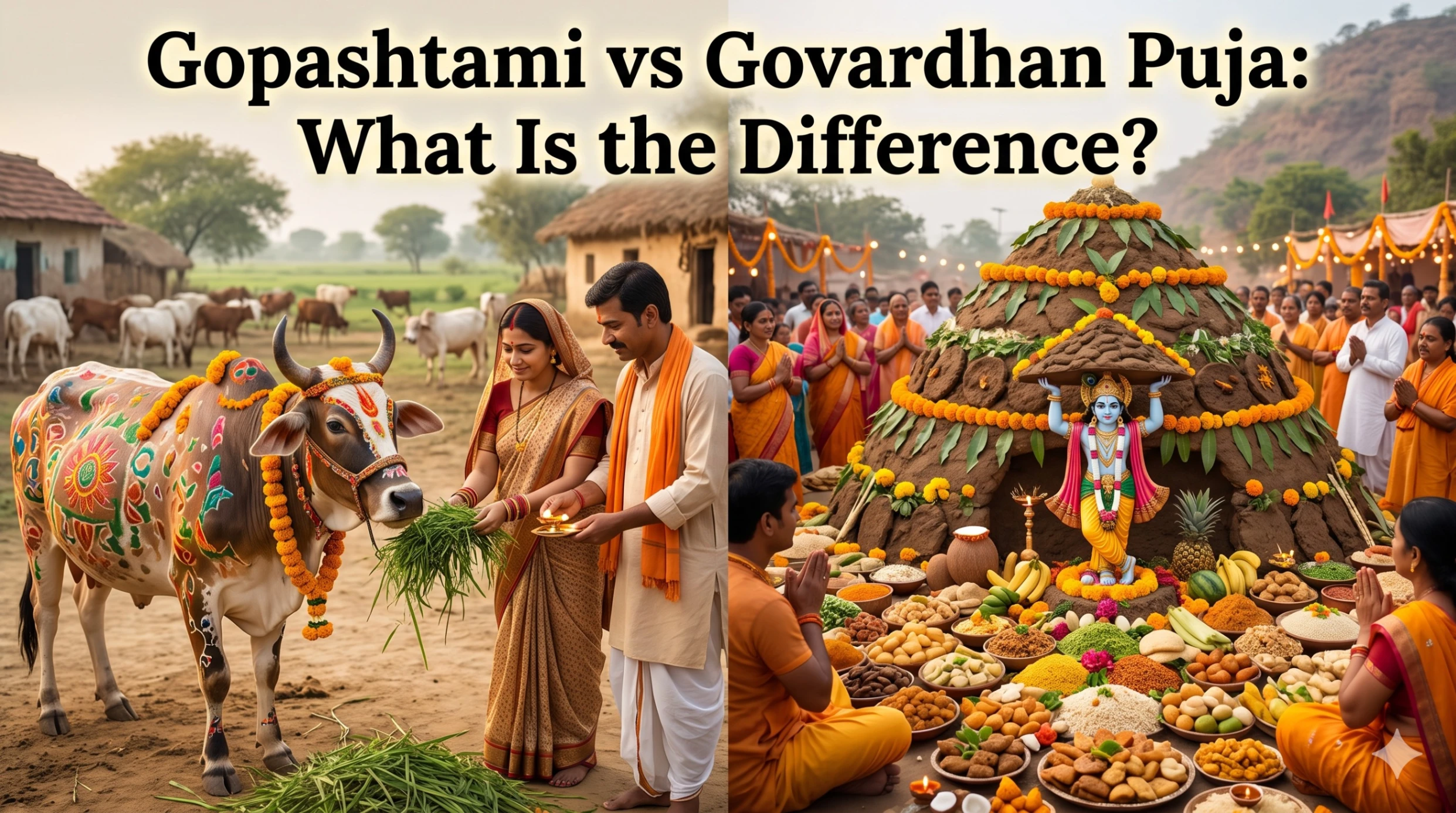
The main difference between Gopashtami and Govardhan Puja is their central theme: Gopashtami celebrates Lord Krishna's life as a cowherd and honours cows, while Govardhan Puja commemorates Krishna lifting Govardhan Hill to protect the people of Braj from torrential rain sent by Indra.
Although both festivals reflect the close relationship between Krishna, cows and nature, they are observed on different dates in the Hindu lunar calendar. Their customs, stories and principal forms of worship also differ.
In this guide, we explore Gopashtami vs Govardhan Puja, including their dates in 2026, mythology, significance, rituals and the reasons both festivals remain important to devotees.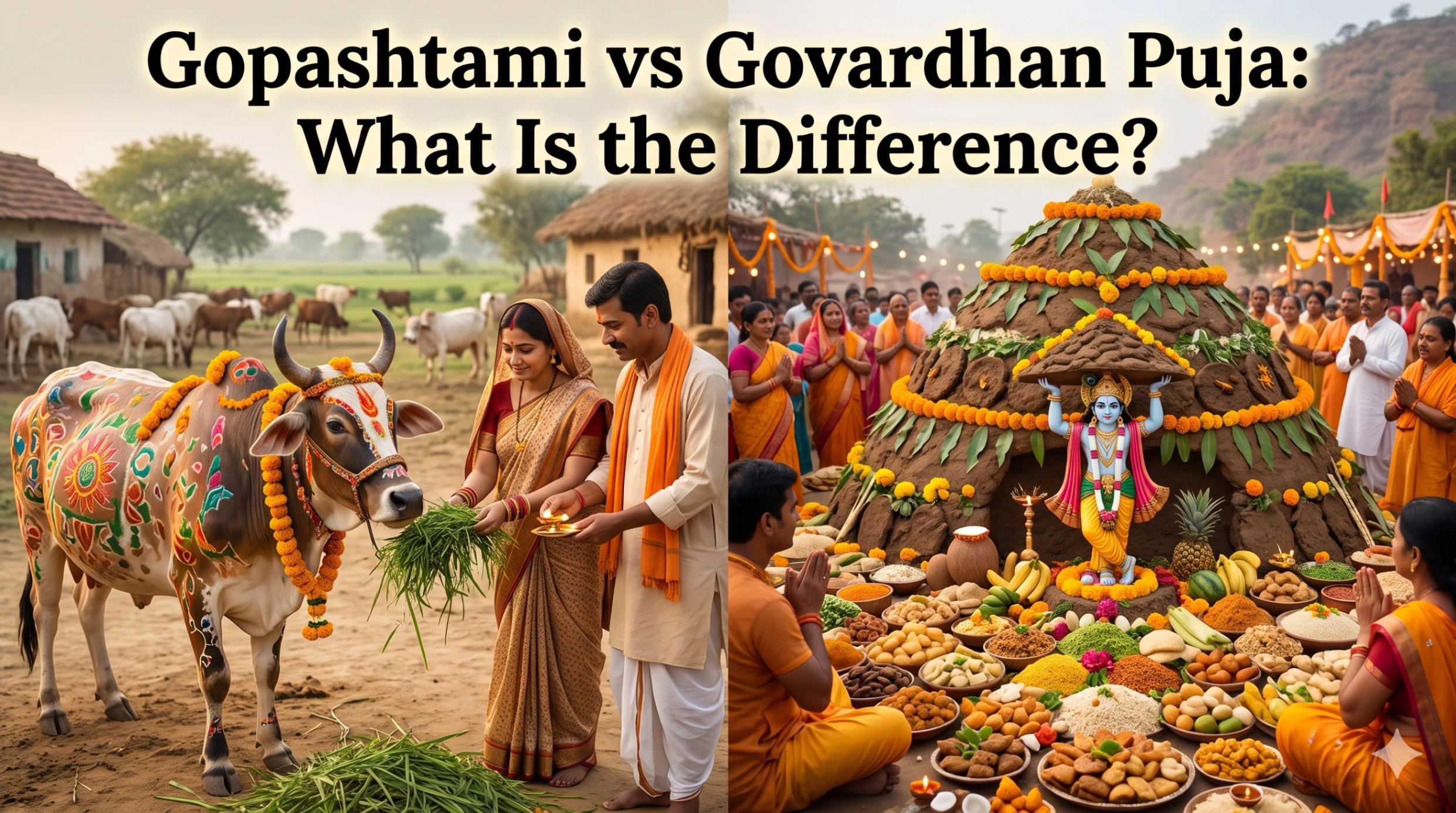
What Is the Difference Between Gopashtami and Govardhan Puja?
The following comparison highlights the main differences between the two festivals.
Basis of comparison | Gopashtami | Govardhan Puja |
|---|---|---|
Main focus | Lord Krishna as a cowherd and the worship of cows | Krishna lifting Govardhan Hill to protect Braj |
Hindu calendar | Kartik Shukla Ashtami | Kartik Shukla Pratipada, subject to regional calendar observance |
Usual timing | After Diwali, during the Kartik month | Traditionally the day after Diwali, though dates can shift |
Main deity | Lord Krishna as Govinda or Gopala; cows are honoured | Lord Krishna as Govardhan-dhari |
Key ritual | Cow worship, decoration and offerings | Govardhan Hill representation, Annakut and offerings |
Main message | Care for cows and appreciation of pastoral life | Protection, gratitude, humility and devotion |
Associated tradition | Krishna's cowherd life in Braj | Krishna's Govardhan Lila |
Common regional association | Mathura, Vrindavan and Braj | Govardhan, Mathura, Vrindavan and many other regions |
Both festivals are important in Krishna devotion, but they are not the same festival. Each remembers a different part of Krishna's relationship with the people, animals and natural environment of Braj.
Gopashtami 2026 Date
Gopashtami in 2026 is expected to be observed on Tuesday, 17 November 2026, according to commonly published Hindu calendar calculations for North India. It falls on Kartik Shukla Ashtami, the eighth day of the waxing lunar fortnight in the month of Kartik.
The festival is particularly important in Mathura, Vrindavan and the wider Braj region, where Lord Krishna is deeply associated with cowherding and pastoral life.
On Gopashtami, devotees worship cows, decorate them with flowers and traditional ornaments, offer fodder and pray to Lord Krishna. Temples may organise special ceremonies and devotional programmes.
Because Hindu festival dates can depend on local sunrise and tithi calculations, check a reliable local panchang for the final date and any specific puja timings.
Govardhan Puja 2026 Date
Govardhan Puja in 2026 is listed on Monday, 9 November 2026, in several Indian festival calendars. Some panchang calculations and regional observances may place particular rituals on a neighbouring date, depending on the timing of Kartik Shukla Pratipada.
Govardhan Puja is traditionally associated with the day after Diwali, but lunar tithi calculations can occasionally create a gap between the main Diwali celebrations and Govardhan Puja.
The festival commemorates Lord Krishna's protection of the people of Braj by lifting Govardhan Hill. Devotees prepare food offerings, worship Krishna and Govardhan Hill, and celebrate Annakut, meaning a mountain or heap of food offerings.
For the exact date and puja muhurat in your city, consult a reliable panchang before making plans.
Design Your Destiny
The stories of Lord Krishna remind us of the importance of wisdom, humility and acting with care. Use this festive season as an opportunity to reflect on your own journey, understand your priorities and take thoughtful steps towards the future you want to create. Explore Design Your Destiny and begin your journey towards greater self-awareness and purposeful living.
Start Your Journey Today!What Is Gopashtami? Story and Significance
Gopashtami is a Hindu festival dedicated to Lord Krishna's cowherd form and the traditional importance of cows in Krishna's life.
According to popular Braj traditions, Gopashtami marks the stage when young Krishna moved from caring for calves to tending the larger herd of cows. This episode represents his growing responsibilities as a cowherd and his deep connection with the pastoral life of Vrindavan.
Krishna is widely known by names such as Govinda and Gopala, which reflect his relationship with cows and cowherds. His childhood stories frequently describe him playing the flute, spending time with the cows and walking through the forests and pastures of Braj with his friends.
Why Is Gopashtami Celebrated?
Gopashtami celebrates several important values:
Respect for cows: Cows are honoured as sacred animals in many Hindu traditions.
Devotion to Krishna: The festival remembers Krishna's life as a cowherd.
Gratitude for nature: It highlights the role of animals and the natural world in sustaining rural life.
Care and responsibility: The festival encourages devotees to treat animals with kindness.
Braj culture: It preserves traditions associated with Krishna's childhood and pastoral surroundings.
Gopashtami is especially significant in Krishna temples across Mathura and Vrindavan. Devotees may visit temples, participate in cow worship and offer prayers to Krishna.
What Is Govardhan Puja? Story and Significance
Govardhan Puja commemorates the well-known story of Lord Krishna lifting Govardhan Hill to protect the residents of Braj from heavy rainfall.
According to the traditional account, the people of Braj were preparing to worship Indra, the deity associated with rain and storms. Krishna encouraged them to recognise the importance of Govardhan Hill, the land and the natural resources that supported their daily lives and cattle.
The people followed Krishna's advice and offered worship to Govardhan Hill instead. Angered by the change in worship, Indra sent severe rain and storms over Braj.
To protect the villagers and their cattle, Krishna lifted Govardhan Hill on his little finger, providing shelter beneath it. The residents remained protected until Indra recognised Krishna's divine power and brought the storm to an end.
The story is remembered as a lesson in divine protection, humility, devotion and gratitude towards nature.
Why Is Govardhan Puja Celebrated?
Govardhan Puja carries several spiritual meanings:
Faith in Lord Krishna: Devotees remember Krishna as the protector of Braj.
Humility: The story reminds people not to allow pride or power to overwhelm wisdom.
Gratitude for nature: Govardhan Hill represents the natural resources that sustain life.
Community and sharing: Annakut offerings are shared as prasad.
Devotion beyond appearances: The festival emphasises gratitude, service and sincere worship.
The festival is especially important in Govardhan, Mathura and Vrindavan, but it is also celebrated in Krishna temples and homes throughout India.
Gopashtami vs Govardhan Puja: Differences in Rituals
The festivals share a connection with Krishna and cows, but their main rituals are different.
Kali Chaudas vs Naraka Chaturdashi : Are They the Same ?
Gopashtami Rituals
Gopashtami focuses on cow worship and Krishna's identity as a cowherd.
Common observances include:
Cleaning the cowshed and the surrounding area.
Bathing or gently cleaning cows where appropriate.
Decorating cows with flowers, garlands or safe traditional ornaments.
Applying tilak according to family or temple custom.
Offering fodder, grass or other suitable food.
Performing aarti and praying to Lord Krishna.
Visiting Krishna temples or participating in local celebrations.
Practices vary by region and household. Animal welfare should always come first: avoid anything that causes stress or discomfort to the animals.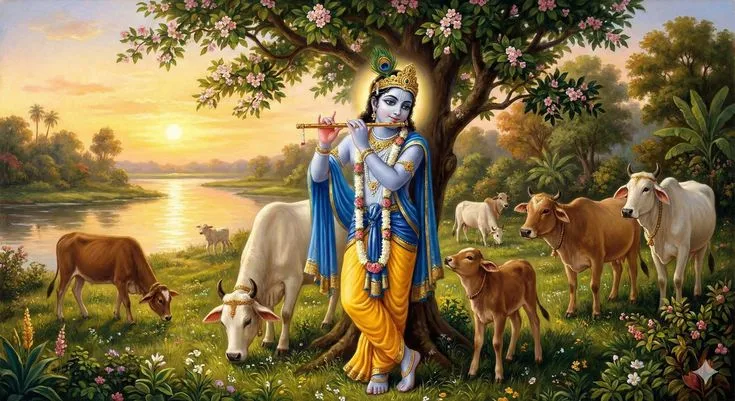
Govardhan Puja Rituals
Govardhan Puja focuses on worshipping Krishna and commemorating the lifting of Govardhan Hill.
Common practices include:
Cleaning and decorating the puja area.
Creating a symbolic Govardhan Hill from cow dung, food or other materials according to tradition.
Decorating the representation with flowers and leaves.
Offering food to Lord Krishna and Govardhan Hill.
Preparing Annakut, a large assortment of cooked food offerings.
Performing aarti and reciting Krishna prayers.
Distributing prasad among family members and the community.
In some traditions, devotees also perform Govardhan Parikrama, a circumambulation of the sacred hill in the Mathura district.
What Is Annakut and How Is It Related to Govardhan Puja?
Annakut is one of the best-known traditions associated with Govardhan Puja. The word combines anna, meaning food or grain, and kuta, referring to a heap or mound.
Devotees prepare a variety of dishes and arrange them as an offering to Lord Krishna. The food may include rice, vegetables, sweets, savoury preparations and other dishes according to local customs.
After the worship, the food is distributed as prasad.
Annakut expresses gratitude for food, agriculture and the resources that sustain communities. It also reflects the spirit of sharing, as offerings are distributed among devotees rather than kept solely for individual consumption.
While cow worship may also take place during Govardhan Puja in some traditions, the central ritual focus remains the worship of Govardhan and Krishna's protective act.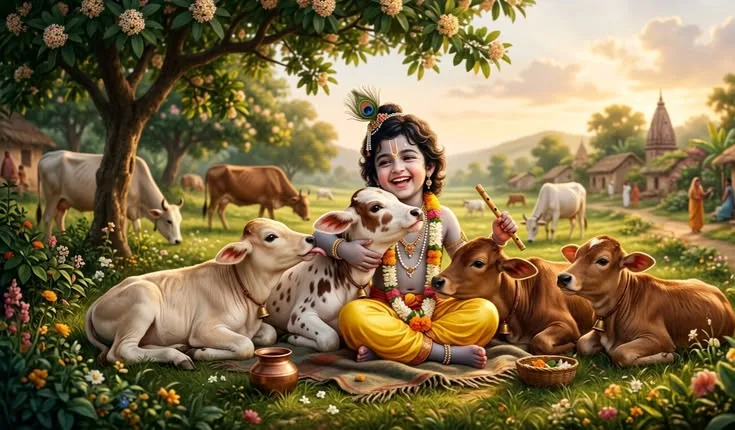
Similarities Between Gopashtami and Govardhan Puja
Although the festivals commemorate different events, they share several important features.
1. Both Are Connected with Lord Krishna
Gopashtami honours Krishna as Govinda or Gopala, while Govardhan Puja remembers him as Govardhan-dhari, the one who lifted Govardhan Hill.
2. Both Are Celebrated During Kartik
Both festivals fall during the Hindu month of Kartik, a period associated with devotional observances and celebrations dedicated to Lord Krishna.
3. Both Have Strong Links with Braj
Mathura, Vrindavan and the surrounding Braj region are central to the stories and traditions associated with both festivals.
4. Both Emphasise Respect for Nature
Gopashtami highlights the importance of cows and pastoral life. Govardhan Puja expresses gratitude for the land, hills, food and natural resources that support communities.
5. Both Include Prayer and Offerings
Devotees may decorate the worship area, offer food or flowers, sing devotional songs and pray to Lord Krishna during both celebrations.
Why Is Kheer Kept Under Moonlight on Sharad Purnima
Why Are Cows Important in Both Festivals?
Cows hold a significant place in many Hindu religious and cultural traditions. They are associated with nourishment, generosity, rural livelihoods and the pastoral stories of Lord Krishna.
In Krishna's childhood narratives, cows are part of everyday life in Braj. His identity as a cowherd is reflected in names such as Gopala and Govinda.
During Gopashtami, cow worship is the central observance. During Govardhan Puja, cows may be worshipped alongside the main rituals, and the story of Govardhan Hill also emphasises Krishna's concern for the people and cattle of Braj.
Both festivals encourage gratitude and care for living beings. Their contemporary observance can also be an opportunity to support responsible animal care, clean shelters and the welfare of animals.
Which Festival Comes First: Gopashtami or Govardhan Puja?
Govardhan Puja is traditionally celebrated around the day after Diwali, on Kartik Shukla Pratipada. Gopashtami falls later in the month, on Kartik Shukla Ashtami.
Therefore, Govardhan Puja generally comes before Gopashtami.
The exact Gregorian dates change every year because both festivals follow the Hindu lunar calendar. In 2026, Govardhan Puja is listed on 9 November in several calendars, while Gopashtami is expected on 17 November in North India.
Regional panchang calculations can affect observance dates, so check your local calendar when planning either festival.
Conclusion
Gopashtami and Govardhan Puja are two distinct festivals that celebrate different aspects of Lord Krishna's life and teachings.
Gopashtami honours Krishna's role as a cowherd and places special emphasis on cow worship, care for animals and the pastoral traditions of Braj. Govardhan Puja commemorates Krishna lifting Govardhan Hill to protect the people and cattle from Indra's storm, while rituals such as Annakut express gratitude for food and nature.
Both festivals encourage devotion, humility, gratitude and respect for the natural world. Understanding their differences helps devotees appreciate the unique stories and customs behind each celebration.
Whether you observe Gopashtami through cow worship or celebrate Govardhan Puja with Annakut and Krishna prayers, both occasions offer an opportunity to strengthen faith and practise kindness, service and gratitude.
Personal Session
Sometimes, taking time to reflect on your goals, challenges and decisions can help you see your next steps more clearly. A personal session offers an opportunity to explore your questions and consider your path forward. Connect with us to learn more about arranging a personal session.
Book Now
Read Latest Articles
What Is My Purpose in Life?How to Discover Your True Calling
Bhai Dooj Date: Tilak Muhurat, Puja Time & Complete Vidhi
Frequently Asked Questions
Q. What is the difference between Gopashtami and Govardhan Puja?
Gopashtami celebrates Lord Krishna's life as a cowherd and focuses on worshipping and caring for cows. Govardhan Puja commemorates Krishna lifting Govardhan Hill to protect the people and cattle of Braj from heavy rain. Gopashtami falls on Kartik Shukla Ashtami, while Govardhan Puja is associated with Kartik Shukla Pratipada. Both festivals honour Krishna but have different stories and rituals.Q.Are Gopashtami and Govardhan Puja the same festival?
No. Gopashtami honours Lord Krishna's cowherd life and focuses on cow worship. Govardhan Puja celebrates Krishna lifting Govardhan Hill to protect Braj and includes rituals such as Annakut.Q.When is Gopashtami in 2026?
Gopashtami is expected to be observed on Tuesday, 17 November 2026, in North India. Check a local panchang for the date followed in your region.Q.When is Govardhan Puja in 2026?
Several Indian festival calendars list Govardhan Puja on Monday, 9 November 2026. Local tithi calculations and regional traditions may affect the observance date, so confirm it with your city's panchang.Q.Why do people worship cows on Gopashtami?
Gopashtami honours Lord Krishna as a cowherd and celebrates the close relationship between Krishna, cows and the pastoral culture of Braj. Devotees express gratitude and respect through cow worship and offerings.Q.What is the story behind Govardhan Puja?
According to Hindu tradition, Lord Krishna lifted Govardhan Hill to shelter the people and cattle of Braj from heavy rain sent by Indra. The event symbolises divine protection, humility and gratitude for nature.Q.What is Annakut in Govardhan Puja?
Annakut is an offering of many food preparations to Lord Krishna. The dishes are arranged as a large offering and distributed as prasad after worship. The tradition expresses gratitude for food and the resources that sustain life.