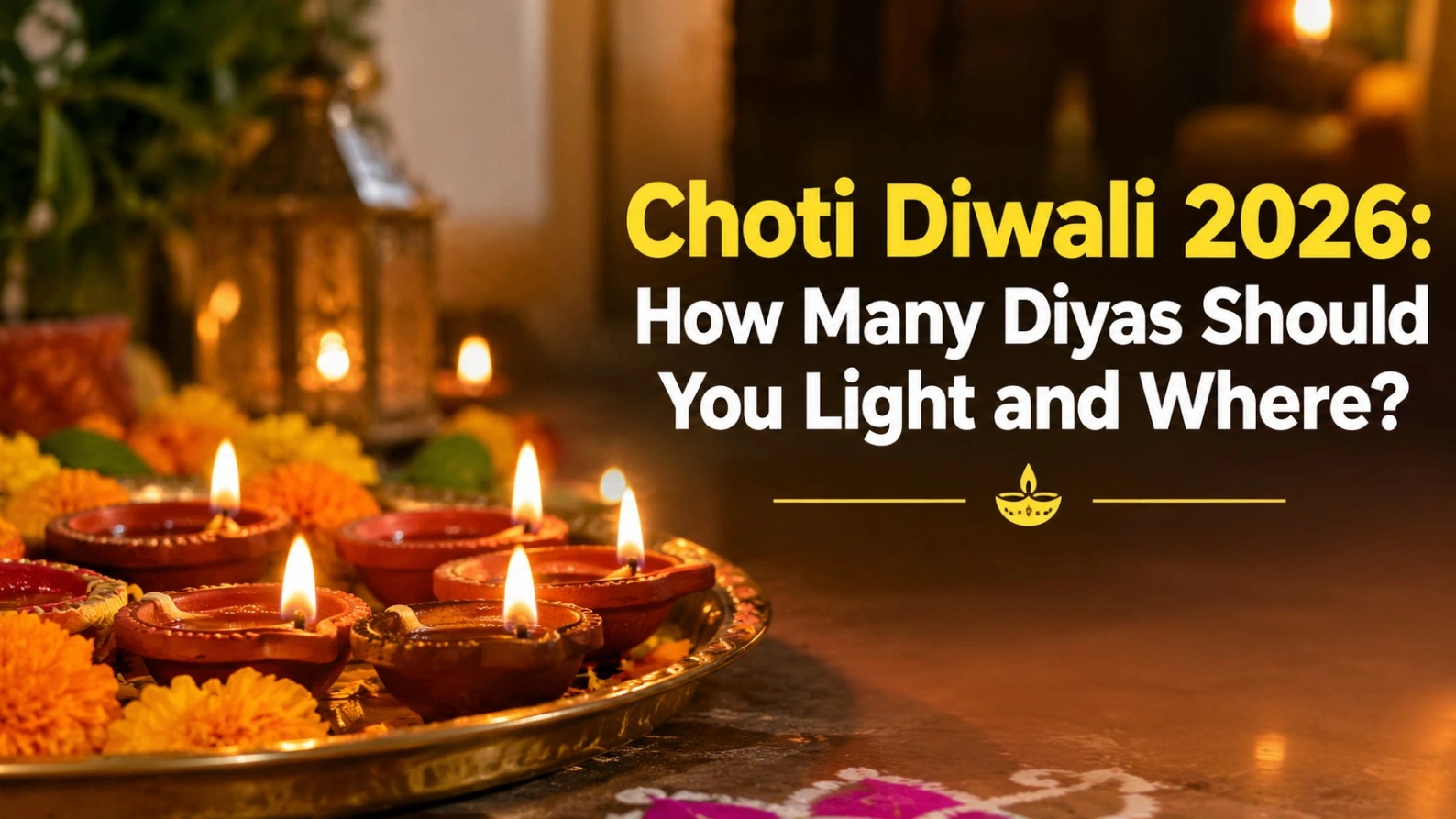
Choti Diwali is an important part of the five-day Diwali festival, celebrated with traditional rituals, prayers, and the warm glow of earthen lamps. Lighting diyas is one of the most cherished customs associated with the occasion. These small lamps symbolise the victory of light over darkness, goodness over evil, and knowledge over ignorance.
One common question people ask while preparing for the festival is: How many diyas should you light on Choti Diwali, and where should you place them? Many households follow the tradition of lighting 14 diyas, while others light lamps according to their family customs and the size of their homes.
In this guide, discover the significance of lighting diyas on Choti Diwali 2026, the traditional places to keep them, the meaning of 14 lamps, and simple tips for celebrating the festival at home.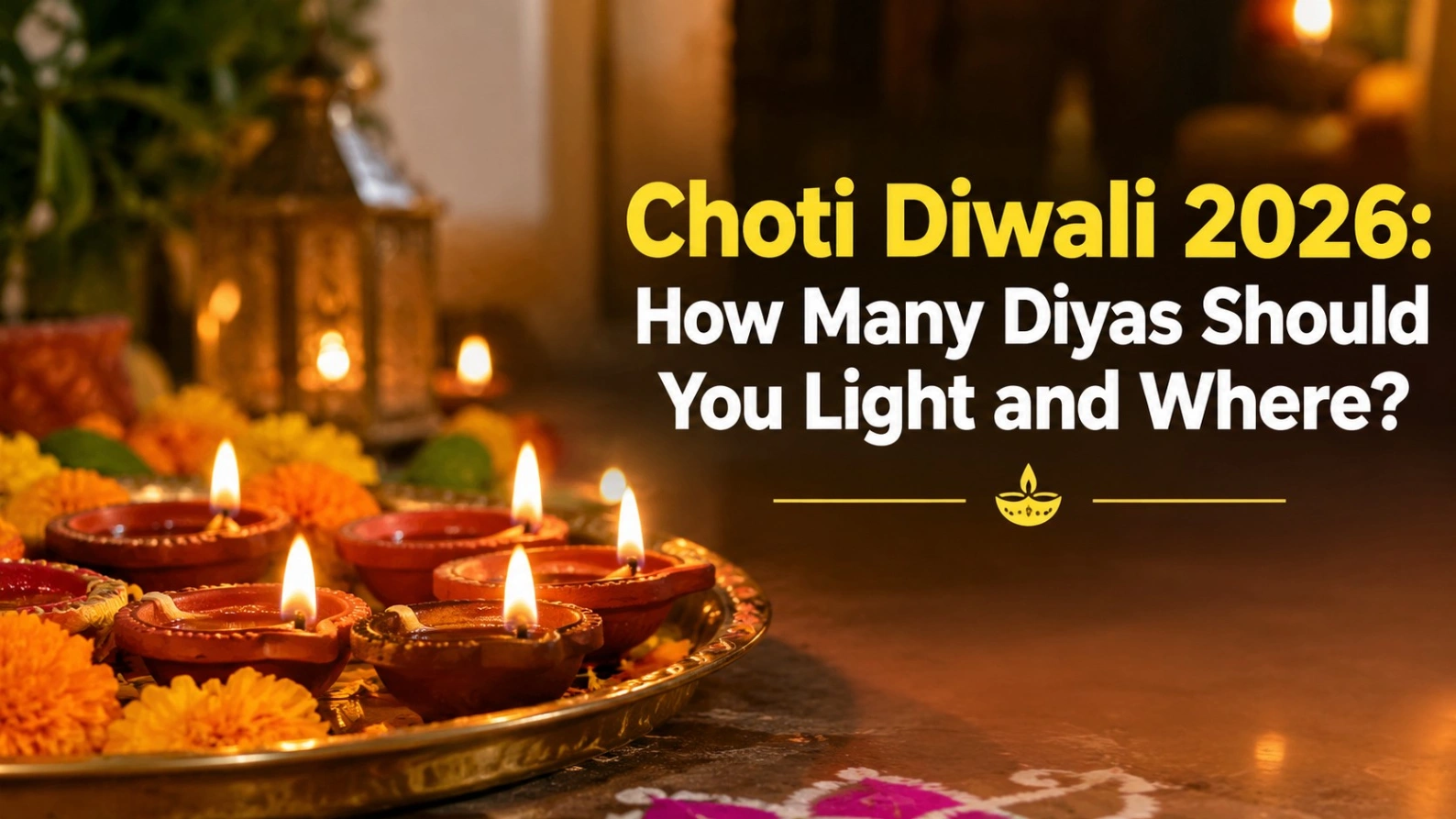
When Is Choti Diwali in 2026?
Choti Diwali, also known as Naraka Chaturdashi, is associated with the fourteenth lunar day of Krishna Paksha in the Hindu month of Kartik.
In 2026, the festival's observances fall across Saturday, 7 November, and Sunday, 8 November, because different rituals follow different parts of the lunar day. The Chaturdashi-related evening observances, including Kali Chaudas in traditions that follow that timing, fall on 7 November, while the pre-dawn Naraka Chaturdashi bath is observed on 8 November. The main Diwali and Lakshmi Puja also fall on 8 November in many Indian calendars.
The exact date assigned to an individual ritual can vary according to the Panchang and the rule followed for that observance. Check a reliable local Panchang for your city before planning the diya lighting and puja.
How Many Diyas Should You Light on Choti Diwali?
There is no single compulsory number of diyas that every household must light on Choti Diwali. The number depends on regional customs, family traditions, and the specific ritual being observed.
However, lighting 14 diyas is a well-known Choti Diwali tradition. The number is associated with Chaturdashi, the fourteenth lunar day, and is especially significant in certain regional customs.
Here are some common approaches to diya lighting:
14 diyas: A traditional choice in many households observing Naraka Chaturdashi.
One diya for a specific ritual: Some customs prescribe a particular lamp for a deity or religious observance.
Several diyas around the home: Families may light additional lamps at entrances, balconies, courtyards, and near their prayer spaces.
More decorative diyas: Some households use rows of lamps to decorate their homes, while others prefer a smaller, simpler arrangement.
The important point is that the number of lamps is not universal. If your family traditionally lights 14 diyas, you can follow that practice. If your custom differs, there is no need to assume that a particular count is mandatory for everyone.
Design Your Destiny
Choti Diwali reminds us that even a small flame can illuminate a dark space. In the same way, self-awareness and meaningful choices can help us bring greater clarity into our lives.
Start Your Journey Today!Why Are 14 Diyas Lit on Choti Diwali?
The tradition of lighting 14 diyas is connected with the symbolism of Chaturdashi and regional customs associated with Naraka Chaturdashi.
In some households, the lamps are placed around the home to illuminate dark spaces and create a welcoming, devotional atmosphere. The practice also reflects the broader Diwali theme of bringing light into one's surroundings.
In Bengal, the related observance of Bhoot Chaturdashi includes lighting 14 lamps, traditionally known as choddo prodeep. This custom is associated with remembering ancestors and honouring family traditions.
Although these practices share the symbolism of 14 lamps, their meanings and rituals are not identical everywhere. Regional traditions should be understood on their own terms rather than treated as a single rule followed throughout India.
Where Should You Place Diyas on Choti Diwali?
Once you have decided how many diyas to light, the next step is choosing where to place them. Traditional lamp placement often focuses on the entrance, the prayer area, and other parts of the household.
1. At the Main Entrance
The main entrance is one of the most popular places to light diyas during Diwali celebrations.
Place lamps on both sides of the doorway or along a safe, stable threshold where they cannot be knocked over. Many families also decorate the entrance with rangoli and flowers.
Lighting diyas at the entrance symbolises welcoming auspiciousness, positivity, and light into the home.
2. Near the Home Temple or Puja Area
A diya placed near the home temple is a central part of many Hindu worship traditions.
You can light a lamp near the pictures or idols of the deities during prayer, following your family's customs. Use a stable lamp holder and keep the flame away from curtains, flowers that can catch fire, and other combustible materials.
3. In the Courtyard or Balcony
If you have a courtyard, terrace, or balcony, you can arrange additional diyas to create a festive atmosphere.
Place them on a level, heat-resistant surface, away from railings where wind might knock them over. For apartments, enclosed lanterns or battery-powered candles can be practical alternatives in windy areas.
Kali Chaudas vs Naraka Chaturdashi : Are They the Same ?
4. Near Windows and Along Safe Wall Edges
Some families decorate windowsills and the edges of rooms with small lamps. These locations can make the home look bright and festive, especially when the diyas are arranged in neat rows.
Only use a windowsill if it is wide and stable enough to support the lamp securely. Keep diyas away from curtains, blinds, paper decorations, and electrical wires.
5. In the Kitchen
The kitchen has a place in many household Diwali traditions because it represents nourishment and everyday well-being.
If you wish to light a diya there, choose a clear, stable surface away from cooking flames, oil containers, gas appliances, and food preparation areas. Never leave an open flame unattended.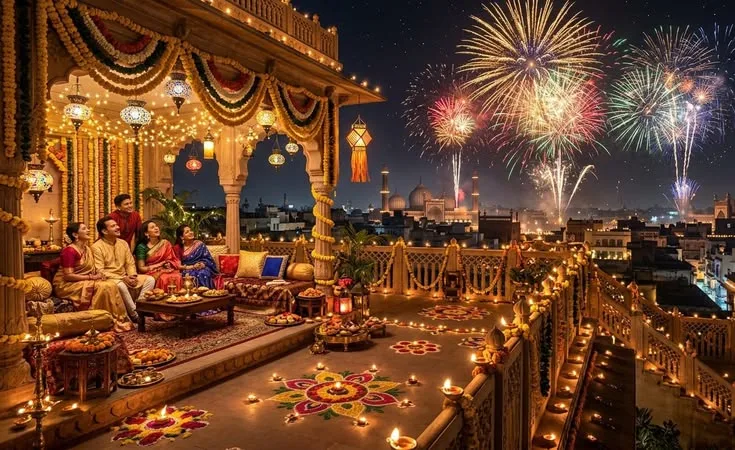
6. Near Tulsi, If Your Family Follows This Custom
Some Hindu households light a diya near the Tulsi plant as part of their daily or festive worship.
If this is part of your family's tradition, place the lamp securely at a safe distance from dry leaves and branches. Avoid positioning an open flame where it could ignite the plant or surrounding decorations.
7. In the Courtyard Corners or Other Dark Areas
A traditional arrangement may include lamps in different corners of the home, symbolically spreading light throughout the household.
You can use a few carefully positioned diyas rather than filling every corner. The aim is to create a beautiful, peaceful environment without compromising safety.
What Is Yama Deepam, and Is It Lit on Choti Diwali?
Yama Deepam is a traditional lamp-lighting observance associated with prayers for protection and longevity. In many North Indian customs, a lamp is offered to Yama, the deity associated with death and dharma.
Some traditions prescribe a lamp with multiple wicks, often placed outside the home and oriented towards the south. However, the observance is commonly associated with Dhanteras or Trayodashi evening, while other households follow their own timing.
For 2026, the distinction matters because the festival dates and lunar observances overlap differently. Do not assume that every Yama Deepam custom must be performed on the same evening as every Choti Diwali ritual.
If your family observes Yama Deepam, follow your customary practice and verify the relevant date and timing through a trusted local Panchang.
How to Light Diyas on Choti Diwali: Step-by-Step Guide
Follow these simple steps to prepare for diya lighting at home.
Step 1: Clean the house. Clean the entrance, prayer area, and the spaces where you plan to arrange the lamps.
Step 2: Prepare your diyas. If you are using earthen lamps, clean them and let them dry. Arrange cotton wicks, oil or ghee, and a suitable lamp holder.
Step 3: Decide the number. Choose 14 diyas if that is your family's tradition, or use the number appropriate to your customary rituals.
Step 4: Arrange the lamps. Prepare a simple layout around the entrance, puja area, and other safe locations. Keep pathways clear.
Step 5: Offer prayers. Light the lamps as part of your household's customary worship. You may offer prayers to the deities associated with your observance.
Step 6: Check every lamp. Ensure that each diya is stable, away from flammable objects, and positioned where children and pets cannot knock it over.
Step 7: Enjoy the celebration mindfully. Spend time with family, share festive food, and appreciate the meaning of the occasion.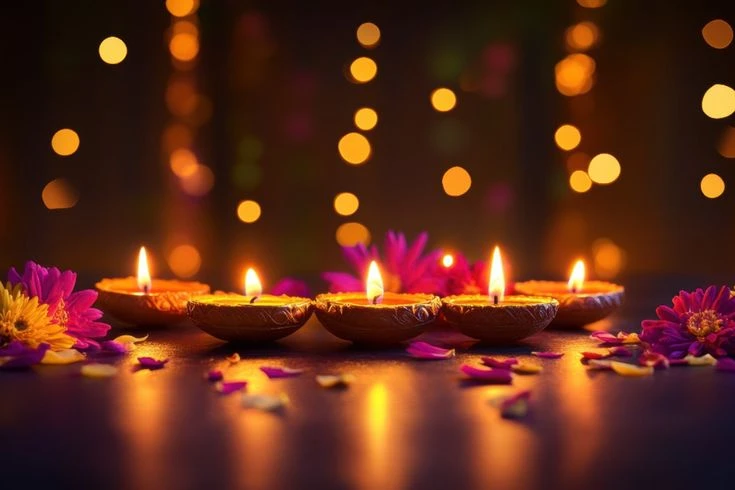
What Oil Should You Use for Choti Diwali Diyas?
The choice of oil or ghee depends on the lamp, the religious custom, and personal preference.
Ghee: Used in many household puja lamps.
Sesame oil: Used in certain traditional lamp-lighting practices.
Mustard oil: Used in some regional customs, including particular ritual observances.
Other suitable lamp oils: Used according to local practice and the manufacturer's instructions.
There is no single fuel that every family must use for every Choti Diwali diya. Follow your tradition and use a lamp designed for the chosen fuel. Never pour oil into a burning lamp.
Important Safety Tips for Lighting Diyas
Diyas create a beautiful festive atmosphere, but an open flame requires care.
Place lamps on stable, non-flammable surfaces.
Keep them away from curtains, paper decorations, and loose clothing.
Never leave burning diyas unattended.
Keep lamps out of reach of children and pets.
Avoid placing diyas near gas stoves or electrical equipment.
Use enclosed lanterns or battery-powered lights in windy locations.
Extinguish lamps safely before sleeping or leaving the house.
You can celebrate the festival meaningfully without using more lamps than your home can accommodate safely.
Why Is Kheer Kept Under Moonlight on Sharad Purnima
Spiritual Significance of Lighting Diyas on Choti Diwali
The diya is more than a decorative object in Hindu traditions. Its flame represents light, awareness, hope, and the removal of darkness.
Choti Diwali is associated with the story of Lord Krishna's victory over the demon Narakasura. This story is widely understood as a celebration of the triumph of good over evil and the restoration of freedom and righteousness.
Lighting lamps during this festive period can serve as a reminder to overcome negativity, cultivate positive thoughts, and bring greater awareness into everyday life.
The ritual also brings families together. Preparing the diyas, decorating the entrance, offering prayers, and sharing the celebration create opportunities to preserve cultural traditions and pass them on to younger generations.
Conclusion
Choti Diwali is a celebration of light, hope, and the victory of good over evil. While 14 diyas are a traditional choice in many households, there is no single number that applies to every family or regional observance.
You can place lamps at the entrance, near the home temple, in the courtyard, or near Tulsi if that is part of your family tradition. Choose safe, stable locations and check the local Panchang for the relevant ritual timings in 2026.
Ultimately, the meaning of lighting diyas lies in devotion, gratitude, and the intention to welcome light and positivity into your home.
Personal Session
Every person's journey is different. Sometimes, a dedicated conversation can provide the space to reflect on personal questions, clarify goals, and consider the next steps with greater confidence. A personal session offers an opportunity to explore your aspirations and discuss the areas of life where you would welcome guidance.
Book Now
Read Latest Articles
What Is My Purpose in Life?How to Discover Your True Calling
Bhai Dooj Date: Tilak Muhurat, Puja Time & Complete Vidhi
Frequently Asked Questions
Q.How many diyas should you light on Choti Diwali?
There is no fixed number of diyas that every household must light on Choti Diwali. Fourteen diyas are traditional in many households observing Naraka Chaturdashi, while other families follow different customs. Diyas are commonly placed near the main entrance, home temple, courtyard, and other safe areas. Follow your family's traditions and keep every lamp on a stable, fire-resistant surface.Q.Is it necessary to light 14 diyas on Choti Diwali?
No, lighting 14 diyas is a traditional practice in many households, but it is not a universal requirement. The number and arrangement depend on regional and family customs.Q.Where should you place diyas on Choti Diwali?
Common locations include the main entrance, home temple, courtyard, balcony, and near Tulsi when customary. Always choose stable surfaces away from curtains, electrical equipment, and other fire hazards.Q.Which direction should a diya face on Choti Diwali?
The direction depends on the ritual. Certain Yama Deepam traditions prescribe a lamp facing south, while ordinary decorative and worship lamps may be positioned according to household customs. There is no single direction rule for every diya.Q.Can you light diyas inside the house on Choti Diwali?
Yes. Many families light diyas near their home temple and in suitable indoor areas. Keep open flames away from curtains, paper decorations, and other combustible materials, and never leave burning lamps unattended.Q.What is the significance of 14 diyas?
Fourteen diyas are associated with Chaturdashi, the fourteenth lunar day, in several regional traditions. In Bengal, Bhoot Chaturdashi includes a custom of lighting 14 lamps connected with remembrance of ancestors.Q.Is Yama Deepam lit on Choti Diwali or Dhanteras?
Yama Deepam is commonly associated with Dhanteras evening in many North Indian traditions, although some families observe related lamp-lighting customs on other evenings. Check your family's practice and the local Panchang for 2026.