
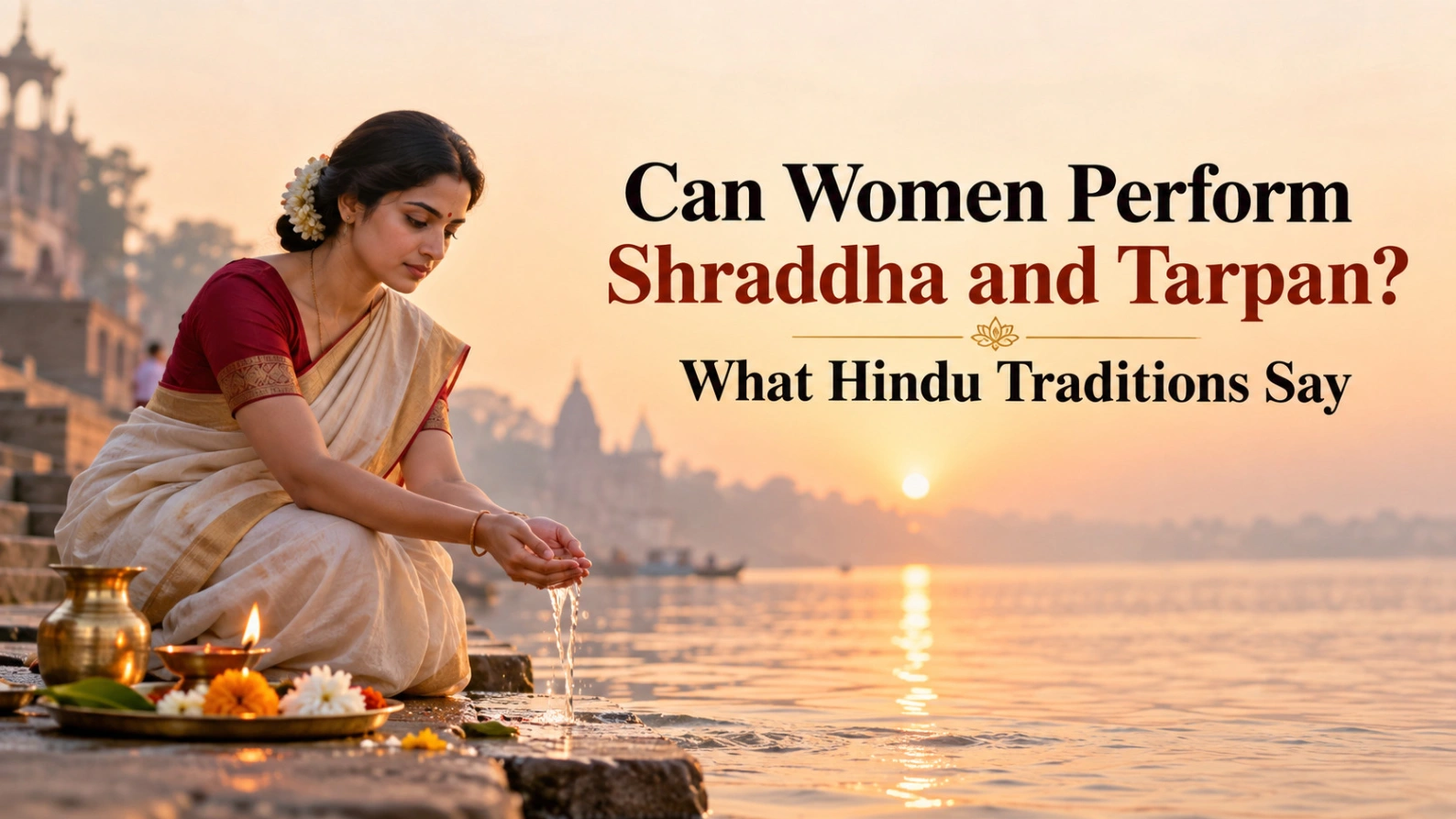
For many Hindu families, Shraddha and Tarpan are meaningful ways of remembering parents, grandparents, and other ancestors. Yet one question often creates confusion: can women perform Shraddha? Can daughters offer Tarpan, perform Pind Daan, or observe Pitru Paksha rituals for their parents?
The most accurate answer is that Hindu traditions are not completely uniform on this question. In many customary systems, the son—often the eldest son—is treated as the primary performer of ancestral rites. At the same time, other textual interpretations, regional customs, priestly traditions, and contemporary practice allow a wife, daughter, daughter’s son, or another close relative to perform certain rites when a son is absent or unable to do so. The subject is therefore best understood through both scripture and living tradition rather than through a single universal rule.
What Are Shraddha, Tarpan, and Pind Daan?
Shraddha refers broadly to rites performed with faith, reverence, and remembrance for departed ancestors. These observances may include offerings of food and water, prayers, charity, and other acts prescribed by family custom. Tarpan is a ritual offering of water to ancestors, often made with black sesame and specific invocations. Pind Daan involves offering pindas, traditionally prepared from rice, barley flour, sesame, or other ingredients according to the ritual tradition being followed.
These rites are especially associated with Pitru Paksha, although annual Shraddha may also be performed on an ancestor’s death tithi or at sacred pilgrimage places. Their larger purpose is remembrance, gratitude, family duty, and the traditional wish that departed ancestors receive peace and spiritual benefit.
Design Your Destiny
Your outer life often begins with the patterns you carry within. Design Your Destiny is an invitation to understand your mind, transform limiting patterns, and live with greater awareness, clarity, and purpose. Discover how timeless spiritual wisdom can move beyond philosophy and become a practical way of living every day.
Start Your Journey Today!Can Women Perform Shraddha?
The answer depends on the tradition being followed. Classical household practice in many communities gives the first responsibility to a son. This is why people often assume that Shraddha is exclusively a male duty. However, that conclusion is too broad.
Translations and interpretations of the Garuda Purana contain provisions for situations in which a son is absent. One translation of Garuda Purana, Preta Kalpa 2.13.16, states that in the absence of a son, the wife, the daughter’s son, or even the daughter may perform the specified rite. Another widely circulated translation says that when there is no son, the wife may perform the rites and, where necessary, another relative or a Brahmin may do so. These passages demonstrate that Hindu ritual tradition contains alternatives when the expected male heir is unavailable.
Different texts also distinguish between different post-death rites, and commentators do not always interpret eligibility in exactly the same way. It is therefore more accurate to say that women are not universally excluded from ancestral rites, while the exact form of Shraddha they may perform can depend on family lineage, region, sampradaya, and priestly guidance.
Can Daughters Perform Shraddha for Their Parents?
The question “can daughters perform Shraddha?” becomes especially important when parents have no sons. In many contemporary Hindu families and pilgrimage traditions, daughters do perform Shraddha for their parents, particularly when no son is available. Some modern Hindu authorities explicitly include daughters among those who may perform Shraddha, although the precise order of eligibility varies between traditions.
Other conservative traditions continue to give preference to a son, grandson, daughter’s son, or another male relative and may ask a daughter to participate through prayer, offerings, charity, or a priest-assisted ritual instead.
So, can a daughter perform Shraddha for parents? In many traditions, yes—especially when there is no son—but the precise ritual procedure may differ. A daughter who wishes to perform the rite should ideally follow her family’s custom or consult a knowledgeable priest familiar with that lineage.
Shradh Dates: Pitru Paksha Start & End Date, Tithi & Vidhi
Can Women Perform Tarpan?
The same principle applies to the question “can women perform Tarpan?” Many ritual traditions historically assign Pitru Tarpan to male descendants. However, living Hindu practice is more varied.
A number of contemporary priests and ritual traditions permit daughters, wives, widows, or other women to offer Tarpan when there is no eligible male descendant. Some use simplified prayers rather than a complete set of Vedic mantras, while others guide the performer through the Sankalpa and water offerings.
Current ritual guides likewise acknowledge differing traditional views while noting that daughters or wives may perform Tarpan in many families when a male heir is absent.
The important point is that Hindu ritual eligibility is connected not only with gender but also with lineage, family duty, ritual tradition, and the particular rite being performed.
Can Women Perform Pitru Paksha Rituals?
Women participate in Pitru Paksha rituals in many ways across India. Even in families where formal Shraddha is performed by a male relative, women often prepare ritual food, participate in prayers, make donations, remember ancestors, and follow household disciplines connected with the observance.
Where no son or eligible male relative is available, women may also perform or commission Shraddha, Tarpan, or Pind Daan depending on local custom. This is why Pitru Paksha rules for daughters cannot accurately be reduced to one rule that applies to every Hindu family.
A useful distinction is between spiritual purpose and ritual procedure. Remembering ancestors with gratitude is widely valued. The exact procedure—who takes the Sankalpa, who offers water, who gives the pinda, and which mantras are recited—may vary according to the tradition being observed.
Can Women Perform Pind Daan?
Another common question is: can women perform Pind Daan?
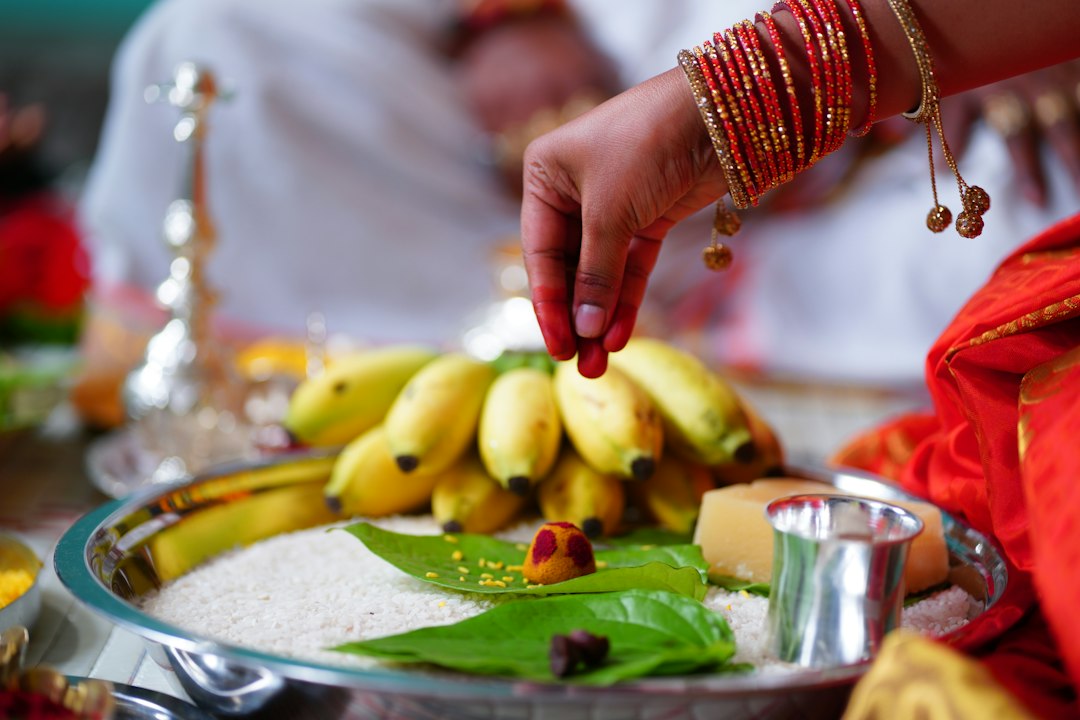
Pind Daan is often associated with sons and male descendants, particularly at sacred pilgrimage places such as Gaya. However, many present-day pilgrimage priests and families accept women performing Pind Daan when there is no son, no other eligible relative, or when a daughter is the principal surviving child.
Contemporary guides connected with Gaya pilgrimage traditions also describe daughters and other relatives as possible performers when a son is absent.
Some traditions permit the daughter herself to offer the pinda. Others may prefer the daughter’s son, another close relative, or a priest acting on behalf of the family. Therefore, families planning Pind Daan at a pilgrimage site should confirm the practice with the priest or tradition under which the ceremony will be conducted.
Who Can Perform Shraddha If There Is No Son?
The question “who can perform Shraddha if there is no son?” is particularly important because Hindu ritual literature frequently provides alternatives rather than allowing an ancestral duty to disappear completely.
Depending upon the text and tradition, the wife, daughter, daughter’s son, brother, nephew, another relative, friend, or qualified priest may be considered when a son is absent.
A Garuda Purana translation states that where there is no son, the wife may perform the rites, while another passage specifically includes the daughter and daughter’s son for a particular rite when there is no son.
This does not mean that every Hindu lineage follows exactly the same order. It does demonstrate, however, that saying “there is no son, therefore Shraddha cannot be performed” is too absolute.
What Do Hindu Scriptures Say About Women Performing Shraddha?
People searching for “Hindu scriptures on women performing Shraddha” should first understand that Hindu ritual practice is based on a large and diverse body of texts rather than one central rulebook.
Dharmashastra literature, Puranic texts, regional ritual manuals, commentaries, inherited family traditions, and different sampradayas do not always approach every situation identically.
Some traditions strongly emphasize patrilineal succession and place the son first. Other sources contain provisions for wives, daughters, daughter’s sons, relatives, or substitute performers when the expected heir is not present. Modern Hindu institutions and priests also differ in how they interpret and apply these provisions.
The most responsible conclusion is therefore that women should not be described as universally forbidden from Shraddha, Tarpan, or Pind Daan. At the same time, saying that gender has no relevance whatsoever to traditional ritual rules would also oversimplify Hindu practice.
Pitru Paksha Shradh Rituals: Step-by-Step Vidhi for Ancestor
Shraddha Rules for Women: Why Family Tradition Matters
When discussing Shraddha rules for women or Tarpan rules for women, regional and family traditions matter considerably.
A Bengali Hindu household, a North Indian family, a South Indian Smarta family, and a Vaishnava household may follow different ritual manuals or inherited customs. The role assigned to daughters, wives, daughters-in-law, and widows can therefore vary.
This does not necessarily mean that one family is right and another is wrong. Hindu ritual tradition has historically developed through multiple schools and regional practices.
For someone who genuinely wishes to perform Shraddha for a parent, the most practical approach is to speak with a priest who understands the family’s sampradaya and customary practices rather than relying entirely on a generalized internet rule.
The Deeper Meaning of Shraddha: Gratitude Beyond Gender
The word Shraddha itself points toward faith, sincerity, and reverence. Ancestral remembrance reminds us that life is not lived in isolation. Every generation receives a body, language, culture, values, opportunities, and memories from those who came before it.
The discussion around whether women can perform Shraddha is therefore most meaningful when approached with both respect for tradition and compassion for actual family circumstances.
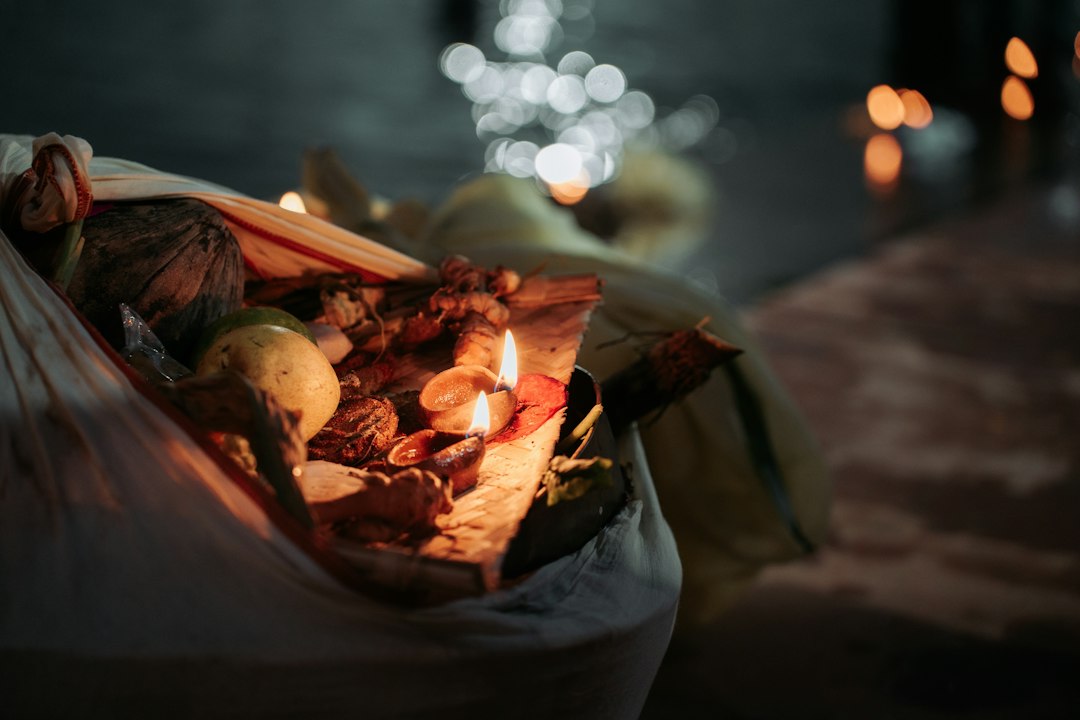
A daughter who has cared for her parents may naturally feel a deep responsibility to remember them after their passing. At the same time, a traditional family may sincerely wish to preserve the ritual sequence followed by generations before them. Hindu practice contains different ways of responding to these situations.
So, can women perform Shraddha and Tarpan?
In many Hindu traditions, women can participate fully, and in a number of traditions they may perform or lead ancestral rites, particularly when a son is absent. Other traditions maintain a more specific sequence of ritual eligibility.
Rather than treating the subject as a conflict between tradition and modernity, it is more accurate to recognise the diversity within Hindu tradition itself. The appropriate approach is to honour the intention behind Shraddha while respecting the sampradaya, family custom, and priestly guidance through which the ritual is performed.
Personal Session
Sometimes one meaningful conversation can bring clarity to questions that have remained unresolved for years. If you are seeking deeper guidance around your spiritual journey, relationships, inner conflicts, purpose, or personal transformation, a personal session can help you look within with greater awareness and clarity.
Book NowRead Latest Articles