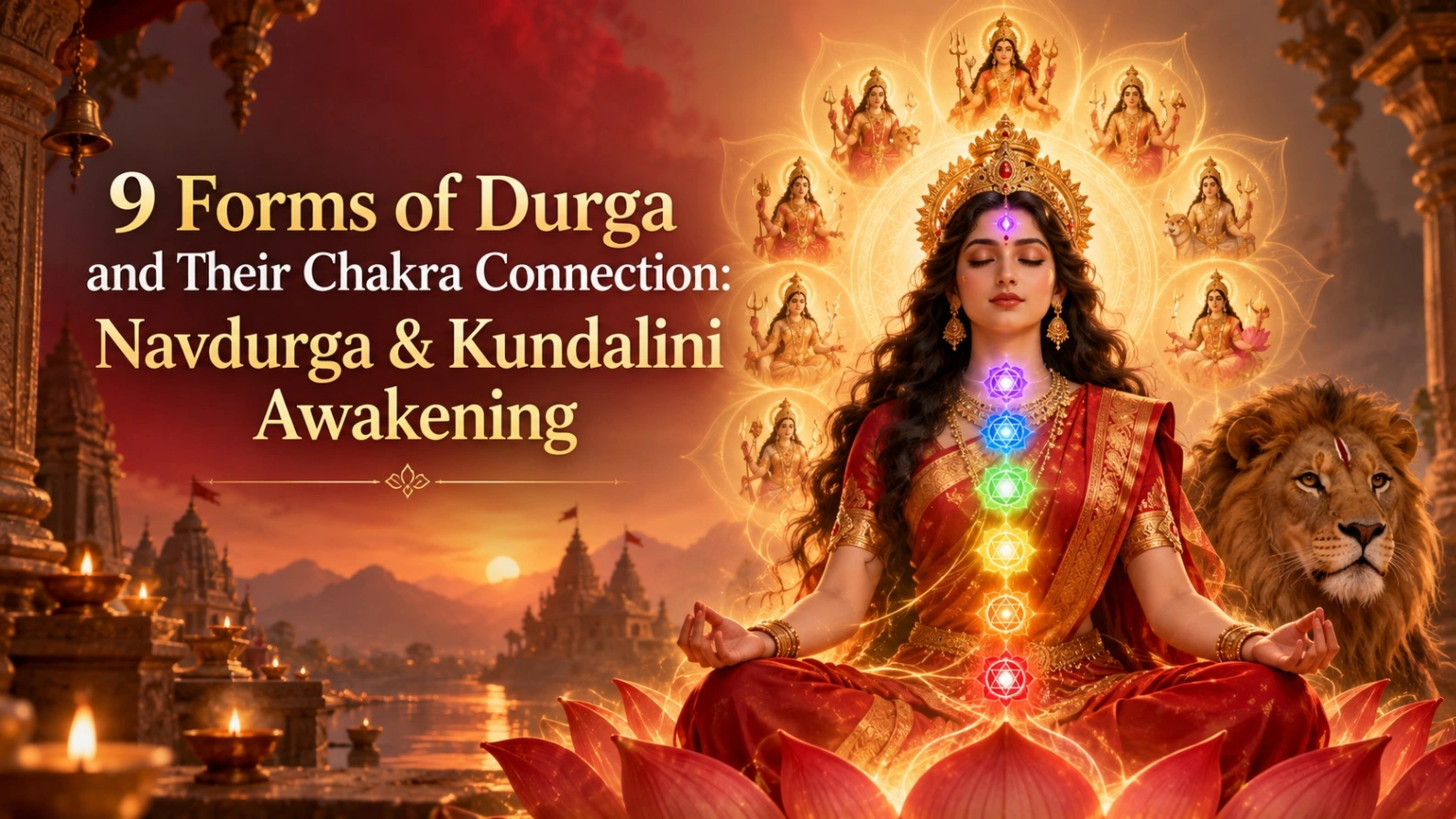
The connection between Durga and Kundalini therefore comes through the idea of awakening inner divine energy.
During Navratri, devotees worship a different form of Durga on each day. Symbolically, this progression can represent an inward movement: from stability and self-discipline to emotional purification, courage, compassion, intuition and finally expanded consciousness.
Seen this way, Kundalini awakening during Navratri does not have to mean a dramatic mystical experience. It can represent gradual inner transformation, becoming more aware, disciplined, fearless, compassionate and connected to one's deeper consciousness.
Let us understand this journey through each of the nine forms.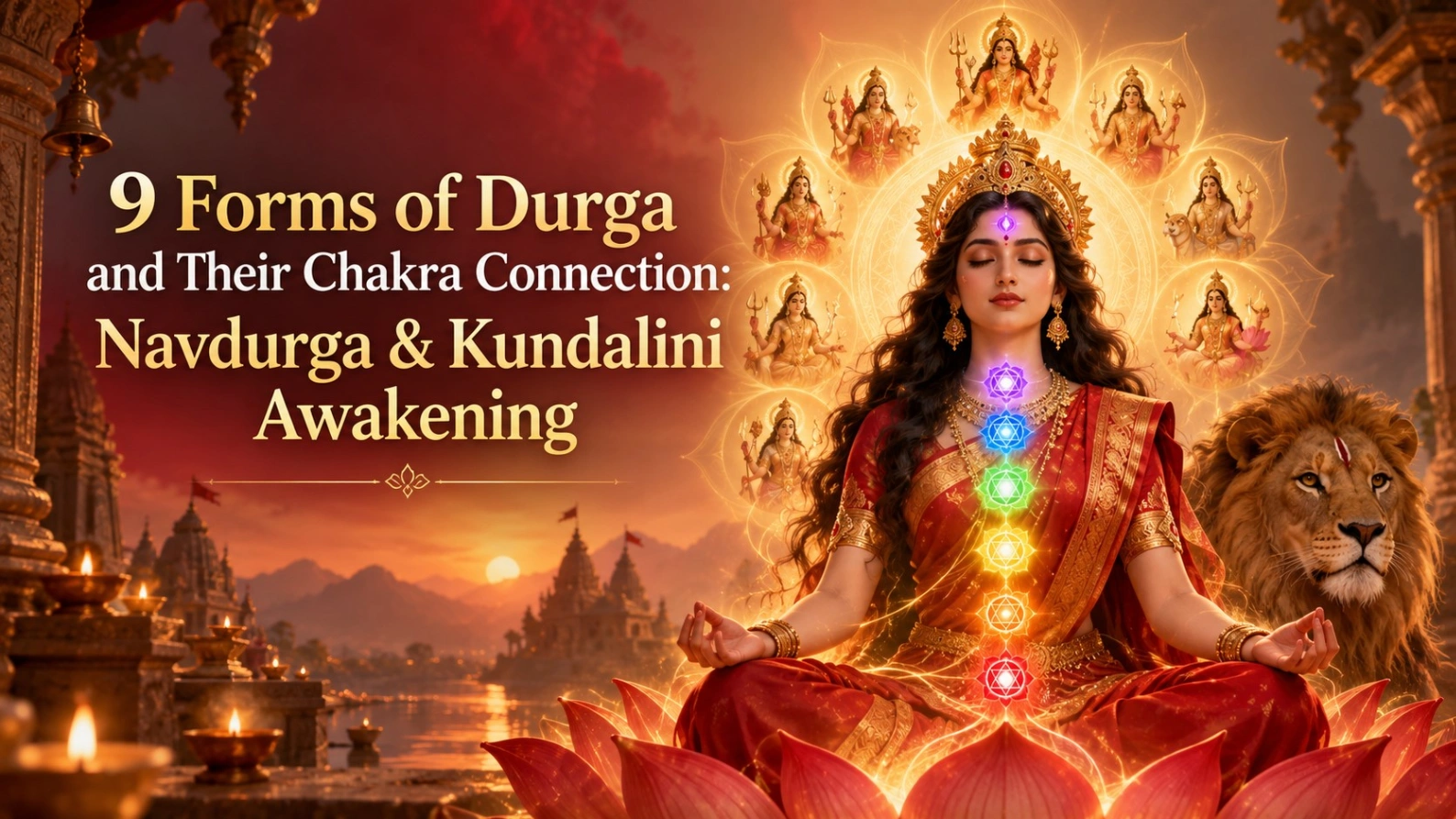
1. Maa Shailaputri – Muladhara Chakra and Grounding
Navratri begins with Maa Shailaputri, the daughter of the mountains. Mountains symbolize strength, stability and an unshakable foundation.
This makes Shailaputri naturally associated in symbolic chakra interpretations with the Muladhara or Root Chakra, located at the base of the spine.
Muladhara represents security, stability, survival and our connection with the physical world. Similarly, every genuine spiritual journey requires a strong foundation before energy can move toward higher levels of awareness.
The first step of Navratri chakra awakening can therefore be understood as grounding yourself.
Before seeking extraordinary spiritual experiences, ask: Are you emotionally stable? Are your daily habits balanced? Are you connected to your body and present reality?
Shailaputri reminds the spiritual seeker to establish strong roots before attempting to rise.
Inner lesson: Become grounded, stable and present.
Design Your Destiny
Your outer life begins to transform when your inner consciousness changes. Design Your Destiny helps you understand your mind, energy and deeper potential through practical spiritual wisdom designed for everyday life.
Start Your Journey Today!2. Maa Brahmacharini – Svadhisthana Chakra and Self-Discipline
The second form, Maa Brahmacharini, represents penance, devotion, restraint and unwavering commitment.
She symbolizes the discipline required to remain focused on a higher goal even when the path becomes difficult.
Brahmacharini is often linked symbolically with the Svadhisthana or Sacral Chakra, associated with emotions, desires, creativity and the flow of energy.
At this stage of the Navdurga chakra connection, the seeker begins learning how to relate consciously to desire rather than becoming controlled by it.
Spiritual discipline does not necessarily mean rejecting every worldly experience. It means developing enough awareness to choose where your energy is directed.
Brahmacharini teaches us that spiritual energy becomes powerful when scattered desires are transformed into focused intention.
Inner lesson: Direct your desires instead of letting desires direct you.
3. Maa Chandraghanta – Manipura Chakra and Inner Power
Maa Chandraghanta represents courage, protection and readiness to confront negativity.
Her energy aligns beautifully with the Manipura or Solar Plexus Chakra, traditionally associated with personal power, confidence, willpower and transformation.
When Manipura is understood symbolically as the fire centre, it represents our ability to take action and overcome fear.
The spiritual journey cannot progress through contemplation alone. There comes a stage when the seeker must confront inner fears, insecurities and limiting beliefs.
Chandraghanta symbolizes this awakening of courage.
The 9 Durga chakra connection therefore moves from grounding and discipline towards empowerment.
Inner lesson: Face fear with awareness instead of running from it.
4. Maa Kushmanda – Anahata Chakra and Creative Expansion
Maa Kushmanda is associated with cosmic creative energy and radiance. Her symbolism represents the life-giving force through which creation expands.
She can be connected symbolically with the Anahata or Heart Chakra, the centre associated with love, compassion, balance and openness.
After developing stability, discipline and courage, spiritual growth requires the heart to expand.
True strength without compassion can become rigid. The heart centre brings warmth, empathy and connection into the awakening journey.
Kushmanda teaches us that inner light naturally expands when fear and emotional contraction begin to dissolve.
Within the journey of Navdurga and Kundalini awakening, this stage represents moving from personal power towards compassionate awareness.
Inner lesson: Let your strength expand into love.
5. Maa Skandamata – Vishuddha Chakra and Pure Expression
Maa Skandamata represents motherhood, nurturing energy, protection and selfless love.
She can be symbolically associated with the Vishuddha or Throat Chakra, which represents truthful communication, authentic expression and purification.
Why connect nurturing energy with expression?
Because mature consciousness does not communicate merely to prove itself. It speaks with awareness, compassion and responsibility.
At this stage, the seeker begins expressing truth without aggression and communicating from a place of inner clarity.
Skandamata's nurturing nature reminds us that words themselves carry energy. Our speech can heal, guide and encourage or create unnecessary conflict.
Inner lesson: Allow truth to be expressed with compassion.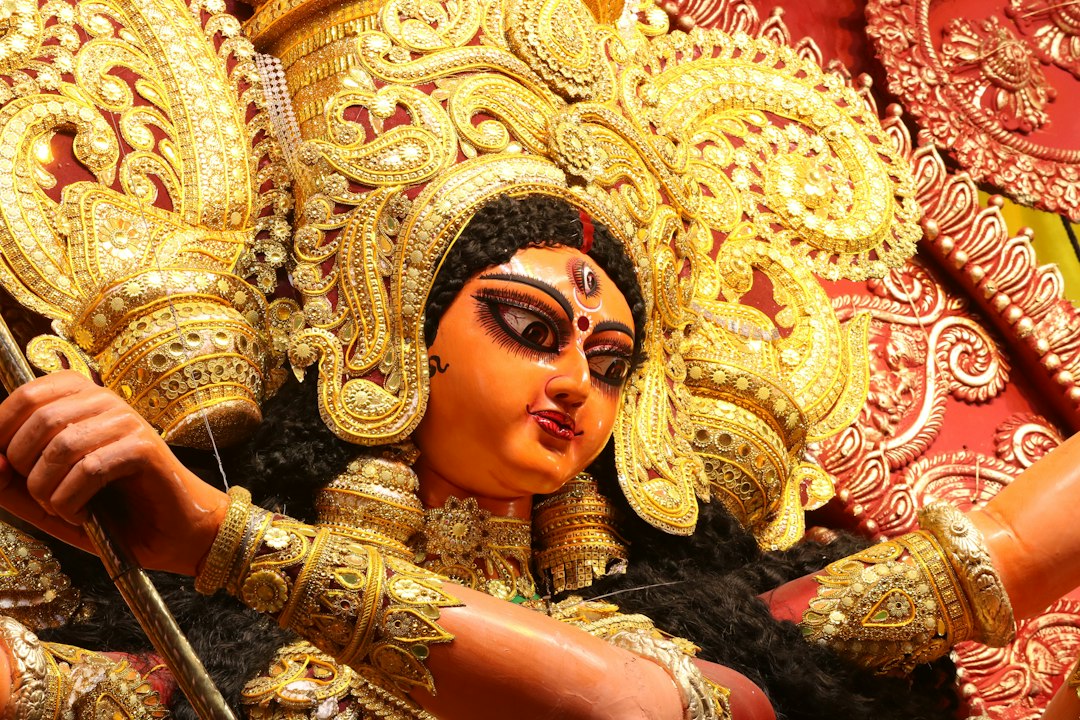
6. Maa Katyayani – Ajna Chakra and Inner Vision
Maa Katyayani represents strength, determination and the power to destroy forces that obstruct dharma.
Symbolically, her energy may be connected with the Ajna or Third Eye Chakra, associated with intuition, perception, discernment and inner vision.
At lower stages of awareness, we often react entirely according to what appears on the surface. As awareness deepens, we begin seeing patterns beneath situations.
Katyayani represents the courage required to distinguish truth from illusion.
The Navdurga chakra connection now moves beyond emotional and personal development toward deeper insight.
This stage asks the seeker to observe thoughts, attachments and assumptions more clearly.
Inner lesson: See beyond appearances and develop discernment.
7. Maa Kalaratri – Sahasrara and Dissolution of Fear
Maa Kalaratri is one of the fiercest manifestations of Durga. She represents the destruction of darkness, ignorance and fear.
Symbolically, Kalaratri may be connected with the movement toward Sahasrara or Crown Chakra consciousness, where the limited sense of individuality begins opening toward something greater.
Her fierce appearance carries an important spiritual message: awakening is not always comfortable.
Transformation sometimes requires facing exactly what we have spent years avoiding like fear, ego, attachment and uncertainty.
Kalaratri represents the courage to pass through this inner darkness.
In the journey of Durga and Kundalini, destruction does not necessarily mean physical destruction. It symbolizes the dissolution of ignorance and outdated identities.
Inner lesson: What appears as darkness may become the doorway to freedom.
Ashtami 2026: Durga Ashtami Date, Time & Navratri Puja Guide
8. Maa Mahagauri – Purification and Higher Awareness
Maa Mahagauri represents purity, serenity, peace and spiritual cleansing.
Because classical yoga generally describes seven primary chakras, the eighth and ninth Navdurga stages can be understood not as additional universally accepted chakras but as states of consciousness beyond the basic chakra progression.
Mahagauri represents the purification that follows inner transformation.
After confronting fear and ignorance, awareness becomes quieter and clearer. The constant struggle of the ego begins to soften.
This stage of Navdurga and Kundalini awakening represents inner stillness.
Purity here does not merely mean ritual purity. It can mean clarity of intention, freedom from unnecessary mental noise and the ability to experience life without constant judgment.
Inner lesson: Spiritual growth ultimately creates simplicity and inner peace.
9. Maa Siddhidatri – Integration, Fulfilment and Awakened Consciousness
The Navdurga journey culminates with Maa Siddhidatri, whose name is associated with the bestowal of siddhi or spiritual accomplishment.
Symbolically, Siddhidatri represents integration the point where the different dimensions of consciousness are no longer experienced as fragmented.
The seeker who began with grounding through Shailaputri has travelled through discipline, courage, expansion, compassionate expression, insight, dissolution and purification.
Siddhidatri represents completion.
Within a symbolic framework of 9 Durga forms and Kundalini awakening, this stage is not about gaining supernatural powers. The deeper message is mastery over the inner world.
Real spiritual accomplishment can be seen in greater awareness, balance, compassion, fearlessness and freedom from unconscious reactions.
Inner lesson: The highest achievement is mastery of oneself.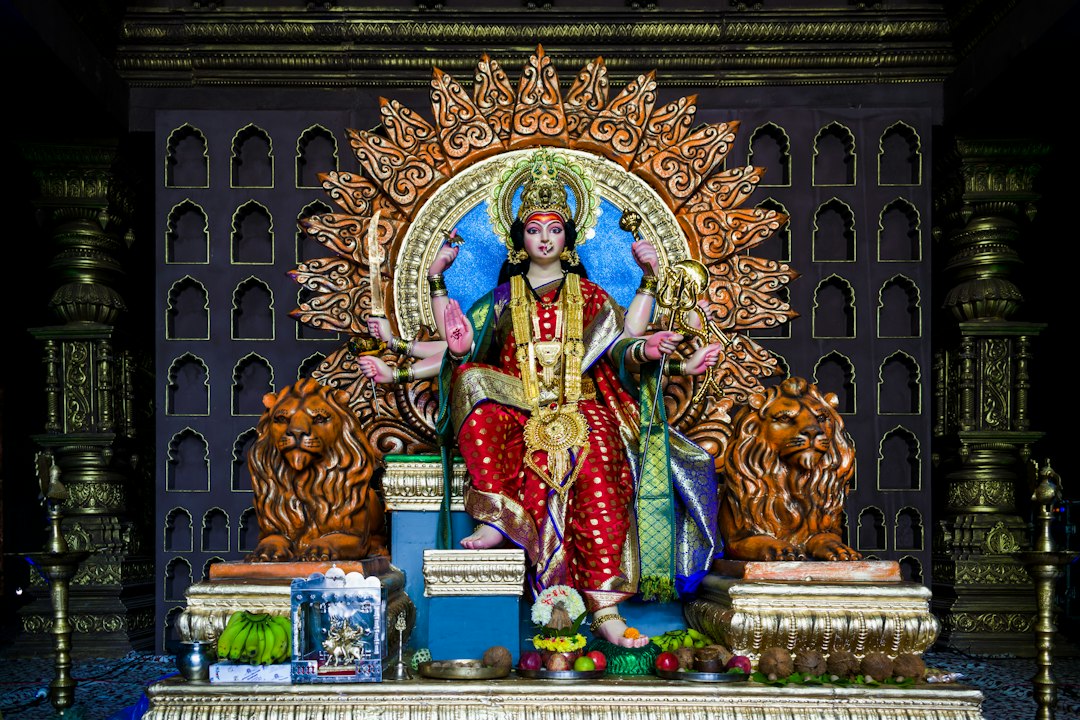
9 Forms of Durga and Chakra Connection at a Glance
Shailaputri – Muladhara – Grounding and stability
Brahmacharini – Svadhisthana – Discipline and direction of desire
Chandraghanta – Manipura – Courage and personal power
Kushmanda – Anahata – Love and expansion
Skandamata – Vishuddha – Pure and compassionate expression
Katyayani – Ajna – Intuition and discernment
Kalaratri – Sahasrara symbolism – Dissolution of fear and ignorance
Mahagauri – Higher purification – Serenity and clarity
Siddhidatri – Integration – Spiritual fulfilment and expanded consciousness
This symbolic sequence helps explain why the 9 forms of Durga and chakra connection can be understood as a complete journey of inner transformation.
How Can Navratri Support Chakra Awareness?
Navratri provides an opportunity to turn spiritual practice inward.
Instead of focusing only on rituals, devotees can dedicate a few minutes each day to the quality represented by that day's form of Durga.
On Shailaputri's day, reflect on stability. With Brahmacharini, examine discipline. With Chandraghanta, work with fear. With Kushmanda, cultivate compassion. With Skandamata, observe your speech. With Katyayani, practise discernment. With Kalaratri, face inner darkness. With Mahagauri, simplify the mind. Finally, with Siddhidatri, contemplate wholeness.
Meditation, mantra chanting, mindful breathing, self-reflection and prayer can all become part of this process.
However, intense Kundalini practices should not be forced merely because it is Navratri. Traditional energy practices are best approached gradually and, where appropriate, with experienced guidance.
9 Colour of Navratri 2026: DayWise List, Date & Significance
The Deeper Spiritual Meaning of Navratri
Navratri can therefore be seen as far more than nine days of worship.
The nine forms of Durga reveal nine dimensions of Shakti that already exist within human consciousness.
Shailaputri teaches stability. Brahmacharini teaches discipline. Chandraghanta awakens courage. Kushmanda expands the heart. Skandamata refines expression. Katyayani develops insight. Kalaratri destroys fear. Mahagauri brings purification. Siddhidatri represents fulfilment.
Together, they transform Navratri into a symbolic map of inner awakening.
The deepest meaning of Kundalini awakening during Navratri may therefore not be about suddenly experiencing extraordinary energy. It is about consciously awakening qualities that move us from fear to courage, confusion to clarity and unconscious living to awareness.
The goddess we worship externally becomes a reminder of the Shakti waiting to awaken internally.
Personal Session
If you are facing emotional blocks, confusion, repeating life patterns or seeking greater clarity on your spiritual journey, a Personal Session can help you explore your challenges with focused guidance. Understand yourself more deeply, gain clarity on what is holding you back and discover practical steps toward greater awareness, balance and inner growth.
Book NowRead Latest Articles