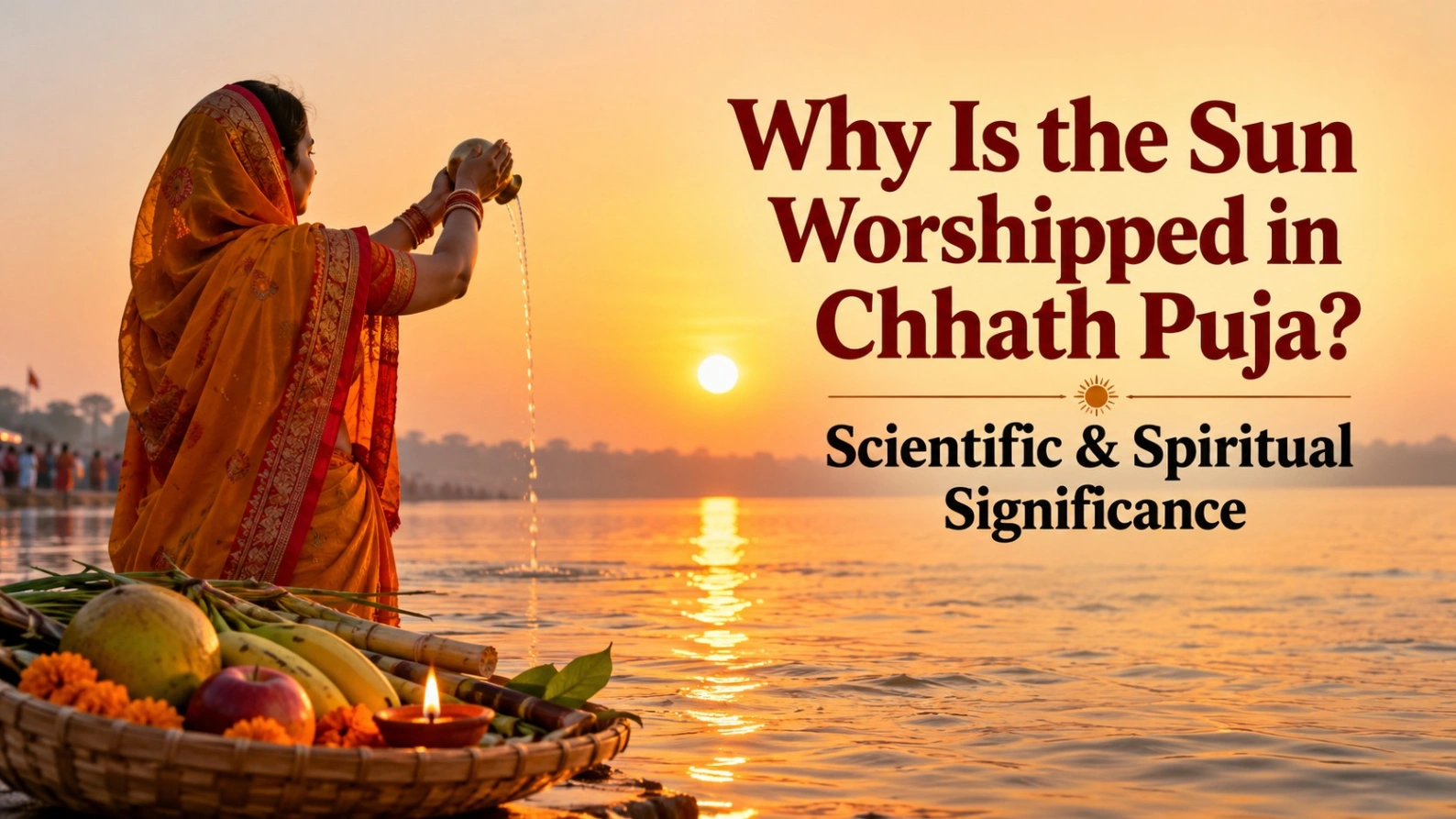
Chhath Puja is one of India's most distinctive festivals of Sun worship. Observed with particular devotion in Bihar, Jharkhand, eastern Uttar Pradesh and among communities across India and abroad, the festival is dedicated primarily to Surya Dev, the Sun God, along with Chhathi Maiya. Unlike many other festivals, Chhath Puja brings devotees directly into nature, where prayers and offerings are made while standing in rivers, ponds or other water bodies.
But why is the Sun worshipped in Chhath Puja, and why are offerings made to both the setting and rising Sun?
The answer lies in the ancient recognition of the Sun as the visible source of light, energy and life. Spiritually, Surya represents vitality, truth, discipline, gratitude and divine consciousness. The rituals of Chhath also create a deep connection between human life and natural cycles.
Chhath Puja is traditionally observed over four days through Nahay Khay, Kharna, Sandhya Arghya and Usha Arghya. The Ministry of Tourism's Incredible India portal similarly describes the festival as dedicated to the Sun God and highlights the distinctive worship of both the setting and rising Sun.
Understanding the scientific significance of Chhath Puja alongside its spiritual meaning makes the symbolism of this ancient festival even more fascinating.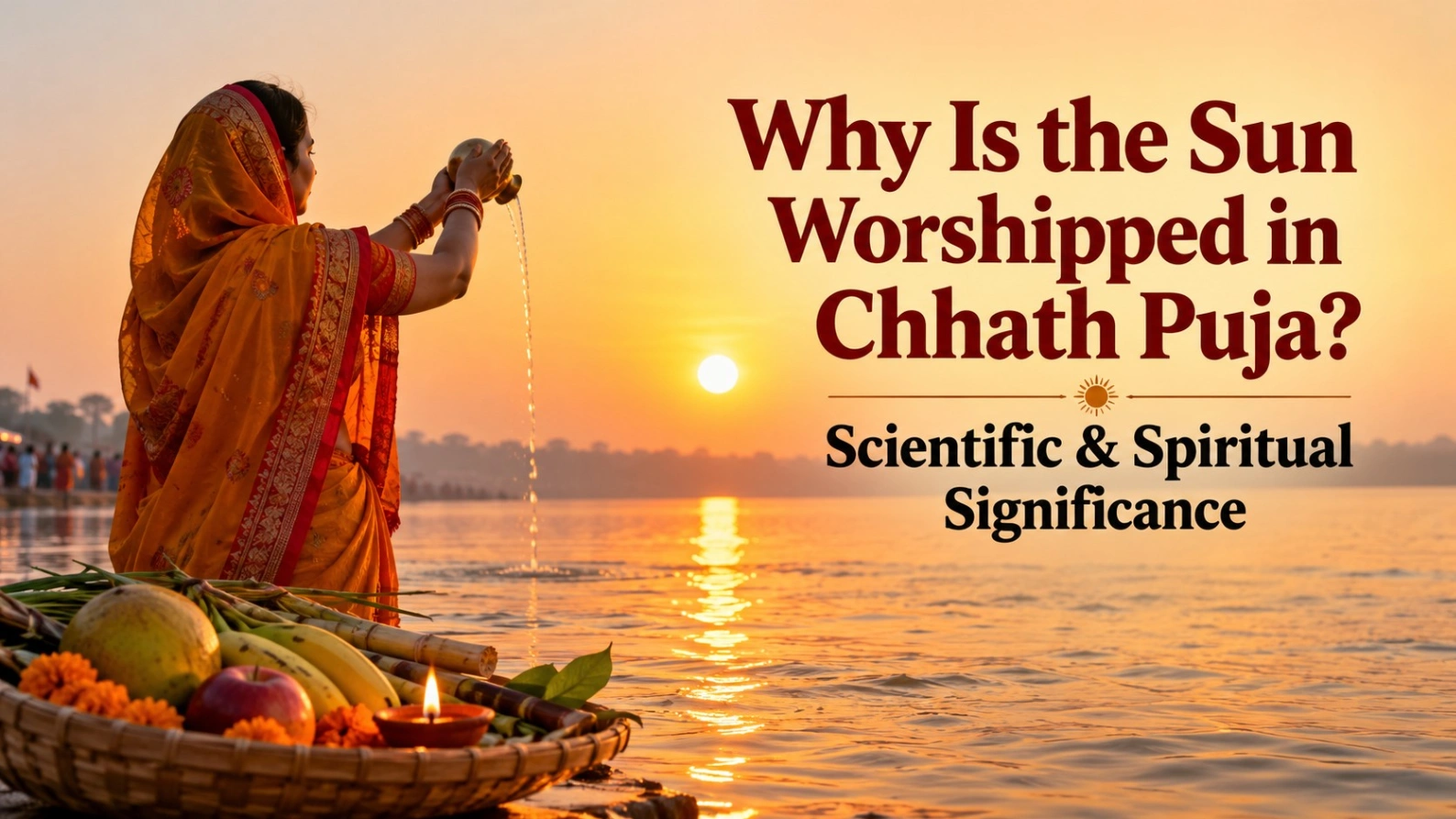
Why Is the Sun Worshipped in Chhath Puja?
The Sun holds an extraordinary position in Indian spiritual philosophy because it can be directly perceived as a force sustaining life on Earth. Plants depend on sunlight, ecosystems depend on plants, and human life ultimately depends on the energy that flows through this natural system.
For devotees, Surya Dev therefore represents much more than a celestial body. The Sun symbolizes life, energy, strength, clarity and continuity.
During Chhath Puja, devotees express gratitude to Surya Dev and seek blessings for health, prosperity, longevity and the well-being of their families. The festival becomes an act of thanksgiving to nature rather than simply a ritual asking for material blessings.
This is central to the importance of Sun worship in Chhath Puja: it reminds devotees that human life is interconnected with forces of nature that exist beyond individual control.
The Sun rises every day without discrimination. Symbolically, therefore, Surya also represents constancy, selfless giving and discipline.
Design Your Destiny
Your outer life begins with your inner transformation. Design Your Destiny helps you understand your mind, break limiting patterns and consciously move toward a life of greater clarity, purpose and fulfilment.
Start Your Journey Today!Spiritual Significance of Sun Worship in Chhath Puja
The Chhath Puja spiritual significance is deeply connected with purification, gratitude, self control and surrender.
Devotees traditionally follow strict rules of cleanliness, fasting and discipline during the festival. These observances shift attention away from ordinary comforts and toward devotion and introspection.
Sun worship can therefore be understood on several spiritual levels.
First is gratitude. Surya Dev represents the energy that sustains life, and offering Arghya becomes an expression of thankfulness.
Second is discipline. The vrat followed during Chhath requires dedication, patience and self-control.
Third is purification. Clean surroundings, ritual bathing and carefully prepared offerings symbolize both outer and inner purity.
Fourth is surrender. Standing before the enormous natural presence of the Sun can serve as a reminder of the limited nature of individual ego and the larger rhythm of existence.
In this way, Sun worship in Chhath Puja becomes both an external ritual and an inward spiritual practice.
Scientific Significance of Chhath Puja
The phrase scientific significance of Chhath Puja is frequently searched online, but it is important to distinguish established science from spiritual interpretations.
Modern science does not establish that Chhath rituals themselves cure diseases or produce special medical effects. However, some elements of the festival such as exposure to natural light, spending time outdoors and following the natural sunrise-sunset cycle can be discussed through established knowledge about human physiology.
Light is one of the major environmental signals regulating the body's circadian rhythm, or biological clock. Research reviewed through the U.S. National Institutes of Health explains that the human circadian system is synchronized largely through regular patterns of light and darkness.
Chhath rituals are closely connected to sunrise and sunset. This creates an interesting parallel between an ancient nature-based observance and modern understanding of how strongly human physiology responds to natural light-dark cycles.
That does not mean Chhath Puja was scientifically designed as medical therapy. Rather, it illustrates how many traditional practices developed around careful observation of natural rhythms.
Scientific Significance of Sun Worship in Chhath Puja
Natural sunlight has several established biological effects.
One of the best known is its role in vitamin D production. The World Health Organization notes that small amounts of ultraviolet radiation contribute to vitamin D production, which is important for musculoskeletal health. However, excessive ultraviolet exposure can damage the skin and eyes and increase the risk of skin cancer.
Sunlight and darkness also influence the body's internal timing system. Exposure to morning light helps provide signals associated with wakefulness and synchronization of the sleep-wake cycle.
Therefore, when discussing the scientific significance of Sun worship in Chhath Puja, the credible approach is not to claim miraculous health effects. Instead, it is to recognise that the festival places people directly in contact with daylight, water, open environments and the daily transition between darkness and light.
This alignment with nature is one of the most interesting bridges between the cultural symbolism of Chhath and modern scientific understanding.
Chhath Puja 2026 Date,Time, Puja Muhurat & Complete Schedule
What Is Chhath Puja Surya Arghya?
One of the defining rituals of Chhath Puja is Surya Arghya.
Arghya refers to the respectful offering of water to the Sun. Devotees traditionally stand in a water body and offer water while praying to Surya Dev.
During the four-day celebration, two major Arghya rituals take place:
Sandhya Arghya is offered to the setting Sun.
Usha Arghya is offered to the rising Sun on the following morning.
This worship of both sunset and sunrise makes Chhath particularly distinctive. Incredible India identifies Sandhya Arghya and Usha Arghya among the festival's principal observances.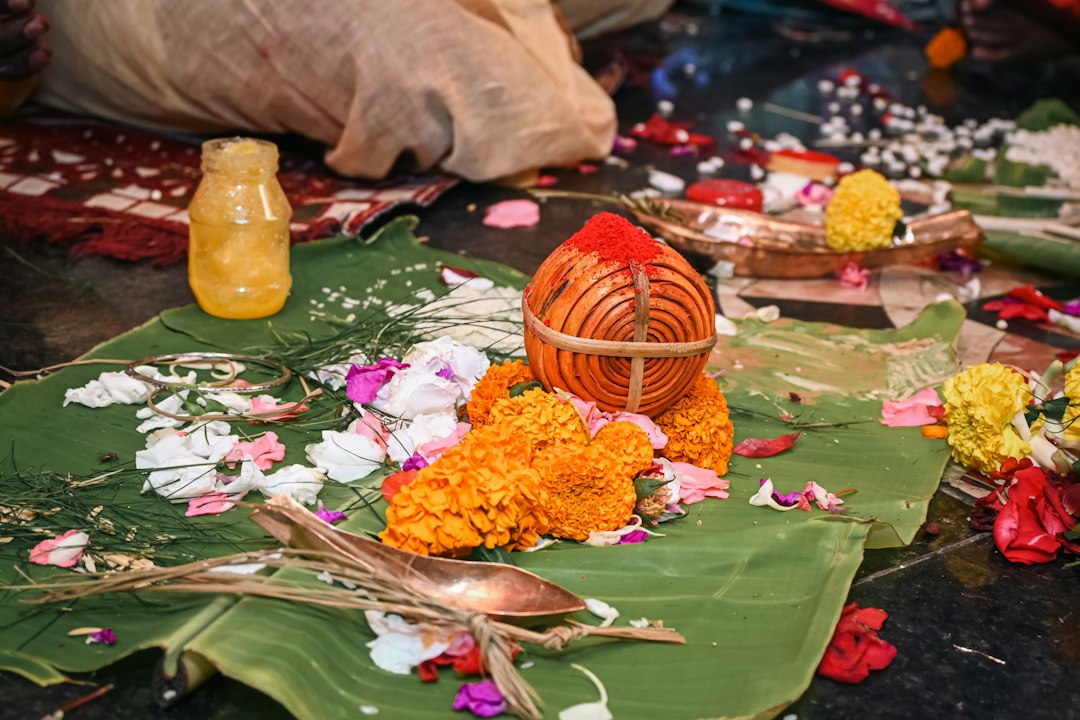
Surya Arghya Significance
The Surya Arghya significance is rooted in gratitude and reverence.
Water is itself one of the fundamental elements necessary for life. When water is offered to the Sun, two essential forces of nature water and solar energy come together symbolically.
Spiritually, Arghya can represent surrender of the ego, gratitude for life and prayer for divine guidance.
It also creates a focused moment of devotion. Instead of rushing through everyday life, devotees stand still, face the Sun, pray and consciously acknowledge nature.
This simple act makes Surya Arghya one of the most recognizable and meaningful rituals of Chhath Puja.
Sandhya Arghya Significance: Why Worship the Setting Sun?
The Sandhya Arghya significance carries one of Chhath Puja's most powerful philosophical lessons.
Most cultures naturally associate the rising Sun with success, beginnings and hope. Chhath Puja, however, also honours the setting Sun.
Why?
Because life consists of both beginnings and endings, growth and decline, achievement and difficulty.
The setting Sun reminds devotees to accept every phase of existence with humility. Success deserves gratitude, but endings deserve respect too.
Symbolically, worshipping the setting Sun teaches that worth is not limited to moments of rise and achievement. Even when something is approaching completion, it retains dignity and meaning.
This makes Sandhya Arghya an extraordinary spiritual expression of acceptance, balance and gratitude.
Usha Arghya Significance: Why Worship the Rising Sun?
After Sandhya Arghya, devotees return before or around dawn for Usha Arghya, the offering made to the rising Sun.
If sunset represents acceptance and completion, sunrise represents renewal, hope and fresh beginnings.
The darkness of night gives way to light, making sunrise a natural symbol of transformation.
Spiritually, Usha Arghya can therefore represent the prayer to move from confusion to clarity, difficulty to hope and spiritual ignorance to awareness.
After Usha Arghya, the Chhath vrat traditionally reaches its conclusion and devotees break their fast. The sequence from sunset to sunrise beautifully completes the festival's symbolic journey.
Why Are Both the Rising and Setting Sun Worshipped?
One of the deepest messages of Chhath Puja lies in worshipping the Sun during two opposite moments.
The rising Sun represents possibility.
The setting Sun represents completion.
Together, they represent the entire cycle of existence.
Spiritually, this teaches equanimity the ability to remain grounded during both favourable and difficult phases of life.
A person who respects only the rise may become attached to success. A person who understands both sunrise and sunset learns that change is inevitable.
Chhath Puja therefore carries a profound message: honour life not only when circumstances are improving but also when a chapter is ending.
Govardhan Puja 2026 Date,Time, Puja Muhurat & Complete Guide
Connection Between Chhath Puja and Nature
Another reason Chhath remains deeply relevant is its strong relationship with nature.
Sunlight, water, fruits, agricultural produce, sunrise and sunset all form part of its ritual environment.
Rather than separating spirituality from the natural world, Chhath presents nature itself as sacred.
The Sun becomes a reminder of energy.
Water represents purity and life.
The changing sky represents time.
The transition between day and night represents the changing phases of human existence.
Seen through this perspective, the Chhath Puja significance extends beyond any single ritual. It encourages gratitude toward the systems of nature on which human existence depends.
Spiritual Lessons We Can Learn From Chhath Puja
Even beyond ritual observance, Chhath Puja offers several timeless lessons.
It teaches gratitude, because much of what sustains human life cannot be created individually.
It teaches discipline, because meaningful spiritual growth often requires consistency and restraint.
It teaches humility, because nature reminds us that life exists within forces much larger than ourselves.
It teaches balance, because both sunset and sunrise receive reverence.
And finally, it teaches renewal. No matter how dark the night becomes, sunrise remains a symbol that another beginning is possible.
So, why is the Sun worshipped in Chhath Puja?
Surya Dev represents the visible force of light, vitality and continuity upon which life depends. Chhath transforms that recognition into a powerful spiritual practice based on gratitude, discipline and connection with nature.
The scientific significance of Chhath Puja can be responsibly understood through its alignment with natural light-dark cycles and the known biological importance of sunlight, while its deeper meaning lies in spiritual symbolism rather than medical claims.
Through Sandhya Arghya, devotees honour endings. Through Usha Arghya, they welcome new beginnings.
Together, the rituals communicate a timeless lesson: respect every phase of life, remain grateful to nature and continue moving from darkness toward light.
Personal Session
Sometimes the answers we seek require deeper understanding and individual guidance. Book a personal session to explore your challenges, gain clarity and receive personalised spiritual insights for your journey.
Book Now
Read Latest Articles
9 Colour of Navratri 2026: DayWise List, Date & Significance
Bhai Dooj Date: Tilak Muhurat, Puja Time & Complete Vidhi
Frequently Asked Questions
Why is the Sun worshipped in Chhath Puja?
Sun is worshipped in Chhath Puja as Surya Dev, the source and symbol of life, energy, light and The vitality. Devotees offer Surya Arghya to express gratitude and seek well-being and prosperity. Chhath uniquely honours both the setting Sun during Sandhya Arghya and the rising Sun during Usha Arghya, symbolising acceptance, renewal and the complete cycle of life.What is the scientific significance of Chhath Puja?
The scientific significance of Chhath Puja is best understood through its connection with natural light, outdoor environments and sunrise-sunset cycles. Light plays an established role in regulating human circadian rhythms. However, claims that Chhath rituals directly cure diseases or provide extraordinary medical benefits are not established by scientific evidence.Why is Surya Dev worshipped in Chhath Puja?
Surya Dev is worshipped as the visible source and symbol of energy, life, strength and light. Devotees express gratitude to the Sun and pray for health, prosperity and family well-being.What is the significance of Surya Arghya in Chhath Puja?
Surya Arghya is an offering of water made to the Sun with prayers and devotion. Spiritually, it represents gratitude, surrender, purity and reverence for the natural forces that sustain life.Why is the setting Sun worshipped during Chhath Puja?
The setting Sun is worshipped during Sandhya Arghya. Symbolically, it teaches respect for endings and declining phases of life, reminding devotees to maintain gratitude and humility during both success and difficulty.Why is the rising Sun worshipped during Chhath Puja?
The rising Sun is worshipped during Usha Arghya and represents hope, renewal, positive beginnings and the movement from darkness toward light.What is Sandhya Arghya?
Sandhya Arghya is the evening offering made to the setting Sun during Chhath Puja. It is one of the festival's central rituals and represents gratitude, acceptance and reverence for the complete cycle of nature.