
How 15 Minutes of Daily Meditation Changes the Amygdala
How meditation changes the brain is one of the most fascinating questions in modern neuroscience. For many people, meditation begins as a simple habit: sitting quietly, breathing slowly, and trying to calm the mind. But with daily practice, even 15 minutes of meditation can become more than a relaxation tool. It can train the brain to respond differently to stress, anxiety, fear, and emotional triggers.
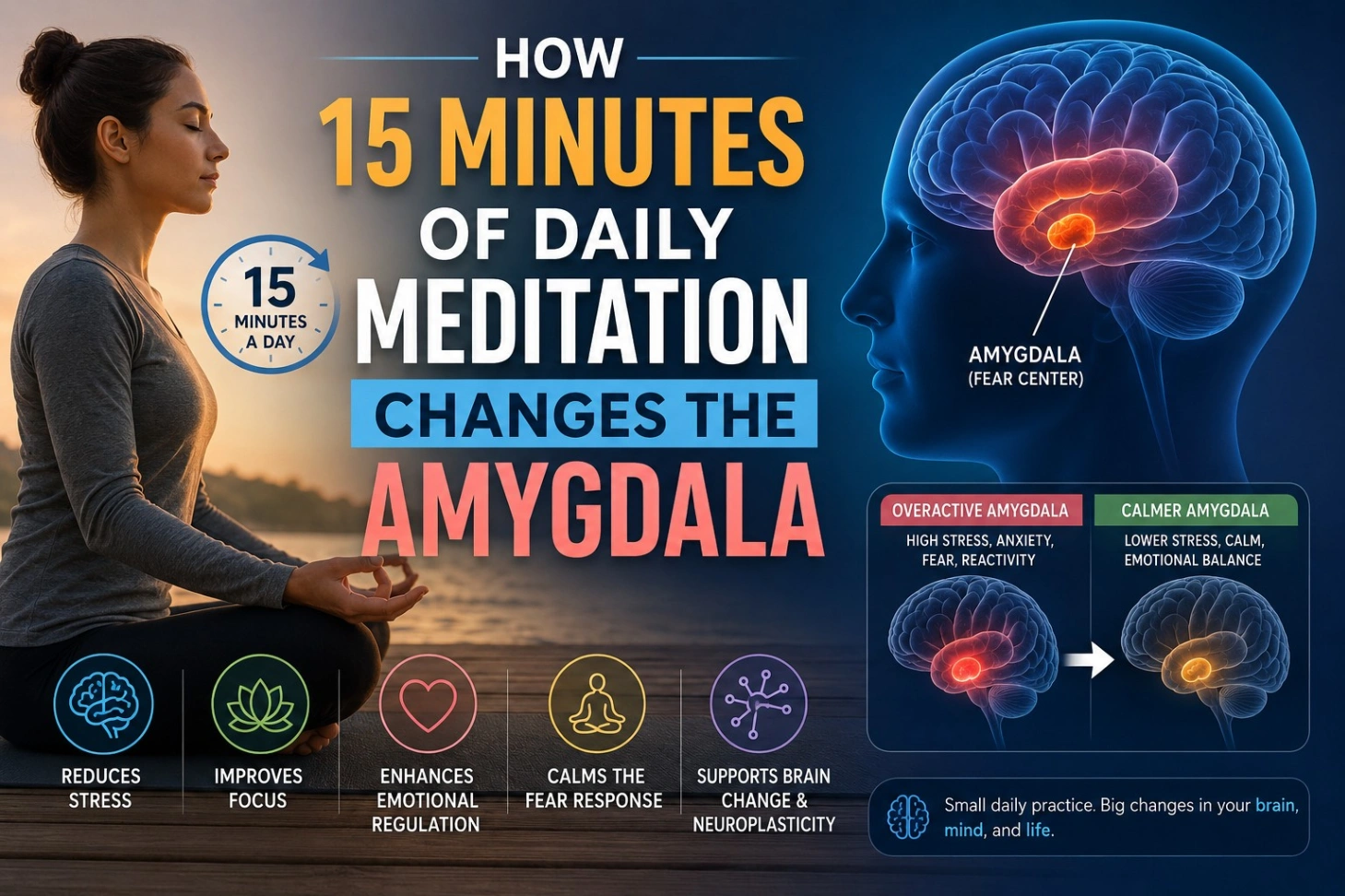
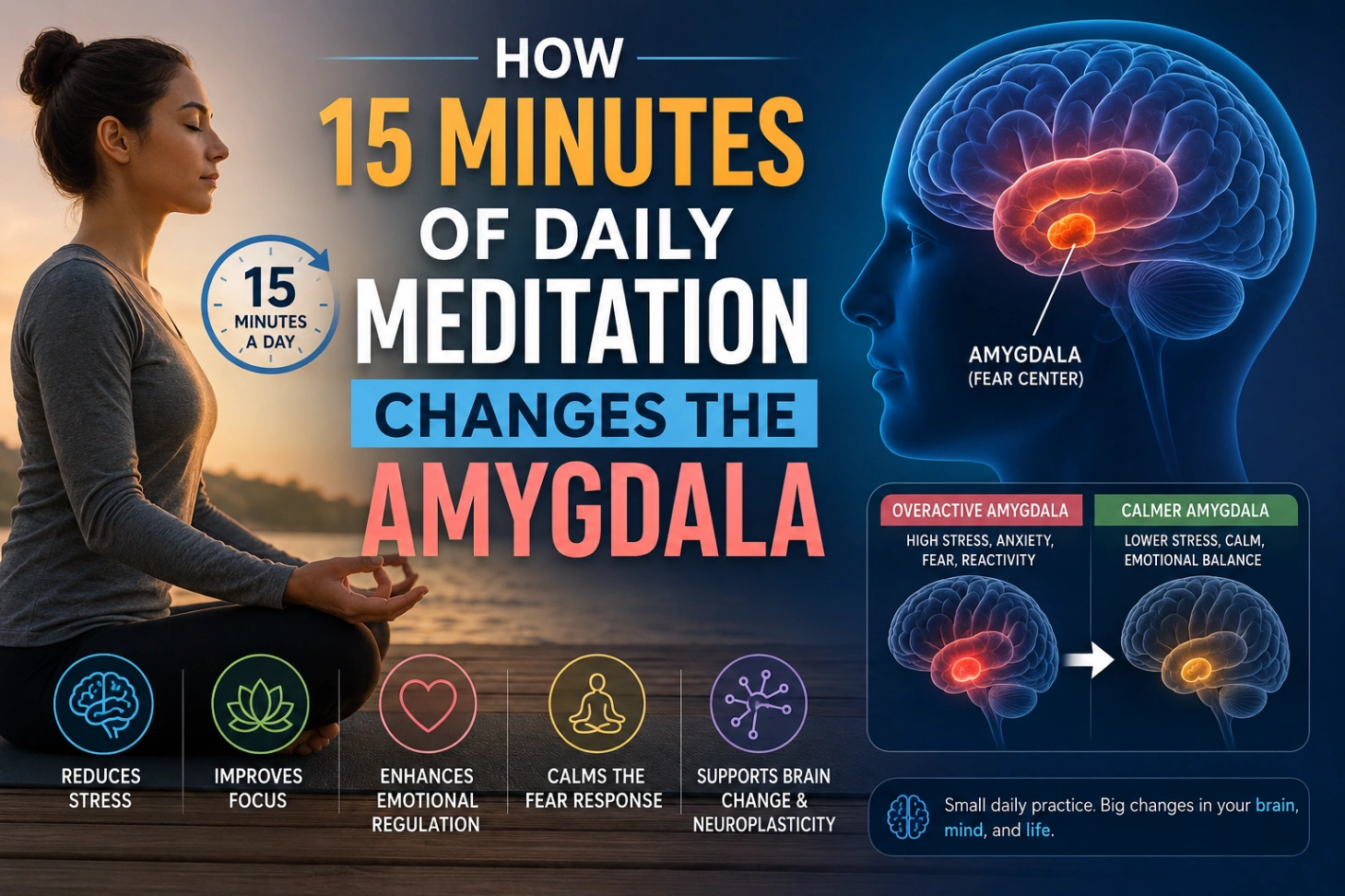
One important part of this story is the amygdala. The amygdala is often called the brain’s fear center because it helps detect threat and activate emotional responses. It plays a key role in the stress response, anxiety, emotional memory, and fight or flight reactions. When life feels overwhelming, the amygdala can become highly reactive, making small problems feel bigger and emotional reactions feel harder to control.
This is where mindfulness meditation becomes powerful. Meditation does not switch off the amygdala. That would not be helpful because we need this part of the brain for safety and survival. Instead, meditation may help the brain relate to stress differently. Over time, daily meditation can support emotional regulation, reduce automatic reactivity, and strengthen the pause between a trigger and your response.
What Is the Amygdala?
The amygdala is a small almond-shaped structure located deep inside the brain’s temporal lobe. Although it is small, its impact on daily life is huge. It helps the brain process emotional information, especially fear, stress, and threat. When you hear a sudden loud noise, feel judged, get bad news, or sense danger, the amygdala helps decide whether the body should prepare for action.
This is why the amygdala is closely connected with the fight or flight response. When it senses threat, it can signal the body to release stress hormones, increase heart rate, tighten muscles, and sharpen attention. In real danger, this response is useful. But in modern life, the same system can get activated by deadlines, arguments, overthinking, social pressure, or constant digital stimulation.
An overactive amygdala does not mean something is “wrong” with you. It often means your brain has learned to stay alert. If stress continues for a long time, the brain may become more sensitive to emotional triggers. This is why amygdala and anxiety are so closely linked. A reactive amygdala can make the mind scan for problems even when there is no immediate danger.
Design Your Destiny
Ready to create a calmer, more conscious life? Begin your journey with Design Your Destiny and learn how small daily practices can reshape the way you think, feel, and respond to life.
Start Your JourneyWhy Meditation Affects the Brain
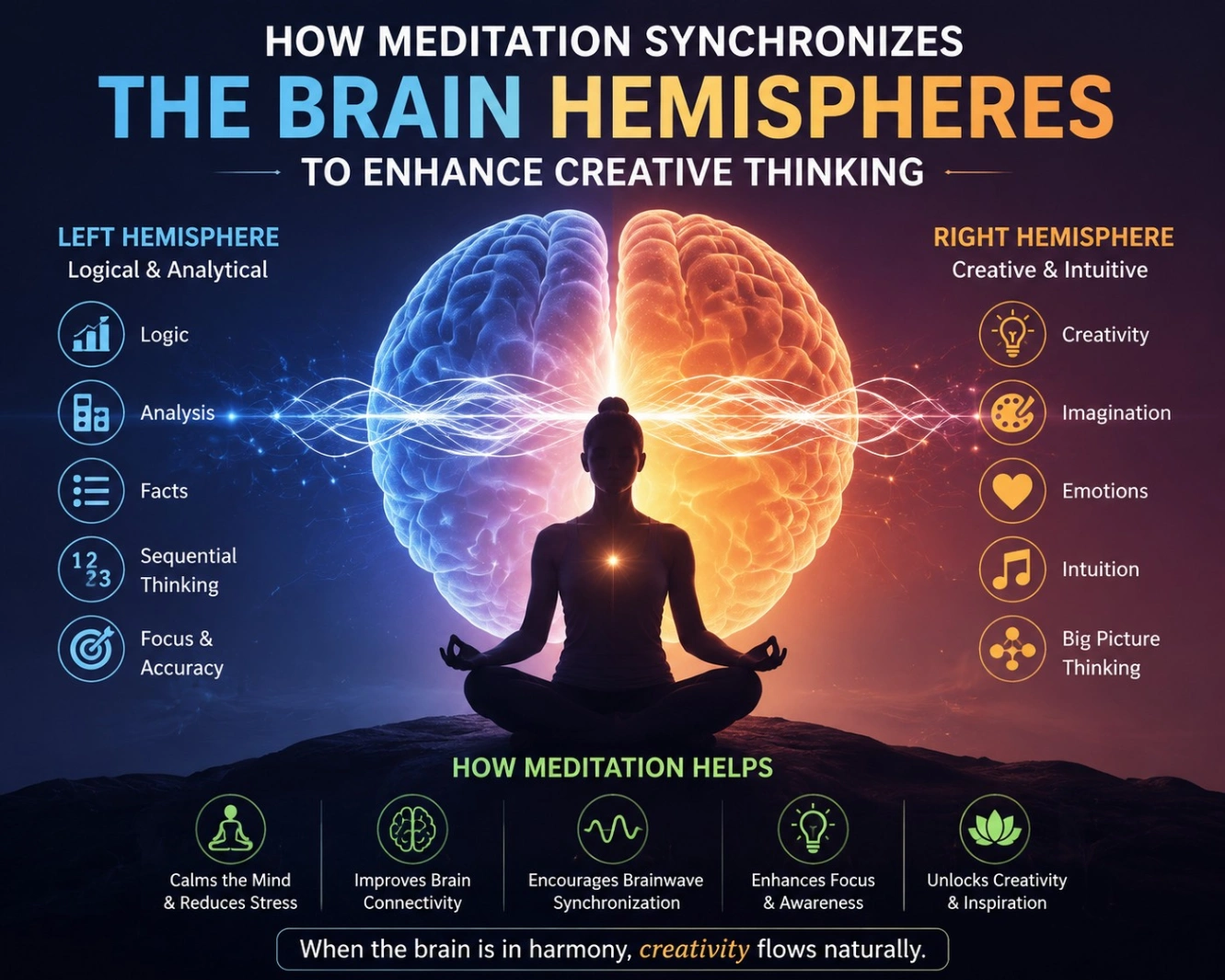
Meditation is mental training. Just like repeated physical exercise can strengthen muscles, repeated attention practice can influence brain networks linked with focus, emotion, self-awareness, and stress regulation. Mindfulness meditation usually involves noticing the breath, body sensations, thoughts, or emotions without immediately reacting to them.
This repeated act of noticing is important. Each time you observe a thought without chasing it, or feel an emotion without acting on it instantly, the brain practices a different pattern. Instead of automatically reacting, it learns to pause. Instead of becoming lost in fear or worry, it learns to witness the experience.
Research on mindfulness-based stress reduction, often called MBSR, has found that meditation practice is associated with changes in brain areas involved in learning, memory, emotion regulation, self-referential processing, and perspective-taking. These areas include the hippocampus, prefrontal regions, and structures connected with stress regulation.
Meditation and Amygdala Activity
When people search for “meditation shrinks the amygdala,” they are usually referring to research suggesting that stress reduction may be associated with structural changes in the amygdala. One well-known longitudinal MRI study found that reductions in perceived stress after an 8-week mindfulness-based stress reduction program correlated with decreases in right basolateral amygdala gray matter density.
This does not mean everyone who meditates for exactly 15 minutes will physically shrink the amygdala. That would be an oversimplification. The more accurate statement is that mindfulness meditation may influence the amygdala’s structure, activity, and connectivity over time, especially when it reduces perceived stress.
Meditation and amygdala research also shows that mindfulness may affect how the amygdala communicates with other brain regions. A study on mindfulness meditation training found evidence of functional neuroplastic changes in an amygdala-related stress pathway. This suggests that meditation may help change the way stress circuits operate, not just how we feel subjectively.
What 15 Minutes of Daily Meditation Can Do
Fifteen minutes may sound too short to matter, but consistency is more important than intensity. A short daily meditation practice gives the brain repeated exposure to calm attention. Over time, this repetition can become a new mental habit.
During 15 min meditation, you may first notice how restless the mind is. Thoughts may jump from work to relationships, from the past to the future, from one worry to another. This is normal. Meditation for beginners is not about stopping thoughts. It is about noticing them and gently returning to the present moment.
That return is the training. Every time you bring attention back to the breath, you are practicing attention control. Every time you notice anxiety without becoming completely absorbed in it, you are practicing emotional regulation. Every time you pause before reacting, you are teaching the brain that not every feeling needs an immediate response.
Over time, daily meditation can help reduce amygdala activity by changing your relationship with stress. Instead of treating every uncomfortable thought as a threat, the brain slowly learns to observe discomfort with more space. This may support a calmer stress response and make emotional triggers feel less overpowering.
Meditation and Neuroplasticity
Neuroplasticity is the brain’s ability to change through experience. This is the foundation behind the idea that meditation rewires the brain. The brain is not fixed. It adapts to what we repeatedly practice.
If we repeatedly practice worry, rumination, and emotional reaction, those pathways can become stronger. If we repeatedly practice awareness, calm breathing, and non-reactivity, different pathways can become more accessible. This does not happen overnight, but small daily practices can matter.
Mindfulness and neuroscience research suggests that meditation is associated with changes in brain systems related to attention, emotion regulation, and self-awareness. A review of meditation neuroimaging studies found that different meditation styles show different patterns of brain activation and deactivation, which means meditation is not one single brain state but a family of practices with different effects.
This is why the type of meditation matters. Focused attention meditation, body scan, loving-kindness meditation, mantra meditation, and open monitoring may influence the brain differently. For stress and the amygdala, mindfulness meditation and breath awareness are often practical starting points because they directly train awareness of thoughts, emotions, and bodily stress signals.

How Meditation Helps Calm the Amygdala
To understand how to calm the amygdala, think of meditation as creating a gap. Stress often works like this: trigger, emotion, reaction. Someone says something hurtful, and anger rises. A deadline appears, and anxiety takes over. A memory comes up, and the body reacts as if it is happening again.
Meditation adds a step: trigger, awareness, emotion, choice, response.
That small moment of awareness can change everything. You may still feel fear, sadness, frustration, or anxiety, but you are less likely to be completely controlled by it. This is meditation and emotional regulation in real life.
The prefrontal cortex, which is involved in planning, attention, and self-control, helps regulate emotional reactions. Mindfulness practice may strengthen the brain’s ability to notice emotional signals and respond more intentionally. In simple words, meditation helps the thinking brain and emotional brain communicate better.
This does not mean meditation makes you emotionless. In fact, it may help you feel emotions more clearly without becoming overwhelmed by them. A calm amygdala is not a silent amygdala. It is an amygdala that no longer needs to sound the alarm for every uncomfortable moment.
Daily Meditation for Stress and Anxiety
Meditation for stress and anxiety is one of the most common reasons people begin practicing. Stress often lives in the body before we understand it in the mind. Tight shoulders, shallow breathing, clenched jaw, racing heart, and stomach discomfort can all be signs that the nervous system is activated.
A 15-minute mindfulness meditation can help you notice these signs earlier. Instead of realizing you are stressed only after snapping at someone or feeling exhausted, you begin to catch the stress response while it is still building.
This matters because awareness gives you options. You can breathe more slowly. You can relax your shoulders. You can step away from a triggering conversation. You can question a fearful thought instead of believing it immediately.
Meditation is not a replacement for therapy, medical care, or practical life changes. But it can be a strong daily support for nervous system regulation. Research reviews suggest mindfulness-based approaches may help with anxiety symptoms, although the quality and strength of evidence can vary depending on the study, population, and method used.
A Simple 15-Minute Meditation Practice
If you are new to meditation, begin simply. Sit comfortably. Keep your back relaxed but upright. Close your eyes if that feels comfortable, or soften your gaze.
For the first two minutes, notice your breathing without changing it. Feel the air entering and leaving the body. Notice whether the breath is fast, slow, deep, or shallow.
For the next five minutes, gently follow the breath. When the mind wanders, bring it back. Do not criticize yourself. Wandering is part of the practice.
For the next five minutes, scan the body. Notice the forehead, jaw, neck, shoulders, chest, stomach, legs, and hands. If you find tension, breathe into that area and soften it.
For the final three minutes, simply observe. Thoughts may come. Emotions may come. Sounds may come. Let them pass like clouds. You do not need to fix anything.
This kind of daily meditation is simple, but not always easy. The goal is not to have a perfect session. The goal is to return, again and again, to awareness.

The Science Is Promising, But Not Magic
It is important to be honest about the science. Meditation brain benefits are real, but they should not be exaggerated. Not every person will experience the same results. Not every study shows the same level of brain change. Meditation research also has challenges, including differences in meditation styles, study design, participant experience, and how mindfulness is defined. A major critical review warned that mindfulness research should avoid hype and use more rigorous methods.
So, does meditation shrink the amygdala? Sometimes research points in that direction, especially when stress reduction is involved. But for a blog title, “changes the amygdala” is more accurate, more responsible, and still powerful.
The real benefit is not just structural change. The deeper benefit is lived experience. You may become less reactive. You may notice anxious thoughts earlier. You may recover faster after stress. You may stop treating every emotional wave as an emergency.
How 15 minutes of daily meditation changes the amygdala is really a story about practice, patience, and neuroplasticity. The amygdala is not your enemy. It is a protective part of the brain that tries to keep you safe. But when stress becomes constant, that protective system can become too sensitive.
Mindfulness meditation teaches the brain a new pattern. It helps you observe rather than instantly react. It supports emotional regulation, calms the stress response, and may influence the structure and function of the amygdala over time.
You do not need to meditate for hours. You do not need to escape your life. You can begin with 15 minutes a day, one breath at a time. The change may feel small at first, but the brain learns through repetition. Calm is not something you find once. It is something you practice daily.
Personal Session
If you feel stuck in stress, overthinking, emotional patterns, or inner confusion, book a personal session to receive guided support and practical tools for your own journey toward clarity, balance, and self-awareness.
Book Now