

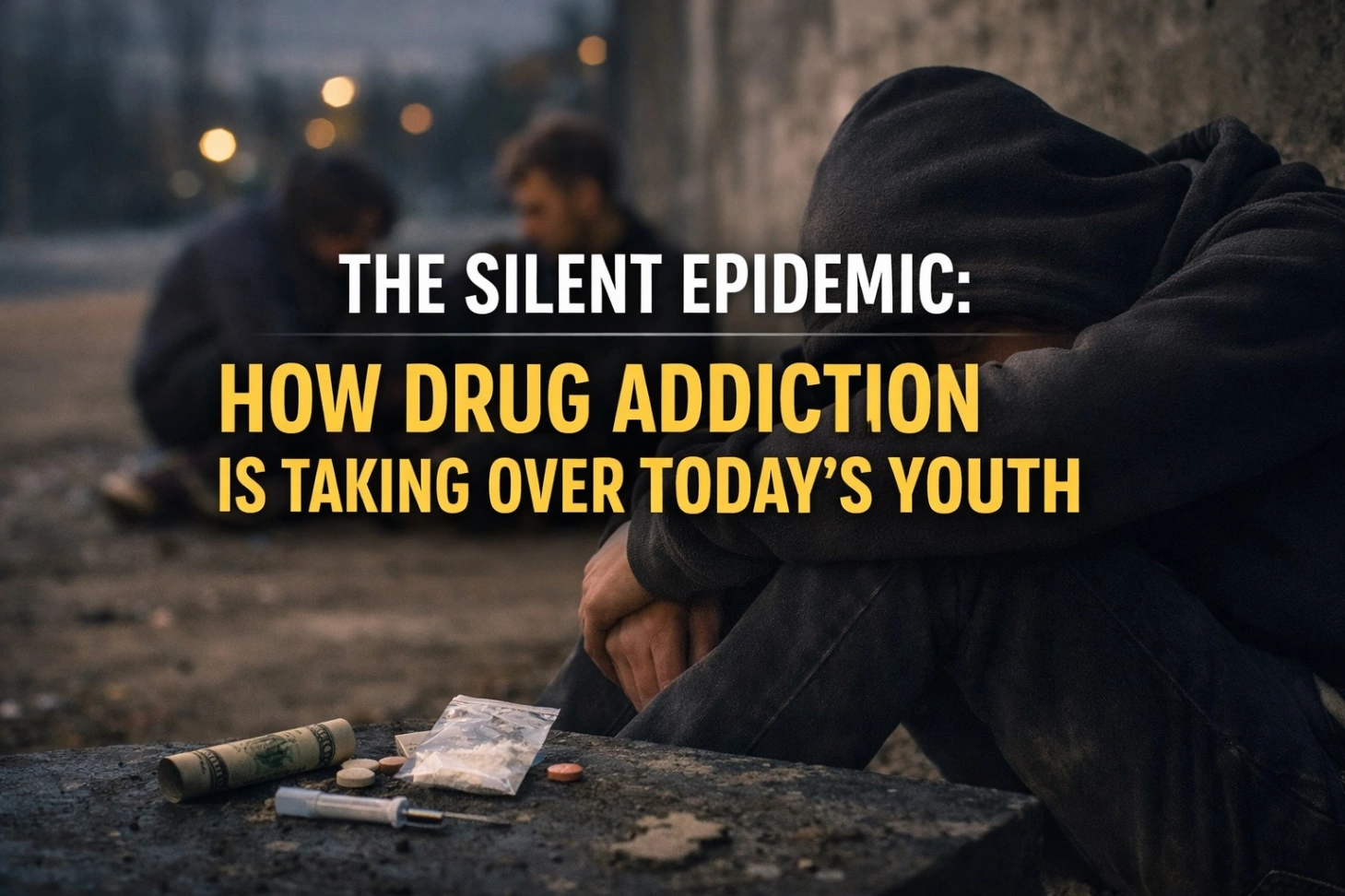
Walk into any college, scroll through social media, or attend a party, and everything seems normal. Smiles, laughter, friendships. But beneath the surface, a quiet crisis is growing i.e youth drug addiction.
It doesn’t always look dramatic. It often begins subtly curiosity, peer pressure, or a need to escape. Over time, what starts as “just trying” slowly turns into dependency. This is why drug addiction in teenagers and young adults is often called a silent epidemic because it spreads unnoticed until it’s too late.
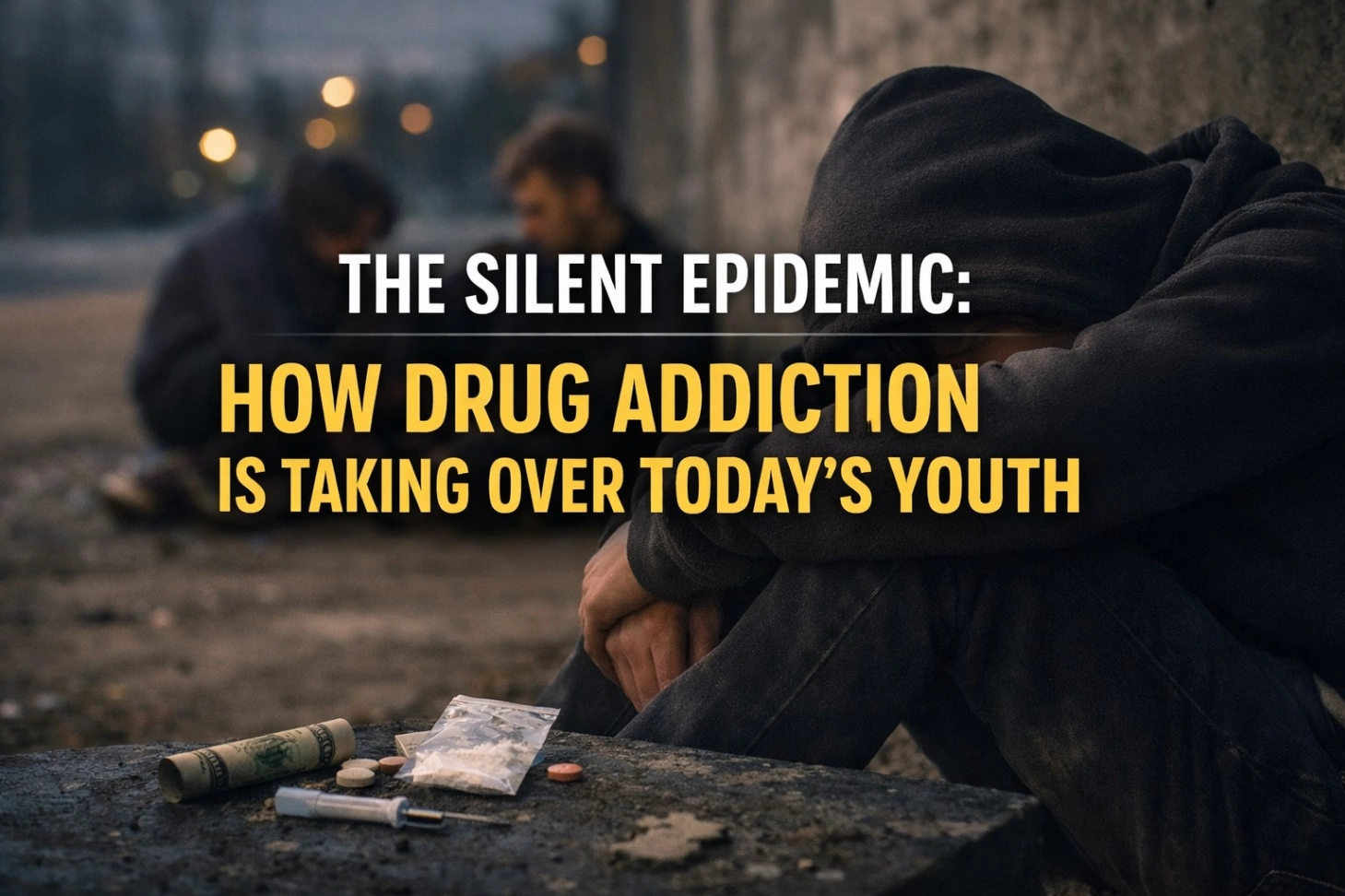
Why Is Drug Addiction Increasing Among Youth?
There’s no single reason. Instead, multiple factors are quietly pushing young people toward substance abuse.
1. Emotional Emptiness & Mental Health Struggles
Many young individuals today feel disconnected, anxious, or lost. When emotions become overwhelming, drugs can feel like an escape.
This is where emotional causes of drug addiction come into play not just physical dependency, but a deeper inner void.
2. Peer Pressure and Social Influence
“Everyone’s doing it” this simple phrase has led many into addiction. Peer pressure and drug abuse go hand in hand, especially in teenage years.
3. Social Media & Party Culture
Platforms glamorize nightlife, alcohol, and drug use. The idea of “living your best life” often includes substance use, influencing youth behavior subconsciously.
4. Curiosity & Experimentation
Teenage years are about exploration. Unfortunately, this curiosity can lead to trying substances without understanding long-term consequences.
Personal Session
If you or someone you know is struggling emotionally or mentally, don’t go through it alone. Book a personal session with Sakshi Shree and start your journey toward healing, awareness, and true transformation.
Book NowEarly Signs of Drug Addiction in Teenagers
One of the biggest challenges is recognizing addiction early. Many parents and friends miss the warning signs.
Here are some hidden drug addiction signs:
Sudden mood swings or emotional numbness
Loss of interest in hobbies or studies
Secretive behavior or isolation
Changes in sleep or appetite
Decline in academic or work performance
These signs may seem small individually, but together they indicate silent addiction in youth.
How Drugs Affect Teenage Brain Development
The teenage brain is still developing especially areas responsible for decision-making, impulse control, and emotional regulation.
Drug use during this phase can:
Alter brain chemistry
Reduce memory and concentration
Increase risk of anxiety and depression
Create long-term dependency patterns
This is why drug abuse among youth is far more dangerous than in adults. It doesn’t just affect the present but it shapes the future.

Effects of Drug Addiction on Youth
The impact of drugs goes beyond physical health. It touches every aspect of life.
1. Mental Health Decline
Drugs can worsen anxiety, depression, and emotional instability. Many young people turn to drugs to escape but end up trapped in deeper mental struggles.
2. Relationship Damage
Addiction creates distance from family and friends. Trust breaks, communication weakens, and isolation grows.
3. Academic & Career Impact
Focus decreases, motivation drops, and long-term goals get lost. Many young individuals struggle to recover academically or professionally.
4. Identity Crisis
Perhaps the most overlooked effect is that young people lose connection with themselves. They forget who they truly are without substances.
Why Do Young People Get Addicted to Drugs?
It’s easy to blame “bad choices,” but the reality is deeper.
Young people often turn to drugs because they are:
Trying to escape emotional pain
Seeking belonging or acceptance
Coping with stress or pressure
Feeling empty or disconnected
At its core, substance abuse in youth is not just about drugs, it’s about unmet emotional and psychological needs.
How Social Media Influences Drug Use in Youth
Social media plays a powerful role in shaping behavior.
It normalizes drug use
It creates unrealistic lifestyles
It promotes instant gratification
It increases comparison and insecurity
This constant exposure can make drug use seem harmless or even desirable, especially to impressionable minds.

How to Prevent Drug Addiction in Teenagers
Prevention starts with awareness and connection.
1. Open Communication
Create a safe space where young individuals can express their feelings without judgment.
2. Mental Health Support
Address anxiety, stress, and emotional struggles early.
3. Education
Teach the real effects of drugs not just fear-based messaging, but honest conversations.
4. Strong Support System
Family, mentors, and friends play a crucial role in guiding youth.
How to Help a Young Person with Drug Addiction
If someone is already struggling, support matters more than blame.
Approach with empathy, not anger
Encourage professional help
Stay consistent and patient
Focus on healing, not punishment
Recovery is possible but it requires understanding, not judgment.

A Deeper Perspective: Addiction or Inner Emptiness?
Many experts today believe that addiction is not just physical, it’s emotional and spiritual.
When a person feels disconnected from themselves, they seek something outside to fill the gap. Drugs become a temporary escape from inner discomfort.
But the real solution lies within in awareness, healing, and self-connection.
The rise of youth drug addiction is not just a social issue it’s a reflection of deeper emotional and psychological struggles.
If we want to solve this silent epidemic, we must look beyond the surface.
Not just at drugs.
But at the pain, pressure, and emptiness driving young people toward them.
Because when we heal the root, the addiction loses its power.
Design Your Destiny
Feeling lost, overwhelmed, or disconnected? It’s time to take control of your life from within. Join the “Design Your Destiny” program and learn how to build clarity, purpose, and inner strength — without escaping into harmful habits.
Meet Now