

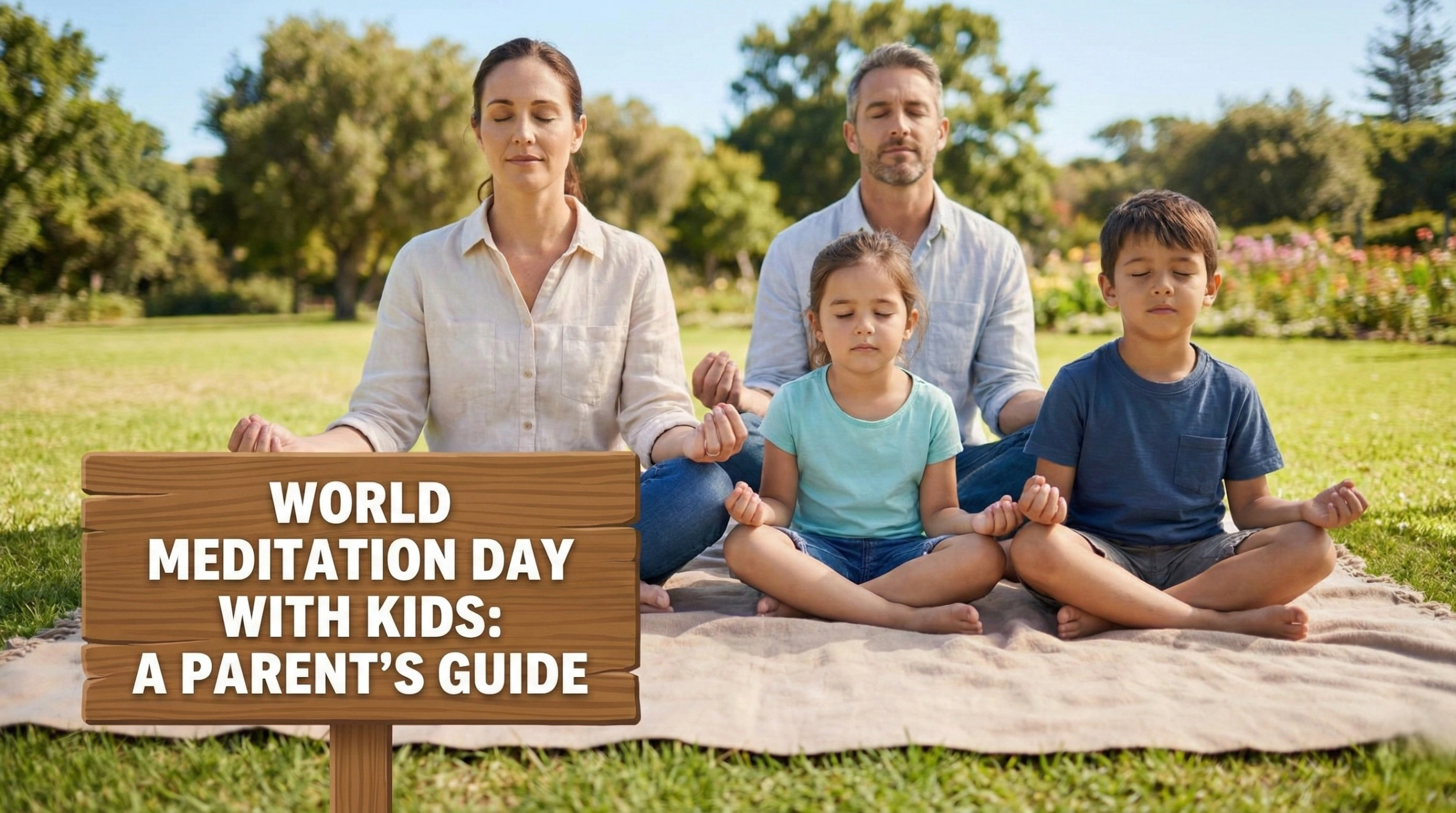
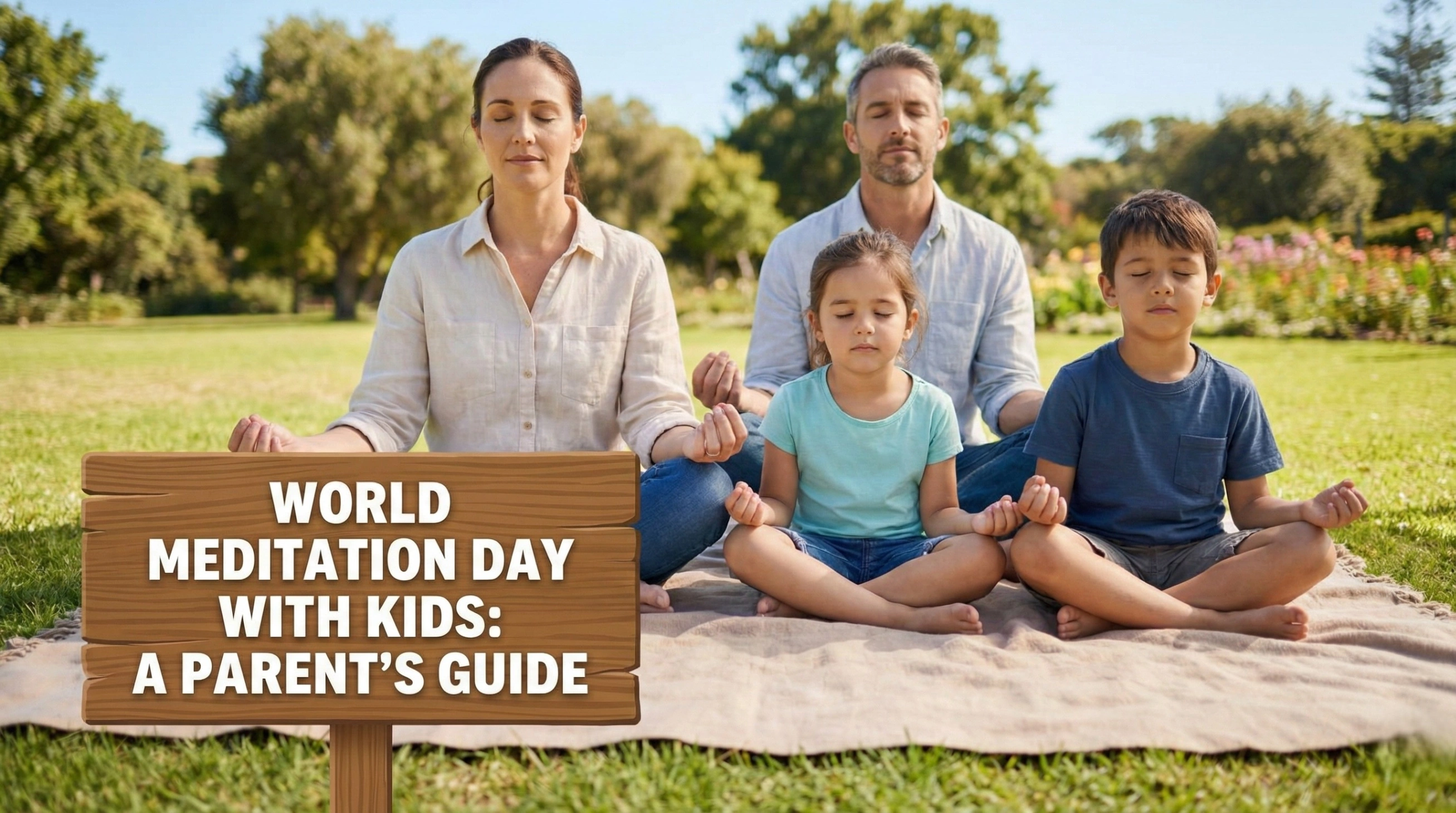
Let’s be honest: when you hear the word "meditation," you probably picture a silent room, a comfortable cushion, and twenty minutes of uninterrupted peace.
As a parent, that sounds less like a practice and more like a fantasy.
But here is the good news. World Meditation Day isn't just about silence. It is about connection connecting with ourselves, our breath, and the people we love most. Celebrating this day with your children doesn't require them to sit perfectly still like little statues. In fact, meditation for kids is often messy, wiggly, and surprisingly fun.
If you have been looking for a reason to introduce family mindfulness into your home, this is it. Whether you are dealing with bedtime battles, big emotions, or just want a few moments of calm in the chaos, this guide will show you exactly how to make mindfulness stick (without the struggle).
What is World Meditation Day?
World Meditation Day is a global call to clear our heads and slow down. In our fast-paced, screen-filled world, it serves as a reminder that rest is productive.
For adults, it might mean a long yoga session. But for families, it’s an opportunity to press reset. It is a day to teach our children that their brains need a break just as much as their bodies do.
You might be wondering, "Is my child too young?" or "Will they even pay attention?" The answer is yes, they can. Children are naturally mindful. Watch a toddler observing a bug on the sidewalk; they are fully present. Our job isn't to force them to meditate; it’s to help them harness that natural focus.
Why Mindfulness Matters for Developing Brains
Before we dive into the activities, let's talk about the "why." Why should we care about meditation for focus and concentration when our kids are barely in grade school?
The science is actually pretty incredible.
1. Reducing Anxiety
We are living in stressful times, and kids feel it too. Anxiety relief for kids is one of the top reasons parents turn to mindfulness. Simple breathing techniques can lower cortisol levels, helping a panicked child return to a state of calm.
2. Emotional Regulation
Have you ever tried to reason with a crying toddler? It’s impossible. Mindfulness gives kids a "pause button." It teaches them to notice an emotion ("I feel angry") before reacting to it (throwing a toy).
3. Better Sleep
This is the big one. Sleep meditation for kids can transform your evenings. By relaxing the body before bed, children drift off faster and stay asleep longer.
4. Focus and ADHD Support
Parents often ask, is mindfulness good for ADHD? Research suggests it can be highly beneficial. It strengthens the "attention muscle" in the brain, helping kids with ADHD learn to bring their wandering focus back to the present moment.
Getting Started: How to Teach Kids to Meditate
The biggest mistake parents make is expecting too much, too soon.
If you ask a energetic 5-year-old to "clear their mind" for 10 minutes, you are setting everyone up for failure. How to teach kids to meditate starts with meeting them where they are.
Age-Appropriate Expectations
Toddlers (Ages 2–4): Keep it physical. Use yoga for kids or tactile games. Attention span is roughly 1–2 minutes.
Young Kids (Ages 5–8): Use imagination. Guided stories and visualization work wonders. Aim for 3–5 minutes.
Pre-Teens (Ages 9–12): Focus on stress relief and real-world application, like using breathing before a test. They can handle 5–10 minutes.
7 Fun Activities for World Meditation Day
Ready to celebrate? You don’t need special equipment or a subscription. Here are seven calming activities for kids that you can do right now.
1. The "Five Finger" Breathing Exercise
Breathing exercises for kids need to be visual. This is a classic because they can do it anywhere at school, in the car, or at the dinner table.
Have your child hold up one hand, spreading their fingers wide like a star.
Take the index finger of the other hand.
Trace up the outside of the thumb while breathing in deeply.
Trace down the other side of the thumb while breathing out.
Continue tracing up and down all five fingers.
It takes about 30 seconds, acts as a sensory grounder, and immediately slows down the heart rate.
2. The Spaghetti Body Scan
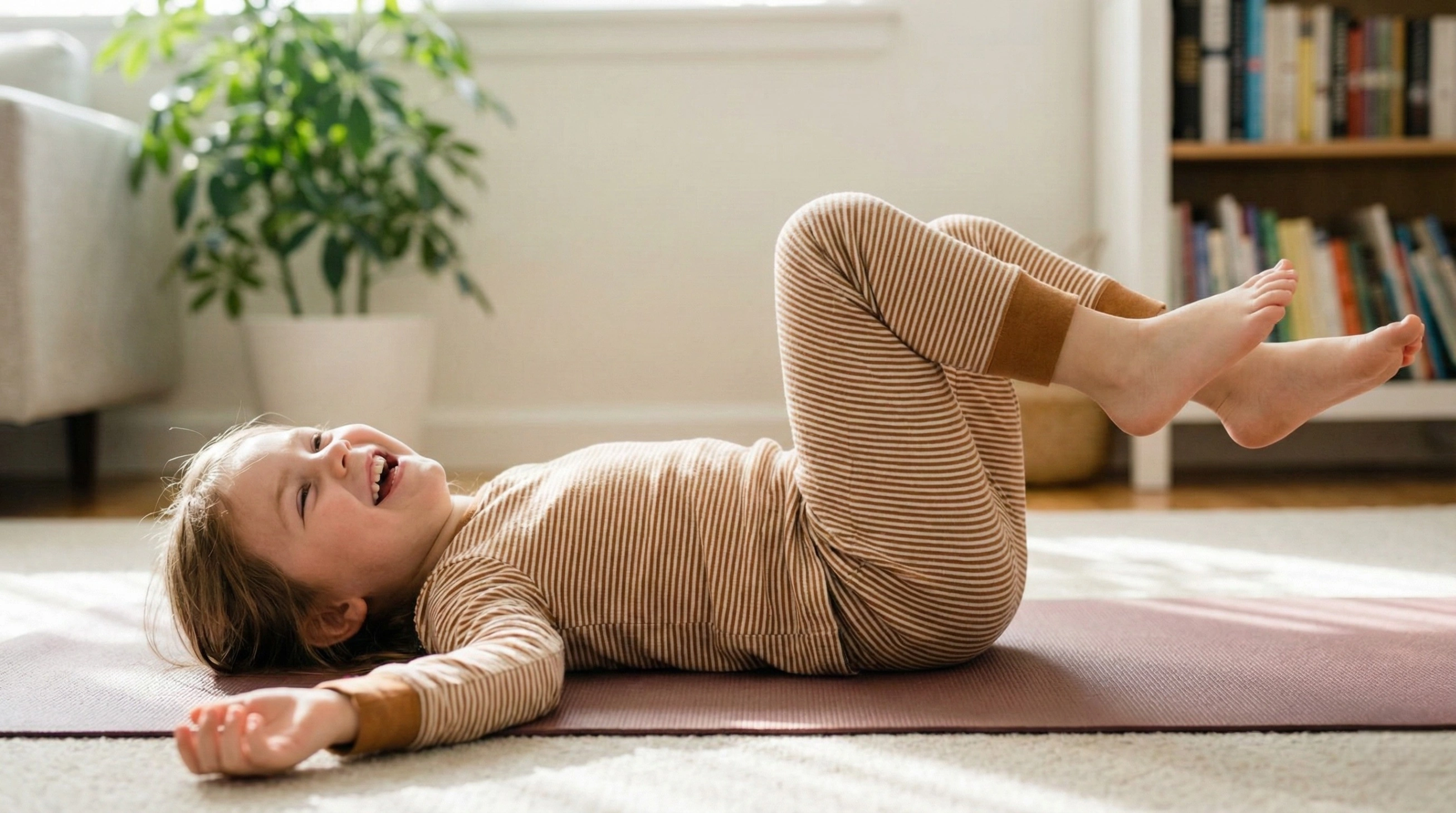
The body scan for kids is a great way to release physical tension, but "relax your muscles" is a vague instruction for a six-year-old. Instead, play the Spaghetti Game.
Step 1: Tell your kids they are uncooked spaghetti; stiff, hard, and rigid. Ask them to squeeze every muscle in their body tight. Hands into fists, shoulders up to ears, toes curled. Hold it for 3 seconds!
Step 2: Now, shout "Cooked Spaghetti!" They have to release all tension and wiggle around like soft, noodly pasta.
Repeat this three times. It teaches them the difference between tension and relaxation.
3. The "Sound Safari"
This is one of the best mindfulness games for outdoor play.
Head to the backyard or a local park. Ask the kids to sit silently for two minutes and close their eyes. Their mission is to identify as many distinct sounds as possible.
Was that a bird? A car? The wind in the leaves? A dog barking way down the street?
After the time is up, share what you heard. This trains meditation for focus and concentration by forcing the brain to filter out noise and tune into specifics.
4. The Bedtime Cloud Ride
If you are struggling with the evening routine, try a bedtime meditation for toddlers and young kids using visualization.
Have them lie down and close their eyes. Speak in a slow, low voice.
"Imagine you are lying on a big, fluffy white cloud. It is so soft and warm. The cloud is going to float up gently into the blue sky. You feel safe and cozy. The cloud floats over your house, over the trees... rock gently side to side..."
This form of guided meditation for kids engages their imagination, which distracts them from the worries of the day and lulls them toward sleep.
5. The Glitter Jar (Mindfulness in a Bottle)
This is a classic craft that doubles as a meditation tool.
Fill a jar with water and clear glue.
Add a generous amount of glitter.
Seal the lid tight (superglue it shut!).
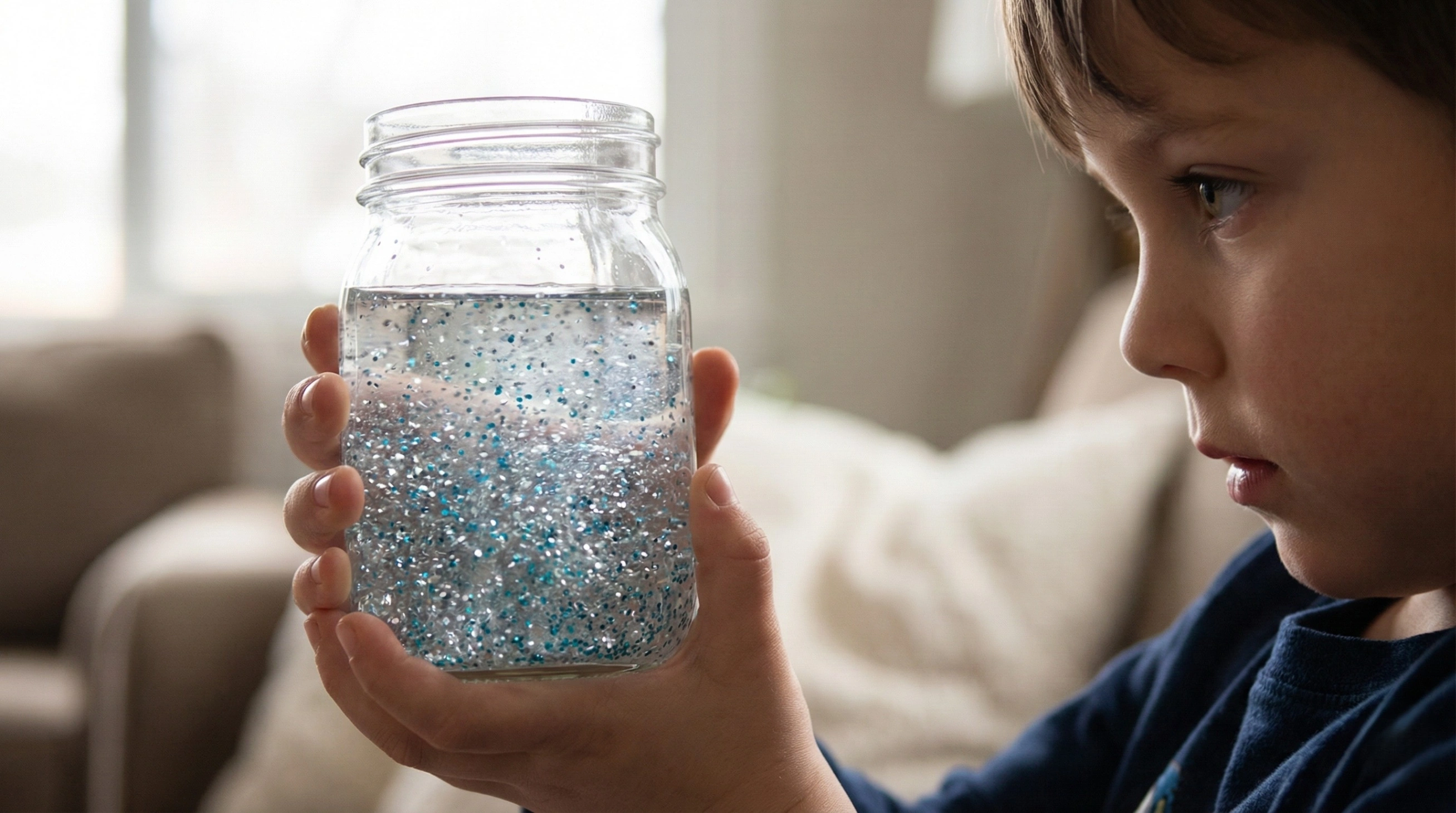
Shake the jar up. Tell your child, "This is what our brain looks like when we are angry or scared. It's all swirly and cloudy, and we can't see clearly."
Set the jar down and watch the glitter settle. "Now, let's breathe and watch the glitter fall. As it settles, the water becomes clear again. That is what happens when we breathe."
6. Yoga Freeze Dance
Combine movement with stillness. Put on some upbeat music and have a dance party. When you hit pause, everyone has to freeze in a specific yoga pose (Tree Pose, Downward Dog, or Warrior).
Yoga for kids helps them get the "wiggles" out so they can settle down later. It teaches control over their physical body.
7. The Gratitude Rock
Find a smooth stone from the garden. Let your child paint it or decorate it.
Explain that this is their "Gratitude Rock." Every night before bed, they hold the rock and think of one thing that made them happy that day. It could be eating pizza, playing with a friend, or a warm hug.
Gratitude is a form of mindfulness that rewires the brain to look for the positive.
Overcoming Common Hurdles
Even with the best intentions, family meditation isn't always smooth sailing. Here is how to handle the bumps in the road.
"My kid won't sit still!"
That is okay! Don’t force them. If you force it, they will hate it. Try walking meditation or "mindful coloring" instead. The goal is awareness, not immobility.
"I don't have time."
You don’t need 30 minutes. A 5-minute meditation for kids is plenty. In fact, even three deep breaths before school counts. Consistency beats duration every time.
"They keep giggling."
Laughter is a release of tension. If they giggle during a breathing exercise, giggle with them, and then gently bring the focus back. Make it playful, not serious.
Creating a Routine That Sticks
World Meditation Day is the perfect launchpad, but the real magic happens in the daily habits.
To make this stick, try "habit stacking." Attach your mindfulness practice to something you already do every day.
Morning: Do a quick stretch and set an intention at the breakfast table.
After School: Do the "Spaghetti Body Scan" to shake off the school day stress.
Bedtime: Use sleep meditation for kids apps or stories as the final step before lights out.
Using Technology Wisely
While we often want to reduce screen time, technology can be a helpful guide. There are wonderful apps offering guided meditation for kids. Look for ones with fun characters and engaging stories. Just ensure the screen is dimmed or the device is face-down so the focus remains on the audio.
A Gift for a Lifetime
Celebrating World Meditation Day with your kids is about more than just one day of peace. It is about giving them a toolkit they will use for the rest of their lives.
When we teach our children to breathe through a tantrum, we are teaching them emotional intelligence. When we practice gratitude, we are teaching them resilience. When we prioritize rest, we are teaching them self-care.
So, this May, roll out the mats (or just sit on the carpet), take a deep breath, and embrace the imperfect, wiggly, beautiful moment with your family.